Bikepacking Saddle Bag Selection: Complete Guide to Frame Bags, Seat Bags, and Handlebar Bag Configurations
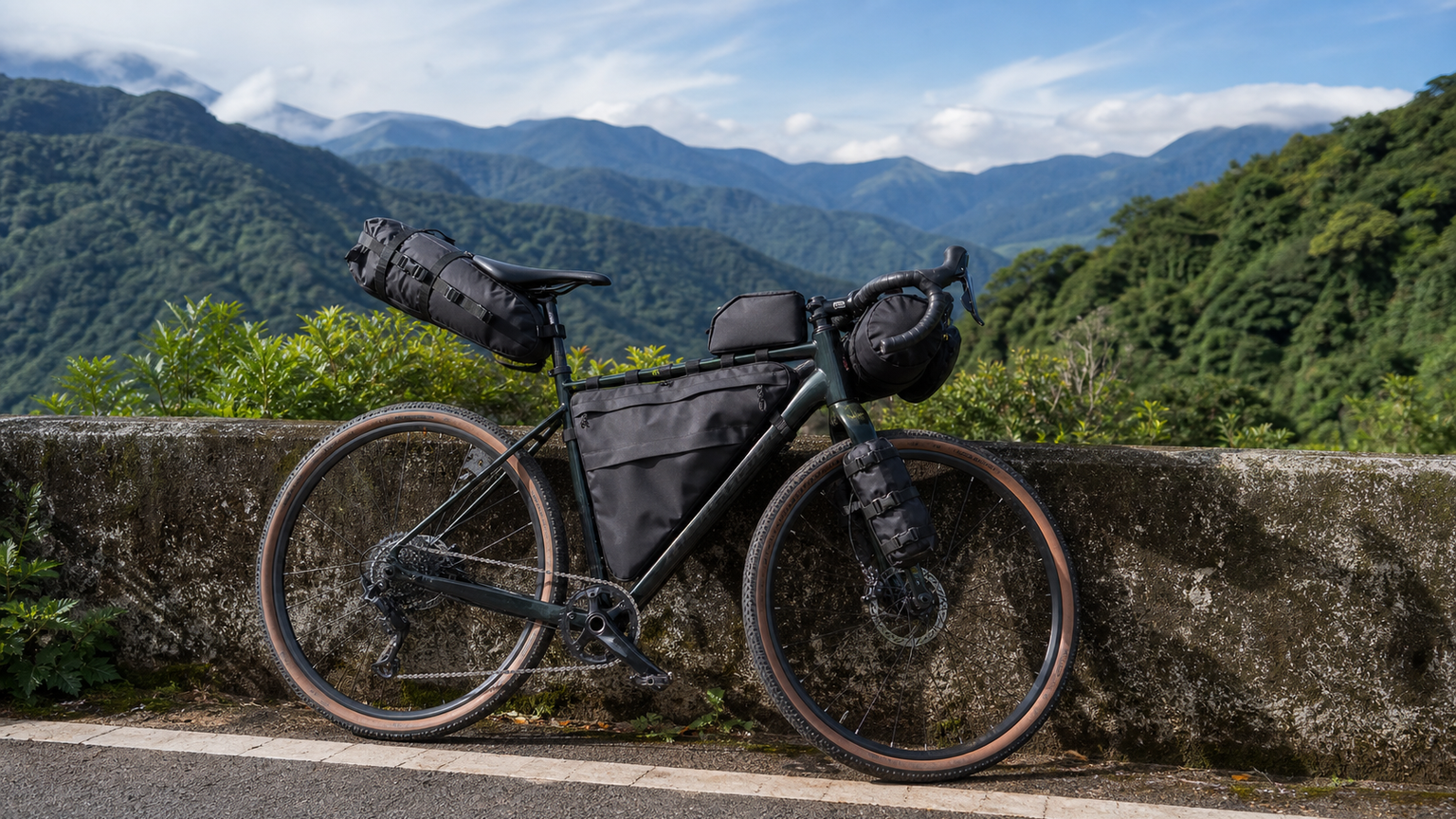
The Three Main Bikepacking Bag Systems
Bikepacking abandons traditional racks in favor of soft bag systems mounted directly to the frame. The three main bag types are the Frame Bag, Seat Pack, and Handlebar Bag/Roll, supplemented by top tube bags, fork bags, and tool rolls to form a complete cargo-carrying setup.
Frame Bag
The frame bag mounts inside the main triangle, with a capacity of 2-8 liters. It’s the preferred location for heavy items because the center of gravity is low and centered.
Capacity Options:
- Small (2-4L): Suitable for long-distance riders, retains bottle cage space
- Half-frame (4-6L): Occupies the upper portion of the frame, keeps the down tube bottle cage
- Full-frame (6-8L): Fills the entire triangle, maximum capacity but no room for bottle cages
Typical Contents: Tools, spare tubes, food, power banks, cash, passport
Recommended Brands: Apidura (UK), Revelate Designs (US), Restrap (UK), and Taiwan’s Topeak
Seat Pack
The seat pack straps to the saddle rails and behind the seatpost, with a capacity of 6-16 liters. It’s the largest-capacity bag in a bikepacking setup.
Capacity Selection:
- 6-8L: Short trips of 1-2 days
- 10-14L: Classic long-distance trips of 3-7 days
- 14-16L: Ultra-long trips or winter trips with extra clothing
Key Principle: Store light but bulky items in the seat pack, as proximity to the rear wheel creates a “tail wag” sway issue. Recommended items include sleeping bags, down jackets, and spare clothing. Never put heavy items in it.
Advanced Option: Drybag Holster systems (such as the Tailfin AeroPack) use a support rack, can carry 9 kg, and eliminate sway.
Handlebar Bag/Roll
The handlebar bag straps to the front of the handlebars, with a capacity of 8-17 liters. It comes in two types: Roll and Drybag Holster.
Things to Note:
- Width must be less than the handlebar width (to avoid affecting handling)
- Leave clearance for shift and brake cables
- Aero bars are narrower and may only accommodate 8L
Typical Contents: Tent fly, sleeping pad, camera, headlamp
Supplementary Bags
- Top Tube Bag: 0.5-1L, for phone, nutrition, and loose change
- Fork Bag: 3-6L, mounts on both sides of the front fork, for water bladders or clothing
- Stem Bag: 0.5L, for a water bottle or snacks
Waterproof Ratings
Bikepacking bags are generally divided into three levels:
| Level | Construction | Use Case |
|---|---|---|
| Water-resistant | Zippered, with waterproof lining | Short rides in dry weather |
| Highly waterproof | Waterproof zippers or roll-top closure | Most conditions |
| Fully waterproof (Drybag) | Roll-top, no zipper | Heavy rain, water crossings |
Recommendation: Choose Drybag level for handlebar and seat packs; water-resistant is sufficient for frame bags (contents can be sealed in separate dry bags).
Budget Recommendations
Entry-level (NT$ 8,000-12,000): Full Topeak setup
Mid-range (NT$ 18,000-25,000): Apidura Expedition series
High-end (NT$ 35,000+): Revelate Designs + Tailfin AeroPack
Beginners are advised to start with mid-range gear, as the durability gap between bag brands is larger than you might expect.
Related Reading
- Cycling Feed Bags and Frame Bags Buying Guide: Capacity and Use Cases for Frame Bags, Saddle Bags, and Top Tube Bags
- Cycling Feed Bags and Backpacks Buying Guide: Frame Bags, Saddle Bags, and Hydration Packs Explained
- Bicycle Camping for Beginners: Bikepacking Gear Checklist and Recommended Routes in Taiwan
- Complete Review of Cycling Bag Types: Capacity and Accessibility Comparison of Frame Bags, Saddle Bags, and Top Tube Bags
多到選擇障礙... 換個單車把帶想一個小時 / BTP / 編織&軟木特有材質超吸睛! / 公路車 / CT Yeh
1 年前
超開放的自行車錶!可以玩遊戲裝APP!?/ SRAM合併的 Hammerhead Karoo深入開箱!/ 即時爬坡偵測 / 全球導航地圖 / Garmin Bryton / CT Yeh
1 年前
單車 一日北高 ( 雙城 ) 肥宅雙人瘋狂行 紀錄片 REACTO
10 年前
#公路車 #Fitting 靠人工智慧APP 幫你調整單車
6 年前
訓練台體驗) 2019台北自行車展 三大家 訓練台體驗 Tacx Neo Flux 2 Xepdo Apx Wahoo Kickr
7 年前
2025 自行車錶排行榜 兩萬車友大數據 / Garmin Bryton 排名會大洗牌嗎? / 全新的碼表前身分析 /公路車 / CT Yeh
1 年前
單車 重低音 藍芽喇叭 音質實測 SoundBot SB525 Real Sound Test
8 年前
Vision Metron RS 37碳幅條輪組 (非SL)官網沒有的 低調開箱 / 這重量太銷魂了 / 公路車 / CT Yeh
6 個月前