Bikepacking Climate Response: Emergency Strategies for Heavy Rain, Strong Winds, and Low Temperatures
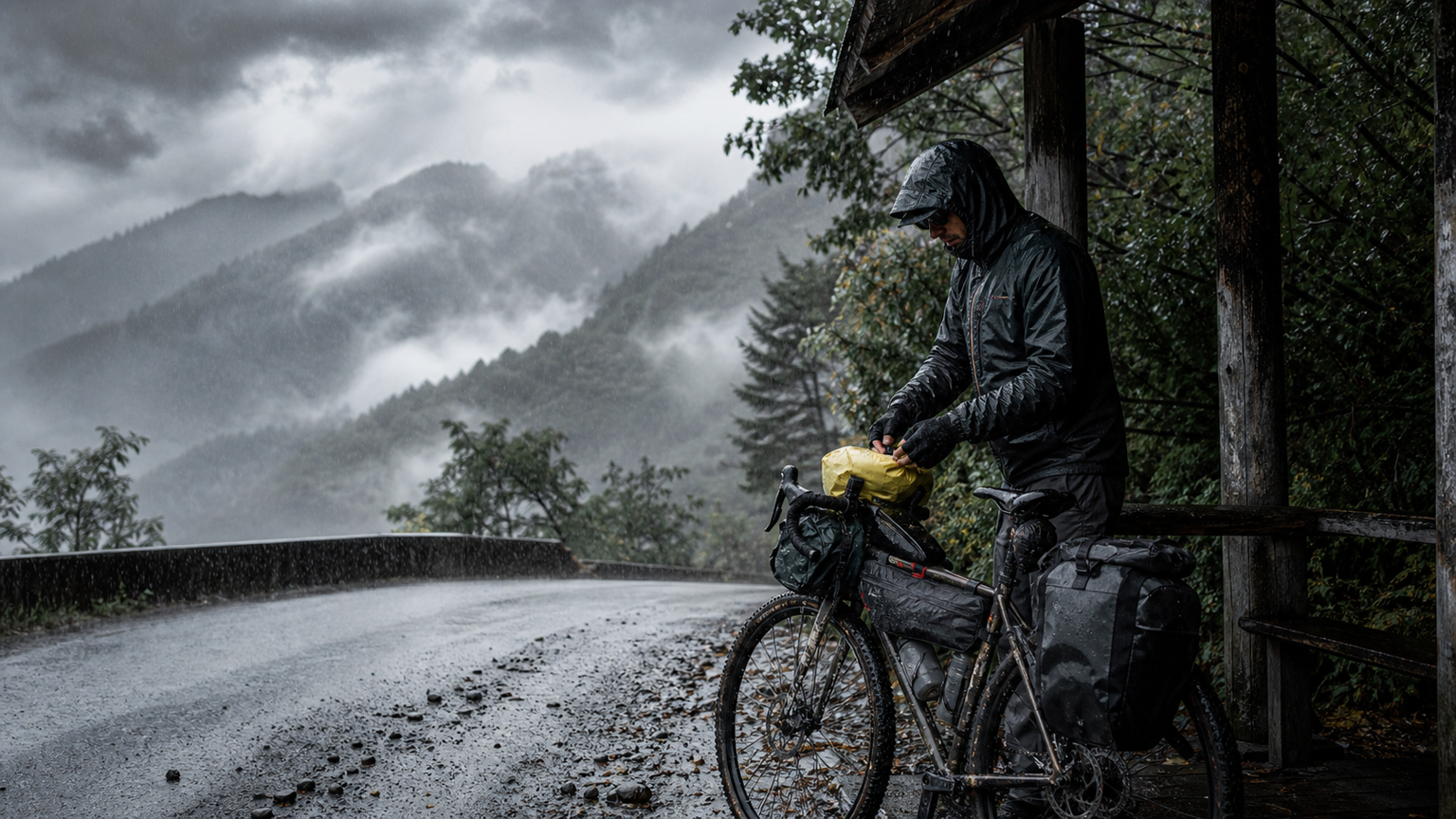
Climate Is the Biggest Variable in Bikepacking
Unlike touring, bikepacking doesn’t allow you to duck into a hotel at any moment—severe weather can force you to spend the night in the wilderness. When underprepared, it only takes 2–3 hours to go from discomfort to hypothermia. This article focuses on how to respond to three life-threatening weather scenarios.
Pre-Departure Climate Assessment
Start monitoring 3 days before departure:
- Central Weather Administration website: detailed mountain forecasts
- Windy.com: integrated wind direction, wind speed, and rainfall data
- Yr.no (Norwegian Meteorological Institute): high accuracy in mountainous areas
- Directorate General of Highways real-time traffic info: typhoon road closures
Red lines for cancelling a trip:
- Probability of rain > 70% and wind speed > Beaufort 7
- Low temperature < 5°C and humidity > 80%
- Typhoon warning (any level)
Scenario 1: Heavy Rain
Immediate Recognition
- Clouds thicken and darken rapidly
- Sudden drop in air pressure (felt as ear ringing or headache)
- Wind direction changes abruptly
- Abnormal animal behavior (birds flying low, cicadas going silent)
Immediate Response (within 10 minutes)
- Take shelter: under bridges, in dense forest, or in abandoned buildings
- Avoid hazardous terrain: ridgelines (lightning), riverbeds (flash floods), under large trees (lightning strikes and falling branches)
- Prioritize warmth: put on a down jacket before putting on the rain jacket
- Electronics: stow your phone and bike computer in a waterproof bag
Response to Prolonged Rain
- Can keep riding: wear a rain jacket, rain pants, and waterproof gloves
- Should stop: visibility < 50 m, standing water on the road > 10 cm deep, or lightning activity
Rain Jacket Systems
| Level | Waterproof Rating | Breathability | Weight | Best For |
|---|---|---|---|---|
| Disposable rain poncho | 5000mm | None | 50g | Emergencies |
| Lightweight rain jacket | 10000mm | 5000g/m² | 200g | Brief showers |
| Standard Gore-Tex | 20000mm | 15000g/m² | 350g | Prolonged rain |
| Pro Shell | 28000mm | 20000g/m² | 500g | Downpours |
Recommendation: Standard Gore-Tex strikes the best balance between weight and protection.
Post-Rain Care
- Change into dry clothing within 30 minutes after the rain stops
- Shoes and socks are critical for preventing hypothermia—make sure they are dry
- Check the inside of your bags for water ingress
- Re-lube the chain and derailleur immediately
Scenario 2: Strong Wind
Wind Force Levels
| Beaufort Scale | Wind Speed (km/h) | Riding Condition |
|---|---|---|
| Force 4 | 20-29 | Minor impact |
| Force 5 | 30-39 | Noticeable wind resistance |
| Force 6 | 40-50 | Speed cut in half |
| Force 7 | 51-61 | Difficult to ride |
| Force 8+ | 62+ | Should not ride |
Response to Wind Force 6 and Above
Crosswind:
- Lower your center of gravity (hands in the drops)
- Leave a 1-meter buffer in your riding line
- Dismount proactively before large vehicles pass
Headwind:
- Accept that your speed will be halved
- Shift to an easier gear ratio
- Shorten your daily distance and set up camp earlier
Tailwind:
- Feels comfortable but is dangerous on descents
- Reduce speed to avoid losing control
High-Risk Terrain
- Coastlines (eastern and western coasts)
- Mountain ridgelines (Wuling, Hehuan Mountain)
- Tunnel entrances (wind tunnel effect)
- Large bridges (Xibin Bridge, Guandu Bridge)
Emergency Response for Wind Force 7–8
- Dismount and walk your bike immediately
- Find shelter (buildings, forest, earth mounds)
- If strong wind persists for more than 2 hours, consider camping in place and waiting
- Use your bike frame to block the wind on the windward side of the tent
Scenario 3: Low Temperatures
Wind Chill Calculation
Wind chill = actual temperature - wind speed effect
| Actual Temperature | Wind 20km/h | Wind 40km/h |
|---|---|---|
| 10°C | 6°C | 3°C |
| 5°C | 0°C | -3°C |
| 0°C | -5°C | -10°C |
| -5°C | -12°C | -18°C |
Descending at 40km/h in a 5°C ambient temperature feels like -3°C.
Layering System
Base Layer (moisture-wicking):
- Merino wool base layer (150-200g)
- Do not wear pure cotton (it accelerates heat loss once soaked with sweat)
Mid Layer (insulation):
- Down jacket (300-500g, 800FP or higher)
- Synthetic jacket (alternative to down in wet conditions)
Outer Layer (windproof/waterproof):
- Gore-Tex rain jacket (350g)
- Windstopper shell for wind protection only (150g)
Accessories:
- Windproof gloves (50-100g)
- Neck gaiter (30-50g)
- Thermal cap (worn under helmet) 30g
- Waterproof shoe covers (80g)
Recognizing and Treating Hypothermia
Early Symptoms (sustained exposure below 10°C for 2 hours):
- Shivering all over
- Slowed reactions
- Numb fingers
Emergency Treatment:
- Stop riding immediately
- Get into a tent or shelter
- Change out of all wet clothing
- Get into your sleeping bag
- Drink warm fluids (hot water with sugar)
- Eat fatty foods (chocolate, nuts)
Severe Hypothermia (core temperature < 35°C):
- Shivering stops (a more dangerous sign)
- Confusion
- Call for help immediately via satellite phone (inReach SOS)
Emergency Gear for Sudden Weather
Always carry these (even when the forecast is clear):
- Emergency survival blanket: 50g
- Windproof matches or a fire starter: 30g
- High-calorie emergency food: 200g (600 kcal)
- Whistle (for signaling): 5g
Decision to Cancel: Typhoons and Torrential Rain
Taiwan’s typhoon season runs from June to October. Bikepacking plans should account for:
- Sea typhoon warning issued: cancel the trip
- Land warning issued: never depart
- Typhoon hits during the trip: descend to lowland immediately
Sunk costs are unrecoverable: hotel bookings and non-refundable leave are losses, but your life matters more.
Special Mountain Climate Conditions
Taiwan’s mountain climate characteristics:
- Afternoon thunderstorms: nearly daily from May to October (start before 8 a.m. and complete climbs before 3 p.m.)
- Mountain breeze vs. valley breeze: valley breeze during the day (upward), mountain breeze at night (downward)
- Cloud and fog layer: persistent fog at elevations of 1500–2500m
Rules of Thumb
Climate principles from experienced bikepackers:
- Always carry warmer clothing than the forecast suggests
- Always keep an extra set of dry clothes in a waterproof bag
- Start early, finish early (avoid afternoon thunderstorms)
- Never rush through bad weather (your schedule is for you, not for nature)
- Cancelling a trip is cheaper than a hospital bill
Related Reading
- Weather Management for Long-Distance Riding: Real-Time Adjustments for Sudden Rain, Strong Wind, and Heat
- A Complete Guide to Weather Adaptation in Cycling Events: On-the-Spot Strategies from Scorching Sun to Downpours
- Mental Preparation for Extreme Weather Riding: Judgment Before Typhoons and After Heavy Rain
- Bikepacking Mental Preparation: Coping with Loneliness on the Road
單車 一日北高 ( 雙城 ) 肥宅雙人瘋狂行 紀錄片 REACTO
10 年前
#公路車 #Fitting 靠人工智慧APP 幫你調整單車
6 年前
下雨天就是要改車 #ceramicspeed #bike
1 年前
大武山後門26%歡樂陡坡!JJSC南台灣單車行Day2 / 被颱風追著跑 / 公路車 / CT Yeh
2 年前
一日北高前的高裝檢 | 北高 360 | 挑戰11小時的裝備 | 一日雙塔 | 補給
6 年前
單車賞雪 裝備準備及注意事項分享 | 公路車
5 年前
雨戰! 西進武嶺員工旅遊 加料 各路段大數據分析 | 同事端出5公斤的公路車來挑戰!? EP1
4 年前
5 ℃ 櫻花之旅 / 75萬單車直接雨中洗車.../ 平菁街 / 北迴歸小隊 / 公路車 / CT Yeh
5 個月前