Sleep Data and Training Planning: A Scientific Interpretation of Wearable Sleep Scores and Their Application in Training Decisions
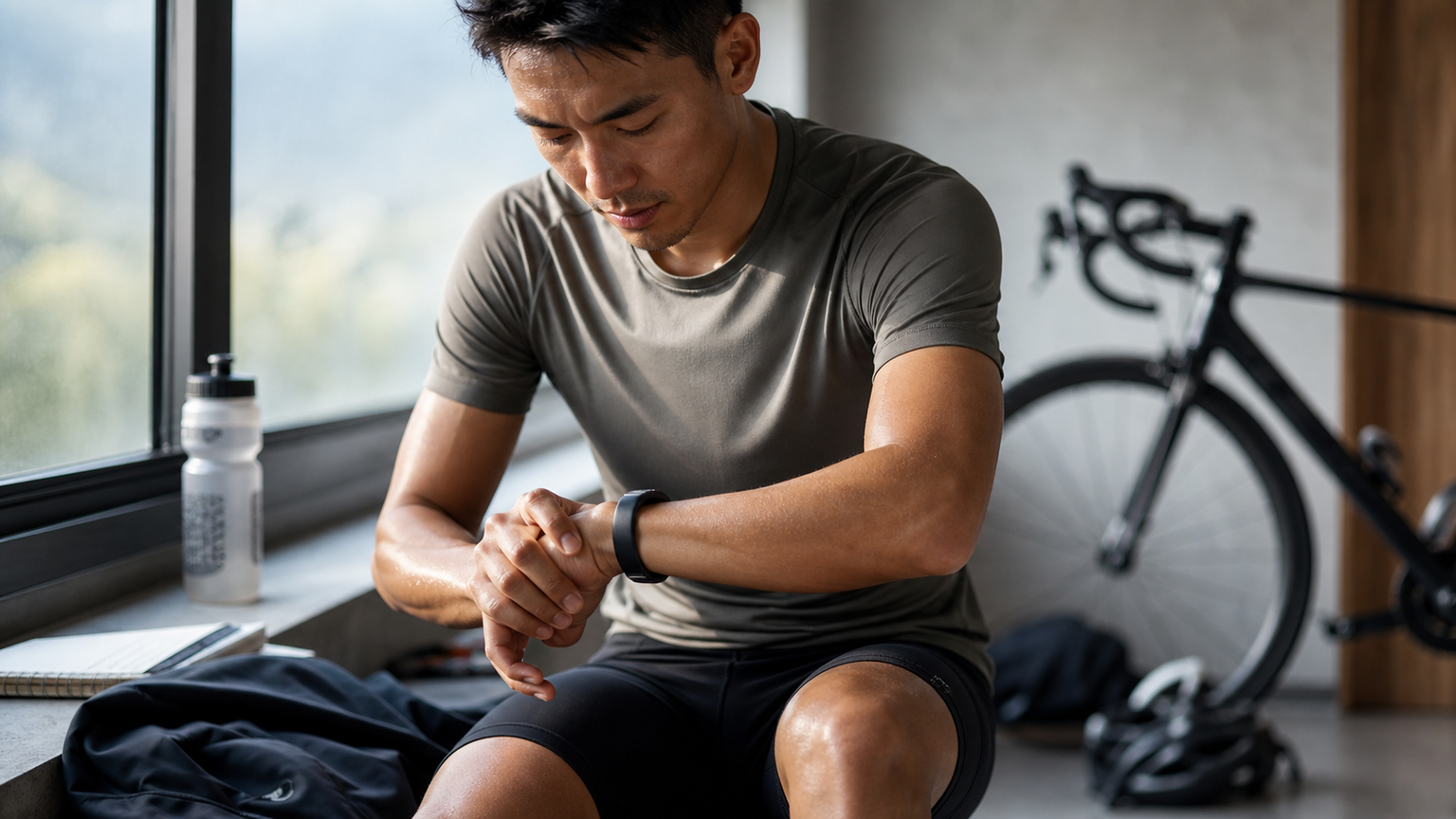
The Scientific Link Between Sleep and Athletic Performance
Sleep is when all training adaptations occur—the peak secretion of growth hormone happens during deep sleep (slow-wave sleep), and muscle repair, glycogen replenishment, and nervous system recovery are all completed during sleep. For endurance athletes, 7–9 hours of high-quality sleep per night is not just the foundation of recovery; it directly impacts the quality of the next day’s training and performance.
The Technical Principles Behind Wearable Sleep Tracking
Smart wearables on the market (Garmin, Fitbit, Apple Watch, WHOOP) primarily track sleep through the following sensors:
- Accelerometer (Actigraphy): Detects wrist movement to estimate sleep/wake states
- Optical Heart Rate Sensor (PPG): Monitors heart rate and HRV to estimate sleep stages
- SpO2 (Blood Oxygen): Detects indirect signs of sleep apnea
Criteria for determining each sleep stage:
| Sleep Stage | Wearable Detection Basis | Accuracy |
|---|---|---|
| Awake | Increased movement + elevated heart rate | Fairly accurate |
| Light Sleep (N1/N2) | Little movement, stable heart rate | Moderate |
| Deep Sleep (N3 Slow-Wave) | Very little movement, low heart rate | Moderate |
| REM (Rapid Eye Movement) | High heart rate variability, little movement | Less accurate |
Compared to polysomnography (PSG, the hospital gold standard), wearables achieve roughly 70–80% accuracy in sleep stage detection, with greater error in identifying deep sleep and REM.
Components of the Garmin Sleep Score
Garmin’s Sleep Score (0–100) combines the following factors:
- Sleep Duration (highest weighting): 7–9 hours is the ideal target
- Sleep Quality: Proportion of deep sleep and REM
- Number of Awakenings: The fewer, the better
- Pre-Sleep Stress: HRV status before falling asleep
- Restoration: Overall HRV quality during the sleep period
Reference recommendations for training based on Sleep Score:
| Sleep Score | Status | Training Recommendation |
|---|---|---|
| 80–100 | Excellent | High-intensity sessions are fine |
| 60–79 | Good | Moderate-intensity training, can fine-tune based on how you feel |
| 40–59 | Fair | Reduce intensity, focus mainly on aerobic base |
| 0–39 | Poor | Recommend rest or very light active recovery |
Applying WHOOP Sleep Data
The WHOOP band is especially popular among athletes because its “Recovery Score” integrates sleep efficiency, HRV, resting heart rate, and respiratory rate:
- Recovery Score >67% (green): High-intensity training can be performed
- 33–66% (yellow): Moderate-intensity training, keep assessing
- <33% (red): Light recovery activities
WHOOP’s advantage lies in 24/7 wear (including during sleep), providing data continuity that is superior to watches worn only at night.
Factors That Interfere with Wearable Sleep Scores
Understanding the following factors helps interpret the data correctly:
- Alcohol consumption: Suppresses REM sleep; the score remains low even after sleeping a long time
- Before a high-intensity session the next day: Heart rate naturally runs higher, which may be misjudged as poor sleep quality
- Side-sleeping habits: Pressure on the wrist may affect PPG optical readings
- Caffeine (within 12 hours): Delays falling asleep and shortens deep sleep duration
- Excessively high ambient temperature: Increases nighttime awakenings and reduces deep sleep quality
A Practical Framework for Integrating Sleep Data into Training Decisions
It is recommended to use “dual-indicator cross-validation”:
- Check the sleep score first thing in the morning
- Then measure HRV (or check Garmin’s HRV Status)
- When the two align, adjust training intensity according to the indicators
- When the two conflict, let subjective bodily sensation be the final arbiter
Exception: If an important race is imminent (within 48 hours), even with a low sleep score, you should still perform the planned easy warm-up rather than resting completely because of a poor number.
Practical Tips for Athletes to Improve Sleep Quality
- Allow at least 3 hours between finishing training and going to bed (to avoid elevated core body temperature)
- On high-intensity training days, schedule 10–15 minutes of cool-down in the evening (foam rolling + light stretching)
- A fixed wake-up time matters more than a fixed bedtime (stabilizes the circadian rhythm)
- During race week, avoid anxiety-induced insomnia from excessive tapering (maintain light training to preserve rhythm)
Conclusion
A wearable’s sleep score is not a perfect scientific instrument, but it is a convenient and sufficiently practical daily reference tool. Long-term accumulated sleep data, combined with HRV trends and training load records, can help you discover “which lifestyle habits most affect your training recovery”—this personalized insight is something no generic advice can replace.
Related Reading
- Sleep Tracking Device Comparison: The Sleep Data Cyclists Should Care About Most
- The Science of Wearables: How Accurate Is the Data on Your Wrist, Really?
- How Much Can You Trust Sleep Scores and Recovery Indexes: The Principles and Limitations of Wearable AI Training Recommendations
- Sleep Monitoring for Running: How Sleep Quality Data Guides Training Load
西進武嶺 免費訓練分析服務 Intervals | 練不夠還是練過頭?你哪一種類型選手?AI模型告訴你! | 備戰神器 | 公路車 訓練 | CT Yeh
4 年前
Apple Watch 3 值得 買嗎!? 實測 單車車錶 遙控相機 Zwift 心律連線 Apple Pay 全聯買菜 GoPro 遙控
8 年前
2026 車錶排行榜!誰是最多車友正在使用?練家子最愛哪款?🏆 (2萬名車友數據) / 公路車 / CT Yeh
5 個月前
2025 自行車錶排行榜 兩萬車友大數據 / Garmin Bryton 排名會大洗牌嗎? / 全新的碼表前身分析 /公路車 / CT Yeh
1 年前
Garmin Edge 1050 旗艦車錶 全台首測!/ 環法冠軍指定 / 對比Edge 1040改進哪些? / 公路車 / CT Yeh
2 年前
全台首發神車錶! iGPSPORT iGS630 兩趟一日北高的續航! 超強導航、功率訓練、超人性APP! Garmin & Bryton 有對手了嗎? | 公路車 |CT Yeh
3 年前
大家都在開箱的...單車用藍芽對講耳機真的有幫助嗎? SENA BiKom 20 長距離旅遊 & 海鷗繞圈賽 實際體驗心得 / 公路車 / CT Yeh
9 個月前
#公路車 #Fitting 靠人工智慧APP 幫你調整單車
6 年前