Climbing Sprints in Cycling: Power Differences Between Seated and Standing Explosiveness, and Training Strategies
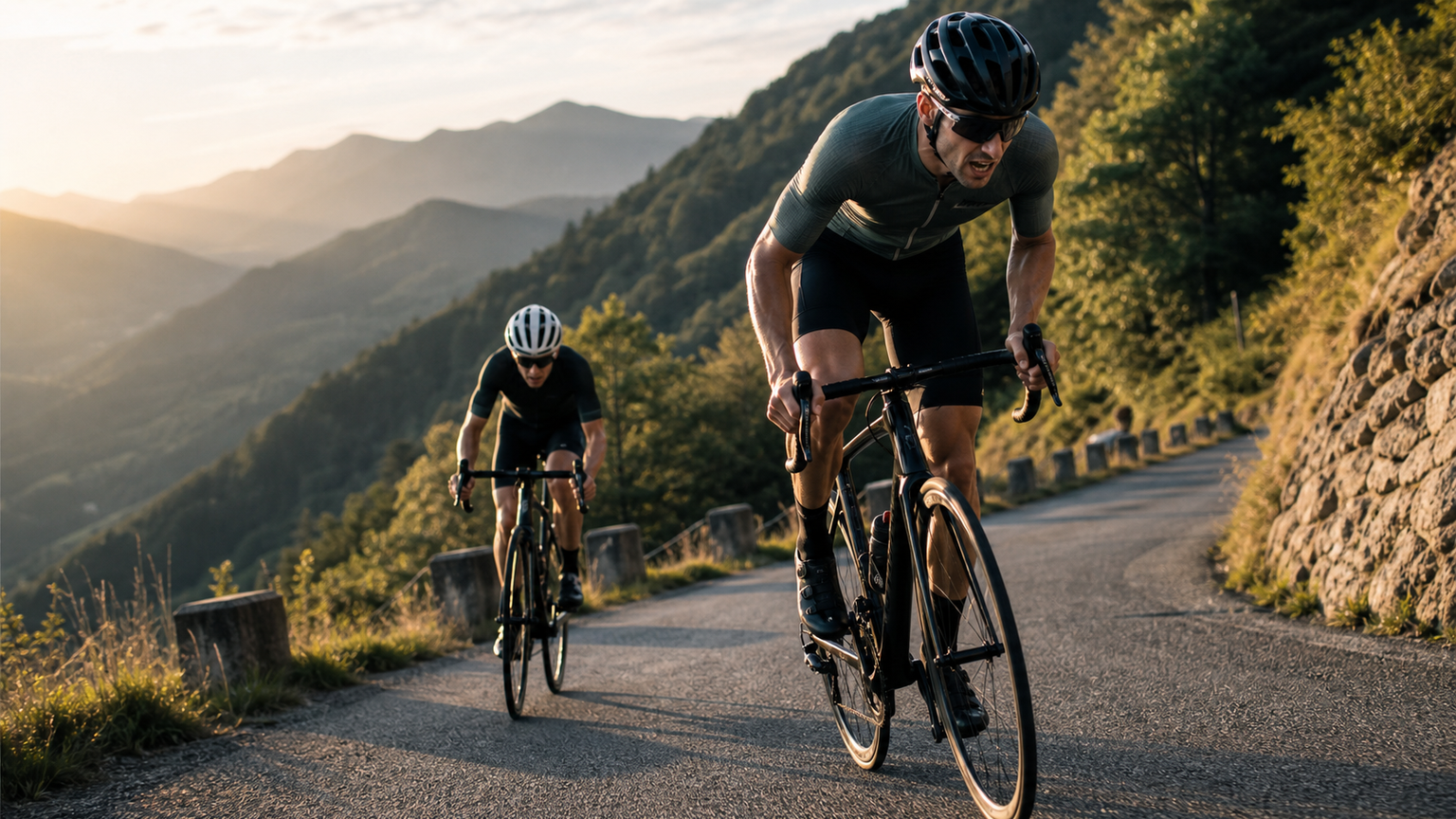
Two Strategies for Sprinting on Climbs
When facing a sprint on a climbing section of a bike ride, riders face an immediate choice: continue riding seated (Seated Climbing) or get out of the saddle and pedal standing (Out-of-Saddle Climbing)?
On the surface, this choice may seem like a matter of habit or style, but it actually involves complex biomechanical trade-offs:
- Seated riding: More energy-efficient, allows longer endurance, and provides better heart rate control
- Standing riding: Can produce higher peak power output over short durations, suitable for sudden increases in gradient
Understanding the power differences between the two is essential for making the most advantageous tactical decisions during a race.
Power Measurement Data: Seated vs. Standing Comparison
Based on multiple studies using power meters and training data from professional teams, here is a comparison of power characteristics between the two positions across different gradients:
| Condition | Seated Peak Power | Standing Peak Power | Standing Advantage |
|---|---|---|---|
| 5% gradient, 30-second sprint | 400W | 450W | +12.5% |
| 8% gradient, 20-second sprint | 380W | 430W | +13.2% |
| 10% gradient, 15-second sprint | 350W | 420W | +20.0% |
| Flat road, 15-second sprint | 650W | 680W | +4.6% |
Pattern observed: The steeper the gradient, the more pronounced the power advantage of standing over seated. This is because on steep climbs, standing allows riders to use their body weight to press the pedals directly downward, while seated riders must fight against a greater tendency to slide backward.
However, standing also comes with significant costs: heart rate averages 10–15 bpm higher, and power declines at a faster rate. Research shows that the maximum sustainable duration for standing riding at 90% of exhaustion intensity is approximately 15–25 seconds, whereas seated riding can be maintained for 45–90 seconds.
Recommended Strategies for Different Rider Profiles
Explosive riders (high peak power / low lactate tolerance):
- Choose standing on climb sprints to deliver maximum power in the shortest time
- Return to seated immediately after the sprint to let heart rate come down
- Best suited for: short, steep climbs (gradient > 8%, length < 400 meters)
Endurance riders (high threshold / low explosiveness):
- Stay seated and grind down opponents with a steady, high power output
- Use standing only in the final 200 meters before the finish line
- Best suited for: long, gradual climbs (gradient 3–7%, length > 1 kilometer)
Technically versatile riders (balanced attributes):
- Switch flexibly: stay seated on the early part of the climb, “stand and press” in the middle, then drop back down, repeating this cycle
- This “yo-yo strategy” can disrupt the opponent’s rhythm while keeping your own cardiovascular load more evenly distributed
Seated Explosive Power Training Plan
Goal: Improve maximum pedaling torque and neural activation efficiency in the seated position
Training method: Big Gear Seated
- Use a gear combination 2–3 chainrings larger than usual
- Reduce cadence to 50–60 rpm
- Accelerate explosively from a standstill or low speed, maintaining for 8–12 seconds
- Sets: 6 × 10 seconds, with 3 minutes recovery between sets
- Focus: Feel the power of “pressing each pedal through the floor”
Training method: Seated Start
- Start from a near standstill, pedal at full effort while seated
- Goal: reach maximum cadence within 5 seconds
- Sets: 8 × 8 seconds, with 2 minutes recovery
Standing Explosive Power Training Plan
Goal: Strengthen upper and lower body coordination and explosive efficiency during standing pedaling
Training method: Standing Attack
- Transition from seated to standing and accelerate instantly
- Transition movement: shift hips backward, rock the bike slightly side to side (using body weight)
- Maintain full effort standing for 10–15 seconds, then drop back to seated
- Sets: 6, with 3 minutes recovery
Standing technique key points:
- Grip the drops firmly, with arms participating in pulling side to side
- Pedaling rhythm: when pressing down with the right foot, simultaneously pull back with the right hand (contralateral coordination)
- Keep your gaze forward, head stable without bobbing up and down
Recommendations for Integrating Climbing Training
Weekly training plan example:
| Day | Content |
|---|---|
| Tuesday | Seated explosive training: big gear 6 × 10 seconds |
| Thursday | Standing climb training: 6 standing attacks on a real climb |
| Saturday | Incorporate “random tactical switching on climbs” tests into a long ride |
Conclusion
Seated and standing sprints have no absolute superiority over one another; rather, they are tactical tools suited to different scenarios. By developing both abilities through targeted training and learning to switch flexibly based on gradient, distance, and your own fatigue level, you can become a more complete cyclist. The next time you hit a climb, ask yourself: “Should I sit or stand right now?” The answer depends on every burst of effort you’ve trained.
Stages功率計 和 智騎 X7 Pro 訓練檯同時騎兩個 Rouvy 角色會一起進終點嗎?最後來點數據分析 | 公路車
5 年前
如果Pogačar騎西進武嶺可以多快?會破2嗎?各種情況深度推估探討 / 公路車 / CT Yeh
2 年前
全台首發!邁金P715踏板功率計!市場價格撼動者再出招 / 功率對比實測 / FAVERO ASSIOMA 可參考! / 公路車 / CT Yeh
1 年前
ThinkRider 智騎 XXPRO 訓練台,高階機種功能 只要 1/3價格!? 實測功率對比、噪音實測 / 公路車 / CT Yeh
1 年前
CT 喇低賽) 武嶺牽車 才是王道 西進牽車四小時內秘訣 攝手位置 如何判斷 防抽筋小秘訣
7 年前
多機位拍片神器 DJI Action 2 拍出速度張力感 | 類空拍機視角 4陣列麥克風超強降風噪 實測! | 公路車 | CT Yeh
3 年前
單車 一日北高 ( 雙城 ) 肥宅雙人瘋狂行 紀錄片 REACTO
10 年前
訓練台體驗) 2019台北自行車展 三大家 訓練台體驗 Tacx Neo Flux 2 Xepdo Apx Wahoo Kickr
7 年前