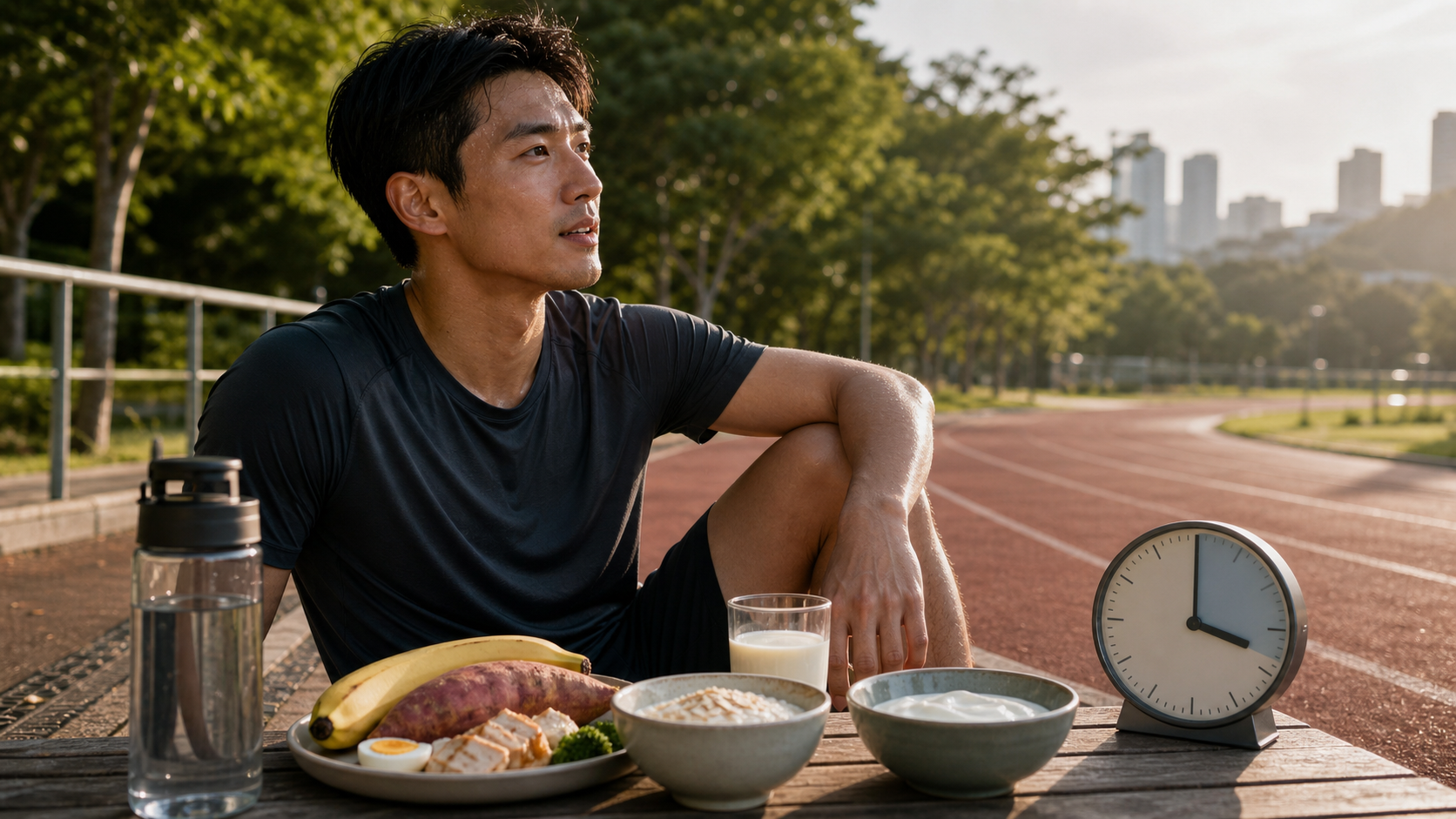
The Golden 30 Minutes After a Run: The Best Timing for Protein and Carbohydrates
Introduction
You’ve just finished a hard workout, sweating at the finish line, and all you want to do is shower and sit down to rest. But sports science tells us that the next 30 minutes are the critical window that determines whether this training session can be fully converted into improved fitness.
This concept of the “Golden 30 Minutes” (Anabolic Window) originates from in-depth research on post-exercise metabolic responses. During this period, muscle cells absorb glucose at 3 to 5 times the normal rate, and protein synthesis is at its peak. Proper nutritional intake during this time can significantly accelerate recovery and enhance training adaptation.
What Happens to Your Body After Running?
The Muscles’ “Hunger State”
After long-distance or high-intensity running, glycogen in the muscles—the primary fuel reserve—is heavily depleted. Muscle cells secrete a signaling protein that opens glucose transporter proteins (GLUT4), allowing blood sugar to rapidly enter cells to replenish glycogen. This mechanism is most active 30 to 45 minutes after exercise.
The Protein Synthesis Switch
After exercise, insulin-like growth factor (IGF-1) and growth hormone rise simultaneously, and with the activation of the mTOR signaling pathway in muscles, the body enters “accelerated protein synthesis mode.” If an adequate supply of amino acids—particularly leucine—is available at this time, muscle repair efficiency can be up to 40% higher than in a fasted state.
The Golden Ratio: Pairing Carbohydrates and Protein
Research shows that the optimal carbohydrate-to-protein ratio for a post-exercise recovery meal is 3:1 to 4:1. In other words, if you consume 20 grams of protein, you should pair it with 60 to 80 grams of carbohydrates.
| Run Type | Recommended Protein | Recommended Carbs | Food Examples |
|---|---|---|---|
| Easy run (<60 min) | 15–20g | 45–60g | Banana + Greek yogurt |
| Medium-distance run (60–90 min) | 20–25g | 60–80g | Sweet potato + chicken breast |
| Long-distance run (>90 min) | 25–30g | 80–100g | Rice + tofu + eggs |
| Interval/speed training | 20–25g | 60–75g | Milk + oatmeal + honey |
Best Food Choices
Fast-Absorbing Carbohydrate Sources
- Banana: Natural sugars, potassium replenishment, easy to digest—the most convenient choice after a run
- White rice/white bread: High glycemic index, quickly replenishes glycogen
- Sports drinks: When running over 90 minutes, liquid carbs are absorbed faster
- Sweet potato: Medium glycemic index, rich in vitamin C and potassium, suitable as a recovery meal staple
High-Quality Protein Sources
- Whey protein: Fastest absorption, rich in leucine, the top choice for protein supplementation
- Chicken breast/fish: Complete amino acid profile, low in fat, doesn’t slow digestion
- Greek yogurt: Contains both protein and carbs, easy to carry, and provides probiotics
- Eggs: Bioavailability as high as 93%, among the highest-quality proteins in whole foods
- Tofu/edamame: Excellent options for plant-based runners; edamame’s leucine content ranks among the top of plant proteins
Hydration and Electrolyte Replenishment
Protein and carbs are only part of recovery. After training in Taiwan’s summer heat, heavy sweating causes losses of sodium, potassium, and magnesium, making electrolyte replenishment equally important:
- Water: Replenish at 1.5 times the amount of body weight lost—i.e., 1.5 liters of water for every 1 kg lost
- Sodium: From sports drinks or salt in food; supplement moderately after long runs
- Potassium: Bananas, sweet potatoes, legumes
- Magnesium: Nuts, dark leafy greens; magnesium deficiency can affect muscle relaxation and sleep quality
When Do You Not Need to Be So Strict?
Not every run requires eating within 30 minutes. The following situations allow for more flexibility:
- Easy runs under 40 minutes: Intensity is insufficient to significantly deplete glycogen; a regular meal is fine
- Afternoon training with dinner within 2 hours: If your main meal can provide timely replenishment, no separate recovery meal is needed
- Weight management phase: If you have weight-loss goals, you can reduce carbs while ensuring adequate protein intake
Practical Tips
Make the Golden 30 Minutes attainable:
- Prepare in advance: Have your recovery meal packed in your bag before training, ready to consume immediately upon finishing
- Liquids first: Your appetite is often poor right after a run; a protein shake + banana is easier to consume than solid food
- Avoid high-fat foods: Fat slows gastric emptying, delaying the absorption of carbs and protein
- Don’t just drink water: Many runners only drink water after a run, missing the optimal window for muscle repair
- Great local options in Taiwan: Soy milk + tea egg + banana is a perfect post-run recovery combo, available at convenience stores nationwide
Conclusion
The concept of the Golden 30 Minutes isn’t about gorging yourself immediately after exercise—it’s about providing the right nutrients at the right time to maximize the return on your training investment. Develop the habit of replenishing protein and carbs right after your runs, and within a few months, you’ll notice faster recovery, easier next workouts, and visibly quicker fitness gains.
Remember: training is only the stimulus; recovery is what makes you stronger.
Related Reading
- Recovery Diet After Road Running: Protein-to-Carb Ratio in the 30-Minute Golden Window
- Recovery Diet After Road Running: The Scientific Basis of the 30-Minute Golden Window
- Post-Run Recovery Diet: Protein and Carbohydrate Replenishment in the Golden 30 Minutes
- The Nutritional Recovery Window After Running: The Golden Ratio of Carbohydrates to Protein
CT暗黑廚房) 車友必備 宇宙無敵鮮蚵湯 幫助訓練恢復 天然食補 好市多 超肥鮮蚵 破PR
7 年前
西進武嶺 免費訓練分析服務 Intervals | 練不夠還是練過頭?你哪一種類型選手?AI模型告訴你! | 備戰神器 | 公路車 訓練 | CT Yeh
4 年前
實景訓練台) 彰化經典百K 高強度喵團 90分鐘 跟著一起練功 2019 Indoor workout Changhua Classic 100 Taiwan
7 年前
Live) 備戰2019彰化經典百K 賽前攻略 (已完賽請看新影片
7 年前
西進武嶺 自製新版AI配速表產生器 x 賽前攻略 抱佛腳! 沒有功率計也可以產生配速表嗎?有什麼其他眉角賽前要注意的呢? | 西進武嶺 / 東進武嶺 KOM 攻略 | 公路車 | CT Yeh
4 年前
FTL 與 SYB 車隊專訪 西進武嶺 實用攻略分享! 2小時 如何練?!你不知道的眉角!新手準備武嶺必看 EP1 | 實力派女車友 | 精華版 | 公路車 | CTYeh
4 年前
摔車後補裝備: 好市多新款單車安全帽& Specialized Romin 北高整路屁股都不痛的坐墊 | 一千元居然有MIPS | CT Yeh | 公路車
4 年前
#公路車 #Fitting 靠人工智慧APP 幫你調整單車
6 年前