Cold Water Immersion Recovery: Study on Duration and Anti-Inflammatory Benefits of 10°C Cold Baths
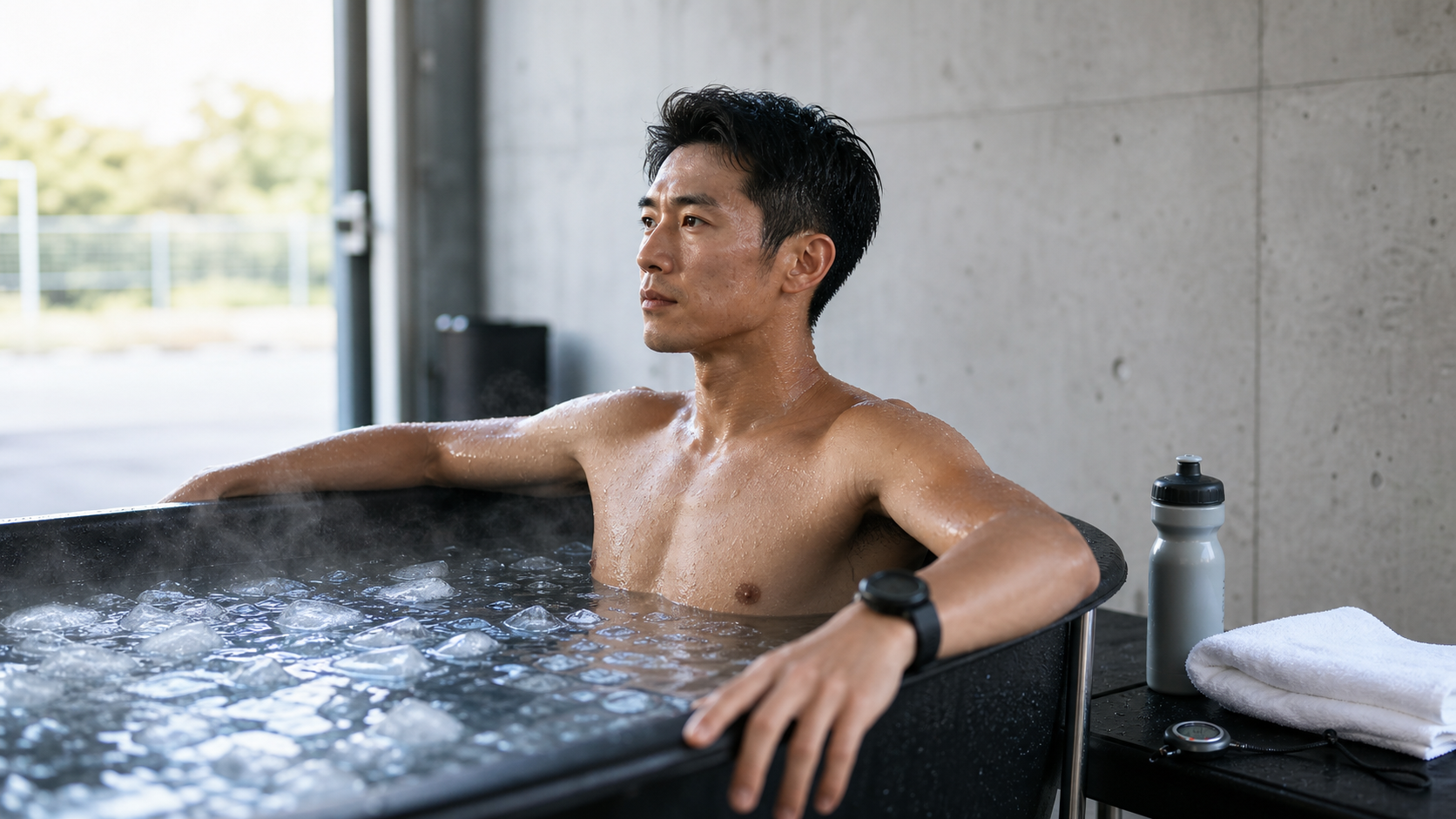
Cold Water Immersion Recovery: A Study on the Duration and Anti-Inflammatory Benefits of 10°C Cold Baths
Introduction
If you’ve ever seen large tubs filled with ice near a marathon finish line, that’s Cold Water Immersion (CWI) in action in professional sports. This recovery method, which can look somewhat “torturous,” has accumulated a substantial body of scientific research over the past 20 years, becoming a key component of elite runners’ recovery toolkit.
But does cold water immersion really work? How cold is cold enough? How long should you soak? Are there any side effects? Let’s dive into these questions.
The Physiological Mechanisms of Cold Water Immersion
Vasoconstriction and Reperfusion Effects
Upon contact with cold water, blood vessels in the skin and muscles rapidly constrict (vasoconstriction), pushing blood toward the body’s core. After leaving the cold water, the vessels dilate significantly (vasodilation), and a large influx of fresh, oxygen-rich blood rushes into the muscle tissue, creating a “pumping effect” that helps clear metabolic waste and inflammatory mediators.
Lowering Tissue Temperature to Suppress Inflammation
After the micro-damage to muscles caused by running, local tissue temperature rises, promoting the activity of inflammatory factors. Cold water can significantly lower tissue temperature (studies show that soaking in 10°C water for 15 minutes can reduce deep muscle temperature by 3 to 4°C), thereby suppressing the inflammatory response and reducing swelling and pain.
Neural Sensory Numbing Effect
The stimulation of cold water on nerve endings can temporarily reduce pain sensitivity, which is the primary mechanism behind the immediate pain-relieving effect of cold water immersion. Although this effect is short-lived, it significantly aids subjective recovery perception after high-intensity training.
Key Findings from Scientific Research
Multiple randomized controlled trials (RCTs) show that cold water immersion provides statistically significant benefits in the following areas:
- Delayed Onset Muscle Soreness (DOMS): The cold water immersion group reported significantly lower pain scores at 24 and 48 hours post-exercise compared to the control group
- Rate of Strength Recovery: Time for muscle strength to return to baseline was shortened by approximately 20 to 30%
- Subjective Fatigue: Self-rated fatigue levels dropped significantly after cold water immersion
- Inflammatory Markers: Smaller increases in creatine kinase (CK) and C-reactive protein (CRP) levels
Research Recommendations on Optimal Temperature and Duration
| Water Temperature | Immersion Duration | Suitable Scenario | Effectiveness Assessment |
|---|---|---|---|
| 10–12°C | 10–15 minutes | After marathon/long-distance runs | Optimal benefits, tolerable |
| 13–15°C | 15–20 minutes | After general training | Good benefits, suitable for beginners |
| 8–10°C | 8–12 minutes | Race recovery | High benefits but uncomfortable |
| <8°C | Not recommended to exceed 5 minutes | Use with caution | Limited additional benefits, increased risk |
The most widely supported parameters in research are: 10 to 12°C for 10 to 15 minutes, a combination that achieves the best balance between effectiveness and tolerability.
Precautions and Contraindications
Conditions Where Cold Water Immersion Is Not Suitable
- Individuals with cardiovascular disease: The sudden drop in water temperature may trigger arrhythmias or severe blood pressure fluctuations
- Raynaud’s syndrome: Excessive sensitivity to cold stimuli may cause vascular spasms
- Immediately after injury (acute phase): The management of certain acute injuries differs from chronic training fatigue; consult a physician
- During hypertrophy-focused training periods: If the training goal is muscle gain, cold water immersion may inhibit the mTOR signaling pathway, reducing protein synthesis efficiency
Key Controversy: Cold Water Immersion vs. Long-Term Muscular Adaptation
Recent research has raised a noteworthy point: while cold water immersion can alleviate short-term discomfort, it may also suppress training-induced adaptive responses.
A 2015 study published in the Journal of Physiology found that runners who consistently used cold water immersion for recovery showed slightly inferior results in muscle hypertrophy and strength gains compared to the control group. Therefore, it is recommended to use cold water immersion after races and key training sessions, but to use it cautiously during training cycles focused on building fitness.
Practical Recommendations for Runners in Taiwan
How to do cold water immersion at home:
- Tools needed: Bathtub (or large tub) + adequate ice + water thermometer
- Steps: Fill with cold water first, add ice to adjust to 10 to 12°C, let your legs acclimate before slowly sitting in
- Immersion range: Legs up to the waist is sufficient; the heart area does not need to be submerged
- Time monitoring: Set a timer and get out immediately after 10 to 15 minutes
- After getting out: Dry off with a towel, move around lightly to allow blood vessels to re-dilate, and do not immediately take a hot shower (the contrast is too extreme)
- Alternative: If you don’t have ice, cold tap water in Taiwan (approximately 18 to 20°C) still provides some benefit; you can extend the immersion time to 20 minutes
Conclusion
Cold water immersion is not a panacea, but when used appropriately, it is a recovery tool backed by scientific evidence. For runners in Taiwan, cold water immersion after summer training not only accelerates recovery, but the cooling sensation itself is also a psychological reward.
If you’ve never tried it, consider starting after your next long-distance run—soak for 10 minutes and see how your body responds. Many runners report that once it becomes a habit, cold water immersion turns into the post-training ritual they look forward to the most.
Related Reading
- Post-Run Ice Bath vs. Hot Bath: Which Recovery Strategy Suits Your Training Cycle?
- Hot and Cold Therapy After Swimming: Comparing the Recovery Benefits of Ice Baths and Hot Baths
- Cold Water Immersion vs. Ice Bath: Key Differences in Temperature and Duration
- Contrast Therapy: Applications of Cold and Hot Baths in Sports Recovery
2016/05/13 單車 冷水坑下滑
10 年前
CT暗黑廚房) 車友必備 宇宙無敵鮮蚵湯 幫助訓練恢復 天然食補 好市多 超肥鮮蚵 破PR
7 年前
水金九不厭五分 10度寒流冷到不願停!feat. 卡卡 / 公路車 / CT Yeh
6 個月前
西進武嶺 免費訓練分析服務 Intervals | 練不夠還是練過頭?你哪一種類型選手?AI模型告訴你! | 備戰神器 | 公路車 訓練 | CT Yeh
4 年前
[防寒衣體驗] 鐵人魂 三鐵 防寒衣試穿會 於松運 深水游泳池 鯨魚池
8 年前
洗單車神器 吹水機! 實際洗車用用看 暴力洗鍊條大法 | 公路車 | CT Yeh
4 年前
摔車後補裝備: 好市多新款單車安全帽& Specialized Romin 北高整路屁股都不痛的坐墊 | 一千元居然有MIPS | CT Yeh | 公路車
4 年前
GoPro Hero 10 畫質好但 他是個吃電怪物 過熱只是小CASE 單車錄影實測 ! 耗電 災情 過熱實測 購買前請三思 OSMO Action 2了 !? | CT Yeh
4 年前