Introduction
The ITU World Triathlon Series (now renamed the World Triathlon Championship Series, WTCS) represents the fastest-paced and most spectator-friendly format in triathlon. The Olympic-standard distance of a 0.75 km swim, 40 km bike, and 10 km run compresses race time to roughly 1 hour 45 minutes to 2 hours, where tactical decisions in every segment can directly impact the final ranking.
WTS Race Format Structure
The World Triathlon Series is held in multiple cities around the globe each year, with athletes competing for points to crown the annual world champion. Unlike long-distance events, the WTS features the following characteristics:
| Feature | Description |
|---|---|
| Drafting legal | Drafting is permitted on the bike leg, making pack tactics crucial |
| High-intensity swim leg | The gap between front and back is typically within 1–3 minutes at the end of the swim |
| Run leg decides the outcome | The final 10 km determines nearly all final placings |
| Mixed relay | Some rounds include a mixed relay event, adding strategic complexity |
Pack Tactics with Legal Drafting
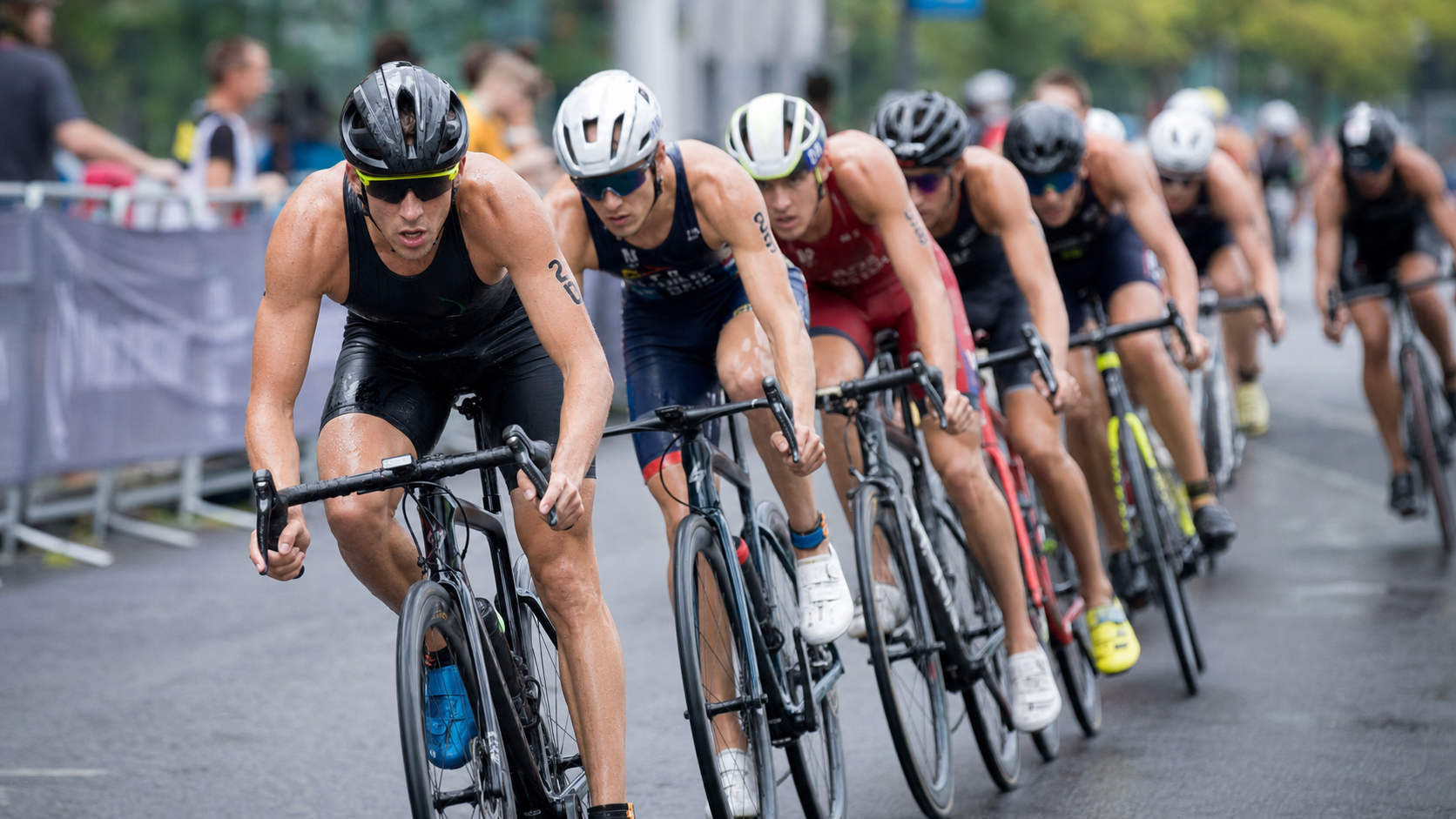
The most unique rule in the WTS is that drafting is allowed on the bike leg—that is, following behind other athletes to reduce wind resistance. This makes the WTS bike leg more akin to pack strategy in road cycling than to an individual time trial.
Elite athletes’ bike leg strategies include:
- Maintaining pack position: Staying in the front pack to avoid wasting extra energy on chasing
- Key attack timing: Creating speed differentials on climbs or corners to try to shrink the pack size
- Saving energy for the run: Under the protection of the pack, elite athletes can preserve more energy for the final run leg than long-distance athletes
- Transition 2 (T2) sprint: In the WTS, transition time differences can reach 15–30 seconds, making it a key competitive battleground
Tactical Style Analysis of Top Athletes
Taking representative male WTS athletes in recent years as examples:
- Kristian Blummenfelt (Norway): Known for a powerful aerobic base, he typically launches decisive attacks on the run leg, with astonishing speed over the final 2–3 km
- Alex Yee (Great Britain): An excellent swimmer who excels at securing a front-pack position after the transition, with extremely fast run leg speed (can break 29 minutes for 10 km)
- Hayden Wilde (New Zealand): An aggressive racing style, often attempting to break away from the pack on the bike leg
On the women’s side:
- Flora Duffy (Bermuda): An all-rounder with top-tier swimming and cycling, equally threatening on the run leg
- Georgia Taylor-Brown (Great Britain): The run is her biggest weapon, typically completing comebacks in the final 3–5 km
Physical Demands and Training Characteristics
WTS elite athletes differ significantly from long-distance triathletes in training:
- Higher proportion of high-intensity interval training: The WTS demands output near or even above the lactate threshold
- Greater emphasis on speed in the swim leg: A 750 m all-out effort requires extremely high anaerobic capacity
- Run leg speed requirements: Elite men’s 10 km run times typically range from 29–31 minutes, equivalent to a 28-minute standard on the road
- Transition training: Efficiency training for T1 and T2 is especially important in the WTS
Key Takeaways for Taiwanese Athletes
If Taiwanese athletes wish to improve their results in WTS-style events, they should pay particular attention to:
- Swimming ability: The pace of the WTS swim leg is extremely fast, and Taiwanese athletes generally need to strengthen their open-water swimming technique
- Pack riding strategy: Under a legal drafting format, learning how to conserve energy within the pack is crucial
- Run speed: Strengthening 10 km run speed, especially pace control under fatigue
Practical Recommendations
- Participate in Olympic-distance events sanctioned by the Chinese Taipei Triathlon Association to accumulate pack riding experience
- Join a swimming club to strengthen open-water swimming technique and adapt to physical contact
- Watch official WTS broadcasts to learn top athletes’ transition techniques and run leg strategies
- If planning to race overseas, the Asia Cup is the best starting point for Taiwanese athletes to enter the international triathlon circuit
Conclusion
The ITU/World Triathlon Series represents the purest form of speed competition in triathlon. Its pack tactics, blistering run paces, and high-intensity swim leg constitute a sporting world entirely distinct from long-distance triathlon. For Taiwanese athletes, whether the ultimate goal is Olympic distance or long distance, drawing speed-oriented lessons from WTS-style training will be key to elevating overall competitive ability.
Related Reading
- WTCS 2026 Highlights: The Tactical Aesthetics of Olympic-Distance Draft-Legal Racing
- Standard Triathlon (Olympic Distance) 20-Week Training Plan: Weekly Schedule Design Logic
- Triathlon Transition Strategy: A Complete Guide to Top Athletes’ Second-Saving Techniques in T1 and T2
- Long-Distance Triathlon: A Complete Analysis of Finish Strategies
Live) 備戰2019彰化經典百K 賽前攻略 (已完賽請看新影片
7 年前
西進武嶺 免費訓練分析服務 Intervals | 練不夠還是練過頭?你哪一種類型選手?AI模型告訴你! | 備戰神器 | 公路車 訓練 | CT Yeh
4 年前
Zwift跨國線上追逐賽 第二站 台灣 TTR vs. 日本 JETT 第二場 (台灣追日本) | 數百位國內外公路車高手,同場較勁 | 多視角賽事直播
4 年前
2023桃園團體繞圈賽 / 海鷗繞圈賽 | 全程空拍數據版 | 公路車 | CT Yeh
2 年前
2019 夏季KOM 5小 完賽心得 準備攻略 東進武嶺 夏季登山王之路 Taiwan KOM Challenge
7 年前
2024桃園團體自由車邀請賽!4K環台賽等級拍攝 全賽事精華!/ 集團大摔車 / 60隊菁英好手衝線 / 公路車 CT Yeh
1 年前
2023桃園團體繞圈賽/環台賽等級拍攝/賽事精華/ 10人一隊缺一不可!50隊廝殺大場面 / 第三屆 海鷗繞圈賽 /公路車/CT Yeh
2 年前
實景訓練台) 彰化經典百K 高強度喵團 90分鐘 跟著一起練功 2019 Indoor workout Changhua Classic 100 Taiwan
7 年前