Lucy Charles-Barclay's Swimming Advantage: An In-Depth Analysis of Leading Strategies in the Pro Triathlon Swim Leg
Introduction
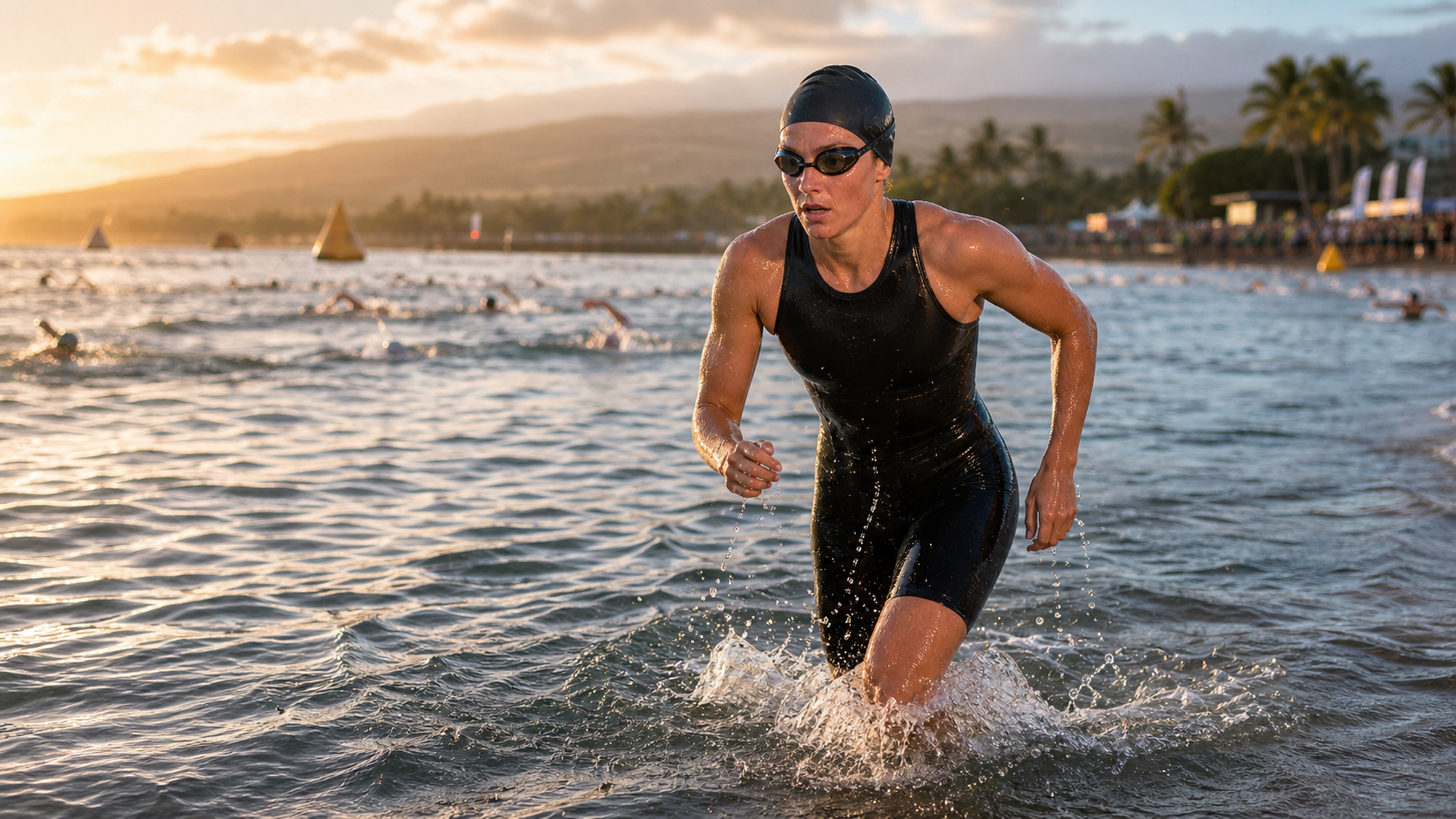
Lucy Charles-Barclay, a British triathlete, is renowned worldwide for her unparalleled swimming ability. Coming from a competitive swimming background and having been a member of the British national swim team, this talent became her most powerful competitive weapon after transitioning to professional triathlon. She has repeatedly exited the water first in the swim at Kona, typically leading the second-place athlete by 5–8 minutes, and has claimed the Kona women’s title four times (as of this article), finally reaching the top at Kona in 2024.
The Advantage of a Competitive Swimming Background
Before transitioning to triathlon, Charles-Barclay was a British national swimmer, and this background gives her several key advantages:
| Advantage | Specific Manifestation | Impact on Triathlon |
|---|---|---|
| Technical Efficiency | Efficient stroke mechanics, low-drag body position | Consumes less energy at the same speed |
| Aerobic Foundation | Cardiorespiratory capacity built from years of swim training | Efficient oxygen utilization on the bike leg |
| Water Feel | Instinctive reaction to currents and swells | More precise navigation in open water |
| Psychological Edge | Confidence gained from leading the swim | Reduces mental pressure in the later stages of the race |
The Multi-Faceted Benefits of a Leading Swim Strategy
In long-distance events like Kona, leading the swim leg is far more than just “being a few minutes faster.” The ripple effects include:
Strategic Benefits:
- Riding solo (being the first on the bike course with no other athletes to follow) is more physically demanding, but it saves the energy expenditure of pack racing
- Chasing athletes must expend extra energy, indirectly weakening their run-leg performance
- Creates psychological pressure on the chasers, disrupting their pacing rhythm
Tactical Benefits:
- A more relaxed T1 (the transition from swim to bike), without having to jostle through the crowd
- Establishes the lead early in the bike leg, setting the race tempo
Core Elements of Swim Training
Charles-Barclay’s swim training has several distinctive features:
- Maintaining High Training Volume: Even after transitioning her career to triathlon, her weekly swim volume remains at 35–45 km
- Continuous Technical Refinement: Regularly works with swim-specific coaches to continuously optimize stroke details
- Retaining Speed Work: Includes high-intensity swim interval sessions weekly to prevent loss of speed
- Open Water Adaptation: Regularly trains in the ocean or lakes to adapt to waves, saltwater buoyancy, and other special conditions
How to Maximize the Swimming Advantage
Leading the swim is just the beginning; the key is how to extend that advantage into the rest of the race:
- T1 Efficiency: A fast transition is a crucial part of maintaining the lead, with Kona transition times kept under 2 minutes
- Bike Leg Pacing: The athlete starting in the lead must set her own pace and cannot rely on group pacing, which requires strong power meter discipline
- Energy Management: Leading the swim often requires extra effort, and nutrition must compensate for this expenditure
Lessons for Athletes Without a Swimming Advantage
Most Taiwanese triathletes do not have the swimming ability of athletes with a competitive swimming background. Charles-Barclay’s case offers several points for reverse thinking:
- The gap in the swim leg (5–8 minutes) can be made up in a long-distance race, so there is no need to overexert yourself chasing in the swim
- Maintaining a steady swim pace to conserve energy allows you to maximize your strengths on the bike and run legs
- Investing in swim technique training (rather than just increasing volume) is the most effective way to improve swimming efficiency
Swimming Improvement Suggestions for Taiwanese Athletes
- Join a swimming club for systematic technique training rather than practicing on your own in open water
- Learn bilateral breathing to improve navigation ability in waves
- Do at least 2–4 open water training sessions per month to adapt to the special conditions of Kona or Taiwan’s waters
- Schedule short-distance swim speed sessions after long training days to prevent speed regression
Conclusion
Lucy Charles-Barclay’s swimming advantage is the greatest asset of her career and one of the most difficult abilities to replicate in long-distance triathlon. Her example tells us that in triathlon, everyone has different strengths, and the key lies in how to turn that strength into a strategic advantage for the entire race. For Taiwanese athletes, identifying and strengthening your own core strength, then building a complete race strategy around it, is the shortest path to a personal best.
Related Reading
- Special Techniques for the Triathlon Swim Leg: Transition Area Preparation and Exit Skills
- Swim Pacing Strategies in Triathlon: Controlled Swimming to Conserve Energy
- Triathlon Swim-Specific Skills: Start Chaos, Pace Control, and the “Save Your Legs While Swimming” Transition Mindset
- Time Management for Triathlon Swim Training: Swim Priority in a Three-Sport Schedule
2025南庄山水悠遊行 仙山KOM 網路直播! / 男菁英組A / 女菁英組A
9 個月前
崇越盃武嶺冠軍高手 賽前JJSC 群峰會精華!對應大數據分析,會有落差嗎?/ feat. JJSC中部公路車約騎 /公路車 / CT Yeh
2 年前
CT 喇低賽) 武嶺牽車 才是王道 西進牽車四小時內秘訣 攝手位置 如何判斷 防抽筋小秘訣
7 年前
Live) 備戰2019彰化經典百K 賽前攻略 (已完賽請看新影片
7 年前
FTL 與 SYB 車隊專訪 西進武嶺 實用攻略分享! 2小時 如何練?!你不知道的眉角!新手準備武嶺必看 EP1 | 實力派女車友 | 精華版 | 公路車 | CTYeh
4 年前
2019 夏季KOM 5小 完賽心得 準備攻略 東進武嶺 夏季登山王之路 Taiwan KOM Challenge
7 年前
超激烈!2025 南庄仙山KOM 賽事精華 / 男菁英A x 女菁英A / 公路車 / CT Yeh
9 個月前
福隆鐵人團練隨拍
8 年前