Introduction
Since its founding in 2017, Super League Triathlon (SLT) has injected fresh energy into traditional triathlon with its innovative race format. Unlike traditional IRONMAN or WTS events, which feature a single long-distance or standard-distance race, SLT uses a multi-stage, high-intensity race design that makes the sport feel as thrilling as professional esports or combat sports. Its emergence has not only attracted a new generation of sports fans but has also forced professional athletes to rethink their racing strategies.
The Core Race Formats of Super League Triathlon
SLT’s biggest feature is its “non-traditional” race formats, which mainly include the following:
| Format Name | Feature | Description |
|---|---|---|
| The Championship | Multiple short-distance rounds with points accumulation | 3 rounds of abbreviated triathlons, each roughly 300m swim/8km bike/2km run, decided by a points system |
| Equalizer | Points gap converted to time gap | Time advantages awarded based on previous round points, with a time-trial format in the final round |
| Triple Mix | Reverse order | Run → Bike → Swim or other non-traditional orders |
| Eliminator | Last-place elimination | The last-place athlete is eliminated each round, a high-intensity elimination format |
Why SLT Is More Appealing to Both Spectators and Athletes
For spectators:
- Races are condensed into 1–2 hours, ideal for live viewing and broadcasting
- Multiple transitions create dramatic ranking shifts, keeping suspense alive
- City-center course designs make it easier for spectators to watch up close
- The points system makes “come-from-behind victories” possible
For athletes:
- High-intensity short distances require different energy system recruitment
- Tactical decisions matter more: when to surge, when to conserve energy
- Greater psychological pressure: every round demands full effort
Strategic Differences Among Elite Athletes in SLT
SLT’s race format demands something entirely different from athletes compared to traditional IRONMAN racing:
Speed-oriented athletes (such as Alex Yee, Hayden Wilde):
- The short-distance, high-intensity format favors speed-oriented athletes
- Leading in the swim matters more, because each round is short and gaps are hard to close later
Pacing-oriented athletes:
- Need to precisely manage energy across multiple rounds
- Recovery strategy during the brief rest between rounds is critical
Transition specialists:
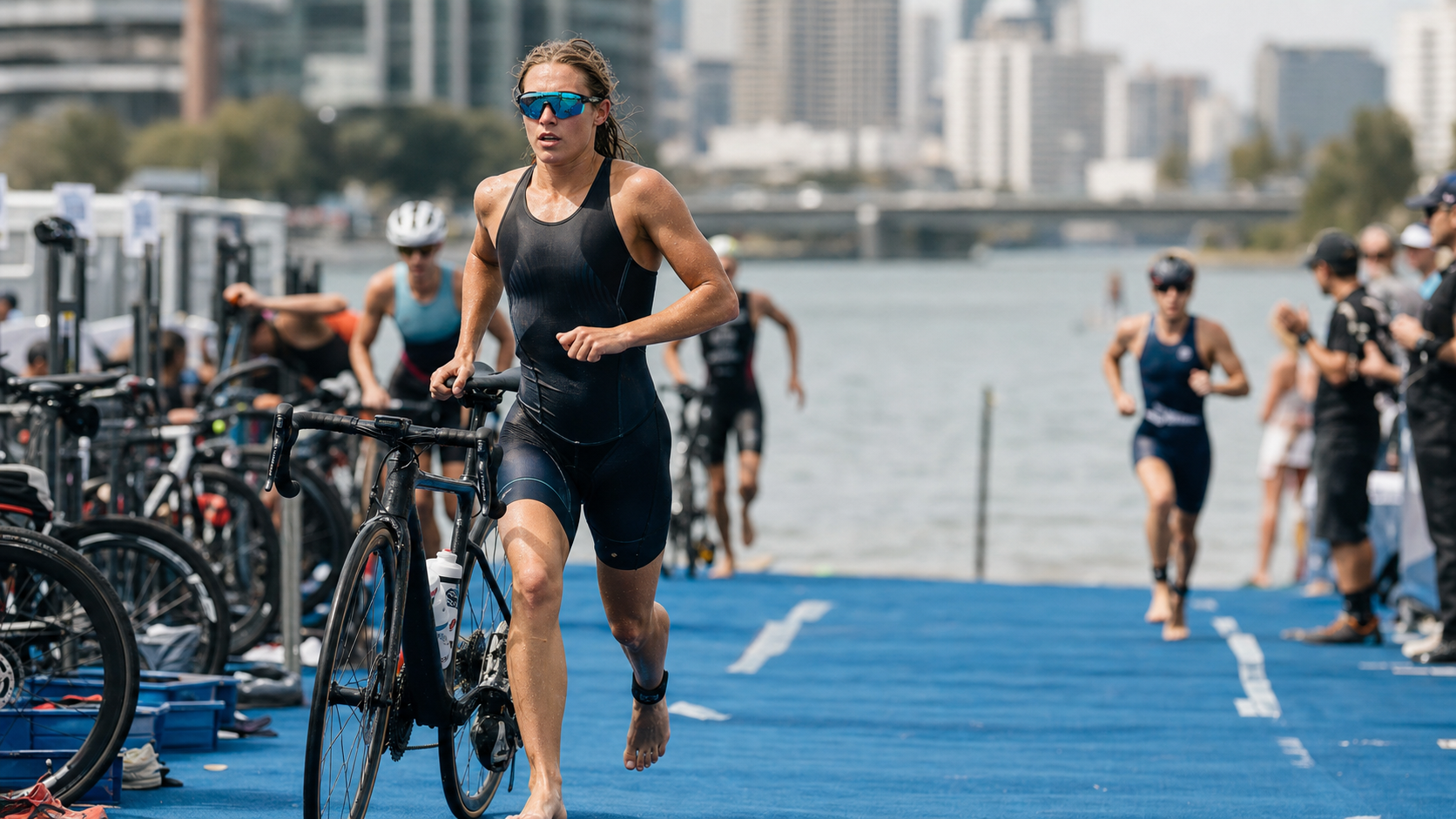
- SLT’s multiple transitions multiply the impact of transition skills
- Each T1 or T2 difference of just 5–10 seconds can accumulate and decide the final placing
Analysis of Technical Demands on SLT Athletes
SLT requires athletes to possess additional abilities beyond traditional triathlon:
- Repeated explosive power: Multiple rounds of all-out sprinting require excellent lactate clearance ability
- Rapid recovery: The short rest between rounds (usually 5–10 minutes) demands efficient recovery
- Tactical flexibility: Adjusting strategy in real time based on the points standings
- Mental toughness: The psychological pressure of multi-round elimination far exceeds that of traditional formats
SLT’s Impact on the Development of Triathlon
The emergence of SLT has had a profound impact on the entire triathlon ecosystem:
- Attracts more young athletes into triathlon
- Drives upgrades in triathlon broadcast quality, introducing more technical equipment
- Pushes traditional ITU/World Triathlon formats to consider improvements in spectator appeal
- Provides athletes with an additional income stream, raising the commercial value of professional triathlon
Opportunities for Taiwanese Athletes to Compete in SLT
Currently, SLT’s premier events are primarily invitation-based. For Taiwanese athletes to reach the SLT stage, they need to:
- Build a solid ranking on the World Triathlon points standings
- Actively compete in SLT qualifying events (some Asian stops feature qualifiers)
- Strengthen speed training to adapt to SLT’s short-distance, high-intensity format demands
Practical Advice
- Watch SLT live streams or replays to learn elite athletes’ transition techniques and tactical decisions
- Practice “all-out sprint + fast transition” racing skills in local short-distance triathlon events
- Try high-intensity Olympic-distance racing to build the speed reserve SLT requires
Conclusion
Super League Triathlon is the best representation of triathlon’s modernization, perfectly blending traditional endurance sport with modern entertainment elements. For Taiwanese triathletes and enthusiasts, following SLT is not just about appreciating elite competition—it’s also about learning how to maintain tactical flexibility under high pressure, skills that apply equally to all types of traditional triathlon events.
Related Reading
- What Is a Triathlon Sprint Race? A Complete Breakdown of Distance, Time, and Intensity
- The Complete Duathlon Beginner’s Guide: Differences Between Run-Bike-Run (Duathlon) and Standard Triathlon, Who It Suits, and Training Focus
- ITU World Triathlon Series: Elite Tactics and Top Athlete Strategies for Olympic Distance
- Draft-Legal vs Non-Drafting Triathlon: Two Fundamentally Different Racing Philosophies and Tactics
新屋團體繞圈賽 | 眾多菁英好手賽道奔馳 | 千瓦女子軍團 | 無敵交管狂獲好評 明年你一定不能錯過 | #公路車
5 年前
2020 新屋團體繞圈賽 三分鐘爽快版 無敵交管衝到腳抽筋 居然有全女子軍團!| 公路車
5 年前
Zwift跨國線上追逐賽 第二站 台灣 TTR vs. 日本 JETT 第二場 (台灣追日本) | 數百位國內外公路車高手,同場較勁 | 多視角賽事直播
4 年前
JE22 百里任務體驗,心跳不能過150,三小時內有可能...? 沒有天時地利難度有多高? / 公路車 / CT Yeh
1 年前
福隆鐵人團練隨拍
8 年前
Live) 備戰2019彰化經典百K 賽前攻略 (已完賽請看新影片
7 年前
Lun HYPER 第三代 D45碳幅條輪組 功率對比實測 / 鈦合金行星齒輪,中高階的製造水準 / 公路車 / CT Yeh
1 年前
CT 喇低賽) 武嶺牽車 才是王道 西進牽車四小時內秘訣 攝手位置 如何判斷 防抽筋小秘訣
7 年前