Competition Swimsuit Buying Guide: Speed Differences and Suitable Occasions for Bonded Seams vs. Stitched Seams
Introduction
For competitive swimmers, a good competition swimsuit can be the difference between standing on the podium and finishing one place behind. As swimsuit technology advances, bonded seams and traditional sewn seams have become the primary choice consumers face. Each has its own advantages and disadvantages in terms of water resistance, durability, and price. Understanding the differences can make your investment more effective.
Bonded Seams vs Sewn Seams: Core Differences
Manufacturing Process
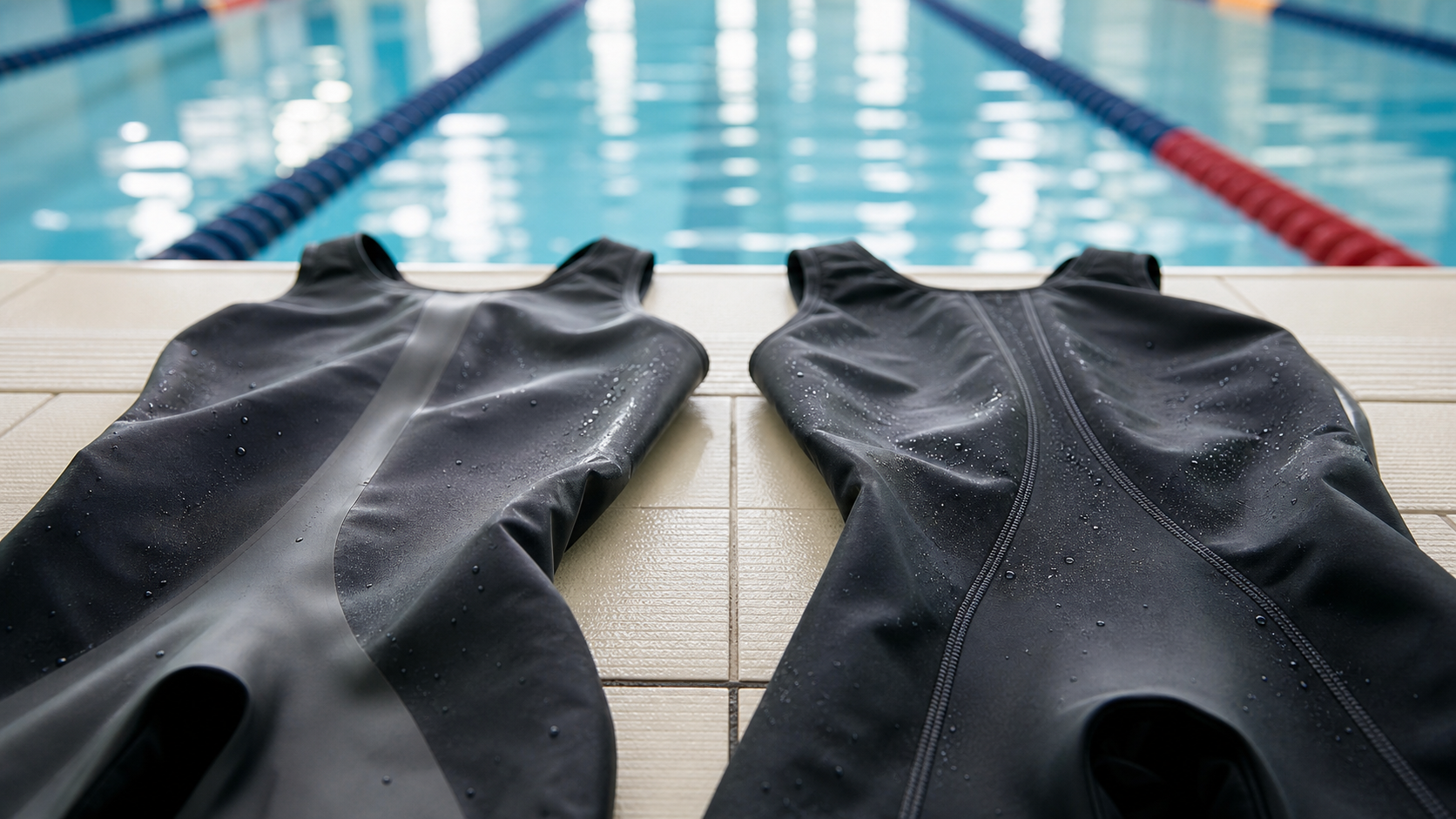
Bonded seams use heat pressing or special adhesives to fuse the fabric together, completely eliminating the problem of traditional stitching protruding from the fabric surface. Flagship competition swimsuits from top brands like Speedo, Arena, and TYR all use this process.
Sewn seams are traditionally stitched with needle and thread. The stitching slightly protrudes from the fabric surface, creating minute but measurable turbulence during high-speed swimming.
Quantitative Comparison of Speed Impact
| Comparison Item | Bonded Seams | Sewn Seams |
|---|---|---|
| Seam Protrusion Height | 0 mm (Completely Smooth) | 0.3–0.8 mm |
| Increase in Water Resistance | Baseline Value | Approx. 1–3% Increase |
| Suitable Race Distances | 50 m–1500 m | Training to Amateur Competitions |
| Average Selling Price (Taiwan Market) | NT$8,000–25,000 | NT$2,000–8,000 |
| Lifespan | 30–50 Races | Suitable for Long-Term Training Use |
Material and Compression Performance
The core value of a competition swimsuit lies not only in the seam technology; the material itself is also crucial:
- Super-elastic Nylon + Spandex Composite Material: Commonly found in bonded seam swimsuits, compression ratio can reach 20–30%, aiding muscle stabilization and propulsion efficiency.
- PBT (Polybutylene Terephthalate) Composite Material: More chlorine-resistant, suitable for training swimsuits; sewn seam versions often use this material.
- Ultra-lightweight Mesh Structure: Some men’s competition swimsuits use breathable mesh on the waist sides to reduce overall weight.
Suitable Occasion Analysis
When to Choose Bonded Seams
- Participating in official swimming competitions at the county/city level or above
- Long-distance triathlons (Olympic Distance and above)
- Personal Best (PB) challenge events
- World Aquatics sanctioned events
When to Choose Sewn Seams
- High-frequency users training more than 4 times a week
- Those with a limited budget who still need a certain level of compression
- Initial investment for student athletes
- Weekend meets for recreational swim clubs
Practical Buying Advice
- Confirm the FINA/World Aquatics Approval Stamp: Competition swimsuits for official races must be on the approved list; you can check the model on the official website.
- Choose One Size Smaller Than Usual: Competition swimsuits are designed to be tight; you should feel moderate compression without affecting your breathing when worn.
- Perform Forward Bends and Squats When Trying On: Confirm that hip joint mobility is not restricted and that there is no excessive pulling when reaching the shoulders forward.
- Ask About Care Instructions: Bonded seam swimsuits cannot be machine washed or spin-dried; they require hand washing and flat drying in the shade, and their lifespan is sensitive to care.
- Keep the Original Tags Until the Size is Confirmed: Some brands allow returns or exchanges if the suit has not been worn in the water.
Recommended Mainstream Competition Swimsuits in the Taiwan Market
- Speedo LZR Racer Elite 2: Flagship bonded model, features 3D body contour design, available through authorized distributors in Taiwan.
- Arena Carbon Air 2: Italian craftsmanship, fully bonded above the knees, high CP value.
- TYR Venzo: American brand, features a streamlined back design, the sewn seam version is also well-received.
- Mizuno GX-Sonic VI: Made in Japan, suits Asian body types, offers good wearing comfort.
Conclusion
For serious competitive swimmers, a bonded seam competition swimsuit is a worthwhile investment. Its technical advantage of eliminating seam water resistance is particularly evident in short-distance sprint events. However, if training is the primary purpose, a durable sewn seam training swimsuit is actually more economical. It is recommended that swimmers purchase separately based on their competition goals: one bonded competition model reserved for official races, and one sewn training model for daily practice, which is the most ideal configuration strategy.
Related Topic Reading
- The Impact of Swimsuit Choice on Performance: The Time Difference Between Competition Swimsuits vs Training Swimsuits
- Competition Swimsuit Review: Resistance Differences Between Polyurethane Fabric and Mesh
- Training Swimsuits vs Competition Swimsuits: Material Comparison of Chlorine Resistance and Elasticity
- Competition Swimsuit Technology: A Guide to Choosing Compression Level, Material, and Fit
3D 列印車褲墊 / 舒適改善? / 無痕 x 分區壓縮 / ATK & Decider系列 / JE22黑科技 / #公路車 #CTYEH
11 個月前
鉅齒紋輪組!? ControlTech MEG-T50 EVO 碳纖維幅條輪組/ 功率對比實驗 / 公路車 / CT Yeh
2 年前
西進武嶺 自製新版AI配速表產生器 x 賽前攻略 抱佛腳! 沒有功率計也可以產生配速表嗎?有什麼其他眉角賽前要注意的呢? | 西進武嶺 / 東進武嶺 KOM 攻略 | 公路車 | CT Yeh
4 年前
2017 美利達 彰化經典百K (精華集請參考另一部) 快速剪接體驗版 (part with NEKO)
9 年前
Live) 備戰2019彰化經典百K 賽前攻略 (已完賽請看新影片
7 年前
多到選擇障礙... 換個單車把帶想一個小時 / BTP / 編織&軟木特有材質超吸睛! / 公路車 / CT Yeh
1 年前
CT 喇低賽) 武嶺牽車 才是王道 西進牽車四小時內秘訣 攝手位置 如何判斷 防抽筋小秘訣
7 年前
Nepest NOVA 碳條輪組:輕量、空力、舒適一次滿足!/ 公路車 / CT Yeh
7 個月前