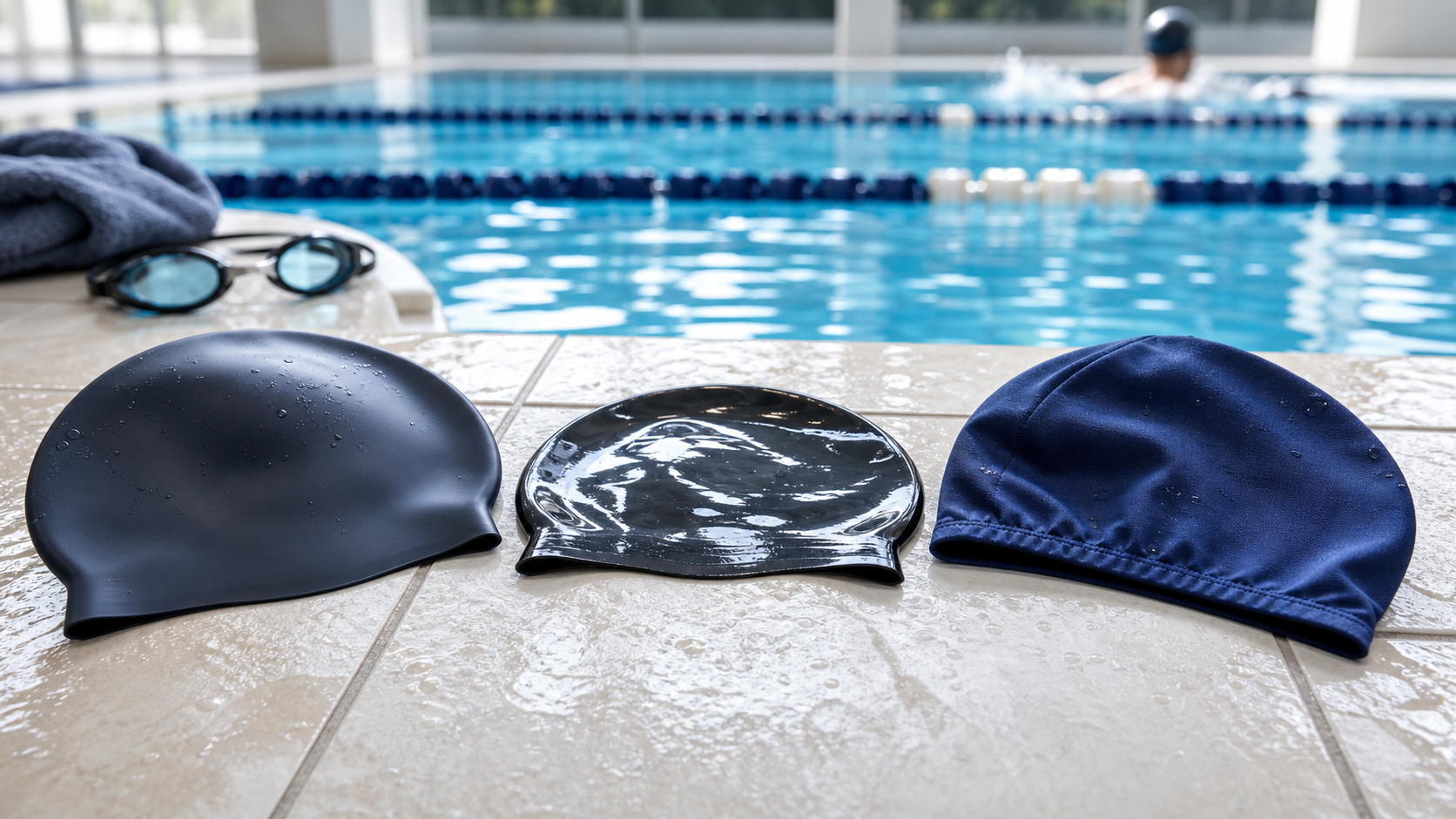
Introduction
The swim cap may seem like an inconspicuous piece of swimming gear, but it serves multiple functions: reducing water drag, protecting hair from chlorine damage, and helping other swimmers identify your position. The three most common materials on the Taiwan market — silicone, latex, and Lycra (spandex) — each have distinctly different characteristics suited to swimmers with different needs.
Core Comparison of the Three Materials
| Comparison Item | Silicone | Latex | Lycra/Spandex |
|---|---|---|---|
| Water Drag | ★★★★☆ Low | ★★★★★ Lowest | ★★★☆☆ Moderate |
| Comfort | ★★★★☆ Good | ★★★☆☆ Moderate | ★★★★★ Best |
| Durability | ★★★★★ Excellent | ★★★☆☆ Moderate | ★★★☆☆ Moderate |
| Warmth | Low to moderate | Low | Low (well ventilated) |
| Chlorine Resistance | Excellent | Moderate (degrades easily) | Moderate |
| Market Price | NT$200–800 | NT$80–300 | NT$150–500 |
| Suitable For | Most swimmers | Competitive racers | Casual swimmers / long hair |
Silicone Swim Caps
Advantages
- Long service life: With proper care, can last 2–4 years, offering excellent value for money
- Hypoallergenic: Contains almost no allergens compared to latex, making it the first choice for those with allergies
- Good waterproofing: The tighter cap edge design effectively blocks water from entering the cap
- Easy to clean: Dries quickly after rinsing and doesn’t develop odor easily
Disadvantages
- Pulls on hair: Especially for those with long hair, hair loss or discomfort can occur when putting on or taking off
- Stronger feeling of heat and stuffiness: Less breathable than Lycra
- Wrinkles increase drag: If the size doesn’t fit well, wrinkles on the cap surface also increase resistance
Suitable Scenarios
- Swimmers who train frequently every week
- Athletes with allergy concerns
- Those seeking a single cap for long-term use
Latex Swim Caps
Advantages
- Lowest water drag: The material is thin and hugs the head closely, giving a surface closest to a perfect streamlined shape
- Extremely lightweight: The cap itself is almost imperceptible in weight
- First choice for racing: Many top athletes choose latex caps for competition (usually layered, with a silicone cap worn over the top)
Disadvantages
- Degrades easily: With prolonged exposure to chlorinated water and UV light, it may start becoming brittle within 6–12 months
- Allergy risk: Some people are allergic to natural latex, so this should be confirmed before use
- Sun-sensitive: When used in open water, UV rays accelerate aging, so the cap should be put away immediately after sun exposure
Suitable Scenarios
- Short-distance sprint competitions
- Advanced swimmers using the double-cap technique (latex + silicone)
- Those with a limited budget or infrequent use
Lycra Swim Caps
Advantages
- Highest comfort: The fabric is soft, doesn’t pull on hair, and doesn’t feel constrictive even after long periods of wear
- A blessing for long-haired swimmers: Can neatly wrap long hair so it doesn’t fall out easily
- Good breathability: Dissipates heat well in water, keeping the head from feeling stuffy
- Easy to carry: Thin and foldable, convenient to carry around
Disadvantages
- Highest water drag: The fabric has texture and is not as smooth as silicone/latex
- Poor waterproofing: Water easily seeps into the cap, so hair still gets wet
- Possible dye bleeding: After contact with pool water, some dye from darker-colored caps may leach out
Suitable Scenarios
- Casual swimming and water aerobics classes
- Swimmers with particularly thick or long hair
- Children learning to swim for the first time
Special-Function Swim Caps
- LSP (streamlined silicone cap): Features an extended rear edge design that wraps over the ears to reduce ear-area drag — an evolved version of the racing swim cap
- Double-layer silicone cap: Has an air layer between the inner and outer layers, providing stronger warmth, suitable for training in low water temperatures
- Sun-protective swim cap: Lycra material with added UPF 50+ sun protection factor, suitable for outdoor pools
Practical Purchasing Tips
- Measure head circumference: Use a tape measure to measure the circumference from the forehead to the back of the head, and compare against the brand’s size chart
- Long-haired swimmers should start with Lycra before moving to silicone: Once accustomed to the pulling sensation of silicone, the drag-training effect is better
- Layer caps for competition: Wear a training-grade silicone cap underneath and a thin latex racing cap on top, balancing streamlining with a snug fit
- Watch out for latex allergies: If you’ve never been in contact with latex products before, it’s recommended to do a skin patch test first
- Taiwan’s summer outdoor pools: White or light-colored silicone caps reflect heat, while dark-colored ones absorb noticeably more heat
Conclusion
There is no absolute best or worst swim cap material — the key is matching it to your purpose. For daily training, the durability and affordable price of silicone caps are most recommended; if you have long hair or are just starting out with swimming, the comfort of Lycra caps is irreplaceable; competitive swimmers pursuing speed can consider latex caps or the double-cap technique. With the right choice and proper care, a single swim cap can accompany you through countless training sessions.
Related Reading
- Comprehensive Comparison of Swim Cap Materials: Drag and Durability of Silicone, Latex, and Fabric Caps
- Swim Cap Material Comparison: Suitable Occasions for Silicone vs Latex vs Fabric Caps
- A Complete Guide to When to Use Racing Swim Caps: Differences Between Training and Competition Caps, and Proper Care
- Training Swimsuit vs Racing Swimsuit: A Material Comparison of Chlorine Resistance and Elasticity
3D 列印車褲墊 / 舒適改善? / 無痕 x 分區壓縮 / ATK & Decider系列 / JE22黑科技 / #公路車 #CTYEH
11 個月前
大家都在開箱的...單車用藍芽對講耳機真的有幫助嗎? SENA BiKom 20 長距離旅遊 & 海鷗繞圈賽 實際體驗心得 / 公路車 / CT Yeh
9 個月前
鉅齒紋輪組!? ControlTech MEG-T50 EVO 碳纖維幅條輪組/ 功率對比實驗 / 公路車 / CT Yeh
2 年前
多到選擇障礙... 換個單車把帶想一個小時 / BTP / 編織&軟木特有材質超吸睛! / 公路車 / CT Yeh
1 年前
[防寒衣體驗] 鐵人魂 三鐵 防寒衣試穿會 於松運 深水游泳池 鯨魚池
8 年前
Nepest NOVA 碳條輪組:輕量、空力、舒適一次滿足!/ 公路車 / CT Yeh
7 個月前
訓練台體驗) 2019台北自行車展 三大家 訓練台體驗 Tacx Neo Flux 2 Xepdo Apx Wahoo Kickr
7 年前
車錶新黑馬? / 超狂續航 / 超好用錶冠 / 無敵準定位 / Dash圖表合成!?/ COROS DURA 評測!/ 公路車 / CT Yeh
2 年前