Swimming Altitude Training: A Study on the Benefits of High-Altitude Environments for Swimming Performance
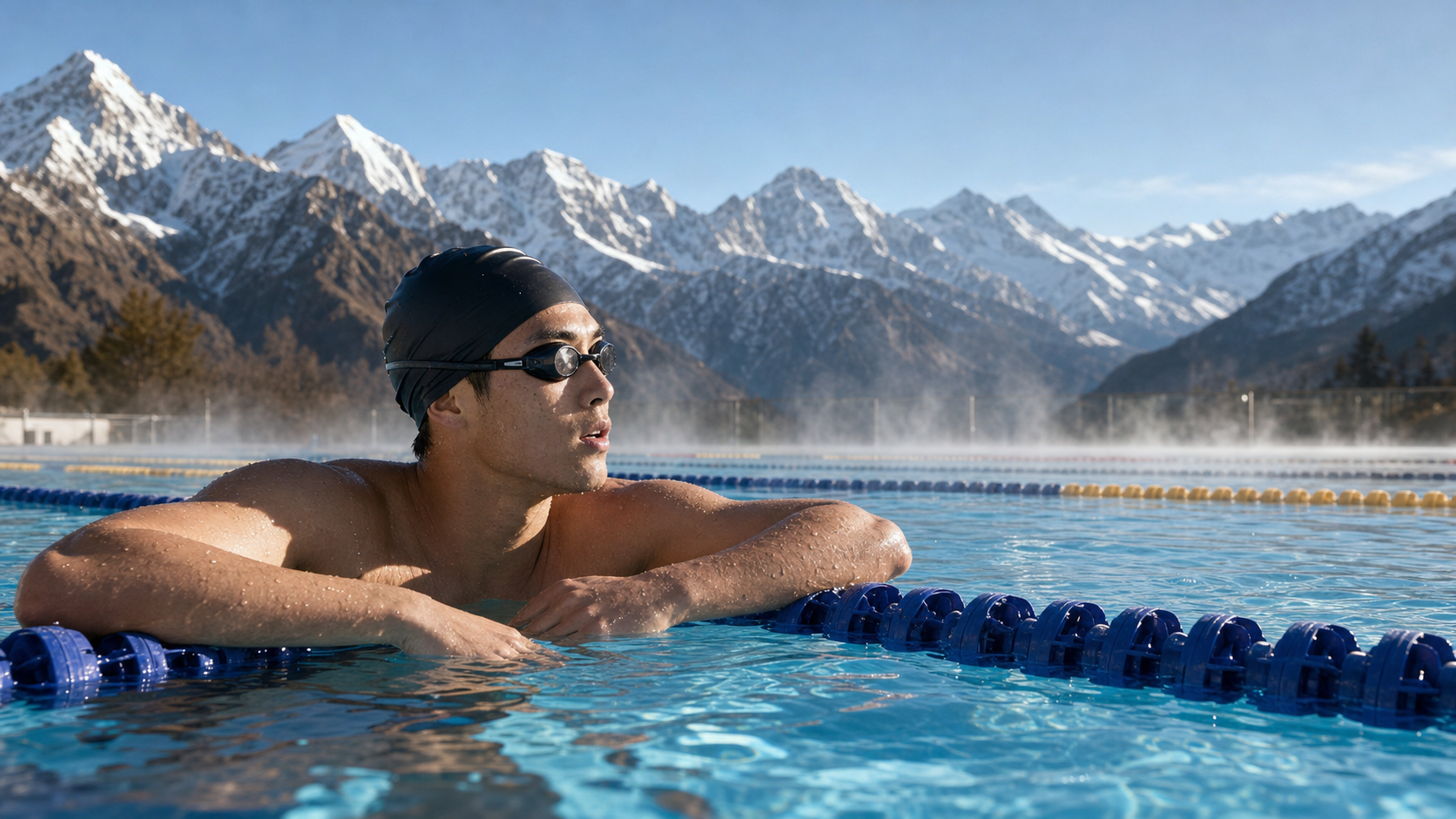
Altitude Training: The Secret Weapon of Endurance Sports
Altitude training has been widely adopted and scientifically supported in land-based endurance disciplines such as marathon running, cycling, and cross-country skiing. The hypoxic conditions at high altitude force the body to produce a series of physiological adaptations beneficial to aerobic performance. However, altitude training for swimming has its unique characteristics—swimming takes place in water, and the oxygen supply mechanism underwater is completely different from that of land-based sports, making research on swimming altitude training a challenging scientific field.
The Physiological Basis of High-Altitude Environments
The relationship between altitude and partial pressure of oxygen (PO₂):
| Altitude (m) | Barometric Pressure (mmHg) | Partial Pressure of O₂ (mmHg) | Relative to Sea Level (%) |
|---|---|---|---|
| 0 (Sea Level) | 760 | 159 | 100% |
| 1000 | 674 | 141 | 89% |
| 2000 | 596 | 125 | 79% |
| 2500 | 560 | 117 | 74% |
| 3000 | 526 | 110 | 69% |
| 4000 | 462 | 97 | 61% |
When the partial pressure of oxygen decreases, blood oxygen saturation (SpO₂) in the human body drops, reducing oxygen delivery to tissues and triggering a series of compensatory physiological responses.
Physiological Adaptations Induced by Altitude Training
Acute Adaptations (First 1–2 Weeks)
| Physiological Response | Mechanism | Impact on Swimming |
|---|---|---|
| Increased heart rate | Compensates for low blood oxygen | Higher heart rate at the same swimming intensity |
| Hyperventilation (high-altitude ventilatory response) | Increased CO₂ elimination | Breathing rhythm must be adjusted |
| Increased urine output | Carbonic anhydrase inhibition, blood concentration | Requires more fluid intake |
| Reduced training capacity | Decreased available oxygen | Swimming speed and training volume must be reduced |
Chronic Adaptations (After 2–4 Weeks)
- Increased erythropoietin (EPO): The kidneys secrete more EPO under hypoxic stimulation, stimulating bone marrow hematopoiesis
- Increased red cell mass: After 3–4 weeks of training at 2500–3000m, red cell mass can increase by 5–8%
- Increased 2,3-DPG: 2,3-diphosphoglycerate in red blood cells increases, enhancing hemoglobin’s oxygen-releasing capacity in tissues
- Muscle mitochondrial adaptation: Hypoxia-inducible factor (HIF-1α) is upregulated, improving muscle oxygen utilization efficiency
- Enhanced buffering capacity: Muscle buffering capacity from calcium carbonate and phosphate shows improvement in some studies
Unique Challenges of Altitude Training for Swimming
Altitude training for swimming faces unique challenges not present in land-based sports:
1. Greater Decline in Swimming Speed
At high altitude, swimmers experience a greater decline in speed (typically 5–10%) compared to runners (3–5%), due to:
- Swimming’s restricted breathing rhythm (cannot breathe freely at any time)
- The aquatic environment prevents adjusting pace like on land to adapt to hypoxia
- Swimming technique deteriorates more easily under hypoxic fatigue, creating a negative feedback loop
2. Compounding Effects of Breathing Limitations
At high altitude, the body requires more frequent breathing; however, breathing during swimming is inherently limited by the stroke cycle (typically one breath every 3–5 strokes). Research shows:
- High-altitude swimming training often forces swimmers to change their breathing rhythm from every 3 strokes to every 2 strokes, affecting technical rhythm
- Some swimmers experience “breathing anxiety” at high altitude, increasing psychological stress and causing technical breakdown
3. The Training Volume–Adaptation Paradox
The most effective stimulus from altitude training comes from training volume (such as swimming mileage), but high altitude precisely limits training volume (due to reduced speed and accelerated fatigue). This creates the contradiction of “wanting to gain altitude adaptation while training quality declines.”
Three Altitude Training Models
| Training Model | Description | Main Advantages | Main Disadvantages |
|---|---|---|---|
| Live High–Train High (LHTH) | Live and train at high altitude | Strongest red blood cell production stimulus | Reduced training intensity and technical quality |
| Live High–Train Low (LHTL) | Sleep at high altitude (tent or room), train at low altitude | Maintains training intensity while gaining hypoxic adaptation during sleep | Logistically complex and expensive |
| Intermittent Hypoxic Exposure/Training (IHE/IHT) | Use hypoxic masks or hypoxic chambers at sea level | No relocation needed, controllable dosage | Smaller effects than true high altitude, expensive |
Research consensus for swimming: The “Live High–Train Low” (LHTL) model is most suitable for swimmers because it allows high-intensity training in low-altitude pools while stimulating red blood cell production through hypoxic exposure during sleep.
Actual Effects: Data from Swimming Studies
Synthesizing existing swimming altitude training research (primarily from top swimming team studies in Australia, France, and China):
- After 3–4 weeks of living at 2000–3000m, competition performance upon returning to sea level improves by approximately 0.5–2.0%
- This improvement is significant in competitive swimming (every 0.1 seconds in the 100m freestyle can be decisive)
- Duration of improvement: Peak condition is typically reached 3–5 days after returning to sea level, then diminishes after 4–6 weeks
Important research differences: Studies on altitude training effects in swimmers show greater individual variability than in land-based sports (“high responders” vs. “low responders”), with genetic factors appearing to play a more significant role in swimmers’ responses to hypoxia.
Optimal Timing for Altitude Training
- 4–6 weeks before competition: This is the optimal window for altitude training
- Avoid 1–2 weeks before competition: The body is still in the acute adaptation phase, and performance may decline
- 3–7 days after returning to sea level: Physiological state is optimal, making this the golden period for important competitions
Altitude Training Resources in Taiwan
Taiwan itself has low elevation and lacks standard high-altitude training venues, but:
- Hehuan Mountain (3275m): Can serve for short-term high-altitude acclimatization, but has no pool facilities
- Artificial hypoxic chambers: Some university sports science departments and professional teams have introduced these, allowing simulation of high-altitude hypoxic environments at low elevation
- Overseas training: Kunming, Yunnan (1895m) and Colorado, USA (approximately 1800–2400m) are common high-altitude training locations chosen by Taiwan’s top athletes
Practical Recommendations
- First-time altitude trainees: Reduce training volume by 40–50% and speed by 5–8% for the first 3 days to allow the body to adapt
- Monitor blood oxygen saturation: Use a pulse oximeter (available at Taiwan pharmacies, approximately NT$500–1500), maintaining SpO₂ > 90%
- Iron supplementation: Altitude training increases iron demand (for hematopoiesis); it is recommended to monitor serum ferritin before the season
- Adequate hydration: The high-altitude environment is dry, and increased breathing leads to greater water loss; supplement at least an additional 500–800mL of fluid daily
Conclusion
Altitude training for swimming is a double-edged sword: the red blood cell production and metabolic efficiency gains from hypoxic stimulation are real and meaningful, but swimming’s inherent breathing limitations make executing altitude training more challenging. For Taiwanese swimmers considering altitude training, the “Live High–Train Low” approach combined with a 4–6 week pre-competition schedule is currently the most scientifically supported strategy.
Related Reading
- Altitude Effects in Swimming: How High-Altitude Training Enhances Swimming Endurance
- The Physiology of High-Altitude Training: EPO, Hemoglobin, and the Oxygen Transport Chain
- High-Altitude Training Guide: How Sea-Level Athletes Can Use the Altitude Effect to Boost Performance
- The Impact of Training Altitude on Acclimatization: Physiological Differences Between Lowland Training and Altitudes Above 2,000m
#公路車 #Vo2Max #最大攝氧量 測驗 體驗 | 心肺測試
6 年前
NEKO's Fun 高美濕地團練
8 年前
實景訓練台) 彰化經典百K 高強度喵團 90分鐘 跟著一起練功 2019 Indoor workout Changhua Classic 100 Taiwan
7 年前
滑雪新手們慘摔學習全紀錄(請開字幕),滑雪好好玩 | Snowboard + Ski | 岩原 スキー場 | 滑雪APP使用 | GoPro Max
6 年前
[教學] Premiere 影片 手震 修正 教學 防抖 單眼 影像 GoPro 穩定 Video Stabilization
8 年前
一日北高前的高裝檢 | 北高 360 | 挑戰11小時的裝備 | 一日雙塔 | 補給
6 年前
一日北高常見問題大集合 | 攻略 | 路線 | 訓練 | 補給 | 自行車 單車 | 一日雙城 | 雙塔 | TWB北高360 | 屁股痛
6 年前
抖肩舞 台灣x日本交流版 (台灣 vs 前橋) 赤城山登山賽 coincidance
8 年前