Running Compression Socks Buying Guide: The Logic Behind Gradient Pressure, Materials, and Suitable Distance
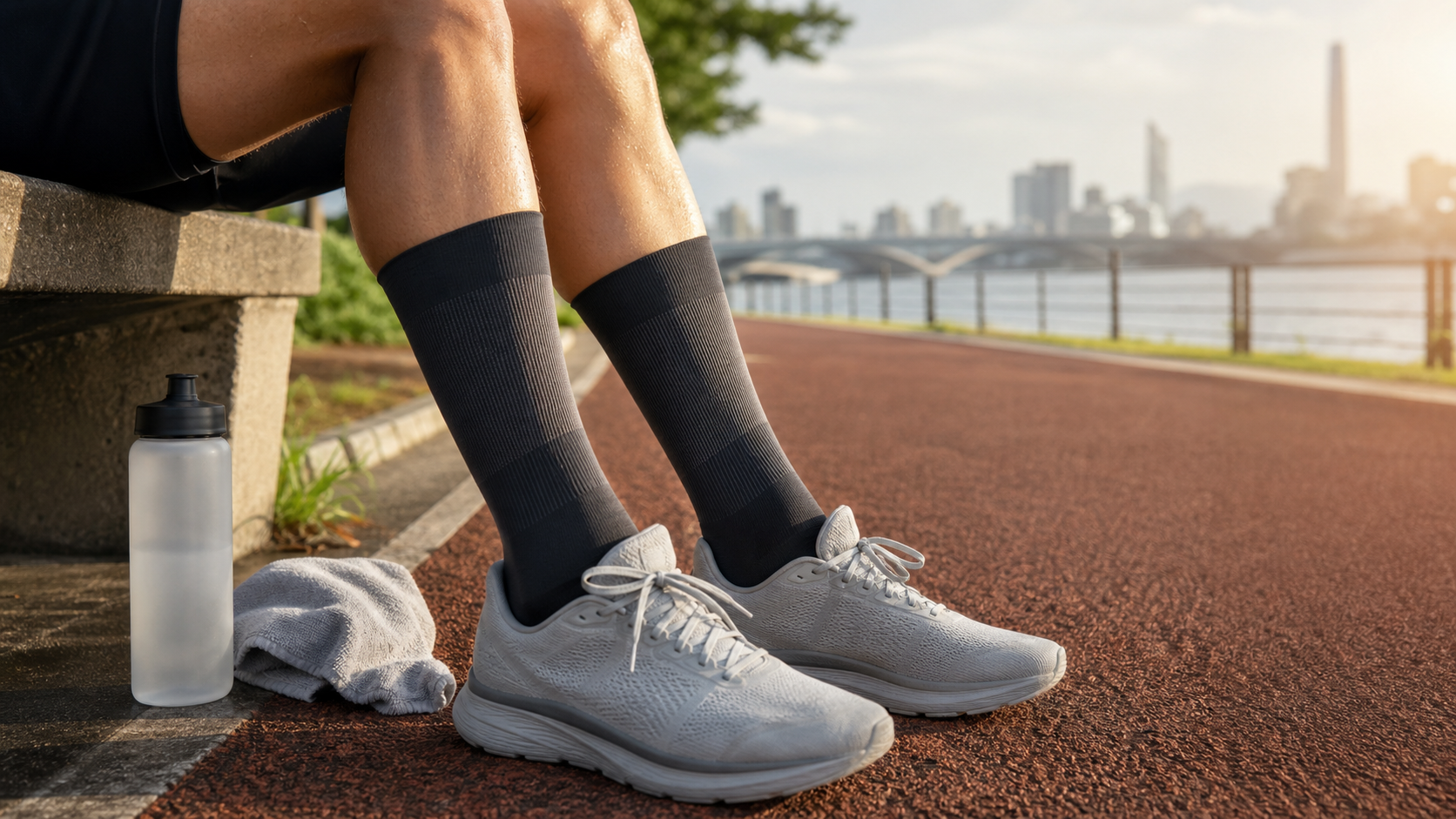
Introduction
Compression socks are becoming increasingly visible in Taiwan’s road running community, with usage rates steadily rising from regular long runs to full marathons and ultramarathons. However, the benefits of compression socks are not one-size-fits-all—the correct pressure level, appropriate wearing timing, and material selection suited to Taiwan’s climate determine whether they can truly deliver results.
The Principle of Gradient Pressure: Why “Tighter Is Better” Is a Misconception
The core design of compression socks is “graduated compression”—tightest at the ankle and gradually decreasing upward. This design mimics the physiological mechanism of venous blood return, promoting leg blood circulation and reducing muscle vibration (lowering micro-damage).
Pressure levels are expressed in mmHg (millimeters of mercury):
| Pressure Level | mmHg Range | Suitable Applications |
|---|---|---|
| Mild | 8–15 mmHg | Daily wear, general training, prolonged standing |
| Moderate | 15–20 mmHg | Long-distance running training (half marathon and above), post-race recovery |
| Firm | 20–30 mmHg | Medical recommendation, varicose veins, recovery after ultramarathon finish |
| Extra Firm | 30 mmHg and above | Medical use only, requires a doctor’s prescription |
Sports compression socks are mostly 15–20 mmHg, a range that balances improved circulation with avoiding excessive tightness.
Choosing Compression Sock Length
- Calf compression sleeves (no foot covering): Cover only the calves, offer better heat dissipation, and are suitable for summer; can be paired with your favorite running socks
- Full compression socks: Cover the feet and provide foot cushioning; suitable for Taiwan’s winter or trail running
- Compression tights: Offer the greatest coverage; suitable for long-distance flights after races or for those with varicose veins
For Taiwan’s summer, calf compression sleeves are the top recommendation, balancing breathability and functionality.
Material Comparison: The Test of Taiwan’s Heat and Humidity
| Material | Breathability | Moisture Wicking & Quick Drying | Durability | Suitability for Taiwan’s Summer |
|---|---|---|---|---|
| Nylon + Lycra blend | Excellent | Good | Fair | Most recommended |
| Merino wool blend | Moderate | Good (moisture regulating) | Fair | Suitable for autumn/winter |
| Polyester + Lycra | Good | Good | Excellent | Acceptable |
| Cotton blend | Moderate | Poor (retains moisture) | Moderate | Not recommended |
For Taiwan’s summer, priority should be given to styles with a high nylon content, combined with quick-drying yarn knit structures, to ensure comfort without stuffiness during prolonged wear.
The Scientific Basis for Wearing Timing
Current research is inconclusive on whether compression socks directly enhance athletic performance, but there is greater consensus on the benefits of the following timing:
- Post-run recovery wear: Put them on within 30 minutes after a race and wear until bedtime to help reduce next-day delayed onset muscle soreness (DOMS)
- Long-distance travel: Wear them on flights or long-distance buses after races to prevent deep vein thrombosis (DVT)
- Runners with standing jobs: Wear 8–15 mmHg mild compression socks during workdays to reduce cumulative leg fatigue
Not recommended usage:
- Wearing them all day for every training session (once the legs become accustomed to compression, discomfort may occur when you stop wearing them)
- Daily wear of pressure levels above 20 mmHg without medical need
Determining the Correct Size
Determining compression sock size is more complex than regular socks and requires considering:
- Ankle circumference (narrowest point)
- Calf circumference at the widest point
- Calf length (from heel to the back of the knee)
Size charts should follow each brand’s own sizing table, as differences between brands are significant. Socks that are too small are not only uncomfortable, but overly tight ankle pressure may actually impede blood circulation.
Practical Recommendations
- For your first try at compression socks, start with 15–20 mmHg moderate pressure rather than jumping straight to high-pressure models
- Ensure leg skin is dry before putting on compression socks; damp skin makes them difficult to put on and prone to causing rashes
- Avoid high-heat drying after washing compression socks; elastic Lycra components deteriorate rapidly under high heat
- The typical lifespan of compression socks is about 150–200 washes before compression force noticeably declines, requiring timely replacement
Conclusion
The most significant practical benefit of compression socks is post-race recovery, not immediate performance enhancement during the race. For Taiwanese runners, choosing breathable nylon styles at 15–20 mmHg as the main option, combined with correct sizing, and using them at the timing where they deliver the most benefit—“post-race recovery”—allows you to gain clear training support benefits with a reasonable investment.
Related Reading
- Road Running Compression Tights Buying Guide: The Practical Benefits of Gradient Pressure Design for Muscle Support
- The Science of Buying Running Compression Tights: Complete Recommendations on Compression Levels, Materials, and Usage Timing
- Do Compression Garments Really Work? A Comprehensive Sports Science Analysis of Compression Gear
- The Recovery Benefits of Compression Tights: Optimal Wearing Timing and Pressure Levels
#公路車 #Fitting 靠人工智慧APP 幫你調整單車
6 年前
Vision Metron RS 37碳幅條輪組 (非SL)官網沒有的 低調開箱 / 這重量太銷魂了 / 公路車 / CT Yeh
6 個月前
西進武嶺 免費訓練分析服務 Intervals | 練不夠還是練過頭?你哪一種類型選手?AI模型告訴你! | 備戰神器 | 公路車 訓練 | CT Yeh
4 年前
3D 列印車褲墊 / 舒適改善? / 無痕 x 分區壓縮 / ATK & Decider系列 / JE22黑科技 / #公路車 #CTYEH
11 個月前
Nepest NOVA 碳條輪組:輕量、空力、舒適一次滿足!/ 公路車 / CT Yeh
7 個月前
訓練台體驗) 2019台北自行車展 三大家 訓練台體驗 Tacx Neo Flux 2 Xepdo Apx Wahoo Kickr
7 年前
#公路車 #Vo2Max #最大攝氧量 測驗 體驗 | 心肺測試
6 年前
[防寒衣體驗] 鐵人魂 三鐵 防寒衣試穿會 於松運 深水游泳池 鯨魚池
8 年前