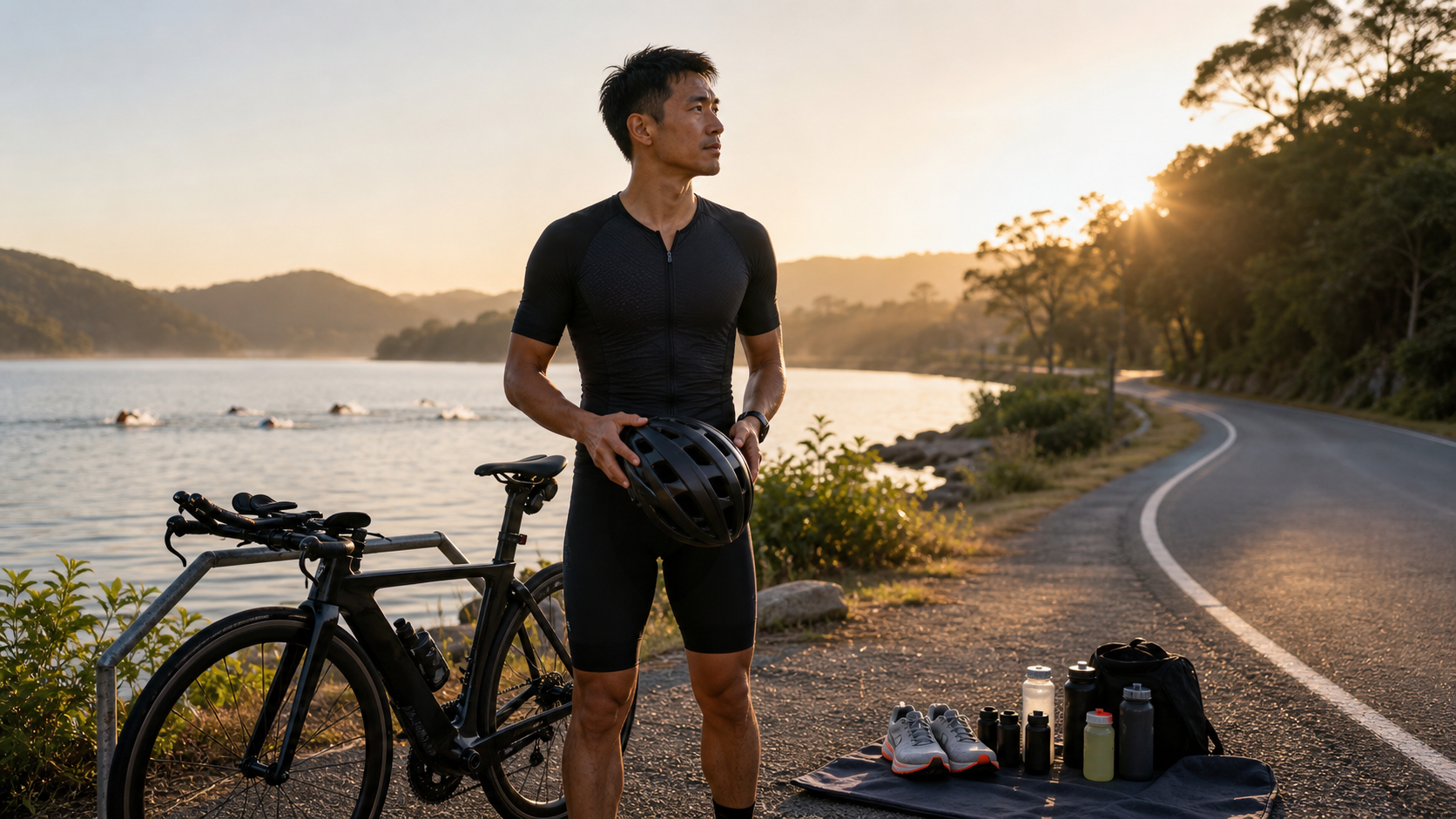
IRONMAN: A Life Test Beyond Distance
The IRONMAN full-distance triathlon (3.8 km swim, 180 km bike, 42.2 km run, totaling 226 km) is one of the most challenging single-day events in amateur endurance sports. The race cutoff time is typically 17 hours, and for most age-group athletes, finishing is itself a victory.
However, as more people complete their first IRONMAN and continue to invest in the sport, the difference between “finish-first” and “performance-first” preparation philosophies has become a core choice facing many first-time challengers.
The “Finish-First” Preparation Philosophy
Core Mindset
Finish-first athletes make safely and healthily reaching the finish line their sole goal. This isn’t indifference to performance, but rather an acknowledgment of the essence of a first IRONMAN: you don’t know how your body will react over such a long-distance race.
Athlete Profiles Suited for “Finish-First”
- First-time IRONMAN finishers (regardless of past triathlon experience)
- Those whose training volume during preparation fell short of recommended peak volumes (e.g., gaps due to work or injury)
- Those unfamiliar with nutrition strategies and pace management for long-distance racing
- Those whose goal is to experience the IRONMAN process rather than a specific finish time
Finish-First Training Strategies
| Training Focus | Specific Approach |
|---|---|
| Prioritize long-distance training | Weekend long rides of 120–150 km, long runs of 25–30 km |
| Practice nutrition strategies | Test energy gels, salt tablets, and solid food during every long session |
| Sufficient brick training volume | Complete 4–6 long bricks during preparation (120+ min ride + 30+ min run) |
| Reduce injury risk | Avoid high-intensity intervals; focus primarily on aerobic base training |
The “Performance-First” Preparation Philosophy
Core Mindset
Performance-first athletes have a clear target finish time (e.g., under 11 hours) and design their training plan around that goal. This philosophy requires more precise training intensity control, more systematic power or pace targets, and a stronger foundation in sports science.
Athlete Profiles Suited for “Performance-First”
- Those with prior IRONMAN finish experience looking to break their personal best
- Those with a consistent training background (12–15+ hours per week)
- Those familiar with pacing strategies and nutrition management across all three disciplines
- Those with a power meter and heart rate monitor to precisely track training intensity
Performance-First Training Strategies
The biggest difference from finish-first is the greater proportion of threshold training and race-pace training:
- Cycling training includes substantial Sweet Spot (88–93% FTP) and Tempo segments
- Running training includes marathon pace long runs
- Swimming training incorporates intervals designed around race speed
- Late-stage preparation includes long bricks simulating race pace
Recommendation for Your First IRONMAN: Start with Finish-First
Even if you have extensive Olympic-distance or 70.3 experience, for your first IRONMAN, it is strongly recommended to prepare with a “finish-first” philosophy, for the following reasons:
-
You don’t know what the 42 km “marathon wall” looks like in an IRONMAN: The IRONMAN run segment is a marathon that comes after a 3.8 km swim and a 180 km bike ride. That kind of fatigue is completely different from a standalone marathon. Before experiencing it for the first time, any pace calculation is just a guess.
-
There are too many variables on race day: Weather, water temperature, wind direction, and road conditions on the bike course can all completely alter your plan. Approaching with the flexible mindset of “I want to finish” is far better suited to adapting to changes than a rigid goal of “I want to finish in X hours.”
-
Finishing itself is a tremendous achievement: Completing your first IRONMAN, no matter how many hours it takes, is one of the most significant athletic achievements of your life. Don’t let anxiety about performance overshadow this precious first experience.
Race Day Pacing Strategy (Finish-First Version)
- Swim: Stay steady and relaxed; don’t sprint due to crowd surges; conserve energy
- Bike: Never exceed 75% FTP for the first 90 km; maintain 72–75% FTP for the final 90 km. “Feeling too easy” is the right feeling
- Run (Marathon): Run slowly for the first 10 km, 15 seconds/km slower than your target pace. The key to completing the final 32 km lies in the restraint of the first 10 km
- Nutrition: Stop at every aid station to refuel; don’t skip any
A Long-Term Perspective on Mindset
After completing their first IRONMAN, the vast majority of athletes will think: “If I had known my body could do this, I should have gone faster.” That thought is precisely the starting point of motivation for “the next one.”
The ultimate takeaway from your first IRONMAN isn’t the time, but a profound understanding of your body’s limits and the powerful belief that “I know I can do this.” Carrying that belief, your second IRONMAN is truly one raced for performance.
Conclusion
The preparation philosophy for your first IRONMAN is your initial dialogue with the sport. Choosing finish-first isn’t a lack of ambition—it’s respect and humility toward long-distance endurance racing. At the moment you cross the finish line, no matter how long it took, that “You are an IRONMAN” is the purest affirmation of all your effort.
Related Reading
2019 柯P 超越北高 第一集團實錄 (11小時實錄請參考另一部影片) 一日雙城 一日北高 NeverStop Taiwan Long Distance Cycling Challenge
7 年前
西進武嶺 免費訓練分析服務 Intervals | 練不夠還是練過頭?你哪一種類型選手?AI模型告訴你! | 備戰神器 | 公路車 訓練 | CT Yeh
4 年前
2019 夏季KOM 5小 完賽心得 準備攻略 東進武嶺 夏季登山王之路 Taiwan KOM Challenge
7 年前
Live) 備戰2019彰化經典百K 賽前攻略 (已完賽請看新影片
7 年前
FTL 與 SYB 車隊專訪 西進武嶺 實用攻略分享! 2小時 如何練?!你不知道的眉角!新手準備武嶺必看 EP1 | 實力派女車友 | 精華版 | 公路車 | CTYeh
4 年前
半日 小台灣 極限單車路線挑戰實錄
7 年前
新玉門關 單車挑戰賽 多視角主集團衝刺菁華版 4K #公路車
5 年前
一日北高前的高裝檢 | 北高 360 | 挑戰11小時的裝備 | 一日雙塔 | 補給
6 年前