Running Footstrike Patterns Fully Explained: A Scientific Comparison of Impact Forces in Forefoot, Midfoot, and Heel Striking
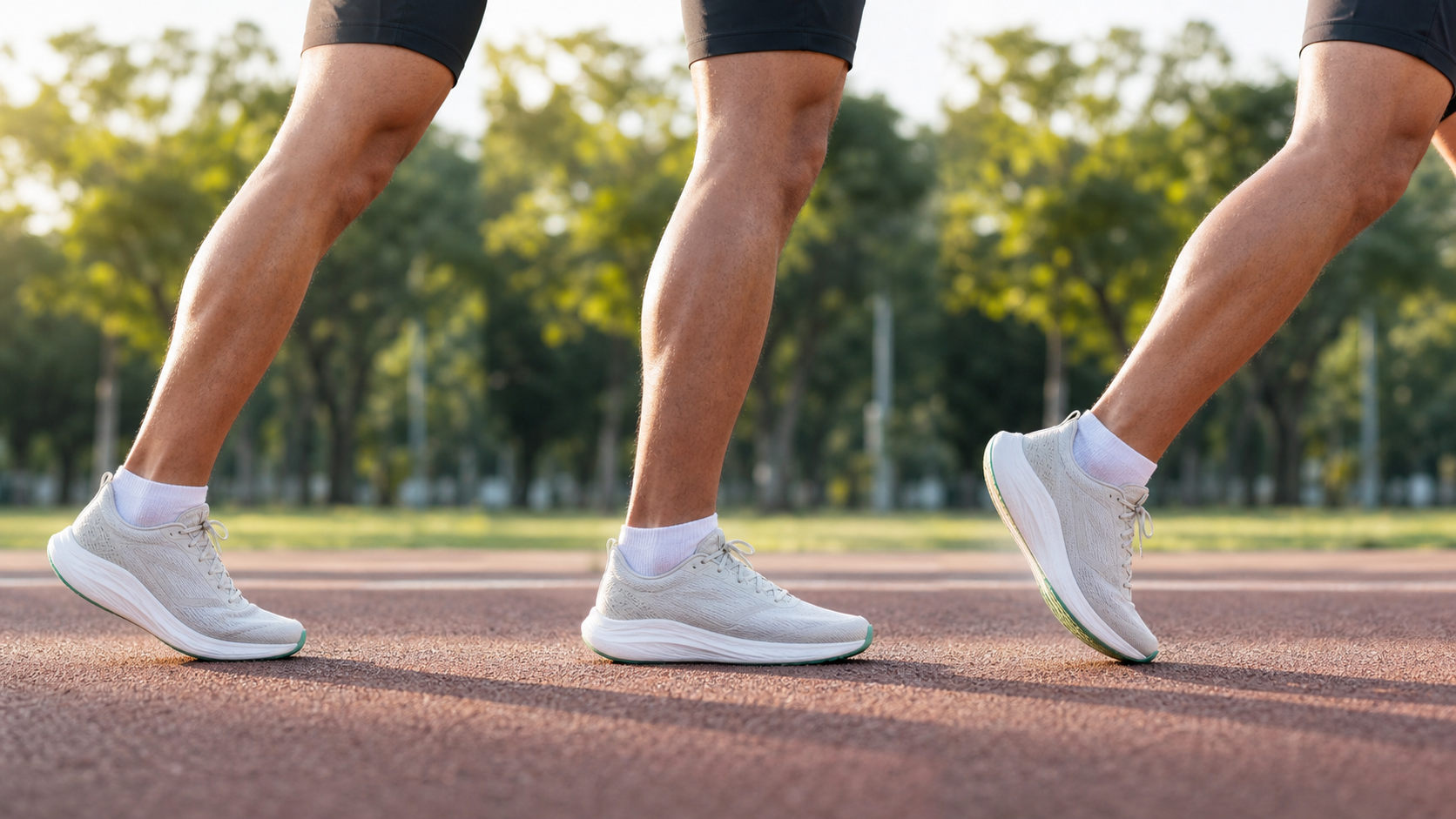
Complete Guide to Running Footstrike Patterns: The Science of Impact Forces in Forefoot, Midfoot, and Heel Striking
Introduction
Every footstrike is a miniature collision. A runner weighing 60 kg takes roughly 900 steps per kilometer, with each step absorbing an impact force of about 2.5 to 3 times body weight. The choice of footstrike pattern not only affects injury risk but also directly influences running economy. Biomechanics researchers have long debated: forefoot striking, midfoot striking, or heel striking—which is the “correct” choice? In reality, there is no one-size-fits-all answer, but scientific data can help you make a more informed decision.
Definitions and Proportions of the Three Footstrike Patterns
Based on the part of the foot that first contacts the ground, footstrike patterns can be divided into three categories:
- Heel Strike (HS): The heel contacts the ground first, with the impact point at the rearfoot. Research shows that approximately 75–80% of non-elite runners in road races adopt this pattern.
- Midfoot Strike (MF): The midfoot arch contacts the ground first, with the foot landing almost simultaneously across the sole. Less common, but recommended by many coaches.
- Forefoot Strike (FF): The ball of the foot contacts the ground first, with the heel barely touching or touching the ground later. Commonly seen in sprinters and habitual barefoot runners.
Scientific Comparison of Impact Forces
| Footstrike Pattern | Initial Impact Peak (BW) | Loading Rate (BW/s) | Common Injury Sites |
|---|---|---|---|
| Heel Strike | 1.5–2.5 | High (approx. 70–100) | Knee joint, iliotibial band |
| Midfoot Strike | Low to no obvious peak | Moderate | Foot arch, metatarsals |
| Forefoot Strike | Low to no obvious peak | Low | Achilles tendon, calf |
(BW = Body Weight multiple)
The most distinctive feature of heel striking is the “Impact Transient”—a shock wave that appears within 50 milliseconds of footstrike, which some studies have linked to tibial stress fractures and knee pain. However, the pioneering research by Lieberman et al. (2010) at Harvard University also pointed out that while forefoot striking can eliminate this peak, excessively increasing the load on the Achilles tendon may raise the risk of tendon injury instead.
The Influence of Running Speed: Speed Changes Footstrike Pattern
The faster you run, the more runners naturally shift toward midfoot or forefoot striking. Among elite runners at paces faster than 3 minutes 30 seconds per kilometer, the proportion of forefoot striking can reach 60–70%; in the latter half of a marathon, as fatigue accumulates, even those who originally midfoot strike often revert to heel striking.
This phenomenon reminds us that footstrike patterns are not fixed—they are a dynamic reflection of speed, fatigue, and muscular strength.
Pros and Cons of the Three Footstrike Patterns
Heel Strike
- Pros: Natural, economical, low demand on calf muscles
- Cons: Higher impact peak, noticeable braking force, requires well-cushioned shoes
Midfoot Strike
- Pros: Even impact distribution, high transition efficiency
- Cons: Requires a certain degree of ankle stability, risk of plantar fasciitis during the transition period
Forefoot Strike
- Pros: Earlier utilization of ground reaction force, suitable for high-speed running
- Cons: Heavy load on calves and Achilles tendon, higher fatigue risk in long-distance races
Should You Actively Change Your Footstrike Pattern?
A systematic review published in the British Journal of Sports Medicine in 2021 indicated that intervention training that forces a change in footstrike pattern can indeed reduce certain specific injuries (such as tibial stress fractures) in the short term, but may simultaneously trigger new injury sites. Therefore, the following practical recommendations are more sensible:
- Only consider changing if you have an injury history: If you have recurrent knee pain that has been assessed as related to heel impact, a gradual adjustment under the guidance of a physical therapist may be appropriate.
- Change slowly: When transitioning from heel striking to midfoot striking, a progressive plan of at least 10 weeks is recommended, with weekly increases not exceeding 10%.
- Barefoot or minimalist shoe training: Short-distance barefoot running can enhance proprioception, helping runners feel a more natural footstrike pattern.
- Cadence increase as an aid: Increasing cadence to 175–185 steps per minute naturally shortens stride length, bringing the footstrike point closer to beneath the center of mass and reducing heel impact.
Conclusion
There is no absolute right or wrong in choosing a footstrike pattern—it is the combined result of individual differences, training background, and shoe selection. Rather than chasing some “standard form,” focus on: landing with the foot beneath the center of mass, smooth transmission of impact forces, and full utilization of tendon elasticity. The purpose of science is not to give you a single answer, but to help you better understand your own body and find the balance between efficiency and safety that works best for you.
Related Reading
- Running Gait Analysis: The Scientific Comparison of Heel Striking vs. Forefoot Striking
- Running Footstrike Patterns: Mechanical Comparison of Forefoot, Midfoot, and Heel Striking
- Running Gait Analysis: The Science of Forefoot vs. Midfoot vs. Heel Striking
- Running Footstrike Analysis: Mechanical Trade-offs of Heel, Midfoot, and Forefoot Striking
CT 喇低賽) 武嶺牽車 才是王道 西進牽車四小時內秘訣 攝手位置 如何判斷 防抽筋小秘訣
7 年前
Insta360 X3 單車YT界的拍攝神器! 首發實測 | 超強AI後製! 超強夜拍實測! 帥氣騎車錄影自己來! | 公路車 |CT Yeh
3 年前
戰略) Zwift Race 如何咬在第一集團 如何評估自己要開多少推力 (請開1.5倍速看)
7 年前
西進武嶺 免費訓練分析服務 Intervals | 練不夠還是練過頭?你哪一種類型選手?AI模型告訴你! | 備戰神器 | 公路車 訓練 | CT Yeh
4 年前
#公路車 #Fitting 靠人工智慧APP 幫你調整單車
6 年前
西進武嶺各路段 前8000名 大數據分析 配速攻略/功率/心律/推力比/維持率/踏頻/踏瓦比/牽車率 大公開 | 建大盃 NeverStop 可參考 | 公路車 | CT Yeh
5 年前
新玩具!Feiyu Pocket 3 無線三軸 運動攝影機 開箱!/ GoPro拍不出來的震撼視角? / 完全沒殘影的神夜拍效果 (內有專屬優惠!) / 公路車 / CT Yeh
2 年前
單車元宇宙新霸主?TrainingPeaks Virtual 實測 / Zwift 完美平替? 還是超越?/ 有台灣國旗!前身 indieVelo / 公路車 / CT Yeh
1 年前