Minimalist Shoes vs. Max-Cushioned Shoes: How Different Running Shoe Designs Affect Running Biomechanics
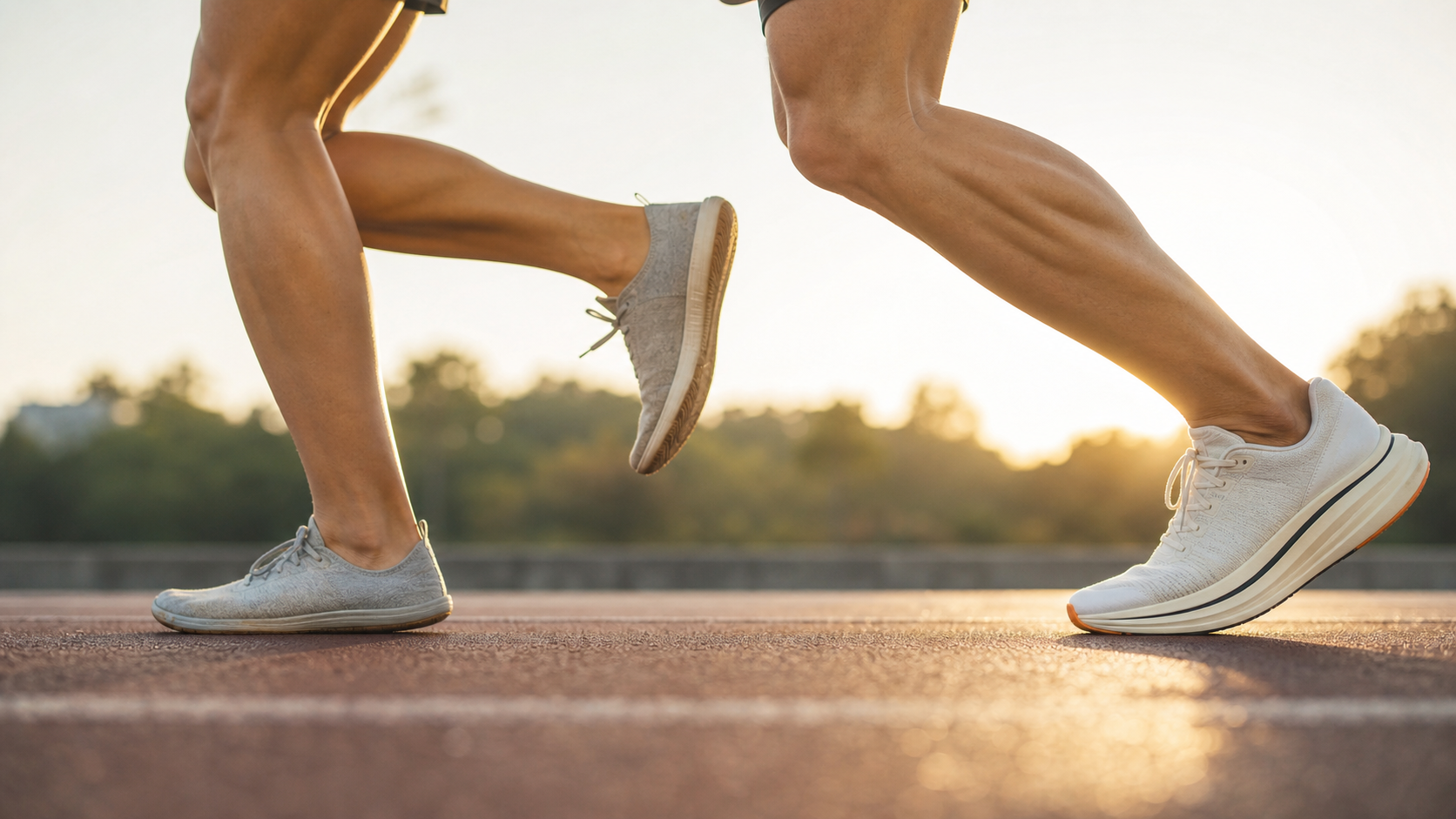
Minimalist Shoes vs. Maximalist Shoes: The Impact of Different Running Shoe Designs on Running Biomechanics
Introduction
In 2009, Christopher McDougall’s Born to Run sparked a wave of minimalist shoes, leading countless runners to abandon bulky footwear in favor of zero-drop, thin-soled shoes. However, this trend brought not only improved efficiency but also a wave of injuries, including metatarsal stress fractures and plantar fasciitis. More than a decade later, the pendulum has swung to the other extreme—maximalist carbon-plated shoes arrived, producing statistically anomalous collective improvements in elite athletes’ performances. Both extremes have their scientific rationale, and both come with their own costs.
Key Parameters in Running Shoe Design
Before comparing minimalist and maximalist shoes, it’s important to understand several key design parameters:
| Parameter | Description | Minimalist Shoes | Maximalist Shoes |
|---|---|---|---|
| Heel-to-Toe Drop | Millimeters by which the heel is elevated above the forefoot | 0–4 mm | 6–12 mm |
| Stack Height | Midsole cushioning thickness at the forefoot | <10 mm | 30–40 mm |
| Weight (per shoe) | Men’s US size 9 | 150–200 g | 200–250 g |
| Carbon Plate | Rigid plate | No | Yes (racing models) |
| Stability Structure | Medial support elements | No | Varies by model |
Biomechanical Effects of Minimalist Shoes
Positive Effects:
- Promotes forefoot/midfoot striking: The low drop removes the artificial “stilt” effect, increasing ankle dorsiflexion and naturally guiding runners toward forefoot or midfoot landings.
- Strengthens arch muscles: The lack of support structures forces the intrinsic foot muscles to work actively; research shows that 12 weeks of minimalist shoe training can increase arch strength by approximately 60%.
- Enhances proprioception: The thin sole increases tactile feedback from the ground, improving dynamic stability of the ankle joint.
- Reduces knee moments: The tendency toward forefoot striking lowers knee flexion moments at landing, theoretically reducing patellofemoral joint stress.
Negative Risks:
- Metatarsal stress fractures from transitioning too quickly (the most common minimalist shoe injury)
- Calf and Achilles tendon overuse (forefoot striking increases Achilles tendon load)
- Greater direct stress placed on the plantar fascia
Biomechanical Effects of Maximalist Shoes
Positive Effects:
- Energy return from highly resilient foam: PEBA foam offers energy return rates above 85%, providing additional propulsion with each step and improving running economy by 3–5%.
- Impact cushioning: Impact forces are distributed, reducing peak landing impact and theoretically protecting joints.
- Carbon plate metatarsal rocker effect: As discussed earlier, it accelerates forward motion and shortens ground contact time.
- Delays calf fatigue: Part of the ankle joint work is borne by the carbon plate-foam system.
Negative Risks:
- Increased ankle instability: The higher sole raises the center of gravity, increasing the risk of ankle sprains, especially on trails or uneven surfaces.
- Reduced proprioception: Thick cushioning blocks ground feedback, and long-term use may diminish the foot’s sensory capabilities.
- Metatarsal stress concentration: The carbon plate increases forefoot rigidity, concentrating stress on the metatarsal heads and posing a risk of stress fractures.
- Limited benefits for heel strikers: Maximalist shoes are optimized for forefoot/midfoot striking; heel strikers may actually experience increased knee impact.
Comparison of Research Data
A 2020 systematic review in the Journal of Sport and Health Science compiled injury risk studies for both shoe categories:
- Minimalist shoes: Injury rates approximately 20–30% higher than traditional shoes (especially during the initial transition period), primarily concentrated in the foot and lower leg
- Maximalist shoes: No statistically significant difference in overall injury rates, but relatively higher risk of stress fractures and ankle sprains
- Traditional training shoes: Falling between the two, with the most stable overall injury rates
How to Choose the Right Running Shoes for You
No single shoe fits everyone. Here is a scientific framework for shoe selection:
- Those with plantar fasciitis or fallen arches: Prioritize traditional training shoes with support structures; approach minimalist shoes with caution (requiring long-term gradual progression)
- Those with a history of knee pain: Consider low-drop (4–6mm) shoes to reduce heel-strike impact
- Those pursuing race performance (5K/10K/marathon): Carbon-plated racing shoes do offer scientific benefits, but daily training should still use training shoes
- Beginner runners: Recommended to start with traditional cushioned training shoes (8–10mm drop, moderate stack height) to build a muscular foundation
- Strengthening the feet: Incorporate minimalist shoes or barefoot running 1–2 times per week over short distances (400–800m) as supplementary training
Conclusion
Both minimalist and maximalist shoes have genuine scientific backing, along with their own appropriate use cases and risks. Minimalist shoes are training tools that “return to instinct”; maximalist shoes are racing weapons enhanced by “technology.” The smartest strategy is to choose the right tool based on your training purpose: use daily training shoes to build your foundation, carbon-plated shoes on race day to perform at your peak, and minimalist shoes when necessary to strengthen your feet—letting each pair of shoes do the right job in the right setting.
Related Reading
- Minimalist vs. Carbon-Plated Maximalist Running Shoes: Which Is Right for You
- The Relationship Between Running Shoes and Injuries: A Complete Analysis of Overly Supportive Shoes, Minimalist Shoes, and the Latest Shoe Selection Science
- The Minimalist vs. Maximalist Running Shoe Debate: The Scientific Truth and Selection Advice
- Minimalist Running Shoes and Barefoot Running: Who They Suit and How to Transition Safely
#公路車 #Fitting 靠人工智慧APP 幫你調整單車
6 年前
Nepest NOVA 碳條輪組:輕量、空力、舒適一次滿足!/ 公路車 / CT Yeh
7 個月前
iPhone內建一秒變長腿🤣 車友必備#cycling
2 年前
靠單車減肥35公斤 心得分享與整理
7 年前
Unaas X50 全碳纖幅條輪 數據實測對比PK | Lun Hyper 的高階版 | 板輪爬坡也可以很厲害? ! 武嶺2小時大師一起親測! CP值超高 | 公路車 | CT Yeh
4 年前
Garmin Edge 1040 重大韌體更新!! / 1050功能全下放!? / 坡度反應變快了嗎?/ 快速對比實測 / 公路車 / CT Yeh
1 年前
單車 重低音 藍芽喇叭 音質實測 SoundBot SB525 Real Sound Test
8 年前
多到選擇障礙... 換個單車把帶想一個小時 / BTP / 編織&軟木特有材質超吸睛! / 公路車 / CT Yeh
1 年前