The Fluid Dynamics of Racing Swimsuits: A Scientific Analysis of Performance Before and After the Full-Body Suit Ban
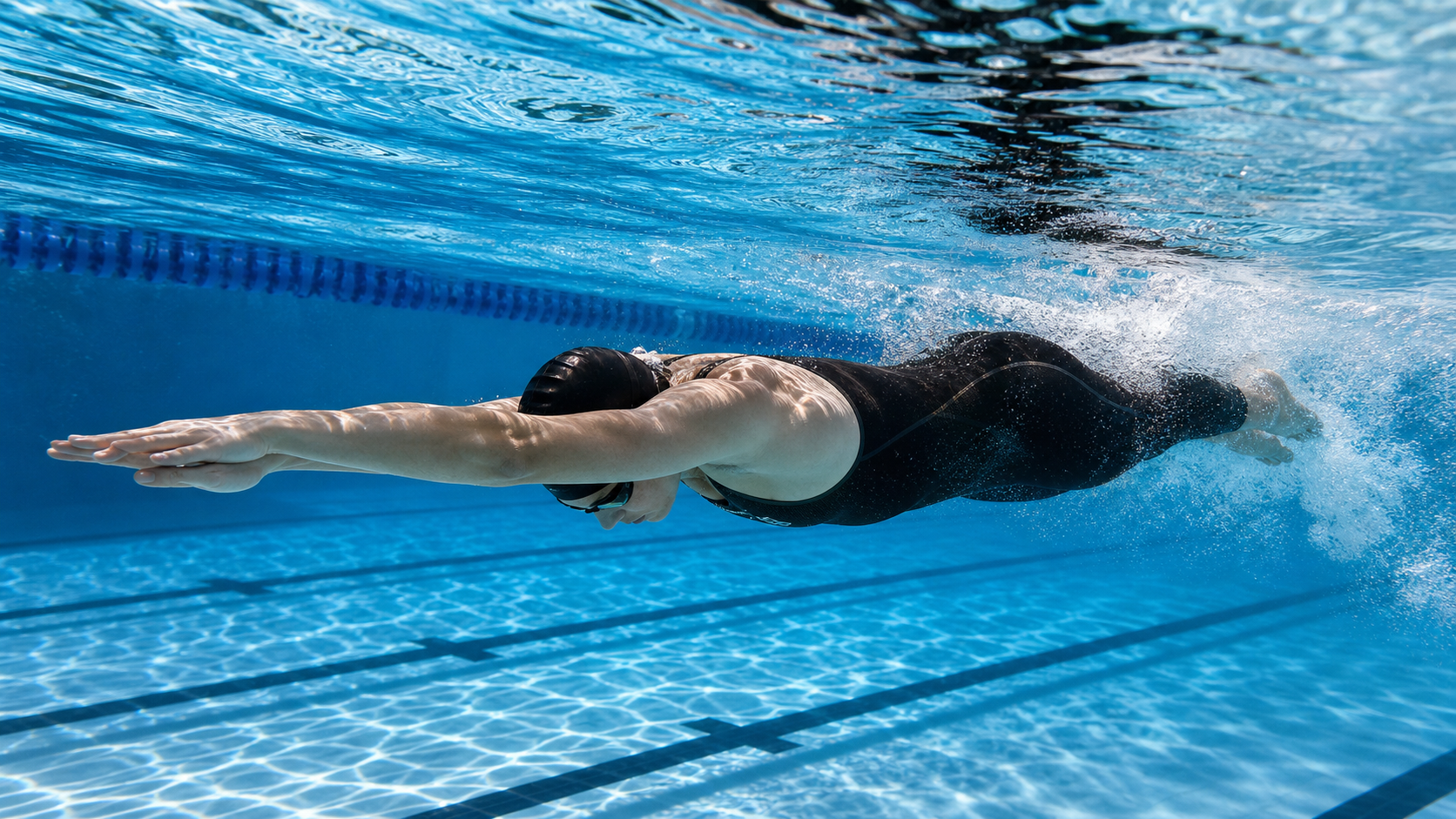
The Most Controversial Technological Revolution in Swimming History
In January 2008, Speedo launched the LZR Racer swimsuit; by the end of February 2008, Australian swimmer Stephanie Rice broke the 400m individual medley world record wearing the LZR. Over the following 18 months, before the conclusion of the 2009 World Aquatics Championships in Rome in July, a total of 43 world records had been rewritten globally, marking the most frenzied record-breaking spree in swimming history. On July 24, 2009, FINA (Fédération Internationale de Natation) announced that from January 1, 2010, non-textile full-body swimsuits would be banned. This decision fundamentally transformed the landscape of competitive swimming and left behind an enduring scientific puzzle: how much of those records were technique, and how much was the swimsuit?
The Fluid Dynamics Design of the LZR Racer
Developed over three years by Speedo in collaboration with NASA and Swimming Australia, the LZR Racer integrated multiple breakthrough technologies:
| Technical Feature | Fluid Dynamics Effect | Mechanism |
|---|---|---|
| LZR Pulse fabric | Friction drag reduced by approximately 6% | Microscopic surface texture guides boundary layer flow to maintain laminar flow |
| Ultrasonic welded seams | Eliminates turbulence triggers at seams | Traditional stitching creates tiny protrusions that disturb the flow field |
| Full-body compression design | Reduces skin and muscle vibration | Lowers “biomechanical drag” |
| Low-density waistband | Enhances buoyancy, improves body position | Increased buoyancy at the waist prevents the legs from sinking |
| Hydro Form compression panels | Compresses the body, reduces frontal cross-sectional area | Improves form drag |
Key data: Fluid dynamics testing at NASA Ames Research Center showed that, compared to previous racing swimsuits, the LZR Racer at the same swimming speed:
- Reduced friction drag by 5–8%
- Reduced body vibration, cutting biomechanical drag by 3–5%
- Improved buoyancy, raising body position, reducing form drag by 2–4%
- Combined effect estimated to improve performance by 1–3% (depending on distance)
The Extreme Buoyancy Effect of Polyurethane Swimsuits
In 2009, the situation escalated further. Italian brands Arena and Jaked introduced swimsuits made of polyurethane (PU) material, whose buoyancy and compression effects far exceeded those of the LZR Racer:
- Extreme buoyancy: The density of PU foam panels is far lower than that of the human body, significantly raising the swimmer’s position in the water and greatly reducing form drag
- Criticized as “wearing a kickboard”: FINA President Julio Maglione used this phrase to describe the extreme buoyancy effect of PU swimsuits
- Explosive performance gains: At the 2009 World Championships in Rome, over just 9 days of competition, most of the 43 world records were broken during that period
Quantitative Analysis of Performance Before and After the Ban
After the FINA ban took effect in 2010, the swimming world witnessed a rare phenomenon of performance “regression”:
| Event | World Record Before the Ban | Best Performance After the Ban (First 2 Years) | Difference |
|---|---|---|---|
| Men’s 50m Freestyle | 20.91 seconds (2009) | 21.45 seconds | -0.54 seconds (-2.6%) |
| Men’s 100m Freestyle | 46.91 seconds (2009) | 47.84 seconds | -0.93 seconds (-2.0%) |
| Men’s 200m Butterfly | 1:49.82 (2009) | 1:51.96 | -2.14 seconds (-1.9%) |
| Women’s 400m Individual Medley | 4:29.45 (2009) | 4:32.68 | -3.23 seconds (-1.2%) |
Notably: Most world records set in 2009 were not surpassed until around 2023 (approximately 14 years later), demonstrating that the effect of technological swimsuits far exceeded the pace of ordinary training improvements.
Scientific Debate: How Significant Was the Effect?
Researchers hold differing views on the actual benefit of technological swimsuits:
Views supporting a significant effect:
- Statistical analysis shows that the performance improvement during 2008–2009 (1–3%) far exceeded the historical average rate of progress (0.1–0.2% per year)
- Several little-known swimmers broke world records while wearing high-tech swimsuits, which is difficult to explain through training alone
Views questioning the effect as exaggerated:
- The psychological placebo effect may have contributed to part of the performance gains
- The conditions at the 2009 World Championships (high temperatures, pool design) also favored fast times
- Training science and nutrition also advanced significantly during the same period
Academic consensus: Objective data from fluid dynamics testing indicates that the drag-reduction effect of high-tech swimsuits was real and significant, with overall performance improvement estimated at 1–2.5%, depending on distance (with a more pronounced effect in sprint events).
Current Standards for Racing Swimsuits (Post-2010)
FINA’s current regulations:
| Regulation Item | Men | Women |
|---|---|---|
| Permitted materials | Textile fabrics (excluding rubber, polyurethane) | Same as left |
| Coverage | Waist to knees | Shoulders to knees |
| Buoyancy limit | Must not provide additional buoyancy | Same as left |
| Thickness limit | Must not exceed a specified thickness | Same as left |
Technology in current compliant swimsuits continues to advance, but due to material and buoyancy restrictions, their benefit is far less than that of the pre-ban PU swimsuits.
The Current State of Fluid Dynamics in Modern Racing Swimsuits
After the ban, swimsuit R&D shifted toward the following directions:
- Surface texture optimization: Mimicking the microscopic structure of shark skin dermal denticles to maintain laminar boundary layer flow
- Body compression technology: Providing compression through precision tailoring to stabilize muscle vibration and reduce biomechanical drag
- Seam technology improvements: Flat seams and minimized seam designs to reduce turbulence trigger points
- Hydrophilic coatings: Some brands apply hydrophobic or hydrophilic coatings to the fabric surface to improve water flow characteristics
Research shows that current top-tier racing swimsuits (such as Speedo Fastskin, Arena Carbon, TYR Venzo) can still improve swimming speed by approximately 0.5–1.5% compared to regular swimsuits, indicating that technology within the compliant range still holds significance.
Recommendations for Taiwanese Swimming Enthusiasts
| Competitive Level | Recommended Swimsuit Choice | Budget (NT$) |
|---|---|---|
| Fitness swimming | General training swimsuit (PBT/polyester) | 500–1,500 |
| Amateur competition | Entry-level racing swimsuit (polyester/nylon) | 1,500–4,000 |
| Serious competition | Mid-tier racing swimsuit (Endurance+) | 4,000–8,000 |
| Elite competition | Top-tier racing swimsuit (competition grade) | 8,000–18,000 |
Important reminder: Top-tier racing swimsuits are designed for competition use and cannot withstand the chlorine erosion of long-term training. Rinse with fresh water after each use, and avoid frequent use in daily training.
Conclusion
The technological revolution of racing swimsuits and the subsequent ban constitute the most vivid fluid dynamics case study in swimming history. It clearly demonstrates that a small reduction in water resistance (2–3%) can yield remarkable competitive results; it also reminds us that the core competitiveness of sport should be built on the physiological capabilities of the human body, rather than the technological advantages of equipment. Nevertheless, continuously optimizing equipment within the compliant range remains a scientific challenge that modern competitive swimming cannot afford to ignore.
Related Reading
- The Complete Record of the Super-Suit Controversy: The Technological Revolution and Rule Rebuilding in Swimming, 2008–2009
- From LZR to X-Glide: The Materials Science Revolution of High-Tech Swimsuits
- Competitive Considerations in Swimsuit Selection: An Analysis of Drag and Pressure Benefits of Technological Swimsuits
- The Technical Evolution of Swimming World Records: The Technology and Training Revolution Behind Record-Breaking in the Past Decade
3D 列印車褲墊 / 舒適改善? / 無痕 x 分區壓縮 / ATK & Decider系列 / JE22黑科技 / #公路車 #CTYEH
11 個月前
#PUSHBIKE 原來這麼好玩! 小朋友 滑步車 初體驗 超可愛
6 年前
下雨天就是要改車 #ceramicspeed #bike
1 年前
單車胎壓觀察到的有趣現象,SRAM Quarq TyreWiz 2.0 無內胎胎壓計 / 裝了有哪些幫助? / Tubeless / 公路車 / CT Yeh
1 年前
2025 自行車錶排行榜 兩萬車友大數據 / Garmin Bryton 排名會大洗牌嗎? / 全新的碼表前身分析 /公路車 / CT Yeh
1 年前
單車元宇宙新霸主?TrainingPeaks Virtual 實測 / Zwift 完美平替? 還是超越?/ 有台灣國旗!前身 indieVelo / 公路車 / CT Yeh
1 年前
2026 車錶排行榜!誰是最多車友正在使用?練家子最愛哪款?🏆 (2萬名車友數據) / 公路車 / CT Yeh
5 個月前
一日北高 11小時 挑戰實錄 原來北高半天就騎完了... 2020 twb360
6 年前