Body Temperature Regulation in Swimming: The Physiological Challenge of Heat Loss 25 Times Faster in Water Than on Land
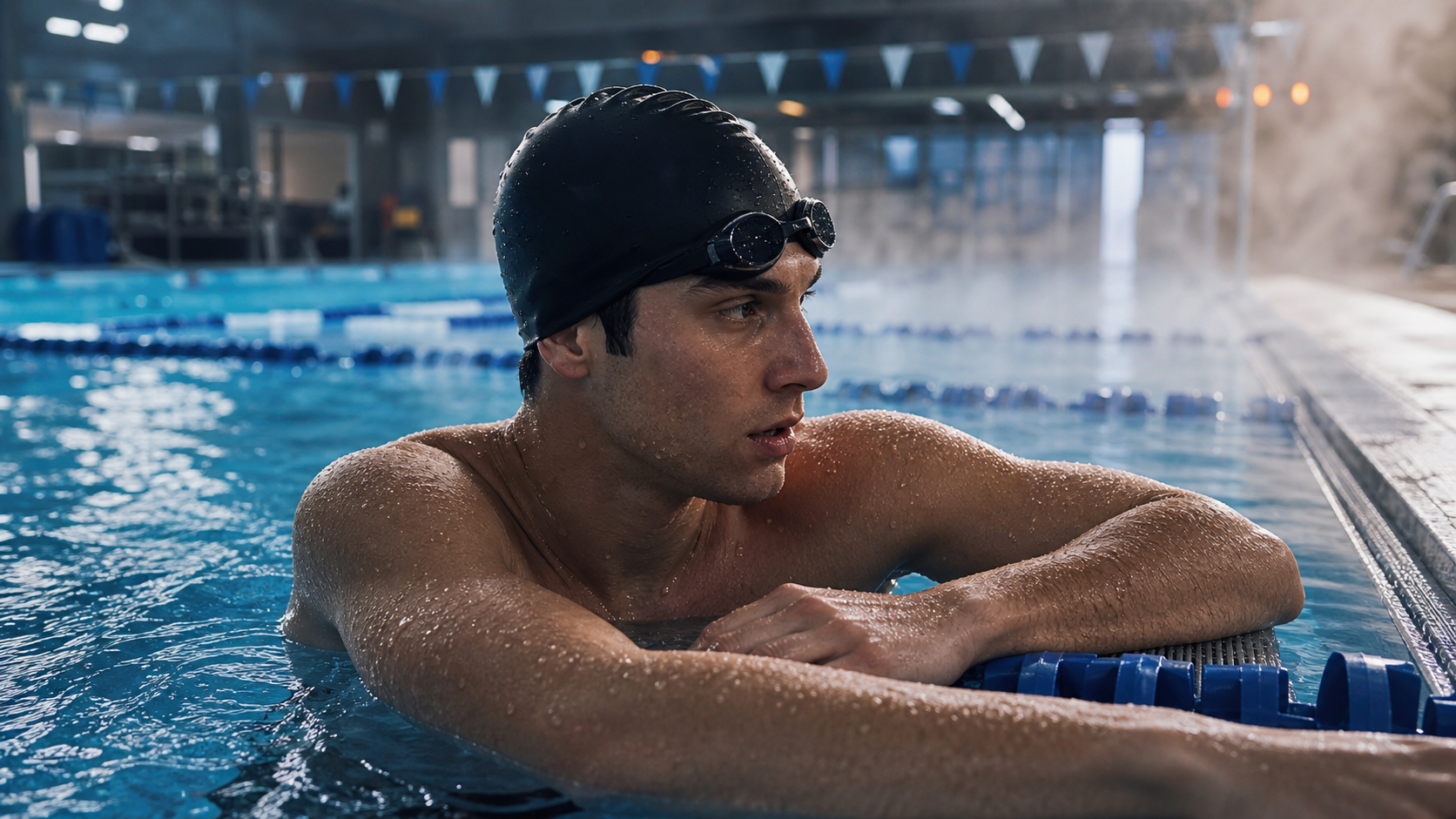
Body Temperature Regulation in Water: An Underestimated Physiological Challenge
Most people know that swimming makes you feel cold afterward, but few think deeply about why. The thermal conductivity of water is approximately 0.58 W/(m·K), while that of air is only about 0.025 W/(m·K)—water conducts heat about 23–25 times better than air. This means that at the same temperature, the rate of heat loss when immersed in water is far greater than in air. This physical property has profound effects on swimming physiology, presenting both challenges and unique training advantages.
The Human Body’s Thermoregulation System
Normal core body temperature is 36.5–37.5°C. When core temperature deviates from this range, the body regulates through the following mechanisms:
| Regulatory Mechanism | Trigger Condition | Effect | Efficiency in Water |
|---|---|---|---|
| Vasoconstriction (skin) | Drop in body temperature | Reduces heat loss from the skin | Limited (water directly contacts the skin) |
| Shivering (skeletal muscle) | Body temperature < 35°C | Heat production (metabolic heat) | Normal |
| Non-shivering thermogenesis (brown fat) | Drop in body temperature | Slow heat production | Normal |
| Sweating (evaporative cooling) | Rise in body temperature | Powerful heat dissipation | Nearly ineffective (skin is in water) |
| Vasodilation (skin) | Rise in body temperature | Accelerates heat dissipation | Instead accelerates heat loss |
Key issue: The heat dissipation mechanism in water (direct skin contact with water) cannot be effectively suppressed by vasoconstriction, while the primary heat-regulating mechanism (sweating) is completely ineffective in water.
The Heat Balance Equation in Swimming
A swimmer’s core temperature change depends on the balance between heat production and heat loss:
Heat production = Basal metabolic heat production + Muscular activity heat production
Heat loss = Convection (water flow carrying heat away) + Conduction (skin contacting water) + Radiation (radiative heat loss in water)
During swimming:
- Muscular activity heat production: approximately 600–1000 kcal/hr (depending on intensity)
- Convective heat loss (swimming strokes accelerating water flow): about 2–4 times faster than static immersion
- Critical water temperature: The water temperature that allows core body temperature to remain stable (neither rising nor falling) during exercise, approximately 25–28°C for the average swimmer
Physiological Responses at Different Water Temperatures
Cold Water Swimming (< 22°C)
- Core body temperature continuously drops (heat loss > heat production)
- Skin blood vessels constrict intensely, concentrating blood in the core
- People with thicker subcutaneous fat experience slower core temperature drops
- In 15°C water, an average person without a wetsuit experiences a core temperature drop of approximately 0.1–0.2°C per minute
Specific effects:
- Reduced muscle temperature: decreased strength and coordination (for every 1°C drop in hand temperature, grip strength decreases by about 2%)
- Increased heart rate: compensatory acceleration of heart rate, increasing myocardial workload
- Hyperventilation: caused by cold shock (see the ventilation physiology article)
Cool Water Swimming (22–28°C)
- Most swimmers can maintain stable core body temperature in this range (at moderate training intensity)
- Mild vasoconstriction still occurs
- This is the optimal water temperature range for competitive events (FINA regulations: pool competition water temperature 25–28°C)
Warm Water Swimming (> 28°C)
- Heat dissipation is limited, and core body temperature tends to rise
- In water temperatures above 32°C, high-intensity swimming (e.g., all-out 200m training sets) can raise core body temperature to 39–40°C
- Increased risk of “swimming heat exhaustion”: symptoms include dizziness, nausea, and a sudden drop in swimming speed
Swimming Heat Exhaustion and Heat Stroke
Exercise-Associated Hyperthermia in Swimming is relatively rare, but the risk increases under the following conditions:
- Water temperature > 30°C combined with high training intensity
- Intensive training in Taiwan’s summer outdoor pools (water temperature can reach 32–35°C)
- Triathlon swim segments (especially when seawater temperatures are high)
Symptom recognition:
- Core body temperature > 38.5°C (can be confirmed via ear or rectal temperature)
- Headache, dizziness, blurred vision
- Inability to maintain swimming speed, decreased stroke coordination
- Flushed skin (more difficult to recognize in warm water)
Emergency treatment: Immediately leave the water, move to a shaded area, apply wet towels to the neck, armpits, and groin, and replenish with electrolyte-containing drinks.
Individual Differences in Thermoregulation
People vary significantly in their ability to regulate body temperature during swimming. Influencing factors include:
| Factor | Cold Water Tolerance | Hot Water Tolerance |
|---|---|---|
| High body fat percentage | Better (subcutaneous fat insulates) | Worse (heat dissipation is harder) |
| High muscle mass | Worse (muscle conducts heat well) | Better (can swim at high speed to dissipate heat) |
| Women (generally) | Worse (stronger skin vasoconstriction response) | Comparable |
| Older adults | Worse (sluggish thermoregulatory reflexes) | Worse (same reason) |
| Cold-water acclimatized individuals | Significantly better | No effect |
Temperature Management in Swimming Training
Cold Water Training Management
- Gradual entry into the water: Allow the skin time to adapt to the temperature and avoid cold shock
- Moderate exercise intensity: In cold conditions, increasing intensity can boost muscular heat production to compensate for excessive heat loss
- Training duration control: In water temperatures below 20°C, it is recommended that a single session not exceed 60–90 minutes
- Warm up after exiting the water: Put on warm clothing immediately to prevent continued cooling after exiting (core body temperature can continue to drop 1–2°C after leaving the water, known as “afterdrop”)
Hot Water Training Management
- Reduce training intensity: When water temperature > 30°C, training intensity should be reduced by 10–20%
- Shorten training duration: Total training time should not exceed 60 minutes
- Increase rest between sets: Leave the water during rest periods at poolside (use air evaporation to cool down)
- Hydration: Although sweating is hard to notice in water, exercise still causes fluid loss through exhalation from the lungs and minimal skin perspiration; replenish 500–750mL per hour
Water Temperature Recommendations for Taiwanese Swimmers
Swimming environments across Taiwan’s seasons:
- Outdoor pools (summer, June–September): Water temperature 30–35°C, watch for heat exhaustion, train moderately
- Outdoor pools (winter, December–February): Unheated pools 18–22°C, pay attention to cold water safety
- Indoor heated pools: Usually maintained at 26–28°C, the optimal training environment year-round
- Open water (northern Taiwan in winter): 18–21°C, requires a wetsuit or adequate cold-water acclimatization
Conclusion
Body temperature regulation in water is one of the most overlooked yet most important safety issues in swimming physiology. Water’s high thermal conductivity makes a swimmer’s core body temperature far more susceptible to environmental temperature than land-based exercise. Whether it’s the risk of hypothermia in cold water or the threat of heat exhaustion in warm water, understanding the physiological mechanisms of thermoregulation and implementing corresponding training management measures is health knowledge that every swimmer—from beginner to competitive athlete—must master.
Related Reading
- Swimming and Body Temperature Regulation: Heat Dissipation Mechanisms in Water and Maintaining Body Temperature
- Body Temperature Regulation in Water and Caloric Expenditure: Why Does Swimming Burn More Energy?
- Water Temperature and Metabolism in Swimming: Caloric Expenditure and Core Temperature Regulation in Cold Water Swimming
- The Effect of Water Temperature on Swimming Performance: Heat Adaptation and Cold Water Swimming Physiology
水金九不厭五分 10度寒流冷到不願停!feat. 卡卡 / 公路車 / CT Yeh
6 個月前
CT暗黑廚房) 車友必備 宇宙無敵鮮蚵湯 幫助訓練恢復 天然食補 好市多 超肥鮮蚵 破PR
7 年前
#公路車 #Vo2Max #最大攝氧量 測驗 體驗 | 心肺測試
6 年前
[防寒衣體驗] 鐵人魂 三鐵 防寒衣試穿會 於松運 深水游泳池 鯨魚池
8 年前
西進武嶺 免費訓練分析服務 Intervals | 練不夠還是練過頭?你哪一種類型選手?AI模型告訴你! | 備戰神器 | 公路車 訓練 | CT Yeh
4 年前
[教學] Premiere 影片 手震 修正 教學 防抖 單眼 影像 GoPro 穩定 Video Stabilization
8 年前
GoPro Hero 10 畫質好但 他是個吃電怪物 過熱只是小CASE 單車錄影實測 ! 耗電 災情 過熱實測 購買前請三思 OSMO Action 2了 !? | CT Yeh
4 年前
靠單車減肥35公斤 心得分享與整理
7 年前