Introduction
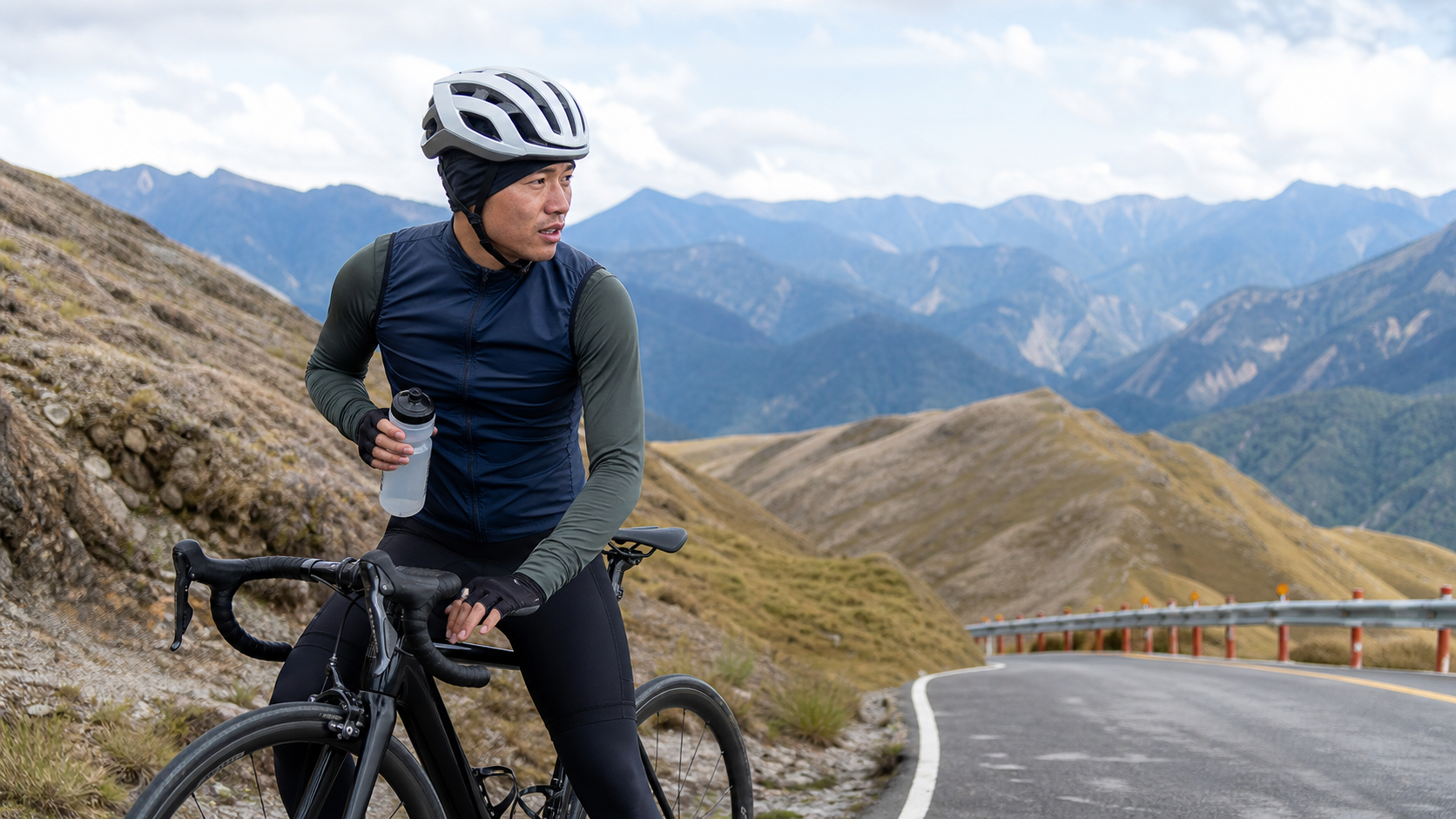
At 3,275 meters above sea level, the summit of Wuling is the highest point on Taiwan’s road network and the dream destination for every road cyclist on the island. However, the air density here is only 67% of that at sea level, making insufficient oxygen supply an unavoidable physiological challenge for riders coming from low altitudes. Acute Mountain Sickness (AMS) can range from mild headaches and nausea to life-threatening conditions. This article starts from the physiological mechanisms and provides a complete guide to preventing and responding to altitude sickness.
The Effects of High Altitude on the Human Body
For every 1,000 meters of elevation gain, atmospheric pressure drops by about 12%, and the partial pressure of oxygen in the air decreases accordingly. At the summit of Wuling:
- Atmospheric pressure is approximately 67% of that at sea level
- Partial pressure of oxygen drops from 21.2 kPa at sea level to about 14.2 kPa
- Maximal oxygen uptake (VO₂max) decreases by about 1% per 100m (above 2,500m)
The body’s responses to hypoxia include faster breathing, increased heart rate, and increased red blood cell production (taking days to weeks). A short-term ride cannot wait for red blood cell adaptation, so the focus of prevention is on avoiding too rapid an ascent.
Recognizing the Symptoms of Altitude Sickness
| Severity | Symptoms | Response Measures |
|---|---|---|
| Mild | Headache, fatigue, slight dizziness, decreased appetite | Rest, hydrate, do not ascend further |
| Moderate | Persistent headache, nausea and vomiting, unsteady gait, decreased urine output | Stop activity immediately, consider descending |
| Severe (HACE/HAPE) | Confusion, inability to walk in a straight line, difficulty breathing, coughing pink frothy sputum | Emergency descent, seek medical attention immediately |
Key Principle: Do not continue ascending once symptoms appear; if symptoms do not improve after rest, you must descend to lower altitude.
Strategies for Preventing Altitude Sickness on Hehuan Mountain Rides
Strategy 1: Gradual Acclimatization
The most effective prevention is giving the body time to adapt:
- Stay at an elevation of 1,500–2,000m the night before the ride (e.g., Cingjing Farm, 1,748m)
- Engage in light activity after arriving at Cingjing; do not force high-intensity training
- After riding up to Wuling on the day, it is not recommended to sleep above 3,000m directly
Strategy 2: Controlling Ascent Rate
The “ascent rule” in mountain medicine: do not increase sleeping altitude by more than 300–500m per day. Although road cycling is usually a day trip, the rate of ascent still needs to be controlled:
- For the 17 kilometers from Cingjing (1,748m) to Wuling (3,275m), it is recommended to take no less than 3 hours of riding time
- Avoid rapid ascent with all-out efforts; give the body buffer time to adapt
Strategy 3: Adequate Hydration
The high-altitude environment is dry, respiratory water loss is rapid, and combined with sweating from cycling, dehydration can worsen altitude sickness:
- When riding on Hehuan Mountain, drink 200–300ml more per hour than at sea level
- Avoid alcohol (it dilates blood vessels and worsens headaches)
- Caffeinated beverages are acceptable in moderation (caffeine has a mild respiratory-stimulating effect)
Strategy 4: Dietary Adjustments
- Focus on a high-carbohydrate diet the day before, reducing high-fat foods
- Avoid overeating before heading up the mountain; stay about 70% full
- Digestive function declines at high altitude, so choose easily digestible fuel (energy gels, bananas, white rice)
Equipment Preparation
Essential equipment checklist for Hehuan Mountain:
- Windproof jacket: Wind speeds at the summit are strong, and temperatures can be 15–20°C lower than at the base
- Gloves and long sleeves: Perceived temperature is even lower on descents
- Backup medication: Pain relievers (Ibuprofen), Diamox (acetazolamide, requires a prescription)
- Power bank: Cell signal is poor at high altitude; ensure your phone has sufficient battery
- Emergency contact information: Taroko National Park Headquarters phone number, location of the nearest medical station
Precautions for Special Populations
The following groups should be especially cautious or consult a physician before tackling Hehuan Mountain:
- Those with heart disease, hypertension, or lung disease
- Those with a history of altitude sickness (higher recurrence rate)
- Those with a recent cold or respiratory infection
- Pregnant women
Practical Tips
- Ride with companions and observe each other’s condition; riding high-altitude routes alone carries higher risk
- Confirm full-body warmth before descending to prevent hypothermia
- If you feel severely unwell at the summit of Wuling, descend immediately to Cingjing (1,748m); most mild symptoms improve within 1–2 hours after descending
- Get sufficient sleep the night before departure; sleep deprivation reduces altitude adaptation capacity
Conclusion
The magnificent scenery of Hehuan Mountain is worth the challenge for every cyclist, but safety always comes first. Understanding the symptoms of altitude sickness, preparing for acclimatization in advance, and staying alert to your own and your companions’ conditions throughout the ride are what will make the Wuling journey a beautiful memory rather than a dangerous accident. Set off with thorough preparation, and the mountain scenery will be all the more beautiful.
Related Reading
- High-Altitude Riding on Hehuan Mountain: Physiological Responses to Hypoxia and Pacing Adjustments
- Altitude Sickness and Cycling: High-Altitude Adaptation You Should Know Before Riding Wuling
- Preventing Altitude Sickness on Taiwan’s Mountain Rides: A Guide to AMS Prevention at Wuling and Hehuan Mountain
- High-Altitude Cycling Training: The Hypoxic Effects and Adaptation Strategies at Wuling 3275m
大禹嶺 到 武嶺牌樓 全程前後實況錄影 | 北進武嶺 | 東進武嶺 | KOM | 訓練台 | 坡度分析 | Taiwan KOM Last 10 km HARD | 公路車
6 年前
單車 一日北高 ( 雙城 ) 肥宅雙人瘋狂行 紀錄片 REACTO
10 年前
#北橫 + #北進武嶺 最硬的員工旅遊 EP1 | #公路車 #拉拉山 | 明池 | 武嶺 | 武陵農場 | 雲海 | Taiwan Cycling Route Wulin
6 年前
Never Stop 西進武嶺 前後雙機 完整全程錄影 訓練台 實境
8 年前
一日北高/長距離團騎 常見問題補充篇 / 組團或跟團的眉角 / 壯車友容易被瘦車友慢性拉爆 / 原來屁股痛可能是這個原因...? / 風場配速法 / 公路車 / CT Yeh
2 年前
FTL 與 SYB 車隊專訪 西進武嶺 實用攻略分享! 2小時 如何練?!你不知道的眉角!新手準備武嶺必看 EP1 | 實力派女車友 | 精華版 | 公路車 | CTYeh
4 年前
富士山KOM 賽事篇 VLOG!/ 小野田出沒!/ 完整路段分析 / 武嶺要騎多快才能拿環?/ 台灣選手 第20回Mt.富士ヒルクライム 参加!/ 公路車 / CT Yeh
2 年前
雨戰! 西進武嶺員工旅遊 加料 各路段大數據分析 | 同事端出5公斤的公路車來挑戰!? EP1
4 年前