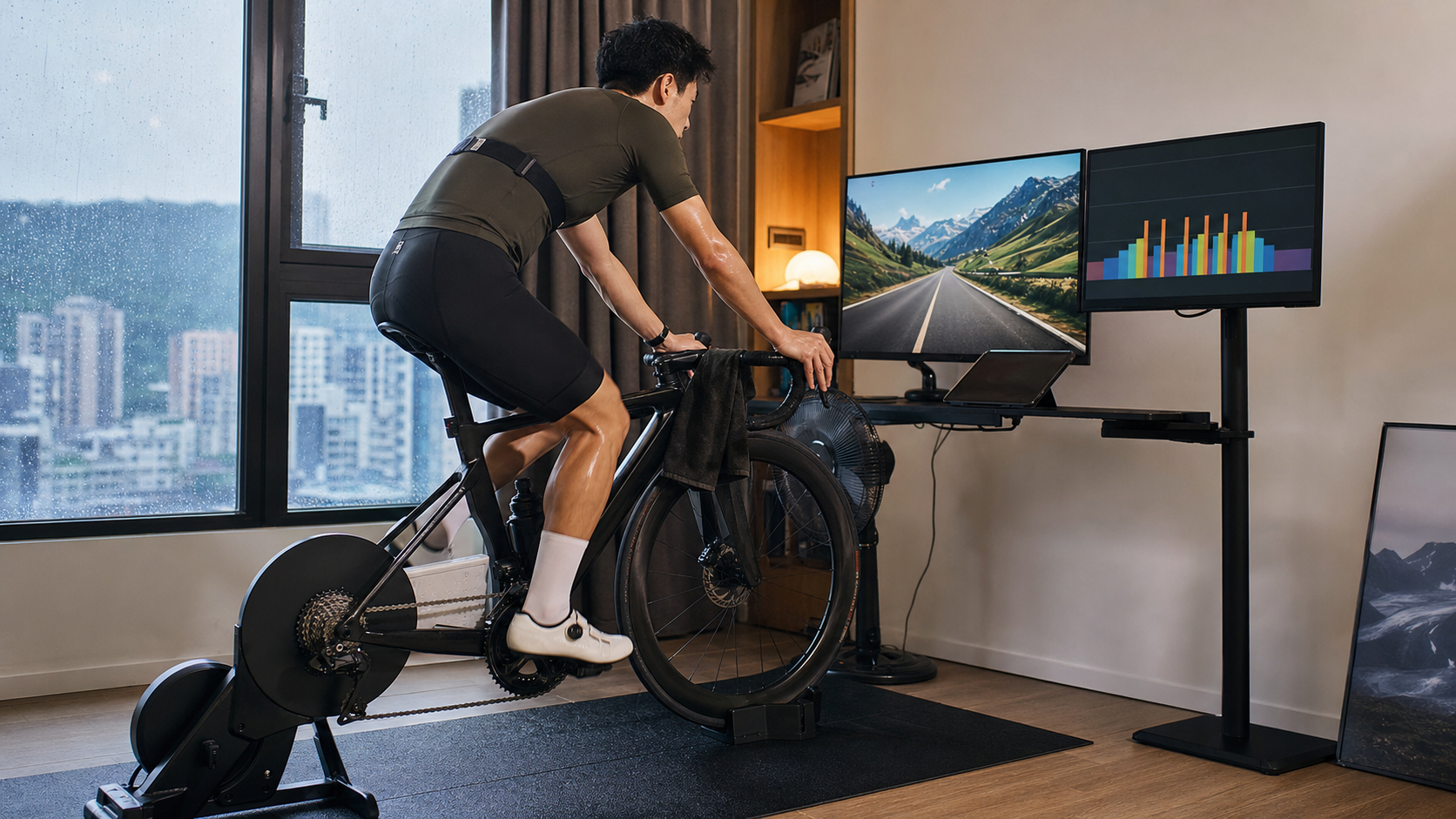
Introduction
Taiwan’s climate makes outdoor training challenging: summer heat, typhoon season, and the continuous rain brought by the winter northeast monsoon. The popularity of indoor smart trainers has led more and more Taiwanese cyclists to move their training indoors, maintaining training consistency. Among indoor training platforms, Zwift and TrainerRoad are the two names most often heard by amateur cyclists. They represent two distinctly different training philosophies, and are worth an in-depth comparison.
Zwift: Immersive Training in a Virtual World
Zwift is a virtual cycling world where you can ride with cyclists from around the globe on the fictional island of Watopia, the streets of London, or Alpine roads. Its biggest selling points are fun and a sense of community.
Power Training Features:
- Offers structured training plans (Zwift Training Plans)
- Includes various plans from FTP Builder to Century Ride Prep
- Workout Mode: Automatically adjusts trainer resistance based on set power percentages (ERG mode)
- Integrated with FTP testing (built-in 20-minute test and Ramp Test)
Pros:
- Virtual races and group rides boost motivation, making long rides less boring
- Good visual effects provide strong psychological stimulation
- Active community; Taiwan has dedicated Zwift communities (e.g., Taiwan Zwift Riders Alliance)
Cons:
- Lower plan flexibility; cannot automatically adjust based on daily fatigue levels
- Gamification elements can be distracting
- Higher monthly fee (approx. USD 14.99)
TrainerRoad: The Data-Driven Training Machine
TrainerRoad has no virtual world, no racing game, just one thing: making you faster. Its core is science-based structured training plans, combined with AI Adaptive Training that dynamically adjusts workout difficulty based on your performance.
Power Training Features:
- Plan Builder: Automatically generates a complete periodized plan based on your target race date and available training days
- Adaptive Training: After completing a workout, the AI adjusts the intensity of your next session based on the quality of your completion
- Career Page: Tracks your Fitness Level (ability scores for each training zone)
- Extensive workout library: Over 1,500 workouts of varying intensities and objectives
Pros:
- Highly scientific training plans with complete periodization logic (Base → Build → Specialty → Pre-Race)
- Adaptive Training is the most intelligent automated adjustment system
- Detailed workout descriptions; each session has a clear explanation of its physiological objective
Cons:
- Interface is relatively dull, leading to greater psychological stress during long training sessions
- Similar monthly fee (approx. USD 19.95, but includes more features)
- Requires pairing with an Apple TV or tablet for a better user experience
Workout Comparison Between the Two Platforms
| Comparison Item | Zwift | TrainerRoad |
|---|---|---|
| Training Philosophy | Fun + Community | Scientific + Data-Driven |
| Workout Adaptation | None | Yes (AI Adaptive) |
| Long Distance Training | Excellent (Virtual Group Rides) | Average |
| Short High-Intensity Training | Good | Excellent |
| FTP Improvement Efficiency | Moderate | High |
| Beginner Friendliness | High | Moderate |
| Racing Features | Yes (Zwift Racing) | None |
| Monthly Fee (USD) | 14.99 | 19.95 |
How Should Taiwanese Cyclists Choose?
Based on different training goals, here are the recommendations:
- Goal is to increase FTP and train systematically for a race: Choose TrainerRoad, and let the AI plan a complete race preparation program for you.
- Lack training motivation, easily get bored: Choose Zwift; virtual group rides and races will help you push through tough workouts.
- Limited budget: Start with a Zwift free trial to get a feel for ERG mode training before evaluating further.
- The optimal solution: Subscribe to both; use Zwift for weekend long aerobic rides and TrainerRoad for weekday high-intensity intervals.
Practical Advice
- Whichever you choose, be sure to test and set your correct FTP: If your FTP is inaccurate, all workout intensities will be off.
- Turn on ERG mode: Letting the trainer automatically maintain the target power is more precise than manual control.
- Room ventilation and cooling are crucial: During Taiwan’s summer, indoor temperatures can exceed 30°C. Rising core temperature can cause power output to drop by 10–15%. Use at least one powerful fan.
- Keep a training log: Record the completion rate, RPE, and heart rate for each workout to facilitate evaluating training effectiveness.
- Sync with Garmin/Wahoo regularly: Upload your training data to Strava or TrainingPeaks to build a complete training record.
Conclusion
Zwift and TrainerRoad represent two paths for indoor training: one filled with visual stimulation and community warmth, the other driving your progress coldly and precisely. For Taiwanese cyclists, no matter which platform you choose, the key is being able to train consistently. Find the tool that suits you, pair it with the correct FTP setting, and combined with Taiwan’s wonderful mountains and roads, FTP growth is just a matter of time.
Related Topic Reading
- Complete Guide to Stationary Trainers: Zwift vs. TrainerRoad Comparison
- Indoor Training Platform Showdown: In-Depth Comparison of Zwift vs. Wahoo SYSTM vs. TrainerRoad
- Data Quality in Zwift and Indoor Training: Analyzing the Differences from Outdoor Riding
- Indoor Trainer Workouts: A Structured Training Guide for Zwift and Garmin
元宇宙單車運動!智騎 X7 Pro 智能訓練台 ThinkRider 居家線上練功
5 年前
訓練台體驗) 2019台北自行車展 三大家 訓練台體驗 Tacx Neo Flux 2 Xepdo Apx Wahoo Kickr
7 年前
單車元宇宙新霸主?TrainingPeaks Virtual 實測 / Zwift 完美平替? 還是超越?/ 有台灣國旗!前身 indieVelo / 公路車 / CT Yeh
1 年前
安裝) 超酷! RGT Cycling 最新 訓練台 騎乘軟體 模擬一級賽經典路線 選手 Road Grand Tours 安裝教學 Zwift 替代方案
7 年前
Fitting訓練兩用功率車 ! Thinkrider ST900 完整實測!/ 坡度升降 / 鄰居測試/ smart bike/公路車/ CT Yeh
2 年前
ThinkRider 智騎 XXPRO 訓練台,高階機種功能 只要 1/3價格!? 實測功率對比、噪音實測 / 公路車 / CT Yeh
1 年前
2022台北國際自行車展 訓練台 試騎心得大全 差點腿軟走出! 元宇宙武嶺!| Garmin Tacx Oreka Xpedo Wahoo | 公路車 | CT Yeh
4 年前
免費UCI指定競賽騎乘軟體 Mywhoosh 概覽初體驗 / 畫質的天花板!? 用鈔能力做出來的 / 公路車 / CT Yeh
2 年前