Bicycle Handlebars and Bar Tape: Vibration Absorption Comparison Between Carbon Fiber and Aluminum Handlebars
Introduction
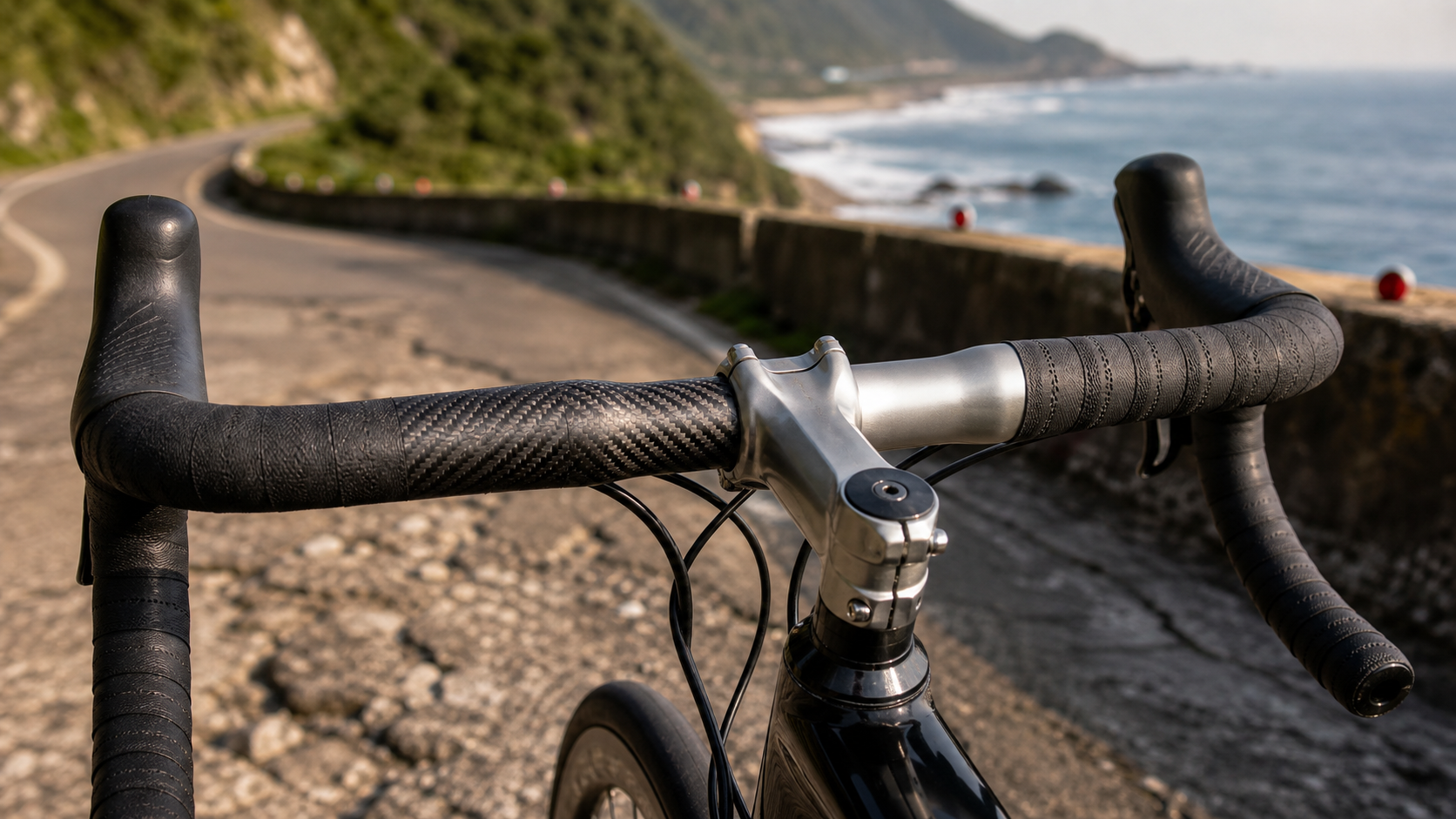
Among all contact points on a bicycle, the handlebar is the most easily overlooked. Most riders upgrade their wheelsets and drivetrains, yet continue using the stock aluminum handlebars and thin bar tape for years. In reality, the handlebar material and the thickness and material of the bar tape have a very direct impact on wrist and shoulder fatigue during long-distance riding.
Carbon Fiber vs. Aluminum Handlebars Comparison
| Comparison Item | Carbon Fiber Handlebars | Aluminum Handlebars |
|---|---|---|
| Weight | 110–170g | 200–300g |
| Vibration Absorption | Excellent (dampens high-frequency vibration) | Poor (vibration transmitted directly) |
| Stiffness | High (requires wall thickness tuning) | Moderate |
| Impact Safety | No obvious deformation warning before failure | Bends first, providing a warning |
| Taiwan Reference Price | NT$3,500–12,000 | NT$800–3,500 |
| Recommended Replacement Interval | 3–5 years, or inspect immediately after a crash | 5–8 years |
The advantage of carbon fiber handlebars lies in their unique fiber structure, which dampens high-frequency vibration from the road surface, significantly reducing hand numbness after long rides. On rougher road surfaces such as Taiwan’s Northern Cross-Island Highway and the coastal roads of eastern Taiwan, the comfort advantage of carbon fiber handlebars is especially noticeable.
Aluminum handlebars’ biggest advantage is more predictable safety—they bend rather than break upon impact, giving the rider a visual warning. For technical riding or off-road scenarios, aluminum handlebars are actually more recommended.
Handlebar Width and Drop Shape Selection
The shape design of the handlebar also affects comfort:
- Shoulder width matching: Handlebar width should equal or be slightly wider than shoulder width (distance between acromioclavicular joints). The average suitable width for Taiwanese men is 400–420mm, and for women 360–380mm
- Compact Drop: Smaller drop and reach, requiring less wrist movement, suitable for riders with smaller hands or limited wrist flexibility
- Traditional Drop: Deeper drop provides more hand positions, suitable for long-distance riders who prefer varied hand placements
- Flare Drop: The drops flare outward, mainly seen on gravel bikes, improving stability in the drop position
Bar Tape Selection
Bar tape is the easiest and most worthwhile upgrade in the handlebar system, costing only NT$500–2,000 while delivering noticeable comfort improvements:
By material:
- PU foam: Common on entry-level bikes, decent cushioning, poor sweat resistance, tends to loosen after summer rides in Taiwan
- EVA foam: Lightweight, good durability, slightly firmer feel, suitable for heavy training
- Gel/silicone: Best cushioning performance, but heavier, suitable for long-distance riding or riders with sensitive wrists
- Cork: Traditional material, lightweight, good sweat absorption, eco-friendly, but less durable
Wrapping technique: Wrap the tape from the end of the bar upward; proper tension and overlap ratio are key. Have an experienced shop mechanic demonstrate, and after practicing 2–3 times yourself, you’ll get the hang of it.
Recommended Brands Available in Taiwan
- FSA K-Force Carbon handlebars: Suitable for advanced racing, lightweight with high stiffness, approximately NT$5,000–7,000
- Deda Elementi Superzero: Italian design, balanced carbon fiber layup, combining comfort and handling, approximately NT$6,500–8,000
- Ritchey Comp Ergo aluminum handlebars: High value-for-money choice, solid craftsmanship, approximately NT$1,200–1,800
- Fizik Tempo Microtex Bondcush bar tape: Cushioned bar tape with gel inner layer, approximately NT$800–1,200
Practical Recommendations
- Do not underestimate handlebar clamp torque: Carbon fiber handlebars typically require only 4–5 Nm of clamp torque and must be installed with a torque wrench; over-tightening can crush the carbon fiber
- Inspect carbon fiber handlebars regularly: Check for cracks or whitening before every ride; stop using immediately if found
- Replace bar tape annually: Taiwan’s hot, humid summers mean sweat can seep into bar tape and cause mold; it is recommended to replace at least once a year
- Always install bar end plugs: If the hollow ends of the handlebar are left unplugged during a crash, they can impale the wrist and cause serious injury
Conclusion
Upgrading the handlebar system is a “silent comfort upgrade”—you may not be able to pinpoint what’s different, but after riding 150 kilometers, the fatigue in your wrists and shoulders will indeed be significantly reduced. Carbon fiber handlebars paired with high-quality gel bar tape is the optimal combination for Taiwan’s mountainous and rough road surfaces, especially recommended for riders planning island-wide tours or long group rides.
Related Reading
- Carbon Fiber vs. Aluminum Frames: Real Riding Feel Differences and Value Analysis
- In-Depth Bicycle Frame Material Comparison: Riding Feel, Weight, and Long-Term Investment Analysis of Aluminum vs. Carbon Fiber vs. Titanium
- Aluminum vs. Carbon Fiber Wheelsets: Comprehensive Comparison and Buying Strategy
- Carbon Fiber vs. Aluminum Seatposts: The Trade-off Between Vibration Absorption and Weight
多到選擇障礙... 換個單車把帶想一個小時 / BTP / 編織&軟木特有材質超吸睛! / 公路車 / CT Yeh
1 年前
超開放的自行車錶!可以玩遊戲裝APP!?/ SRAM合併的 Hammerhead Karoo深入開箱!/ 即時爬坡偵測 / 全球導航地圖 / Garmin Bryton / CT Yeh
1 年前
再一組! 全碳幅條 碟煞/無內胎輪組 開箱! 到底好騎嗎? UNAAS X40 | 公路車 | CT Yeh
4 年前
碟煞公路車 銑面器 !? 原來銑完差這麼多! 降低蹭碟機率! | TIME 公路車 保養小記錄 | CT Yeh
3 年前
Canyon 公路車斷把手 五年老車特規還能修嗎? 維修保養全記錄 feat. 501單車監理站 | 公路車 | CT Yeh
4 年前
2026台北自行車展 一日隨意逛小紀錄 / 風櫃嘴16分國手的交流 / 踩台居然刷到季軍🥉 USD150 GET! / ! / CT Yeh
4 個月前
Nepest NOVA 碳條輪組:輕量、空力、舒適一次滿足!/ 公路車 / CT Yeh
7 個月前
2026 車錶排行榜!誰是最多車友正在使用?練家子最愛哪款?🏆 (2萬名車友數據) / 公路車 / CT Yeh
5 個月前