Long-Distance Cycling: A Complete Guide to Preparing for a 200km One-Day Ride, from Planning to Execution
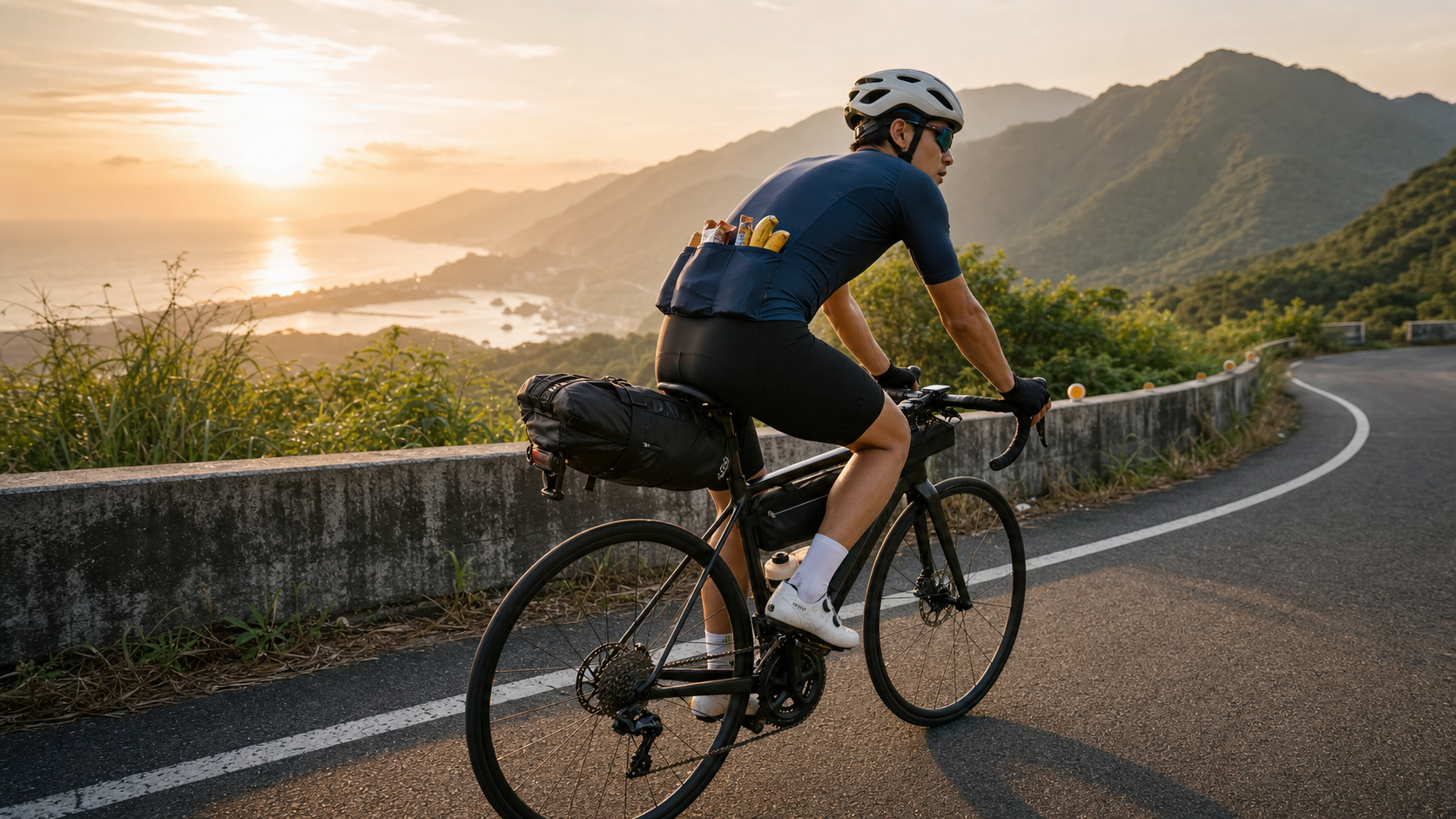
Introduction
Taiwan offers many classic routes ideal for tackling a 200km one-day ride—from the Northern Coast loop in the north, the Sun Moon Lake grand traverse in the central region, to the Pingtung Plain dash in the south, each with its own terrain and difficulty. However, completing this distance is not just about “courage”—it requires a systematic preparation strategy. Many beginners set out without adequate preparation and often hit a severe energy crash (bonk) at the 130–150km mark, forcing them to abandon early.
This article provides a complete preparation framework to help you systematically complete your first (or faster) 200km.
8-Week Pre-Race Training Plan
The core principle of preparation is “progressive overload.” Below is a recommended 8-week plan with gradually increasing weekly volume:
| Week | Weekly Volume | Longest Single-Day Ride | Key Workouts |
|---|---|---|---|
| Weeks 1-2 | 150–180km | 60km | Zone 2 aerobic base |
| Weeks 3-4 | 200–230km | 80km | Add 2×1hr tempo rides |
| Weeks 5-6 | 250–280km | 120km | Long rides + fatigued-leg days |
| Week 7 | 200km (taper) | 100km | Maintain intensity, reduce volume |
| Week 8 | 100km (race week) | 40km easy | Full preparation, store energy |
Key training elements include:
- Back-to-back long rides: Saturday 100km + Sunday 80km to simulate accumulated fatigue
- Fatigued-leg training: Complete 2–3hr moderate-intensity rides with slightly tired legs
- Night or early-morning rides: Help your body adapt to different circadian rhythms
Equipment and Nutrition Preparation
The nutrition strategy for 200km can make or break your ride. Here is a basic framework for calculating energy needs:
For a 70kg rider, a 200km ride (estimated 7–9 hours) burns approximately 3,500–5,000 calories. Recommended preparation:
- Solid food: Energy bars, rice balls, bananas (refuel every 45–60 minutes)
- Liquid nutrition: Sports drinks, electrolyte tablets (to prevent cramps and sodium loss)
- Caffeine strategy: Use a caffeinated gel (about 100mg) after the 130km mark to delay fatigue
- Refueling stop planning: Taiwan’s convenience stores are extremely dense, so you can set a refueling point every 40–50km
Core equipment checklist:
- At least 2 spare inner tubes + CO₂ inflator or hand pump
- Front and rear lights (to ensure safety for night riding)
- Rain jacket or windbreaker (Taiwan’s weather is unpredictable)
- Insoles or padded cycling shorts (to prevent pressure from long hours in the saddle)
Race-Day Pacing Strategy
The reason many people fail at 200km is “riding too fast in the early stages.” It is recommended to follow the “negative split” pacing principle:
Three-Segment Pacing Breakdown (using an 8-hour finish as an example):
- 0–80km: Push at low-intensity Zone 2, averaging 23–25km/h. This is the easiest segment of the entire ride—build confidence
- 80–150km: Maintain a steady rhythm, adjust slightly based on terrain, and on flats you can pick up the pace a little to 25–27km/h
- 150–200km: Decide based on remaining energy. If your early pace was solid, you can hold or slightly increase speed over the final 50km
A practical mental trick is to break the 200km into four 50km “mini-tasks.” After completing each segment, do a proper refuel and take a short break (5 minutes), giving both your mind and body a chance to reset.
Practical Tips
During preparation, the following points are often overlooked but are crucial:
- Test all equipment and food during training: Never use new nutrition products or gear for the first time on race day. Be sure to test everything before long rides in Taiwan’s summer heat
- Carb-load in the week before the race: In the final 3 days, increase daily carbohydrate intake to body weight × 7–10g to fully top off muscle glycogen
- Sleep matters more than any training: Ensure 7–8 hours of sleep per night in the two weeks before the race, especially in the final 3 days
- Understand Taiwan’s weather patterns: If starting in summer, set off at 4–5am to avoid the high-temperature window from 10am–3pm
- Share your route plan with family or teammates: Share your GPS location to ensure safety
Conclusion
Completing 200km in one day is a major milestone for cycling enthusiasts in Taiwan. It tests not just physical fitness, but also planning ability, nutrition wisdom, and mental resilience. As long as you follow a systematic preparation strategy, most riders with a basic fitness base can make themselves ready to cover this distance within 8 weeks.
The most important point is: enjoy the process. Taiwan’s road scenery never lacks surprises. Over the course of a 200km journey, you will have the chance to see many corners and landscapes you would never notice on an ordinary ride—and that is the most precious reward of completing this journey.
Related Reading
- Training Plan Before a Long Ride: How to Prepare for 200km in 8 Weeks
- Road Bike Long-Distance Challenge Preparation: Training Methods for a 200km One-Day Round Trip
- Ultra Cycling Preparation: Challenges Beyond 200km
- The Mental Challenge of Long-Distance Riding: Psychological Preparation Strategies for a 200km One-Day Ride
單車 一日北高 ( 雙城 ) 肥宅雙人瘋狂行 紀錄片 REACTO
10 年前
半日 小台灣 極限單車路線挑戰實錄
7 年前
Live) 備戰2019彰化經典百K 賽前攻略 (已完賽請看新影片
7 年前
一日北高常見問題大集合 | 攻略 | 路線 | 訓練 | 補給 | 自行車 單車 | 一日雙城 | 雙塔 | TWB北高360 | 屁股痛
6 年前
靠單車減肥35公斤 心得分享與整理
7 年前
一日北高前的高裝檢 | 北高 360 | 挑戰11小時的裝備 | 一日雙塔 | 補給
6 年前
2019 夏季KOM 5小 完賽心得 準備攻略 東進武嶺 夏季登山王之路 Taiwan KOM Challenge
7 年前
2019 柯P 超越北高 第一集團實錄 (11小時實錄請參考另一部影片) 一日雙城 一日北高 NeverStop Taiwan Long Distance Cycling Challenge
7 年前