The 72-Hour Recovery Plan After Long-Distance Rides: A Scientific Shift from Passive Rest to Active Recovery
Introduction
After completing an ultra-long ride, your body enters a recovery window that demands respect. Many Taiwanese cyclists, after finishing a round-island tour, a Wuling climb, or a 200km challenge, either immediately start planning their next challenge (training too soon for recovery) or remain completely immobile for a week (over-resting). Neither extreme is an optimal recovery strategy.
Sports science research shows that the 72 hours following an ultra-long ride should be divided into three distinct recovery phases, each corresponding to different bodily states and optimal recovery interventions. Understanding this timeline can improve the quality of your next training session while preventing the accumulation of chronic fatigue.
The Body’s State After an Ultra-Long Ride
Taking a ride of 200km or more as an example, the damage state of the body after finishing includes:
| Type of Damage | Severity | Recovery Time (Estimated) | Main Symptoms |
|---|---|---|---|
| Muscle micro-tears (DOMS) | Moderate to High | 48–96 hours | Delayed onset muscle soreness, peaking 24–48 hours after the ride |
| Glycogen depletion | High | 24–48 hours (requires replenishment) | Muscle weakness, sluggish thinking |
| Inflammatory response (acute) | Moderate | 24–72 hours | Localized swelling sensation, warmth |
| Nervous system fatigue | Moderate to High | 48–96 hours | Slow reactions, decreased coordination |
| Immune system suppression | Moderate | 12–48 hours (“open window” period) | Susceptibility to colds |
| Hormonal imbalance (cortisol/testosterone) | Mild to Moderate | 24–72 hours | Mood swings, changes in appetite |
Special note: The “Immune Open Window”: Within 12–24 hours after an ultra-long ride, the immune system is in a suppressed state, with infection risk 2–6 times higher than usual. During this period, pay special attention to avoiding contact with sick individuals, prolonged stays in crowded public places, and ensure adequate sleep and nutrition.
The 72-Hour Phased Recovery Plan
Hours 0–24: Passive Recovery Phase
The core goals of this phase are “replenish, rest, and reduce inflammation”:
Within 30–60 minutes after finishing the ride (the golden recovery window):
- Consume 20–30g of protein + 60–80g of carbohydrates (e.g., chocolate milk, recovery protein shake with a banana)
- Slow stretching for 10–15 minutes (gentle stretching, do not force joints)
- Replenish with electrolyte drinks (don’t just drink plain water)
2–8 hours after the ride:
- Main meals should focus on carbohydrates (rice + protein), approximately 1–1.2g of carbs per kilogram of body weight
- You may take an ice bath (10–12°C, 10–15 minutes) or contrast water therapy (hot/cold alternating) to accelerate inflammatory metabolism
- Avoid alcohol (it inhibits protein synthesis and glycogen resynthesis)
First night of sleep:
- This is the most important recovery time; ensure 9–10 hours of sleep
- You may take 400mg of magnesium before bed (to aid deep sleep and replenish magnesium lost during the ride)
Hours 24–48: Transition Phase from Passive to Active
- DOMS (delayed onset muscle soreness) typically peaks during this phase, but this doesn’t mean you can’t be active
- Recommended: “Active recovery ride” — ride at Zone 1 intensity (very easy, not breathless, not sweating) for 30–45 minutes
- Benefits of an active recovery ride: promotes blood circulation, accelerates clearance of metabolic waste, maintains joint mobility
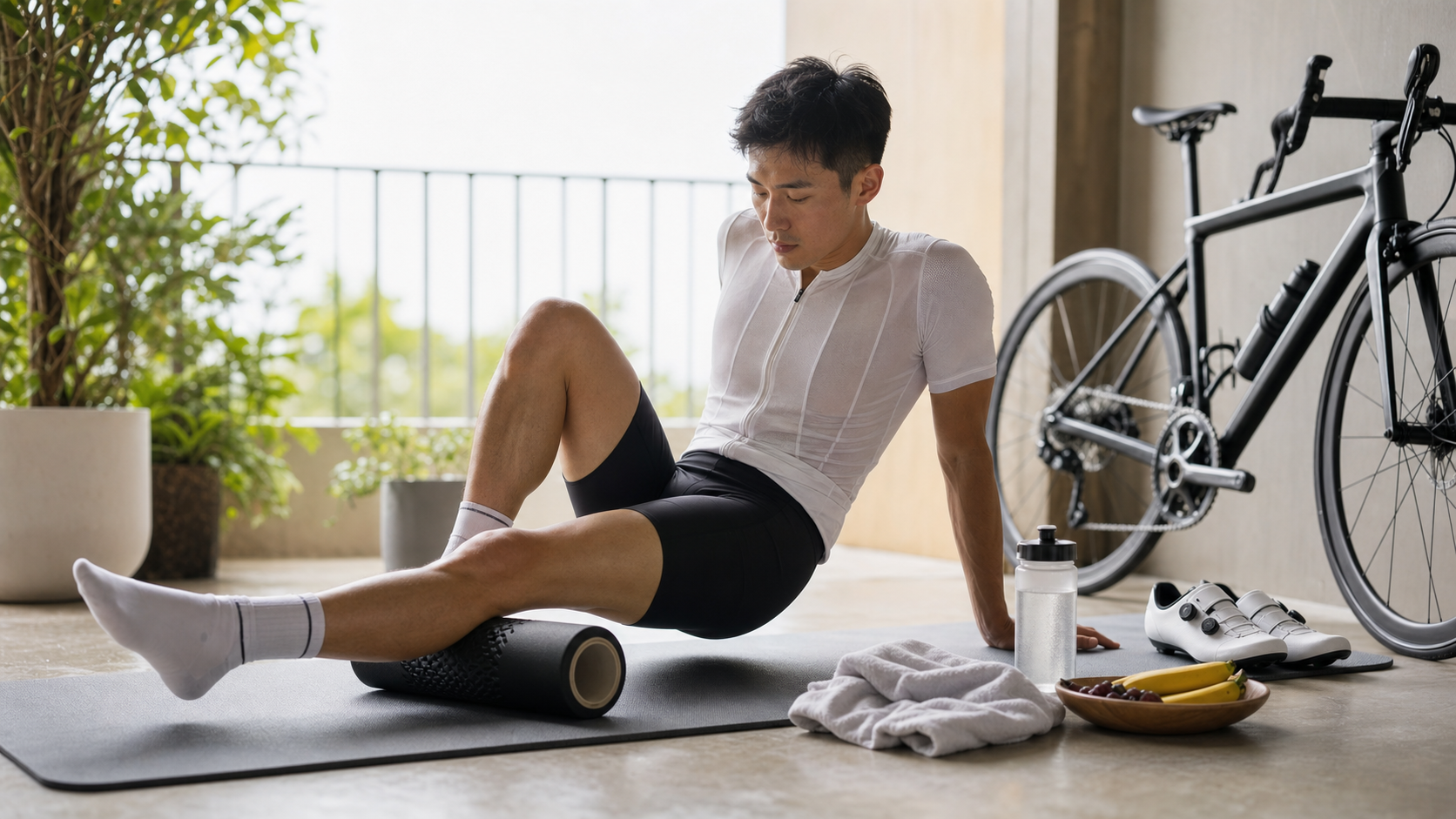
- Gentle massage or foam rolling is acceptable (use light pressure; do not press hard on sore spots)
- Diet: continue high carbohydrate intake, add sufficient high-quality protein (1.6–2.0g per kilogram of body weight per day)
Hours 48–72: Enhanced Active Recovery Phase
- For most people, DOMS begins to subside during this phase, making it the best time for active recovery
- Recommended activities: 45–60 minutes of light riding at Zone 1–2, swimming (swimming pools are common in Taiwan, excellent low-impact recovery), or yoga
- You can return to a normal diet pattern, but maintain a relatively higher protein intake
- Assessment indicators: Has your morning resting heart rate returned to its normal baseline? Has your subjective fatigue level dropped below 4 (on a scale of 10, with 10 being most fatigued)?
Recovery Quality Monitoring Indicators
The following indicators help you objectively determine whether you can resume normal training:
- Morning resting heart rate: Returning to within ±3 bpm of the 7-day average before the ultra-long ride indicates the cardiovascular system has recovered
- HRV (Heart Rate Variability): If you use HRV monitoring tools, values should rise above your personal baseline
- Subjective mental state: Feeling “wanting to ride” upon waking rather than “not wanting to move”
- Leg compression test: Pressing on the front and back of the thighs no longer produces significant tenderness
Practical Recommendations
- Do not schedule high-intensity workouts within 72 hours: Many Taiwanese cyclists, driven by excitement after completing a long-distance challenge, want to immediately start their next plan. 72 hours is the minimum; if the challenge distance exceeds 400km, the recovery period should be extended to 5–7 days
- Utilize Taiwan’s recovery resources: Taiwan has abundant hot spring resources (Jiaoxi, Beitou, Wulai) — soaking in hot springs (37–40°C) after an ultra-long ride can relax muscles and promote local blood circulation, a unique recovery advantage for Taiwanese cyclists
- Record the recovery timeline after each ultra-long ride: Build a personal “recovery database” to understand how many days you typically need to return to training condition. This is extremely valuable for planning future training cycles
- Pitfall to avoid: “Compensatory consumption” during recovery: After completing an ultra-long challenge, you may feel elated and be prone to excessive drinking to celebrate or staying up late — both of these can significantly prolong actual recovery time and should be avoided as much as possible
Conclusion
Completing an ultra-long ride is an achievement worth celebrating properly. But truly smart cyclists celebrate by allowing their bodies to meet the next challenge in optimal condition.
The 72-hour scientific recovery is not a waste of time; it is an investment in every future ride. Make rest a part of your training, and you will find your long-distance performance continuously improving at a pace you never anticipated.
Related Reading
- Body Recovery After Long Rides: Diet, Sleep, and Light Activity Within 48 Hours
- Recovery and Nutrition Management for Multi-Day Races: Complete Training and Logistics Preparation for a Taiwan Challenge
- Recovery Techniques for Multi-Day Rides: Next-Day Recovery Routines for 3+ Consecutive Days of Riding
- Body Recovery After an Ultramarathon: Gradual Return to Training Over Two Weeks Post-Race
單車 一日北高 ( 雙城 ) 肥宅雙人瘋狂行 紀錄片 REACTO
10 年前
一日北高 11小時 賽後心得分享篇 | TWB北高360 | 一日雙城 | 單車 | 公路車
6 年前
2022 環花東挑戰賽 Day2 搭到特快車 高速真空吸引! 台東一路逆風殺回花蓮! 總排 ??| Feiyu Pocket 2s | 公路車 | CT Yeh
4 年前
一日北高/長距離團騎 常見問題補充篇 / 組團或跟團的眉角 / 壯車友容易被瘦車友慢性拉爆 / 原來屁股痛可能是這個原因...? / 風場配速法 / 公路車 / CT Yeh
2 年前
一日北高常見問題大集合 | 攻略 | 路線 | 訓練 | 補給 | 自行車 單車 | 一日雙城 | 雙塔 | TWB北高360 | 屁股痛
6 年前
2019 夏季KOM 5小 完賽心得 準備攻略 東進武嶺 夏季登山王之路 Taiwan KOM Challenge
7 年前
Live) 備戰2019彰化經典百K 賽前攻略 (已完賽請看新影片
7 年前
FTL 與 SYB 車隊專訪 西進武嶺 實用攻略分享! 2小時 如何練?!你不知道的眉角!新手準備武嶺必看 EP1 | 實力派女車友 | 精華版 | 公路車 | CTYeh
4 年前