The Post-Exercise Protein Synthesis Window: Muscle Repair Benefits of Supplementing Within 30 Minutes After Riding
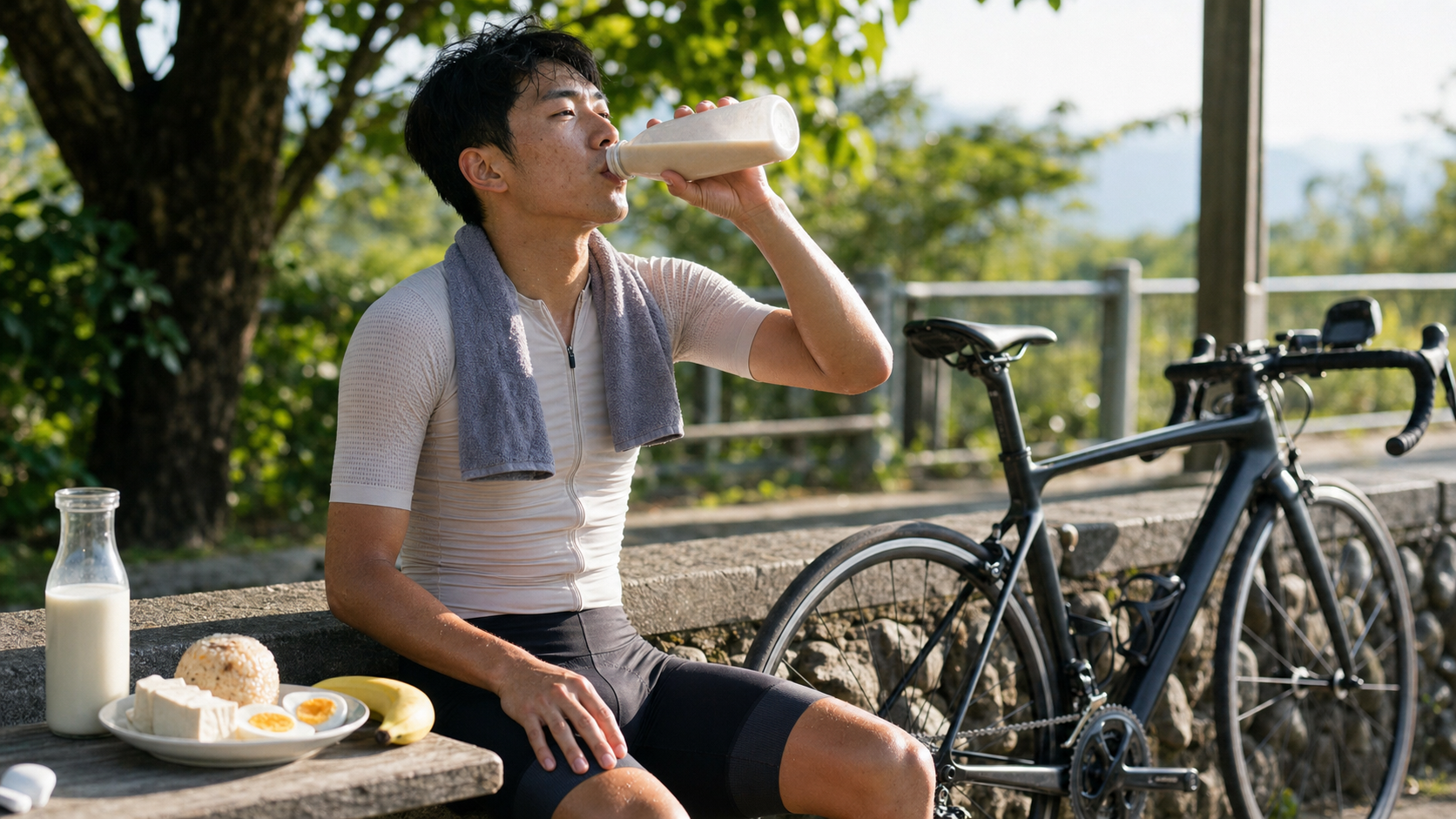
Introduction
“You must drink a protein shake within 30 minutes after training!” This phrase is almost a rule of thumb in the gym, but in the cycling community, the emphasis on post-exercise protein supplementation is noticeably lacking. Many cyclists in Taiwan finish a 3–4 hour long ride and only drink water or eat plain rice, completely overlooking the critical role protein plays in muscle repair and training adaptation.
This article will break down the science of post-ride protein synthesis from the cellular level of the mTOR signaling pathway to practical food choices and supplementation timing, ensuring every training session receives the recovery and supercompensation it deserves.
The Physiological Mechanism of Post-Exercise Muscle Protein Synthesis
Activation of the mTOR Signaling Pathway
After exercise ends, a cascade of repair and adaptation responses occurs in muscle cells:
- Exercise itself activates mTOR: Mechanical stress (pedaling) and metabolic stress (lactate accumulation, energy depletion) activate mTOR Complex 1 (mTORC1), initiating the signaling cascade for protein synthesis
- Amino acids further amplify the signal: Essential amino acids (EAA), especially leucine, work synergistically with mTORC1 to amplify the rate of protein synthesis
- Muscle protein synthesis rate (MPS) increases: MPS can remain elevated for 24–48 hours post-exercise, but peaks 1–3 hours after exercise
The Leucine Threshold Effect
Leucine is the “key” amino acid that activates mTOR and exhibits a threshold effect:
- At least 2–3 grams of leucine per meal is needed to effectively trigger mTOR signaling
- 25–30 grams of complete protein typically contains sufficient leucine
- Insufficient protein supplementation (e.g., only 10–15 grams) fails to effectively initiate MPS
The Scientific Debate on Supplementation Timing
“Protein timing” has long been a contentious area in sports science:
Evidence Supporting the “30-Minute Window”
- Cribb & Hayes (2006) showed that supplementing protein around training time yields greater benefits in muscle hypertrophy and strength gains compared to supplementation at times distant from training
- Immediate post-exercise supplementation restores blood essential amino acid concentrations faster, shortening the duration of negative protein balance
- After long-distance rides (> 3 hours), protein breakdown is significantly elevated, making timely amino acid supplementation even more critical
The Refined Scientific Perspective
Recent meta-analyses (Schoenfeld & Aragon, 2013) show:
- If total daily protein intake is adequate (1.4–2.0 g/kg/day), the timing effect is relatively small
- However, for high-volume riders (weekly training > 12 hours), timely post-exercise supplementation still provides additional benefits
- The “30-minute window” is better described as a “4–6 hour window”—adequate supplementation throughout the entire post-exercise recovery period is beneficial
Conclusion: Timing matters, but daily total intake matters more. If total daily intake is insufficient, even hitting the 30-minute window will yield limited results.
Comparison of MPS Benefits Across Different Protein Sources
| Protein Source | Leucine Content (per 25g protein) | MPS Rate | Digestion & Absorption Rate |
|---|---|---|---|
| Whey Protein | ~2.7 g | ★★★★★ | Fast (1–2 hours) |
| Casein | ~2.3 g | ★★★★ | Slow (5–7 hours) |
| Egg White Protein | ~2.2 g | ★★★★ | Moderate |
| Soy Protein | ~1.5 g | ★★★ | Moderate |
| Tofu (Traditional) | ~0.8 g per 100g | ★★ (requires large amounts) | Moderate |
| Chicken Breast | ~2.0 g per 25g protein | ★★★★ | Moderate |
| Pork Tenderloin | ~1.9 g per 25g protein | ★★★★ | Moderate |
Protein + Leucine Content of Local Taiwanese Foods:
- 1 egg: 6g protein, 0.5g leucine
- 100g unsweetened soy milk: 3.5g protein, 0.3g leucine
- 1 piece (150g) chicken breast: 35g protein, 2.7g leucine
- 100g traditional tofu: 8g protein, 0.6g leucine
The Synergistic Benefits of Carbohydrates + Protein
Combining carbohydrates and protein post-exercise offers additional advantages over protein alone:
- Increased insulin secretion: Carbohydrates stimulate insulin, enhancing muscle cells’ efficiency in taking up amino acids
- Accelerated glycogen resynthesis: The presence of protein does not interfere with glycogen resynthesis and may slightly accelerate it through the insulin effect
- Recommended ratio: Carbohydrate:Protein = 3:1 to 4:1 (e.g., 60–80g carbs + 20–25g protein)
Practical Taiwanese Combination Examples:
- 1 bowl of white rice (60g carbs) + 100g chicken breast (22g protein) + tofu (8g protein) = 30g total protein, 3:1 ratio
- 500mL sweetened soy milk (25g carbs + 15g protein) + 2 boiled eggs (12g protein) = 27g total protein
- 30g whey protein powder + 1 banana (25g carbs) = quick, convenient option
Estimating Protein Needs After Long-Distance Rides
| Ride Type | Duration | Recommended Protein Supplement | Reason |
|---|---|---|---|
| Easy Ride | < 1.5 hours | Regular diet suffices | Minimal protein breakdown |
| Moderate-Intensity Long Ride | 2–3 hours | 25–30g post-ride | Muscle glycogen depletion, EIMD onset |
| High-Intensity Long Ride | > 3 hours | 30–40g (split into two doses) | Significant protein breakdown, high repair demand |
| Consecutive Multi-Day Riding | > 4 hours daily | 1.8–2.0 g/kg throughout the day | Cumulative repair needs; nighttime casein supplementation beneficial |
Practical Recommendations
- After every ride (especially > 2 hours), consume at least 25g of complete protein within 30–60 minutes
- If you cannot eat immediately after training, carry boiled eggs or convenient whey protein sachets
- Daily protein total: cyclists with high training volume should aim for 1.6–2.0 g/kg/day, distributed across 4–5 meals, with 25–35g per meal
- Consuming casein before bed (e.g., Greek yogurt, low-fat cheese) can extend muscle protein synthesis throughout the night
Conclusion
With every pedal stroke, muscle fibers undergo micro-damage and remodeling demands. Protein supplementation is not a bodybuilding-exclusive topic—it is recovery science that every serious cyclist should prioritize. Taiwan’s rich food culture offers abundant high-quality protein sources—eggs, tofu, soy milk, chicken breast—and as long as you consume sufficient amounts at the right times, the effort of every grueling climb can translate into real muscular adaptation, making you stronger with every ride.
Related Reading
- Protein Synthesis After Cycling: Nutritional Timing for Muscle Repair
- Post-Exercise Protein Supplementation Timing: The Science of the Anabolic Window and Muscle Recovery
- Protein Intake Timing and Recovery: Does the Golden Window After Training Really Exist?
- The Post-Exercise Muscle Protein Synthesis Window: Temporal Research on mTOR Signaling After Resistance Training
CT暗黑廚房) 車友必備 宇宙無敵鮮蚵湯 幫助訓練恢復 天然食補 好市多 超肥鮮蚵 破PR
7 年前
西進武嶺 自製新版AI配速表產生器 x 賽前攻略 抱佛腳! 沒有功率計也可以產生配速表嗎?有什麼其他眉角賽前要注意的呢? | 西進武嶺 / 東進武嶺 KOM 攻略 | 公路車 | CT Yeh
4 年前
FTL 與 SYB 車隊專訪 西進武嶺 實用攻略分享! 2小時 如何練?!你不知道的眉角!新手準備武嶺必看 EP1 | 實力派女車友 | 精華版 | 公路車 | CTYeh
4 年前
西進武嶺 免費訓練分析服務 Intervals | 練不夠還是練過頭?你哪一種類型選手?AI模型告訴你! | 備戰神器 | 公路車 訓練 | CT Yeh
4 年前
單車AI教練!全新 ChatGPT4o 幫你分析訓練成果!排武嶺課表,分析騎車姿勢! 太神了! / 公路車 / CT Yeh / feat. 緯緯
2 年前
#公路車 #Fitting 靠人工智慧APP 幫你調整單車
6 年前
一日北高/長距離團騎 常見問題補充篇 / 組團或跟團的眉角 / 壯車友容易被瘦車友慢性拉爆 / 原來屁股痛可能是這個原因...? / 風場配速法 / 公路車 / CT Yeh
2 年前
iPhone內建一秒變長腿🤣 車友必備#cycling
2 年前