Introduction
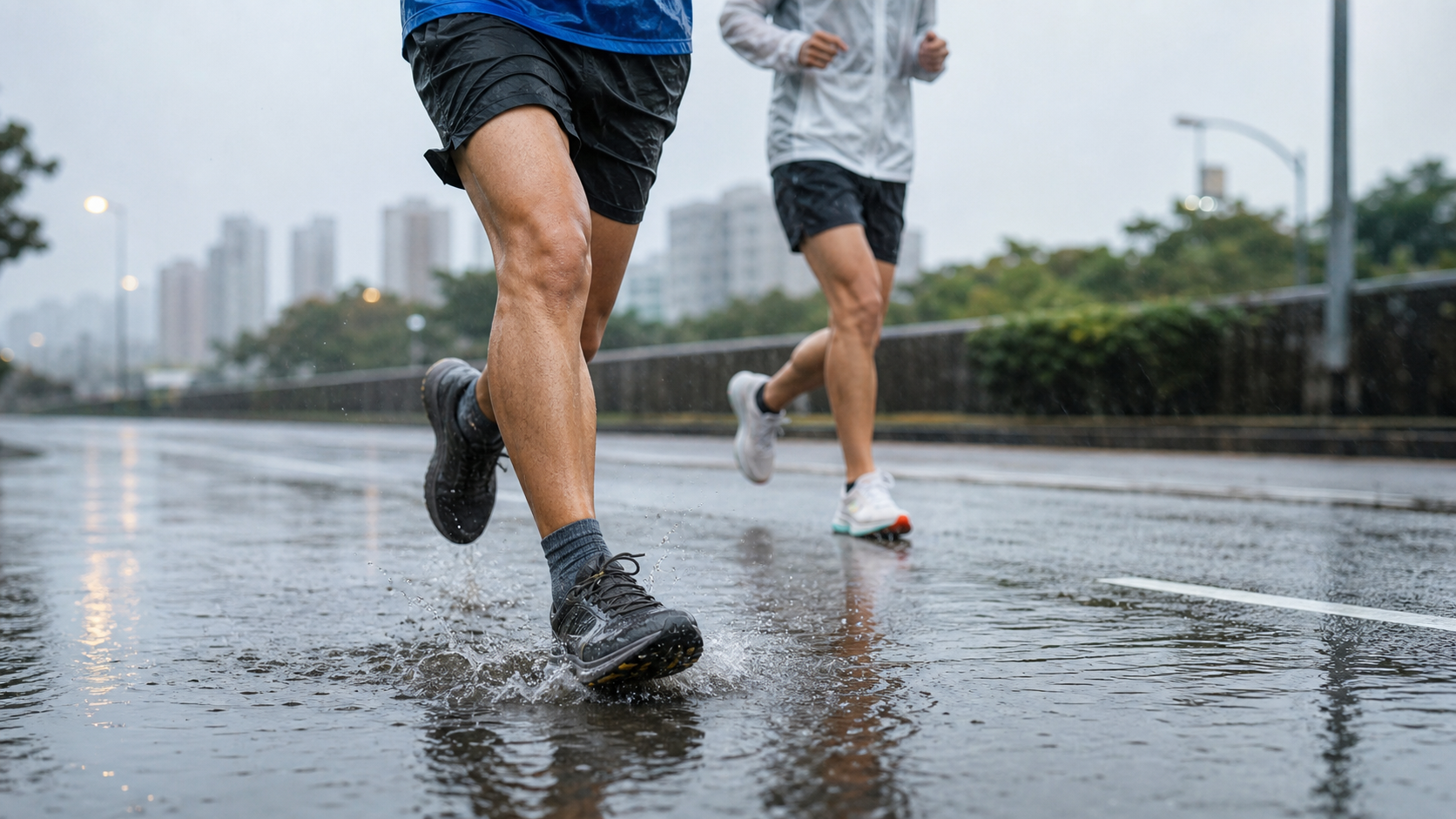
Taiwan’s climate is rainy, from winter rains in the north to the plum rain season. Encountering rain during road races is almost a required course for every runner. However, facing a wet course, many runners hesitate over gear choices: should they spend money on a pair of waterproof running shoes, or simply accept wet feet and take on the race in regular shoes? This article analyzes the pros and cons of both strategies from a scientific perspective and provides a complete gear and strategy guide for rainy marathons.
Waterproof Shoes vs. Regular Shoes: A Complete Comparison of the Two Strategies
| Comparison Item | Waterproof Running Shoes (Gore-Tex, etc.) | Regular Running Shoes (Accepting Wet Feet) |
|---|---|---|
| Waterproofing | Excellent initially; the difference narrows after 30 minutes | Water gets in quickly, but also drains quickly |
| Weight | 50–100g heavier (waterproof layer) | Lighter, no weight change |
| Breathability | Poor, feet feel stuffy | Good, breathable even when wet |
| Blister Risk | Feet get hot and stuffy, more prone to blisters | Water passes through quickly, relatively fewer blisters |
| Ground Traction | Usually better (thicker rubber outsole) | Varies greatly by shoe model |
| Drying Speed | Extremely difficult to dry once soaked | Dry in 2–3 hours after the race |
Conclusion: For short-distance rainy road runs (under 10km), waterproof shoes have their value; but for a full marathon, most runners choose regular shoes and “accept wet feet,” because prolonged stuffiness actually harms the feet more.
Supporting Measures for the Accepting Wet Feet Strategy
Once you decide to accept wet feet, you need a complete set of supporting measures to reduce blisters and friction injuries:
Foot Protection:
- Apply Vaseline to toe gaps, heels, and ankle bone protrusions to form an anti-friction barrier
- Wear wool running socks (such as Darn Tough, Smartwool), which are more abrasion-resistant than cotton or synthetic fibers and retain cushioning even when wet
- Apply waterproof breathable tape (3M Blenderm or Leukotape) on toes to reduce friction between toes
Shoe Selection Recommendations (Regular Shoes for Rainy Days):
- Prioritize shoes with large mesh and more drainage holes, allowing water to flow out quickly
- Models with deep rubber tread patterns provide better grip on slippery surfaces
- Avoid thick-cushioned stability shoes: water accumulation significantly increases weight, and soft soles offer poor stability on wet surfaces
Upper Body Rain Gear Strategy
Beyond the feet, upper body rain gear is equally important:
| Gear Item | Rainy Day Recommendation | Avoid |
|---|---|---|
| Top | Lightweight water-repellent functional running top | Pure cotton T-shirt (heavy and clingy when wet) |
| Outer Layer | Lightweight running windbreaker (not a raincoat) | Fully waterproof raincoat (non-breathable, overheats) |
| Hat | Lightweight running cap with a brim | Brimless headband (rain gets in eyes) |
| Gloves | Lightweight water-repellent gloves (for cold rainy days) | Thick gloves (overheating) |
| Phone | Waterproof pouch or ziplock bag | Directly in pocket (water damage) |
Rainy Day Pacing and Course Strategy
Wet surfaces directly affect running mechanics and require targeted technical adjustments:
Running Technique Adjustments:
- Shorten stride by 10% to increase the contact area between the foot and the ground, improving stability
- Avoid excessive overpronation or landing with feet turned outward, which increases the risk of sideways slipping on wet surfaces
- Actively slow down when crossing metal manhole covers, granite tiles, and painted lines—these surfaces become extremely slippery in the rain
- Be especially cautious on downhill sections; braking time is 20–30% longer than on dry days
Route Selection:
- Choose the side of the road with rougher surfaces (asphalt), avoiding smooth tiles or marble sections
- Go around puddles at the roadside rather than stepping through them—the depth is unknown and may hide potholes
- Actively slow down on curves, as the risk of sideways slipping on sharp turns increases significantly in the rain
Rainy Day Mental Strategy
Running a marathon in the rain often challenges the mind as much as the body:
- Accept in Advance: Once you confirm rain before the race, mentally accept that “today is a rainy race”—don’t wait for the rain to stop
- Reframe Your Thinking: “Rain is cool, which isn’t bad for long-distance running—heat dissipation is more efficient”
- Build Rituals: Establish “rainy-day-specific rituals” in your gear preparation (such as applying Vaseline, wearing specific socks), turning them into familiarity rather than abnormality
Practical Advice
- Check the weather forecast the day before the race and decide your gear strategy in advance—don’t make hasty decisions on race morning
- Prepare a disposable large plastic bag to wear for warmth before the start, then discard it after starting
- Put spare dry clothes in the finish-line drop bag and change immediately after finishing to prevent hypothermia
- Wash your running shoes immediately after the race and stuff them with newspaper to absorb moisture, preventing the shoes from losing their shape
Conclusion
Running a marathon in the rain is an essential skill for Taiwanese runners. Mastering the right gear selection logic matters more than spending big money on waterproof equipment—what’s even more important is the mental acceptance of the “accepting wet feet” strategy. On rainy days, slow your pace, focus on safety, replace complaints with strategy, and complete a rainy marathon that truly showcases your endurance.
Related Reading
- Complete Guide to Running in Rain and Cold Weather: Gear, Safety, and Training Adjustments
- Weather Response for Road Races: Strategy Adjustments for Rain, Heat, and Strong Winds
- Trail Running Shoes vs. Road Running Shoes: Outsole Traction Needs on Taiwan’s Mountain Trails
- Hydration Packs vs. Handheld Bottles vs. Race Belts: A Complete Comparison of Road Running Hydration Methods