Physiological Adaptation to Cold-Water Swimming: Coping with Winter Water Temperatures in Taiwan's Northeast Coast
Introduction
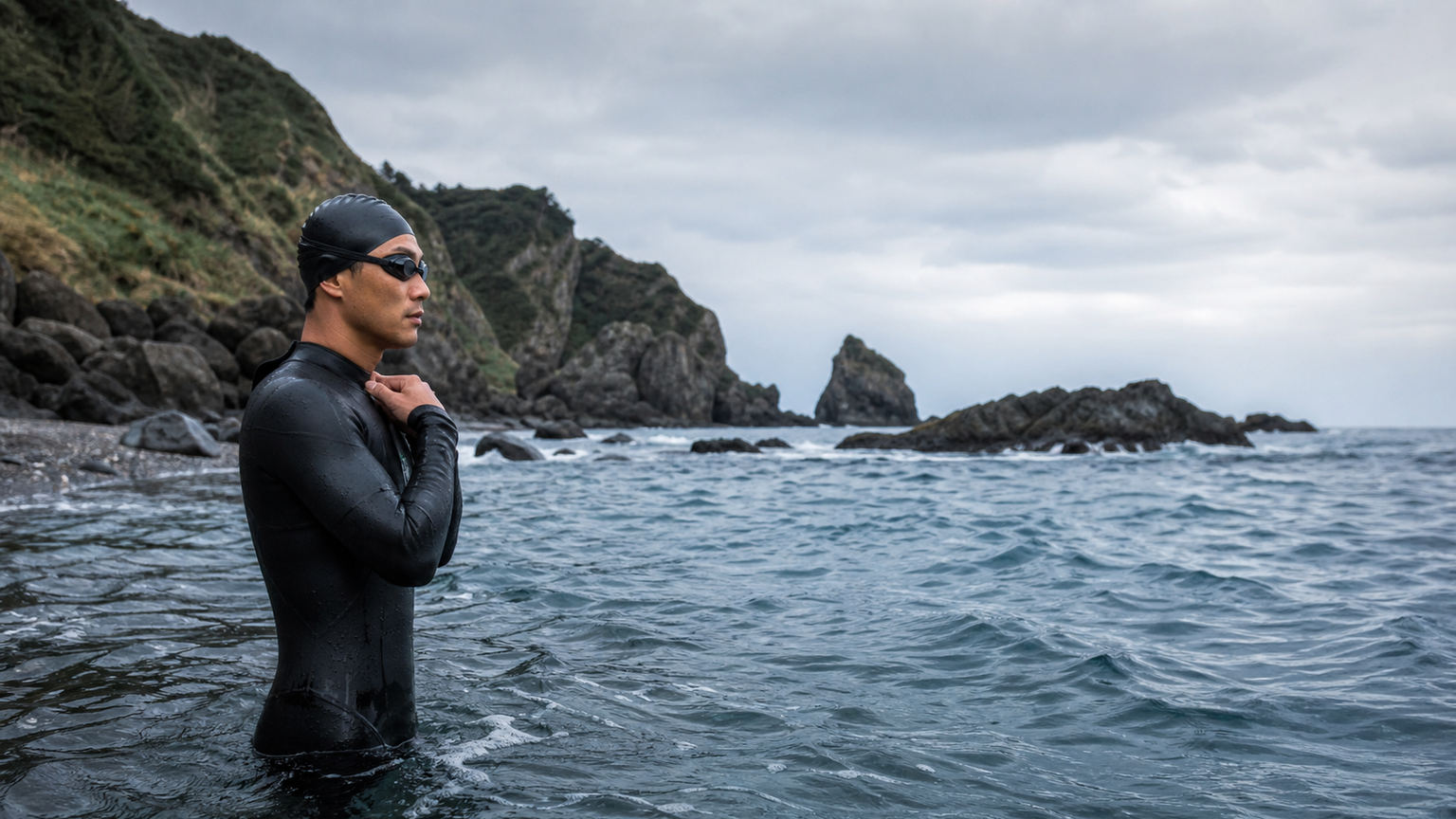
From October to March each year, seawater temperatures off Taiwan’s northeast coast gradually drop from 27–29°C in summer to 16–19°C. For swimmers accustomed to a constant 28°C pool temperature, such water temperatures can pose unexpected physiological challenges. However, for well-prepared athletes, cold-water swimming is not only feasible—it can be a unique and even enjoyable training experience.
This article explores the physiological mechanisms involved and provides a safety guide and adaptation strategy for winter open-water swimming in Taiwan.
The Body’s Immediate Response to Cold Water
When skin suddenly contacts cold water, the body activates a series of defense mechanisms:
Cold Shock Response
The first 30–90 seconds after entering the water are the most dangerous phase:
- Hyperventilation: Cold stimulation triggers rapid, shallow breathing, which may cause dizziness
- Sudden heart rate spike: Heart rate can rise 20–30 beats per minute within seconds
- Elevated blood pressure: Peripheral vasoconstriction increases the workload on the heart
- Mild mental confusion: Some people experience a brief loss of spatial awareness
Countermeasures: Enter the water gradually to let your body adapt; do not jump straight into cold water.
Swimming Incapacitation
After prolonged swimming in colder water, coordination in the limbs declines:
- Reduced hand dexterity (affects catch efficiency)
- Reduced leg coordination (kick loses rhythm)
- Overall swimming speed decreases, though subjective perception may not reflect this
Warning Signs of Hypothermia
Warning signals after core body temperature begins to drop:
- Uncontrollable, persistent shivering
- Slowed thinking and impaired judgment
- Muscle stiffness; swimming movements become mechanical
- Strong drowsiness
If any of the above symptoms appear, exit the water immediately.
Water Temperature Risk Levels off Taiwan’s Northeast Coast
| Water Temperature Range | Safe Time (without wetsuit) | Risk Level | Recommended Gear |
|---|---|---|---|
| Above 26°C | Unlimited (consider other factors) | Low | Regular swimwear |
| 22–26°C | 1–2 hours | Low | Swimwear or thin wetsuit |
| 18–22°C | 30–60 minutes | Moderate | 3mm wetsuit recommended |
| 16–18°C | 15–30 minutes | Moderate-High | 5mm wetsuit necessary |
| 14–16°C | 10–20 minutes | High | 5mm full wetsuit |
| Below 14°C | 5–15 minutes | Extreme | Unprotected swimming not advised |
The above times are estimates for an average adult; individual variation is significant
Progressive Cold-Water Adaptation Plan
The human body can acclimatize to cold water through systematic training, primarily manifesting as:
- Diminished cold shock response
- Improved efficiency of subcutaneous blood flow regulation
- Increased psychological tolerance to cold
Four-Week Basic Adaptation Plan
Week 1: At home, take 2–3 minute cold showers daily, gradually lowering the temperature from 26°C to 22°C, to accustom the skin to cold stimulation
Week 2: Begin each open-water session with a 5–10 minute short immersion (standing only, not swimming) to observe your entry response
Week 3: Gradually extend time in the water to 20–30 minutes, monitoring changes in limb dexterity
Week 4: Perform full training sessions, but establish an exit signal (a personal safety word or confirmation with a training partner)
Safety Rules for Cold-Water Swimming off the Northeast Coast
- Never swim alone: Accidents in cold water happen quickly; someone on shore should be watching, or swim with a companion
- Inform others of your plan: Before departing, tell the lifeguard station or fellow swimmers your planned swimming duration and route
- Warm up beforehand: Do 10–15 minutes of on-land warm-up before entering the water to raise your core temperature
- Prepare rapid rewarming gear: Have blankets, dry clothes, and hot drinks ready on the beach for immediate rewarming after exiting
- Know when to get out: Maintain a safety margin between “I can still swim” and “I should get out”; exit immediately if you feel any discomfort
Choosing Cold-Water Gear
- Wetsuit: The most essential insulating gear; 3mm suits suit 18–22°C, 5mm suits suit temperatures below 16°C
- Swim cap (double-layer or silicone): The head is a major heat-loss area; a thicker cap makes a significant difference
- Neoprene gloves/boots: Extremities lose dexterity first; gloves help maintain stroke efficiency
- Earplugs: Prevent irritation of the outer ear canal (cold water entering the ear canal can cause dizziness)
Potential Benefits of Cold-Water Swimming
Research directions suggest that regular cold-water swimming may offer:
- Activation of brown adipose tissue, raising resting metabolic rate
- Moderate activation of the immune system
- Enhanced mental resilience and stress tolerance
- Mild endorphin release (the “cold-water swimmer’s high”)
However, these benefits are only meaningful when safety comes first.
Conclusion
The winter seawater off Taiwan’s northeast coast is a unique training ground for prepared swimmers. By understanding the physiological challenges of cold water, equipping yourself appropriately, and following progressive adaptation principles, you can safely extend your swimming season—and perhaps even discover the distinctive clarity and sense of accomplishment that cold-water swimming offers. Safety is the foremost priority; enjoyment is the ultimate goal.
Related Reading
- Cold-Water Swimming: Physiological Effects of Low Water Temperature, Risks, and Progressive Adaptation Training
- Coping with Open-Water Temperatures: Cold-Water Adaptation Training and Hypothermia Prevention
- Seasonal Physiology of Swimming: Effects of Cold vs. Warm Water on Performance
- Cold-Water Adaptation in Swimming: Effects of Water Temperature on Heart Rate, Metabolic Rate, and Oxygen Consumption