Northeast Coast Open Water Training Scenarios: Wave Conditions, Water Temperature, and Safety Guidelines
Introduction
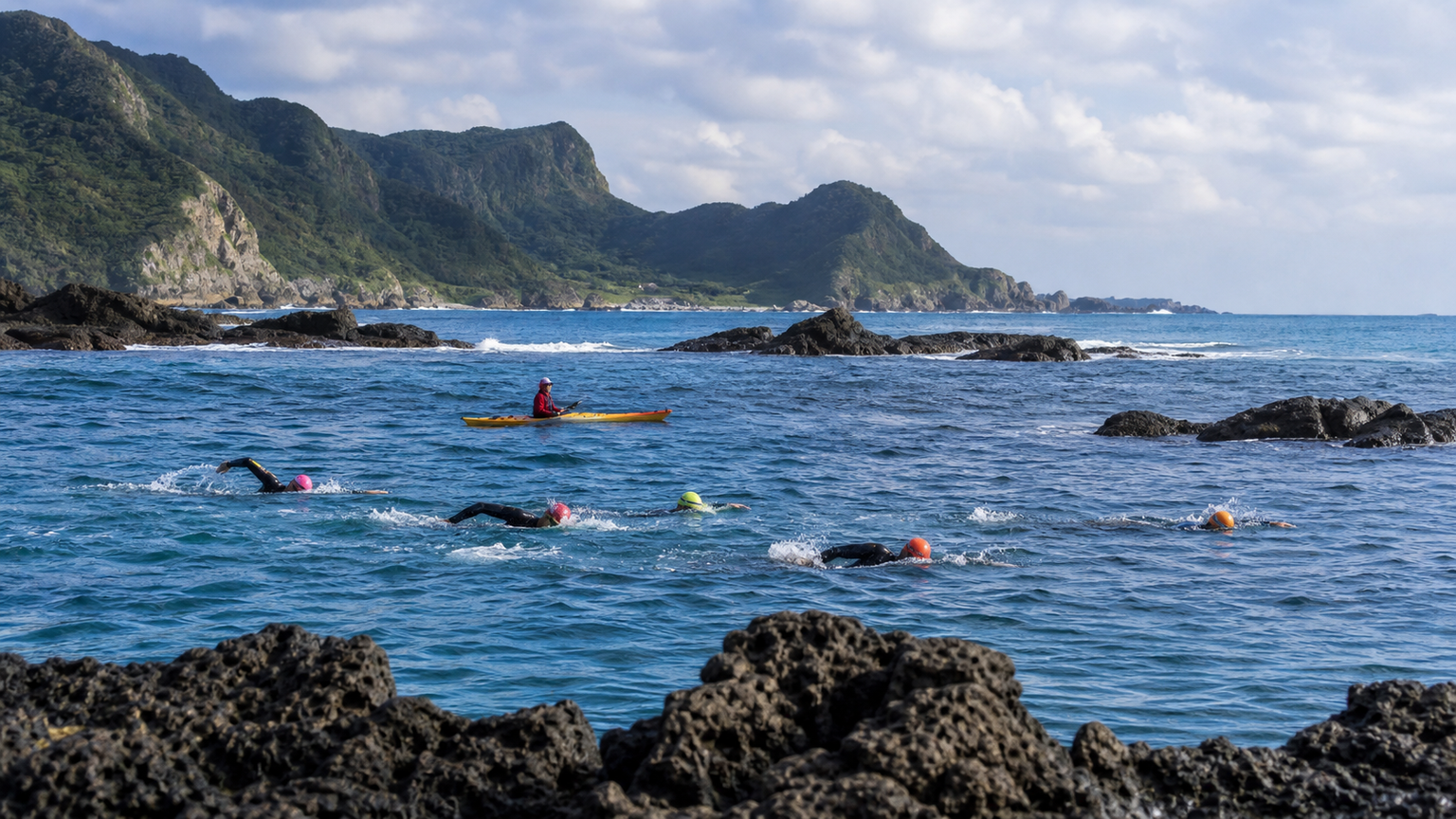
Located less than an hour’s drive from downtown Taipei, the Northeast Coast offers the most convenient open-water training environment on the Taiwan mainland. From the sandy beaches of Gongliao to the rocky bay of Longdong, the Northeast Coast provides a diverse range of water environments, covering everything from calm waters suitable for beginners to advanced training sites with challenging wave conditions.
However, the complex sea conditions of the Northeast Coast also make it one of the waters with a higher accident rate in Taiwan. Understanding the characteristics of each site and mastering safety regulations are essential courses for training at the Northeast Coast.
Comparison of Major Training Site Characteristics
| Site | Wave Characteristics | Summer Water Temp | Winter Water Temp | Suitability | Facilities |
|---|---|---|---|---|---|
| Fulong Beach | Beach waves, reaching 1–1.5m in summer | 26–28°C | 17–20°C | Suitable for beginners | Changing rooms, lifeguards |
| Longdong Bay | Sheltered by rock walls, smaller waves | 25–27°C | 16–18°C | Intermediate and above | Parking available |
| Bitoujiao | Open sea, stronger waves | 25–27°C | 15–17°C | Advanced | Limited |
| Aodi Fishing Harbor | Calm inside the harbor, rough outside | 25–27°C | 16–18°C | Beginners (inside harbor) | No formal facilities |
| Shicheng Beach | Occasional strong rip currents | 24–26°C | 16–19°C | Intermediate | Limited |
Wave Characteristics of the Northeast Coast
Influence of the Northeast Monsoon
From October to April each year, the northeast monsoon prevails, bringing to the Northeast Coast:
- Swells with stable direction: Wave direction is largely fixed (northeast→southwest), with regular periods, allowing skilled athletes to learn how to use them
- Increased wave height: Average wave height is 0.5–1.5 meters, and can exceed 2 meters when winds are strong
- Increased surface turbulence: Whitecaps on wave crests reduce visibility and make sighting more difficult
Post-Typhoon Effects
Two to three days after a typhoon passes, the waters of the Northeast Coast will show:
- Long-period swells (huge energy but longer periods, which are actually more regular)
- Increased floating debris in the water (a safety hazard)
- Changes in beach topography (variations in bottom depth)
It is recommended to wait 3–5 days after a typhoon before entering the water for training, to confirm that wave conditions have returned to normal.
Northeast Coast Water Temperature Calendar
| Month | Approximate Water Temp | Recommended Gear | Training Duration Limit |
|---|---|---|---|
| Jul–Sep | 27–29°C | Regular swimwear | No special limit |
| Apr–Jun | 22–26°C | Thin wetsuit recommended | No special limit |
| Oct–Nov | 22–25°C | 3mm wetsuit | 60–90 minutes |
| Dec–Jan | 17–20°C | 5mm wetsuit | 30–60 minutes |
| Feb–Mar | 16–18°C | 5mm full wetsuit | 20–40 minutes |
Safety Regulations and Precautions
Basic Safety Rules
- Always inform others: Before heading out, inform your training companions or family of your training location, estimated time, and route
- Never swim alone: It is recommended to have at least two people together, with one person able to monitor from shore
- Wear an inflatable safety buoy (Tow Float): In open water, a brightly colored tow float makes you visible to boats and rescue personnel, while also providing emergency buoyancy
- Know your physical limits: Set your turnaround point 20% more conservatively than you estimate
- Cancel training in bad weather: Under severe weather conditions such as lightning, strong winds (above Beaufort scale 6), or heavy fog, not entering the water is the wisest decision
Special Considerations for Rocky Reef Terrain
Special risks of rocky reef terrain such as Longdong and Bitoujiao:
- Submerged rocks: When swimming near rock wall areas, watch for underwater reefs and avoid being pushed toward the rock walls by waves
- Reflected waves: Waves hitting the rock walls reflect back to the sea surface, crossing with incoming waves to form irregular, chaotic waves that are difficult to read
- Surface growth: Barnacles and shellfish on rock walls are extremely sharp, posing a risk of cuts when waves push you against the rock walls
Ocean Hazards Unique to Taiwan
- Jellyfish: During summer and autumn, jellyfish swarms occasionally appear at the Northeast Coast; leave the water immediately if spotted
- Sea urchins: Sea urchins are densely concentrated near the reefs of Longdong; check your footing before stepping down in the water
- Venomous fish: Stonefish, lionfish, and others camouflage on the reefs; watch where you step when walking in shallow water
Emergency Response
Cramps
- Immediately roll onto your back and float, reducing panic
- Stretch the cramped muscle (for calf cramps: pull toes upward)
- Once calm, swim slowly toward shore, or wait for rescue
Being Carried Away by a Strong Current
- Do not fight the strong current head-on (you will exhaust yourself)
- Swim sideways to exit the strong current zone (most rip currents are only 5–20 meters wide)
- If you cannot escape, maintain a back float and wave for help
Emergency Distress Signals
- Wave one arm in the water (keep the other arm maintaining buoyancy)
- Blow a whistle (recommended to carry an emergency whistle, secured to your swim cap or buoy)
- A brightly colored inflatable buoy increases the chance of being spotted
Training Resources
There are currently several open-water swimming communities that train regularly at the Northeast Coast. You can find relevant information through Facebook or various triathlon groups. Training with an experienced leader is the safest way to get started.
Conclusion
The open waters of the Northeast Coast are a valuable resource for swimming training in Taiwan, but its beauty and danger coexist. Fully understanding the hydrological characteristics of each site, adhering to safety regulations, and continuously improving technical skills will allow you to safely build energy for your next race with every training session.
Related Reading
- Open-Water Training Sites: Lakes, Reservoirs, and Sea Areas Suitable for Practice in Taiwan
- Adapting to Waves and Currents in Sea Swimming: Technical Essentials for Swimming Along Taiwan’s Coast
- Safety Guidelines for Open-Water Swimming: An Overview of Legal Swimming Areas in Taiwan
- Swimming in Waves in Open Water: Technical Differences Between Swimming with, Against, and Across Waves
虎豹潭!日本老師來台一日約騎 台灣車友熱情招待私房路線 / CT Yeh
20 天前
大武山後門26%歡樂陡坡!JJSC南台灣單車行Day2 / 被颱風追著跑 / 公路車 / CT Yeh
2 年前
風櫃嘴 | 全台最多大砲的單車路線 | 尋寶網攝影師告訴你怎麼擺拍起來才好看 | 熱門攝影地點巡禮
6 年前
台北闊瀨陡坡 騎旅 / 日本單車雜誌編輯車友臨時加入!/ 髮香才是最強的 / feat. 北迴歸線小隊 / 公路車 CT Yeh
6 個月前
備戰 戀戀197 賽前關門點分析 西濱團練 #公路車 4K高畫質
6 年前
一起升級!海鷗盃LSD團練...JJSC Zone2招待 騎到手抖 / 公路車 / CT Yeh
1 天前
風櫃嘴時間 預測西進武嶺時間?13000名車友統計數據分析告訴你 !
5 年前
大武山20%魔王陡坡【JJSC南台灣遊騎Day2】!屁股真的要裂開了...凡士林抹滿也沒用?神秘金教堂還有超便宜夜市
3 個月前