Introduction
The design of a road bike drop handlebar may seem simple, yet it is a critical component that affects riding comfort, handling precision, and aerodynamic efficiency. In Taiwan, from the flat riverside paths of Taipei to the long climbs of Wuling, different riding environments demand vastly different handlebar setups. Many riders install complete high-end component groups but overlook handlebar compatibility, leading to wrist pain on long rides or poor climbing efficiency.
Basic Handlebar Specifications Explained
Key Dimensions
| Specification | Description | Recommended Selection Method |
|---|---|---|
| Width | 38–46cm (center-to-center) | Usually equals shoulder width (acromion to acromion) |
| Drop | 110–145mm | Deep drop = lower aero position; shallow drop = for those with less upper-body flexibility |
| Reach | 65–85mm | Affects how far the rider leans forward in the drops |
| Flare | 0–16° | Outward angle, improving descending stability and control |
| Handlebar Shape | Traditional round, ergonomic (Ergo), compact | Ergonomic designs differ in how they conform to the hand |
Material Options
- Aluminum Alloy: Mainstream choice from entry to mid-level, weighing approximately 200–280g, durable and impact-resistant
- Carbon Fiber: High-end option, weighing approximately 130–180g, absorbs some vibration, but requires factory inspection after impacts
Climbing Bars (Shallow Drop) in Taiwan
Climbing-specific handlebars feature a shallower drop (90–115mm), allowing riders to naturally grip the drops in a seated climbing position without excessive bending at the waist:
Advantages
- More natural wrist angle when gripping the drops while climbing, reducing wrist fatigue
- More breathing room in the climbing position, with less chest compression
- Suitable for riders with lower torso flexibility or older riders
Suitable Taiwan Scenarios
- Long climbs such as Wuling, Hehuan Mountain, and Daxue Mountain
- Classic road climbing routes (Beiyi Highway, Provincial Highway 3 mountain sections)
- Bike segments in Taiwan’s ultra half-ironman or long-distance triathlon events
Disadvantages
- Limited aero position options during high-speed flat riding
- Visually harder to distinguish from standard road bars, with lower recognition among amateur riders
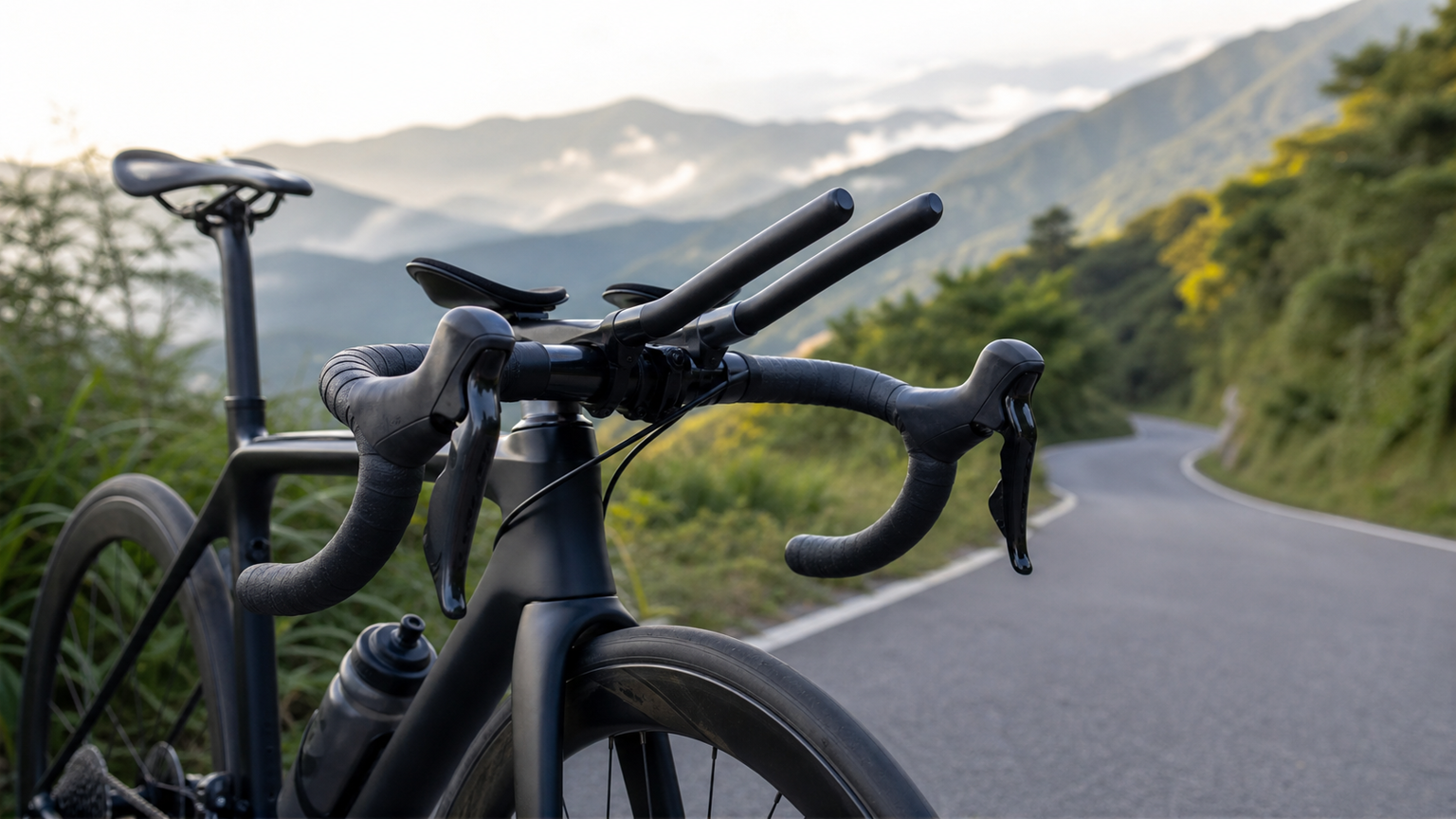
Aero Extension Bars (Aerobars)
Time trial extension bars are designed to allow riders to adopt an extremely low, tucked position, significantly reducing frontal wind resistance:
Suitable Scenarios and Types
- Integrated Fixed Aero Bars: Dedicated to time trial bikes (TT Bike), integrated into the frame design for overall optimization
- Clip-on Aerobars: Can be mounted on existing road bike handlebars, offering greater flexibility
- Long-Distance Endurance Extensions (Triathlon Aerobars): Used in triathlon events, emphasizing comfort and durability
Time Trial Applications in Taiwan
Time trial events have become increasingly popular in Taiwan in recent years, including individual time trial stages of the Tour de Taiwan and locally organized time trials. In such events, aero extension bars are equipment that can significantly improve performance, but note the following:
- Braking response time is longer when riding with aero extension bars, making them unsuitable for complex urban traffic
- Taiwan regulations prohibit the use of extension bars in mass-start road races
- It is recommended to undergo a Bike Fitting before adopting the extension bar position to ensure the posture does not harm the lumbar spine
Handlebar Width Selection Logic
- Climbing Riders: Narrower bars (38–40cm) reduce wind resistance and make it easier to hold a straight line on narrow mountain roads
- Fast Flat-Terrain Riders: Standard width (40–42cm), balancing stability and handling
- Descending and All-Terrain Riders: Wider bars (42–46cm) or flared designs, providing greater steering leverage
Practical Advice
- Handlebar width selection should be based on shoulder width, but personal preference varies greatly; it is recommended to test ride before confirming
- Carbon fiber handlebars require a torque wrench during installation; over-tightening can cause carbon fiber to crack
- The thickness and material of bar tape significantly contribute to vibration absorption; 2.5–3mm thickness is recommended
- Taiwan’s humid climate can cause cotton bar tape to become slippery from sweat; silicone or synthetic leather materials are more suitable
- The handlebar angle (tilt) affects wrist angle in the drops; recheck after every reinstallation or replacement
Conclusion
Choosing a road bike handlebar requires combining three aspects: riding goals, physical condition, and the characteristics of your primary routes. Taiwan’s terrain diversity—from the flat western coastline to the steep Central Cross-Island Highway—means different riders have vastly different handlebar needs. Investing in a handlebar that suits your riding position, paired with high-quality bar tape, can make every ride more comfortable and efficient, especially at critical moments in Taiwan’s long-distance events.
Related Reading
- Road Bike Handlebar Setup Guide: Choosing Between Tops, Drops, and Aero Positions
- Road Bike Drop Bar Selection Guide: Width, Drop, and Flare
- Road Bike Handlebar and Drop Bar Buying Guide: How Width, Shape, and Material Affect Riding Comfort
- Road Bike Handlebar Systems: Traditional Drops, Aero Bars, and Integrated Handlebars
Canyon 公路車斷把手 五年老車特規還能修嗎? 維修保養全記錄 feat. 501單車監理站 | 公路車 | CT Yeh
4 年前
超開放的自行車錶!可以玩遊戲裝APP!?/ SRAM合併的 Hammerhead Karoo深入開箱!/ 即時爬坡偵測 / 全球導航地圖 / Garmin Bryton / CT Yeh
1 年前
碟煞公路車 銑面器 !? 原來銑完差這麼多! 降低蹭碟機率! | TIME 公路車 保養小記錄 | CT Yeh
3 年前
鉅齒紋輪組!? ControlTech MEG-T50 EVO 碳纖維幅條輪組/ 功率對比實驗 / 公路車 / CT Yeh
2 年前
Vision Metron RS 37碳幅條輪組 (非SL)官網沒有的 低調開箱 / 這重量太銷魂了 / 公路車 / CT Yeh
6 個月前
再一組! 全碳幅條 碟煞/無內胎輪組 開箱! 到底好騎嗎? UNAAS X40 | 公路車 | CT Yeh
4 年前
Nepest NOVA 碳條輪組:輕量、空力、舒適一次滿足!/ 公路車 / CT Yeh
7 個月前
3D 列印車褲墊 / 舒適改善? / 無痕 x 分區壓縮 / ATK & Decider系列 / JE22黑科技 / #公路車 #CTYEH
11 個月前