Introduction
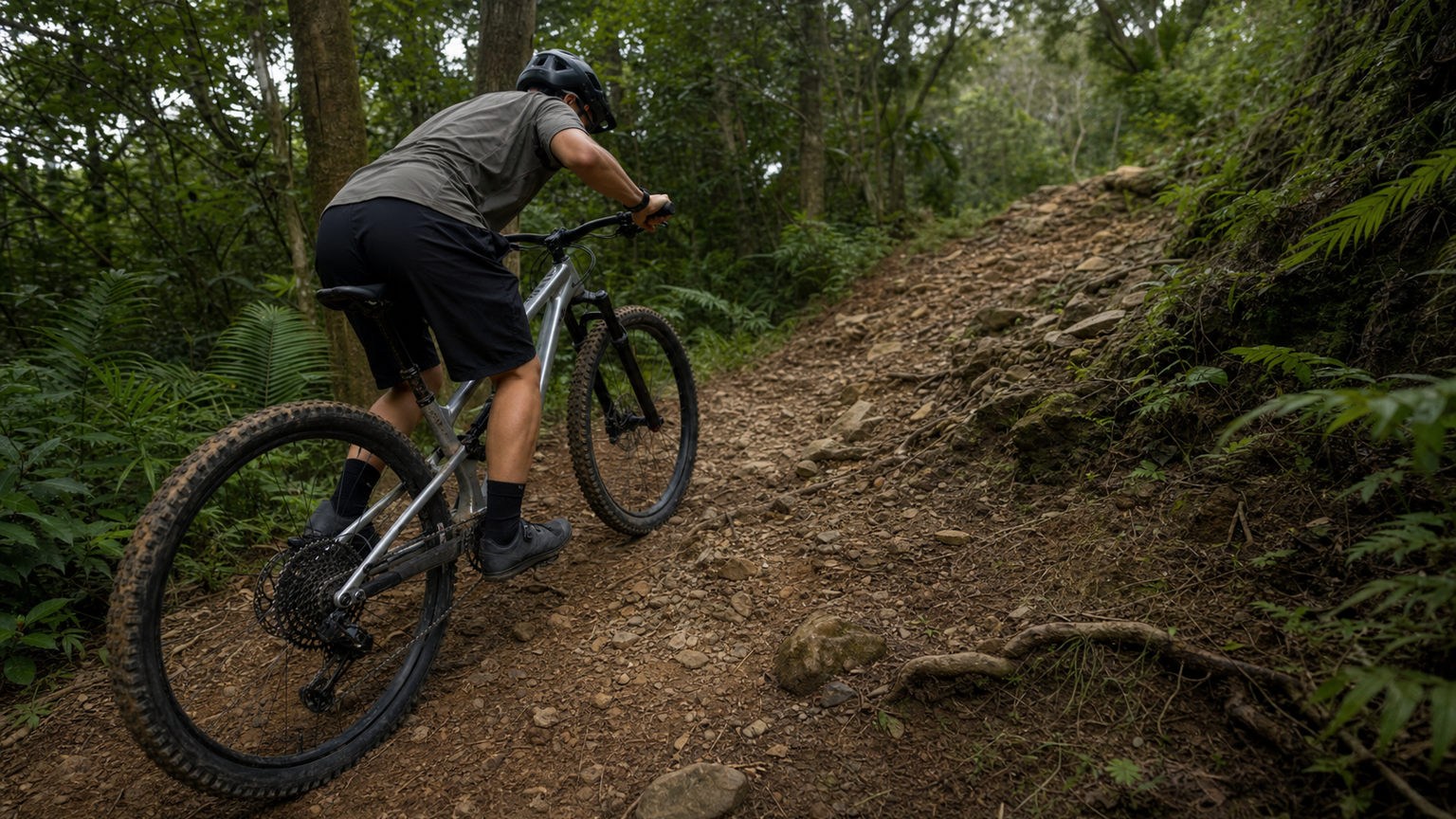
Taiwan boasts a rich mountain environment, from Neihu Dagon Creek in the north and the off-road trails of Yangmingshan, to Aowanda in the south and the Taroko trails in the east—all of which are paradise for MTB (mountain bike) riders. However, the technical logic of mountain bike climbing is completely different from road cycling: on the road, you only need to worry about power and endurance; on the trail, traction, center of gravity, and terrain reading are the key factors that determine whether you can make it up.
The Core Challenges of MTB Climbing
Mountain bike climbing faces two main challenges that road cycling does not:
1. Wheelie Out
On steep climbs, if your center of gravity shifts too far back, the front wheel loses traction, lifts off the ground, and the rider loses steering control, usually ending in a backward flip. This is especially noticeable on slopes exceeding 15%.
2. Rear Wheel Spin
Conversely, if your center of gravity is too far forward, rear-wheel traction is insufficient, and when you pedal on loose ground or rocks, the rear wheel spins in place, preventing forward progress—or even causing you to slide backward.
These two problems are contradictory: shifting weight forward solves the wheelie-out but worsens rear-wheel spin; shifting weight backward improves rear-wheel traction but makes the front wheel more likely to lift. The essence of MTB climbing technique lies in finding a dynamic balance between these two extremes.
Basic Principles of Weight Distribution
| Terrain Type | Saddle Position | Upper Body Lean | Front/Rear Weight Ratio |
|---|---|---|---|
| Hard-packed dirt, gentle slope (<10%) | Normal | Slight forward lean | 45:55 |
| Loose dirt, moderate slope (10–15%) | Shifted forward | Forward lean | 40:60 |
| Steep slope, hard ground (>15%) | Shifted forward | Extreme forward lean | 35:65 |
| Steep slope, loose ground | Shifted forward but low posture | Forward lean + lowered center of gravity | 40:60 |
| Rocky terrain | Normal to slightly forward | Stay flexible | 45:55 |
Practical execution:
- Move the saddle forward: Before setting off, lower the saddle by 1–2 cm and, within your ability, shift your hips toward the front edge of the saddle
- Lean your upper body forward: Drop your head and bend your torso so your chest approaches the handlebars, increasing downward pressure on the front wheel
- Extend and press through your arms: Push the handlebars slightly forward with both hands to further shift weight onto the front wheel
Pedaling Rhythm and Traction Management
The Importance of Steady Power Output
When climbing on loose ground, the evenness of your pedaling force matters more than the amount of force. Sudden surges or intermittent hard stomps are likely to cause the rear wheel to slip the moment you push down:
- Avoid: The vicious cycle of hard push → wheel spins → push again → spins again
- Goal: A smooth, continuous pedaling rhythm that keeps the rear wheel maintaining moderate traction at all times
- Cadence: MTB climbing is typically lower than road cycling; 60–75 RPM is a common effective range
Seated vs. Standing
In MTB climbing, seated climbing is usually preferable to standing, for the following reasons:
- Seated climbing keeps your hips pressed on the saddle, adding weight to the rear wheel and improving traction
- Standing allows you to produce more power, but it reduces rear-wheel traction and makes slipping more likely
- Exception: On very short, hard-surface steep pitches (such as rock ledges or steps), standing with a rhythmic pedal stroke can be more effective
Terrain Reading and Line Choice
MTB climbing isn’t just about charging straight ahead; line choice matters just as much:
- Look for the hardest ground: Rock and compacted dirt provide better traction than loose leaf litter
- Avoid deep sand and wet leaves: On these surfaces, both front and rear wheels lose grip
- Use natural terrain features: The soil between tree roots is usually firmer than exposed roots themselves
- Look ahead: Plan your line 5–10 meters before reaching a steep section, rather than searching for it while riding
Practical Tips
- Before climbing, reduce rear tire pressure by 5–10 PSI (lower than on flat ground) to increase the contact patch and grip
- Shift into an appropriate low gear before the climb begins, avoiding rushed shifts mid-steep-section (pedaling force drops during shifting, making rear-wheel spin more likely)
- Practice “clipping out on climbs”: when you’re about to lose traction, unclip properly to put a foot down for support instead of falling
- Choose climbing tires with a center-ridge tread design for low rolling resistance while still providing adequate grip
Conclusion
MTB climbing is an art that demands both physical awareness and technical understanding. Every time you successfully ride up a seemingly impossible steep section, it’s a testament to your understanding of physics and your own body. Practice in Taiwan’s abundant mountain terrain, starting with gentle slopes and gradually increasing the challenge—you’ll discover more and more places where “you can actually ride up,” and that sense of accomplishment is one of the most captivating charms of mountain biking.
Related Reading
CT 喇低賽) 武嶺牽車 才是王道 西進牽車四小時內秘訣 攝手位置 如何判斷 防抽筋小秘訣
7 年前
大武山後門26%歡樂陡坡!JJSC南台灣單車行Day2 / 被颱風追著跑 / 公路車 / CT Yeh
2 年前
公路車 爬坡 破PR 紀錄 小技巧 分享
6 年前
一日北高/長距離團騎 常見問題補充篇 / 組團或跟團的眉角 / 壯車友容易被瘦車友慢性拉爆 / 原來屁股痛可能是這個原因...? / 風場配速法 / 公路車 / CT Yeh
2 年前
大禹嶺 到 武嶺牌樓 全程前後實況錄影 | 北進武嶺 | 東進武嶺 | KOM | 訓練台 | 坡度分析 | Taiwan KOM Last 10 km HARD | 公路車
6 年前
一日北高常見問題大集合 | 攻略 | 路線 | 訓練 | 補給 | 自行車 單車 | 一日雙城 | 雙塔 | TWB北高360 | 屁股痛
6 年前
單車 梅山36灣 坡度介紹 路段介紹 空拍 (相關遊記影片,請參考說明或我的頻道喔,歡迎訂閱)
6 年前
車友來我家測FTP...好硬啊🤣 #cycling #公路車
2 年前