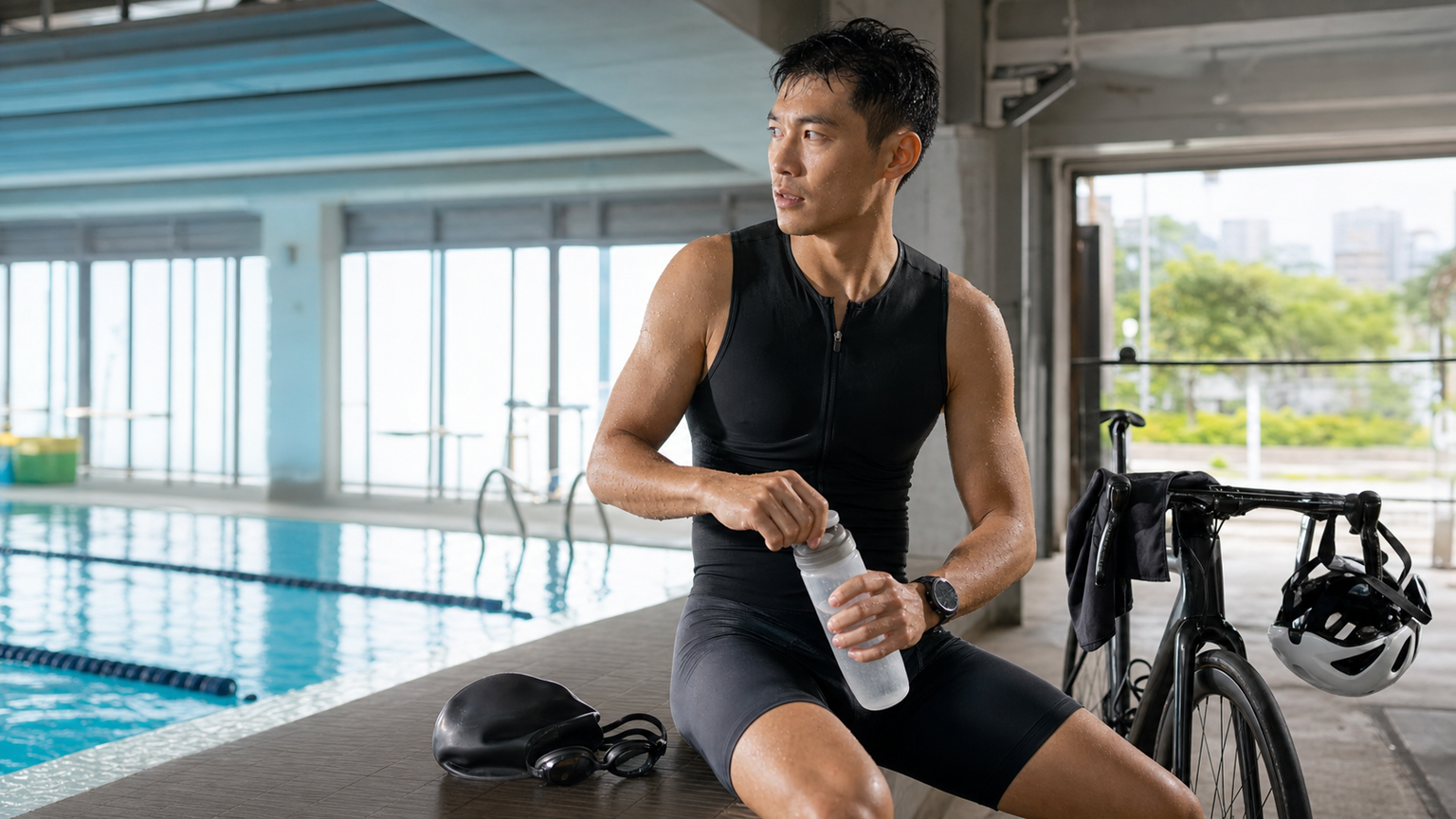
Introduction
Many full marathon runners fall into a common misconception: that race preparation simply means continuously accumulating running mileage. While this single-mode training approach is direct and effective, it also subjects the lower limbs to repeated impact forces, increasing the risk of overuse injuries such as stress fractures and iliotibial band syndrome. Incorporating swimming and cycling as “cross-training” not only maintains aerobic fitness while giving the lower limbs a rest, but also strengthens muscle groups that running alone cannot fully develop, building a more well-rounded athletic capacity.
The Core Value of Cross-Training
Cross-training contributes to full marathon preparation in three key ways:
- Maintaining Aerobic Base: Both swimming and cycling are highly aerobic activities that can improve VO₂max without adding impact to the lower limbs
- Active Recovery: Light cycling (50–60% HRmax) promotes blood circulation in the lower limbs, accelerates lactate clearance, and serves as the best active recovery method after running
- Muscle Strengthening: Swimming trains the core and upper back, while cycling strengthens the quadriceps and glutes—both address muscle groups that are relatively underdeveloped from running alone
Swimming: Full-Body Aerobic + Core Strengthening
The greatest advantage of swimming is “zero impact”—in the water, joints are completely unloaded, making it an ideal alternative during injury recovery periods or high-mileage weeks.
Suggested Swimming Workouts for Marathon Preparation
| Type | Distance | Intensity | Primary Benefit |
|---|---|---|---|
| Aerobic endurance swim | 1000–1500m | 60–70% HRmax | Cardiovascular maintenance, recovery |
| Interval swim (4×200m) | 800m main set | 80–85% HRmax | VO₂max stimulation |
| Pull-buoy core swim | 600–800m | Moderate | Core + back muscle strengthening |
Taiwan Resources: Public sports center pools in various cities and counties offer affordable entry fees (NT$50–80 per visit in Taipei City). During the preparation period, 1–2 swimming sessions per week is the highest value-for-money cross-training option.
Indirect Benefits of Swimming for Running
- Breathing rhythm training: Swimming’s enforced breath control improves respiratory muscle efficiency, which in turn enhances running economy
- Shoulder and back relaxation: Tight shoulders and neck from long runs can be fully stretched against the water’s resistance
- Mental relaxation: The sensory isolation of being in water serves as a natural pressure-release valve for race preparation stress
Cycling: Lower-Limb Strengthening + Active Recovery
Cycling offers two distinct modes of value for full marathon runners:
Mode 1: Low-Intensity Recovery Ride (Active Recovery Ride)
- When to use: The day after a long run, or during the pre-race taper period
- Intensity: 50–60% HRmax, easy gear with light pedaling, guided by “should feel very easy”
- Duration: 30–45 minutes
- Benefits: Promotes lower-limb blood circulation, accelerates clearance of muscle waste products, without adding fatigue
Mode 2: Aerobic Endurance Ride
- When to use: During reduced-mileage weeks (injury recovery, taper period)
- Intensity: 65–75% HRmax, maintaining the aerobic base
- Duration: 60–120 minutes
- Recommended Taiwan Routes: Greater Taipei riverside bike paths (flat, approximately 100K total with selectable segments), Taichung Dongfeng Bike Trail (30K point-to-point, no climbs)
- Benefits: Maintains weekly aerobic training volume without running
How to Integrate Cross-Training into a Preparation Week
Here is a typical cross-training integration plan for a marathon preparation week:
- Monday: Complete rest or 30 minutes of swimming (easy recovery)
- Tuesday: Running intensity workout (intervals or tempo run)
- Wednesday: Easy 10K run + 30-minute recovery ride
- Thursday: Easy 10K run + strength training
- Friday: 1000–1500m swim (aerobic endurance)
- Saturday: Long run (weekly key workout)
- Sunday: 45–60 minutes of easy recovery cycling or an easy 8K run
Frequently Asked Questions
Q: Can the aerobic benefits of cross-training directly equate to running mileage?
A: They cannot be directly converted, but “heart-rate minutes” can serve as a reference—60 minutes of cycling at 70% HRmax provides an aerobic effect roughly equivalent to 35–40 minutes of easy running.
Q: If I cycle too long during the preparation period, will leg fatigue affect my running?
A: If cycling intensity exceeds 75% HRmax and lasts more than 90 minutes, lower-limb fatigue can indeed accumulate. During the preparation period, focus on “easy gears and high cadence (90+ rpm)” to avoid heavy grinding.
Practical Recommendations
- If you experience mild calf or knee discomfort during the preparation period, immediately replace 1–2 runs that week with swimming—this often allows the injury to recover without interrupting your preparation progress
- Schedule cycling rather than running the day before a long run, keeping the lower limbs active under light load—this yields better long-run performance the next day than complete rest
- The concept of triathlon training applies perfectly to full marathon preparation—diverse exercise stimuli strengthen the cardiorespiratory system from different angles
Conclusion
Full marathon preparation should not be a one-way street. The fluidity of swimming and the speed of cycling are both detours leading to the finish line. When lower-limb fatigue demands rest, let the pool or the bike path keep your aerobic engine running—on race day over 42K, every form of training will make its contribution.
Related Reading
- Cross-Training in Full Marathon Training: When to Add Swimming and Cycling
- Cross-Training in Half Marathon Training: Swimming and Cycling as Supplementary Aerobic Options
- Marathon Cross-Training Integration: Timing and Methods for Swimming and Cycling as Supplementary Training
- Cross-Training in Marathon Training: When and How Swimming and Cycling Can Replace Running
西進武嶺 免費訓練分析服務 Intervals | 練不夠還是練過頭?你哪一種類型選手?AI模型告訴你! | 備戰神器 | 公路車 訓練 | CT Yeh
4 年前
靠單車減肥35公斤 心得分享與整理
7 年前
CT暗黑廚房) 車友必備 宇宙無敵鮮蚵湯 幫助訓練恢復 天然食補 好市多 超肥鮮蚵 破PR
7 年前
一起升級!海鷗盃LSD團練...JJSC Zone2招待 騎到手抖 / 公路車 / CT Yeh
2 天前
單車 一日北高 ( 雙城 ) 肥宅雙人瘋狂行 紀錄片 REACTO
10 年前
一日北高常見問題大集合 | 攻略 | 路線 | 訓練 | 補給 | 自行車 單車 | 一日雙城 | 雙塔 | TWB北高360 | 屁股痛
6 年前
一日北高/長距離團騎 常見問題補充篇 / 組團或跟團的眉角 / 壯車友容易被瘦車友慢性拉爆 / 原來屁股痛可能是這個原因...? / 風場配速法 / 公路車 / CT Yeh
2 年前
單車元宇宙新霸主?TrainingPeaks Virtual 實測 / Zwift 完美平替? 還是超越?/ 有台灣國旗!前身 indieVelo / 公路車 / CT Yeh
1 年前