Introduction
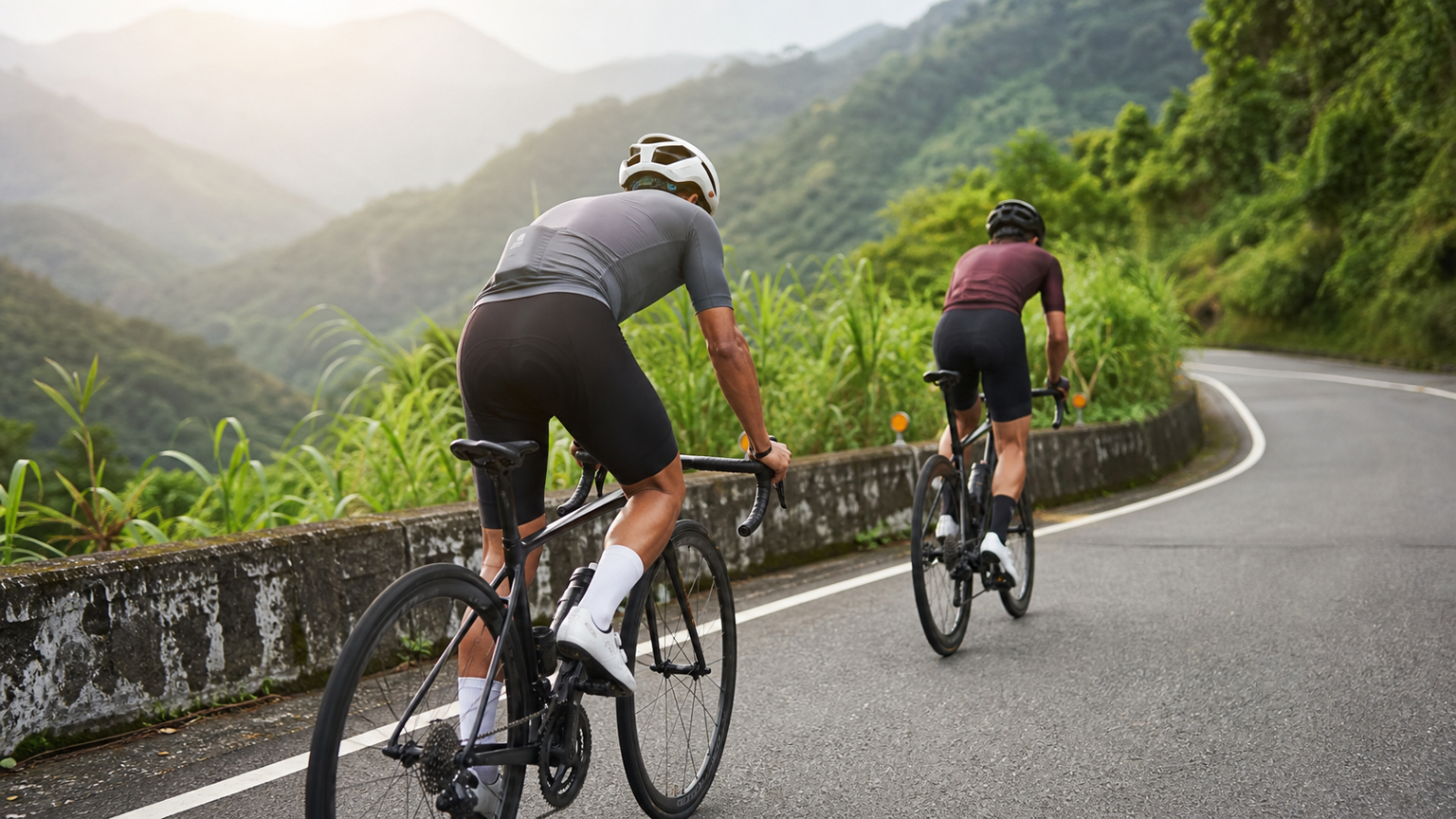
Riding hills together on weekends, the front group disappears into the distance while the back group chases and stalls behind—this is a shared memory for many amateur cyclists. Paired Climbing Training refers to deliberately training alongside stronger riders, using their pace to push yourself beyond your comfort zone. Done correctly, it can bring significant improvement; done incorrectly, it can lead to injury at best, or a loss of training motivation at worst.
The Science Behind Paired Training
Why Is Riding with Stronger Riders More Effective?
- Pacemaking Effect: Studies show that athletes with a rhythmic reference point are on average 3–5% faster than those riding alone
- Psychological Threshold Shift: Seeing others sustain higher intensities recalibrates your own judgment of what “very tired” means
- Technical Imitation: Directly observing a strong rider’s pedaling cadence, cornering lines, and saddle position adjustments
Risks of Paired Training
- If the intensity gap is too large (over 20% FTP), failing to keep up can push you directly into an over-fatigue zone
- Psychological frustration, if not managed well, can cause a decline in training motivation
- Blindly following without observing your own data makes it impossible to evaluate training effectiveness
Tactics: How to Follow Smartly
1. Set a “Follow Distance” Rather Than a “Passing Goal”
The purpose of paired training is not to win, but to raise intensity within a controllable range.
- Keep the gap to the stronger rider within 30–60 seconds (time difference on the same climb)
- Allow yourself to be dropped, but don’t let the gap exceed your line of sight
- When the gap narrows, maintain your pace—don’t suddenly accelerate
2. Segment Strategy
Break a climb into three segments:
| Segment | Strategy | Intensity Target |
|---|---|---|
| Early (30%) | Follow conservatively, observe the pace | 85–90% FTP |
| Middle (40%) | Hold the gap, control breathing | 90–95% FTP |
| Late (30%) | Push depending on conditions, don’t force a chase | 95–105% FTP |
3. Data First, Feelings Second
- On climbs, use the power meter as the primary reference, not “whether you’re keeping up”
- If power has already reached the planned ceiling, allow the other rider to pull away
- Heart rate often lags at high altitudes (e.g., Wuling), so avoid making decisions based solely on heart rate
Psychological Management: What to Do After Getting Dropped
Common Psychological Traps
- Comparison Mindset: “He’s my age, why is he so fast?”—Comparison hinders learning; instead ask, “What in his technique makes him more efficient?”
- All-or-Nothing Thinking: If you can’t keep up, you feel like “today was a total failure”—every painful climbing session accumulates adaptation
- Overinterpreting Fatigue: Sore legs ≠ overtraining; learn to distinguish between “manageable discomfort” and “pain that requires stopping”
Reframing Paired Training
- Treat being dropped as a data point: The point and section where you got dropped are exactly your weaknesses—target them next time
- Post-ride conversation: Discussing pacing strategy with the stronger rider after training is far faster than figuring it out on your own
- Record progress, not comparisons: Each time you climb the same road, compare against your own previous time, not others’ results
How to Form a Paired Training Group
The ideal paired training isn’t about finding “the strongest possible” rider, but finding a rider 5–15% stronger than you.
- In Taiwanese cycling clubs: Groups are usually divided by FTP W/kg or times on common climbing routes
- Strava Club approach: Find friends on Segments with time differences of 3–10 minutes from yours and arrange rides
- Bike shop pairing: Many Taiwanese bike shops split riders by speed on Saturday shop rides—a great opportunity to find a training partner
Recommended Paired Training Frequency
| Training Week Goal | Paired Training Frequency | Notes |
|---|---|---|
| Base phase | Once every 2 weeks | Focus on technical observation, not intensity |
| Build phase | Once per week | Pair with 1 individual interval session |
| Peak phase (pre-race) | Once every 2 weeks | Intensity is already high; use paired rides as race simulation |
Practical Tips
- Communicate beforehand: Tell your training partner your goal for the day, and ask them to maintain a steady pace rather than going all-out to the summit
- Bring a power meter or at least a heart rate monitor to avoid blindly following and burning out
- Taiwan’s Beiyi Highway and Caoling are excellent routes for paired training—not too long, easy to repeat, and allow for multiple comparisons
- The 48 hours after paired training are recovery time; don’t schedule another high-intensity day
Conclusion
Climbing alongside stronger riders can push both your body and mind past their limits in a short time. But the key is going up the mountain with a strategy—set reasonable follow targets, replace emotional decisions with data, and after training, extract lessons rather than frustration. Next time you climb Wuling with your team, try treating the section where you got dropped as your most valuable training material.
Related Reading
- The Benefits of Group Training: Why Riding with Stronger Riders Makes You Improve Faster
- Strategy Analysis for Climbing Races: Timing for Following, Passing, and Saving Energy
- Companion Strategies in Climbing Races: When to Draft, Gap, or Ride Solo
- Cycling Pacing Training: Methods for Developing Rhythm and Sustained Speed
一日北高/長距離團騎 常見問題補充篇 / 組團或跟團的眉角 / 壯車友容易被瘦車友慢性拉爆 / 原來屁股痛可能是這個原因...? / 風場配速法 / 公路車 / CT Yeh
2 年前
昇陽SYB車隊 & Fuji 菁英選手們的趣味經驗分享,長知識了!市民車友必看~ 一路被拉爆後才給問 | 戀戀197 武嶺 凸台經驗分享 | 公路車 | CT Yeh
4 年前
單車AI教練!全新 ChatGPT4o 幫你分析訓練成果!排武嶺課表,分析騎車姿勢! 太神了! / 公路車 / CT Yeh / feat. 緯緯
2 年前
西進武嶺 免費訓練分析服務 Intervals | 練不夠還是練過頭?你哪一種類型選手?AI模型告訴你! | 備戰神器 | 公路車 訓練 | CT Yeh
4 年前
公路車 爬坡 破PR 紀錄 小技巧 分享
6 年前
一個測試有沒有認真練車的方法😂 #公路車
10 個月前
#公路車 #西進武嶺 配速配瓦實驗 坡度分析 四小時內攻略 建大盃 NeverStop #西進武嶺攻略
6 年前
西進武嶺 自製新版AI配速表產生器 x 賽前攻略 抱佛腳! 沒有功率計也可以產生配速表嗎?有什麼其他眉角賽前要注意的呢? | 西進武嶺 / 東進武嶺 KOM 攻略 | 公路車 | CT Yeh
4 年前