Heat Adaptation and Cycling Performance: Physiological Adaptation to Taiwan's Summer High-Temperature Training
Introduction
Summer in Taiwan is both a torment and a gift for cyclists. The high-temperature, high-humidity environment from June to September makes riding especially grueling, but if heat adaptation principles are applied scientifically, it can instead become an opportunity to elevate overall competitive ability. This article analyzes the physiological mechanisms of heat stress and provides practical strategies for summer training in Taiwan.
Physiological Effects of Heat Stress on Cycling Performance
The Chain Reaction of Rising Core Temperature:
When ambient temperature rises, the body must maintain a core temperature of approximately 37°C, which requires a large volume of blood to be directed to the skin (for cooling) rather than to the muscles (for work). This causes the following physiological changes:
- Cardiac Drift: At the same power output, heart rate continues to rise because the heart must simultaneously supply both the muscles and the skin for heat dissipation
- Decreased Stroke Volume: Blood is redistributed to the skin, reducing venous return to the heart and lowering stroke volume
- Central Nervous System (CNS) Inhibition: High temperatures directly suppress the brain’s ability to recruit muscle fibers, reducing maximum sustainable power output
- Electrolyte Loss Through Sweat: Heavy sweating leads to sodium and potassium loss, affecting muscle contraction and nerve transmission
| Ambient Temperature | Estimated Power Reduction at Same Intensity | Core Temperature Rise Rate |
|---|---|---|
| 20°C (Cool) | Baseline (0%) | Slow |
| 25°C (Comfortable) | -2–3% | Normal |
| 30°C (Warm) | -5–8% | Moderate |
| 35°C (Hot) | -10–15% | Fast |
| 38°C+ (Extremely Hot) | -15–25% | Very fast, risk of heat exhaustion |
Physiological Mechanisms of Heat Adaptation
What Is Heat Acclimatization?
After 5–14 days of exposure to heat-stress environments, the body undergoes the following physiological adaptations:
Primary Adaptive Responses (Ranked by Importance):
- Increased Plasma Volume (Most Important): The fluid proportion of blood increases, restoring stroke volume and improving the elevated heart rate
- Increased Sweat Rate: Sweat glands become more sensitive to heat stimuli and begin perspiring earlier
- Reduced Salt Concentration in Sweat: The rate of electrolyte loss decreases, making electrolyte balance maintenance more efficient
- Lowered Thermoregulatory Threshold: The core temperature at which sweating begins decreases, allowing more timely heat dissipation
- Improved Psychological Heat Tolerance: Subjective heat perception diminishes, making the same temperature feel more comfortable
Taiwan Summer Heat Adaptation Training Plan
Active Heat Adaptation Protocol (5–10 Days):
Perform 60–90 minutes of low-to-moderate intensity riding (Zone 2–3) daily during the hottest hours (10:00–16:00), allowing the body to receive sufficient heat stimulus without excessive depletion.
Passive Heat Adaptation Method (Supplemental):
If outdoor riding is not possible every day, spend 20–30 minutes in a hot bath or sauna after exercise to accelerate plasma volume expansion.
Phased Strategy:
- Days 1–3: Low-intensity riding to let the body begin adapting to sweating; do not chase power
- Days 4–7: Moderate intensity; begin to notice improvement in the elevated heart rate
- Days 8–14: Gradually resume normal training intensity; heat adaptation is largely established by this point
Hydration and Electrolyte Strategy
Nutrition and Hydration Recommendations for Taiwan Summer Riding:
- Hourly Fluid Intake: 500–750 mL (up to 1000 mL/hr during high heat and high intensity)
- Sodium-Containing Drinks: For sessions exceeding 60 minutes, beverages should contain 400–600 mg/L of sodium (standard sports drinks suffice)
- Pre-loading: Drink 500 mL of an electrolyte beverage 30 minutes before departure
- Ice Vest or Ice Packs: Lowering core temperature by 1–2°C before departure can delay the onset of heat fatigue
Practical Recommendations
- Base summer training on heart rate rather than power—allow power to drop in high heat to maintain the target heart rate zone
- Start early or ride in the evening: The Taipei Basin is hottest between 2–4 PM; schedule departures for 5–7 AM or 5–7 PM
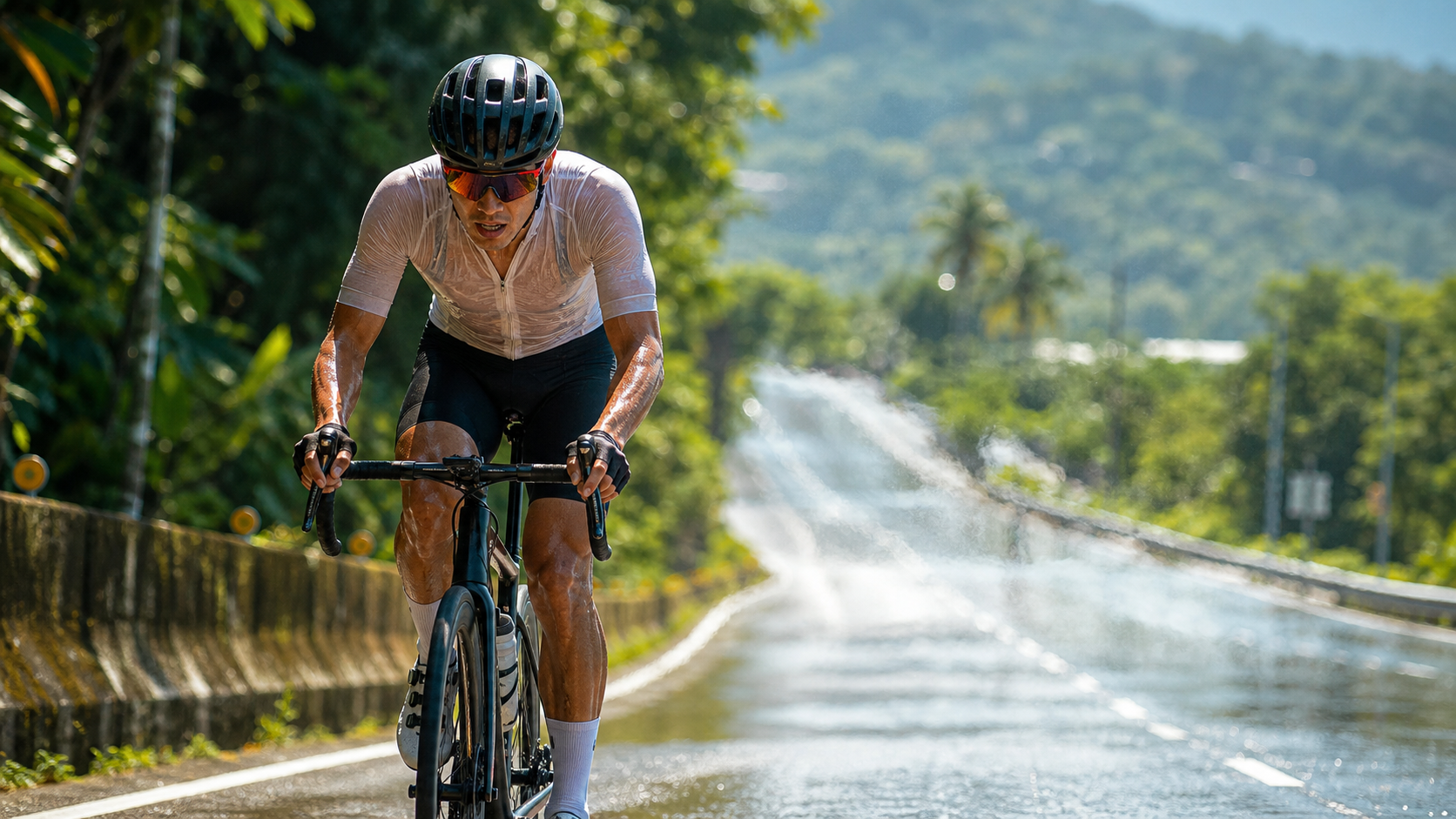
- Light-colored clothing and ventilated helmets: Dark clothing absorbs heat; choose white or light-colored jerseys in summer and confirm your helmet has adequate ventilation
- Stop immediately at signs of heatstroke: Dizziness, nausea, and cessation of sweating are precursors to heatstroke—find shade and rehydrate immediately
- Use summer as the aerobic base period for the winter racing season: The increased plasma volume from heat adaptation persists for several weeks after temperatures drop, providing tangible benefits for autumn races
Conclusion
Taiwan’s scorching summer need not be an enemy of training. Armed with the scientific knowledge of heat adaptation, make summer a crucible for fitness gains while protecting your body’s safety with proper hydration strategies. A scientifically trained cyclist can improve in every season.
Related Reading
- Heat Adaptation Training: Performance Enhancement Strategies for Taiwan’s Summer Heat
- Heat Adaptation Training: Physiological Strategies to Improve Summer Cycling Performance in Taiwan
- Cardiopulmonary Stress of Riding in Hot Environments: Physiological Adjustment for Taiwan Summer Training
- Cycling Heat Adaptation Training: Coping Strategies for Taiwan’s Summer High Temperatures
單車 一日北高 ( 雙城 ) 肥宅雙人瘋狂行 紀錄片 REACTO
10 年前
#公路車 #Fitting 靠人工智慧APP 幫你調整單車
6 年前
單車胎壓觀察到的有趣現象,SRAM Quarq TyreWiz 2.0 無內胎胎壓計 / 裝了有哪些幫助? / Tubeless / 公路車 / CT Yeh
1 年前
西進武嶺 免費訓練分析服務 Intervals | 練不夠還是練過頭?你哪一種類型選手?AI模型告訴你! | 備戰神器 | 公路車 訓練 | CT Yeh
4 年前
大武山後門26%歡樂陡坡!JJSC南台灣單車行Day2 / 被颱風追著跑 / 公路車 / CT Yeh
2 年前
4K 東眼山 x 水蜜桃冰沙 百人單車約騎! 操完再吃冰 多爽快
7 年前
CT 喇低賽) 單車 比賽總是沒照片? 攝影師的觀點大公開 姿勢就是力量! 請加速1.25倍收看
7 年前
一日北高/長距離團騎 常見問題補充篇 / 組團或跟團的眉角 / 壯車友容易被瘦車友慢性拉爆 / 原來屁股痛可能是這個原因...? / 風場配速法 / 公路車 / CT Yeh
2 年前