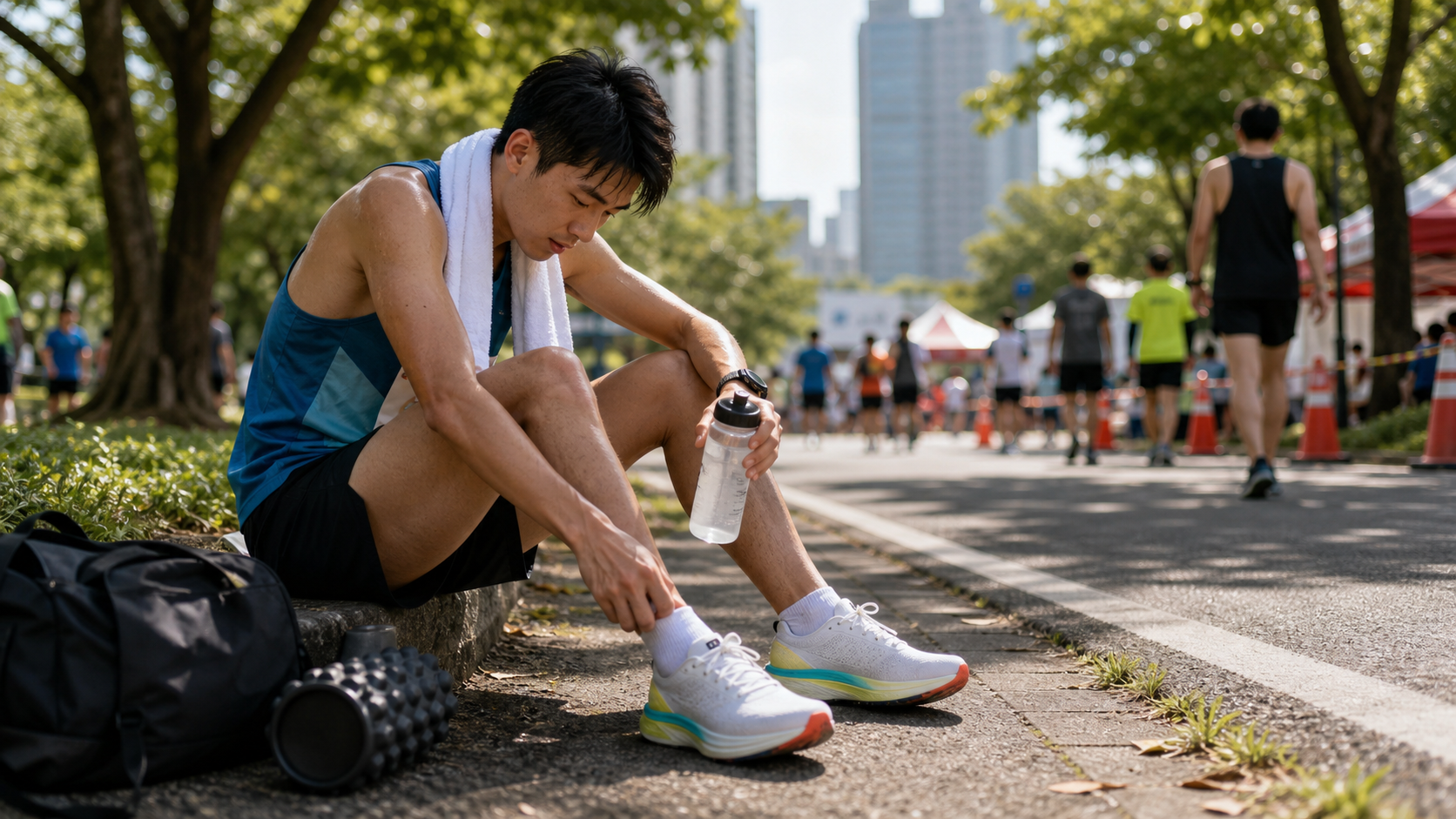
Introduction
The moment you cross the half marathon finish line, the goal of your training cycle is achieved, but your body’s “repair project” is just beginning. The 21-kilometer race causes micro-damage to muscle fibers, significant glycogen depletion, and temporary immune suppression. Improper post-race handling—returning to high-intensity training too early—is the main reason many runners get injured 2–4 weeks after the race. This article provides a science-based post-race recovery timeline, from the minute the race ends all the way to returning to normal training two weeks later.
First 2 Hours After the Race: Immediate Recovery
The first hour after finishing is the “metabolic window,” when replenishment efficiency is at its highest:
- Carbohydrate intake: 0.8–1g/kg body weight (bananas, sweet potatoes, sports drinks)
- Protein intake: 20–30g (milk, soy milk, tea eggs, chicken breast)
- Active hydration: 200–250 ml of water or electrolyte drink every 15 minutes, until urine returns to a light yellow color
- Change into dry clothes: Sweat-soaked running gear cools you down quickly; after races in Taiwan, put on warm clothing to avoid catching a chill
- Don’t sit still immediately: Walk lightly for 5–10 minutes before stopping, to prevent blood from pooling in the lower limbs
24–48 Hours After the Race: Acute Recovery Phase
The day after the race is often when fatigue feels heaviest, and delayed onset muscle soreness (DOMS) peaks:
- Active light recovery: 20–30 minutes of easy walking, swimming, or cycling (not running)
- Foam rolling: 2–3 minutes each on the quadriceps, calves, and glutes, rolling with light pressure—don’t “dig hard into tender points”
- Ice therapy: If there is localized swelling in the knees or heels, apply ice for 10–15 minutes per session, 2–3 times daily
- Prioritize sleep: Ensure 8–9 hours of sleep each night; growth hormone secretion peaks during deep sleep
Return-to-Training Plan for Weeks 1–2 After the Race
The following uses a “standard recovery plan” as a framework and can be adjusted based on individual fatigue levels:
| Day | Training Content | Intensity | Notes |
|---|---|---|---|
| Days 1–2 post-race | Complete rest or light walking | Very low | Let acute fatigue subside |
| Days 3–4 post-race | Easy jogging 20–30 minutes | Very easy | First run back; don’t watch pace |
| Days 5–7 post-race | Easy runs 4–6 km × 2 sessions | Easy | Legs feel normal again; no chasing speed |
| Days 8–10 post-race | Easy runs 6–8 km, add 4 × 100m strides | Easy + short speed feel | Only add speed segments after confirming no pain |
| Days 11–14 post-race | Easy runs 8–10 km, 1 light tempo session of 20 minutes | Aerobic + light threshold | Gradually return to normal training rhythm |
Core principle: The standard for returning to training is “no pain, a natural and fluid stride, and feeling easy without deliberately pushing the pace”—not “resume training just because a certain number of days has passed.”
Three Indicators for Assessing Recovery
- Morning resting heart rate: If it is still 5–7 bpm higher than usual, systemic fatigue has not subsided, and high-intensity training is not advisable
- Rating of Perceived Exertion (RPE): Run at your usual easy pace; if it feels harder than normal, continue maintaining low intensity
- Localized pain: If there is any sharp pain (not muscle soreness) in the knees, heels, or calves, pause the return-to-training plan and assess
Common Post-Race Mistakes Among Taiwanese Runners
- “Striking while the iron is hot” by racing back-to-back: Many Taiwanese runners follow up the December race (Fubon) with events in January–February, resuming high-intensity training without adequate recovery, accumulating fatigue that erupts in the spring
- Doing intervals after just 3 days: Leg feel and nervous system recovery are not synchronized; muscle fiber damage repair takes 7–10 days
- Doing absolutely nothing for 2 weeks: Excessive rest causes aerobic adaptations to regress; it’s recommended to maintain at least 2–3 easy runs per week
Psychological Recovery After the Race
Post-race mood swings are also common, especially the “Post-Race Blues” that can set in after the satisfaction of achieving your goal fades:
- Take time to record what you gained from the race and your reflections
- Set a goal for the next event or mileage target (but don’t hastily sign up right away)
- Share race experiences with running friends to maintain social connections
- Use the recovery period to do things you usually don’t have time for (travel, leisure), making up for the quality of life sacrificed during training
Training Transition After 2 Weeks
If everything recovers smoothly, you can return to a normal training rhythm starting on day 15 post-race:
- Start weekly mileage at your pre-race taper level; don’t jump straight back to peak volume
- Re-establish your next 8–12 week training plan
- If preparing for the next half marathon (with an interval of 8+ weeks), enter the build phase directly after the 2-week recovery
Practical Tips
- Keep a foam roller and massage ball on hand; the first 3 days after the race are when they get the most use
- Drink more turmeric milk or ginger tea: curcumin helps reduce muscle inflammation and is an easily accessible natural anti-inflammatory ingredient in Taiwan
- Take warm baths (37–40°C) or use compression calf sleeves: improve lower-limb circulation and accelerate waste metabolite clearance
Conclusion
Completing a half marathon is an achievement to be proud of, but the wisdom of post-race recovery is the key to continuous improvement and enjoying running year after year. The patience of the first 2 weeks pays off with better training quality and a longer running career down the road. Slow down, and you’ll be able to run farther.
Related Reading
CT暗黑廚房) 車友必備 宇宙無敵鮮蚵湯 幫助訓練恢復 天然食補 好市多 超肥鮮蚵 破PR
7 年前
2019 夏季KOM 5小 完賽心得 準備攻略 東進武嶺 夏季登山王之路 Taiwan KOM Challenge
7 年前
Live) 備戰2019彰化經典百K 賽前攻略 (已完賽請看新影片
7 年前
西進武嶺 免費訓練分析服務 Intervals | 練不夠還是練過頭?你哪一種類型選手?AI模型告訴你! | 備戰神器 | 公路車 訓練 | CT Yeh
4 年前
一日北高前的高裝檢 | 北高 360 | 挑戰11小時的裝備 | 一日雙塔 | 補給
6 年前
FTL 與 SYB 車隊專訪 西進武嶺 實用攻略分享! 2小時 如何練?!你不知道的眉角!新手準備武嶺必看 EP1 | 實力派女車友 | 精華版 | 公路車 | CTYeh
4 年前
一日北高 11小時 賽後心得分享篇 | TWB北高360 | 一日雙城 | 單車 | 公路車
6 年前
摔車後補裝備: 好市多新款單車安全帽& Specialized Romin 北高整路屁股都不痛的坐墊 | 一千元居然有MIPS | CT Yeh | 公路車
4 年前