First-Timer's Triathlon Guide: Best Practices for 51.5K Standard-Distance Transitions and Race Tactics (Series 78)
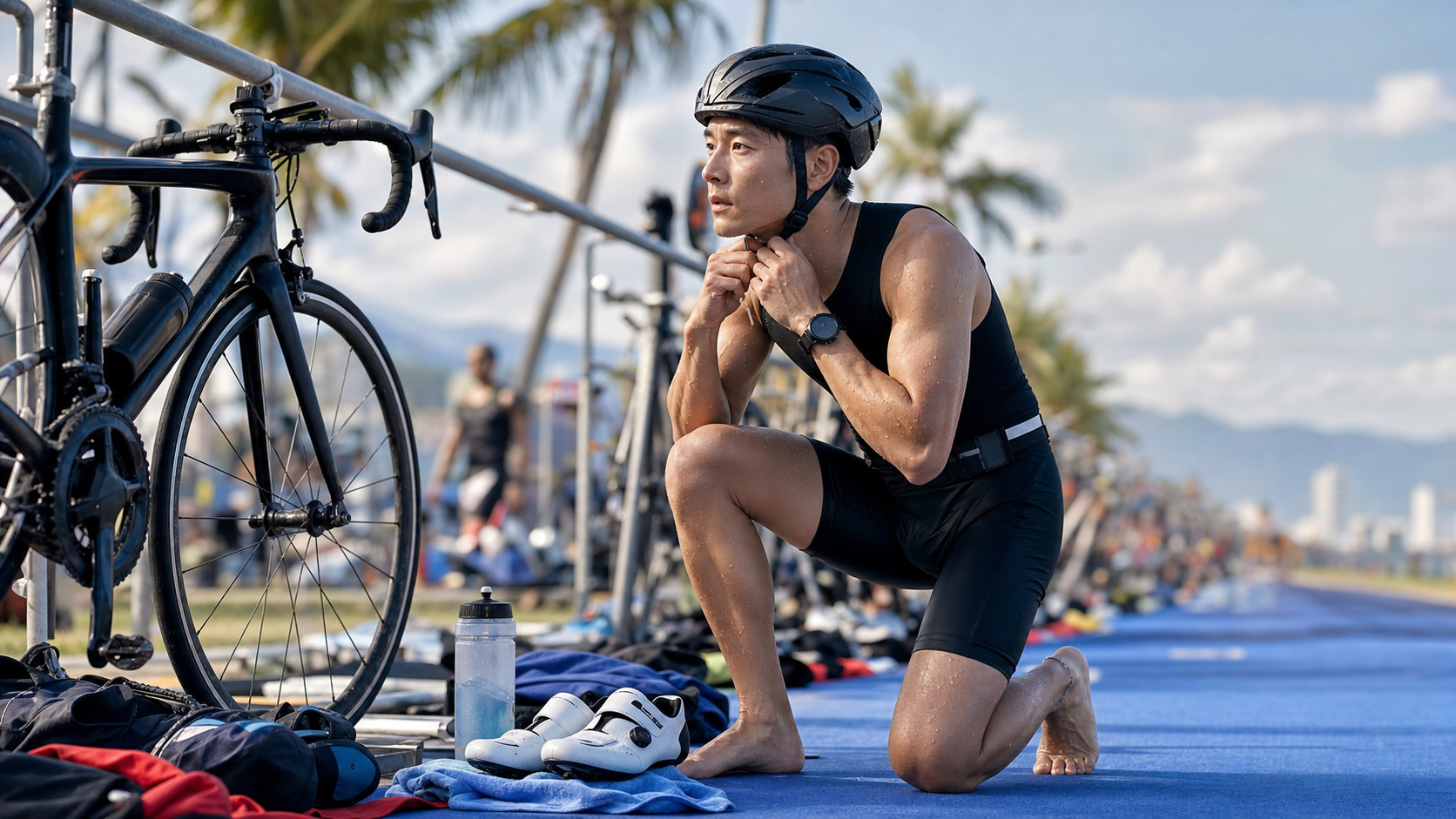
First Triathlon Challenge Guide: Best Practices for 51.5K Standard Distance Transitions and Race Tactics (Series 78)
This article was co-written by the sports science editorial team and professional coaches to bring you the most professional triathlon knowledge and training advice.
In the modern triathlon field, more and more sports enthusiasts are emphasizing “science-based training.” Whether you are a beginner aiming to finish or an elite athlete pursuing a personal best (PB), precise physiological data management and systematic workout planning are the keys to injury-free progress. This article will delve into the relevant physiological mechanisms and training practices.
The Art of Smooth Transitions: Breaking Down T1 and T2
In triathlon, the Transition Area is often called the “fourth discipline.” A skilled athlete can complete T1 (swim-to-bike) and T2 (bike-to-run) in 1-2 minutes, while beginners may take more than 5 minutes. The key to speeding up lies in simplifying the process: unzipping the wetsuit before exiting the water, pre-clipping cycling shoes onto the pedals, and laying out gear in order on a towel in the transition area. Any unnecessary movement will silently consume precious race time.
Brick Workouts to Overcome Heavy Legs
When you finish riding dozens of kilometers and start running, your legs feel incredibly heavy for the first 1-2 kilometers, as if filled with lead. This happens because blood is pooled in the pedaling muscles of the thighs, and running and cycling use completely different muscle fibers and neural pathways. Through “brick workouts” (immediately running 15-30 minutes right after cycling), you can train your brain and muscles to redistribute blood within minutes, helping your body adapt to this rapid neuromuscular transition.
Triathlon (51.5K Standard Distance) Transition Area Smooth Flow Checklist
Here is a practical data and recommended arrangement compiled for you:
| Transition Phase | Athlete Action Steps | Gear Check | Tactical Focus | Time-Saving Tips |
|---|---|---|---|---|
| Swim Exit (T1 Start) | Unzip wetsuit down to the waist | Swim cap and goggles in hand | Maintain running rhythm, prevent dizziness | Use the run from the water to peel off the upper half of the wetsuit |
| Bike Setup (T1) | Put on helmet (buckle first) -> remove wetsuit -> put on cycling shoes | Helmet, race number (turned to the back) | Confirm race number and helmet buckle are secure | Use elastic laces, pre-clip cycling shoes on the bike |
| Bike Return (T2 Start) | 500m before the finish, slip feet out of cycling shoes and rest them on top | Prepare to dismount | Watch for the dismount line, no early dismounting | Dismount while moving, run with the bike to the transition spot |
| Run Start (T2) | Rack the bike -> remove helmet -> put on running shoes -> grab nutrition | Running shoes, visor, energy gels | Turn the race number to the front | Dust running shoes with talcum powder for easy entry, ease off the pace for the first 1K |
Recommended Core Gear and Nutrition Checklist
For this training or race, it is recommended to prepare the following items:
- Lightweight breathable gear: Highly breathable fiber materials to reduce sweat resistance and prevent chafing injuries.
- Heart rate monitoring equipment: Chest strap heart rate monitor or high-precision sports watch for real-time heart rate zone tracking.
- High-osmolarity energy gels: Each pack provides approximately 25-30g of complex carbohydrates, to be consumed every 40-45 minutes.
- Electrolyte/salt tablets: To prevent electrolyte imbalance and muscle cramps from heavy sweating in high temperatures.
- Post-race golden recovery drink: Carbohydrate-to-protein ratio of 3-4:1, consumed within 30 minutes after finishing/training.
Frequently Asked Questions and Expert Answers (FAQ)
Q: Do I have to wear socks during the T1 transition?
A: For short-distance races (such as half-distance or standard distance), many elite athletes choose to skip socks to save time and apply petroleum jelly inside the cycling shoes to prevent chafing. However, for longer distances like 113 or 226, it is recommended to take the time to put on socks to avoid blisters.
Q: How can I make the wetsuit easier to remove?
A: Apply anti-chafing balm (Body Glide) to your wrists, ankles, and neck. When removing the wetsuit, roll it outward as you peel it off, step on the cuffs, and pull your arms out firmly.
Conclusion and Outlook
The core of science-based training lies in “consistency” and “listening to your body.” We hope this guide helps you ride farther, run faster, and achieve your personal goals healthily and pain-free on the triathlon journey! See you at the finish line of the next race!
Related Reading
- First Triathlon Challenge Guide: 51.5K Standard Distance Transitions and Race Tactics: Complete Practical Handbook (Series 468)
- First Triathlon Challenge Guide: Best Practices for 51.5K Standard Distance Transitions and Race Tactics (Series 213)
- First Triathlon Challenge Guide: Best Practices for 51.5K Standard Distance Transitions and Race Tactics (Series 462)
- First Triathlon Challenge Guide: The Scientific Principles Behind 51.5K Standard Distance Transitions and Race Tactics (Series 270)
西進武嶺 免費訓練分析服務 Intervals | 練不夠還是練過頭?你哪一種類型選手?AI模型告訴你! | 備戰神器 | 公路車 訓練 | CT Yeh
4 年前
單車AI教練!全新 ChatGPT4o 幫你分析訓練成果!排武嶺課表,分析騎車姿勢! 太神了! / 公路車 / CT Yeh / feat. 緯緯
2 年前
FTL 與 SYB 車隊專訪 西進武嶺 實用攻略分享! 2小時 如何練?!你不知道的眉角!新手準備武嶺必看 EP1 | 實力派女車友 | 精華版 | 公路車 | CTYeh
4 年前
CT 喇低賽) 武嶺牽車 才是王道 西進牽車四小時內秘訣 攝手位置 如何判斷 防抽筋小秘訣
7 年前
一日北高常見問題大集合 | 攻略 | 路線 | 訓練 | 補給 | 自行車 單車 | 一日雙城 | 雙塔 | TWB北高360 | 屁股痛
6 年前
再一組! 全碳幅條 碟煞/無內胎輪組 開箱! 到底好騎嗎? UNAAS X40 | 公路車 | CT Yeh
4 年前
#公路車 #Fitting 靠人工智慧APP 幫你調整單車
6 年前
靠單車減肥35公斤 心得分享與整理
7 年前