The Complete Guide to Trail Running Race Preparation: A Systematic Approach from Race Selection to Finish Line
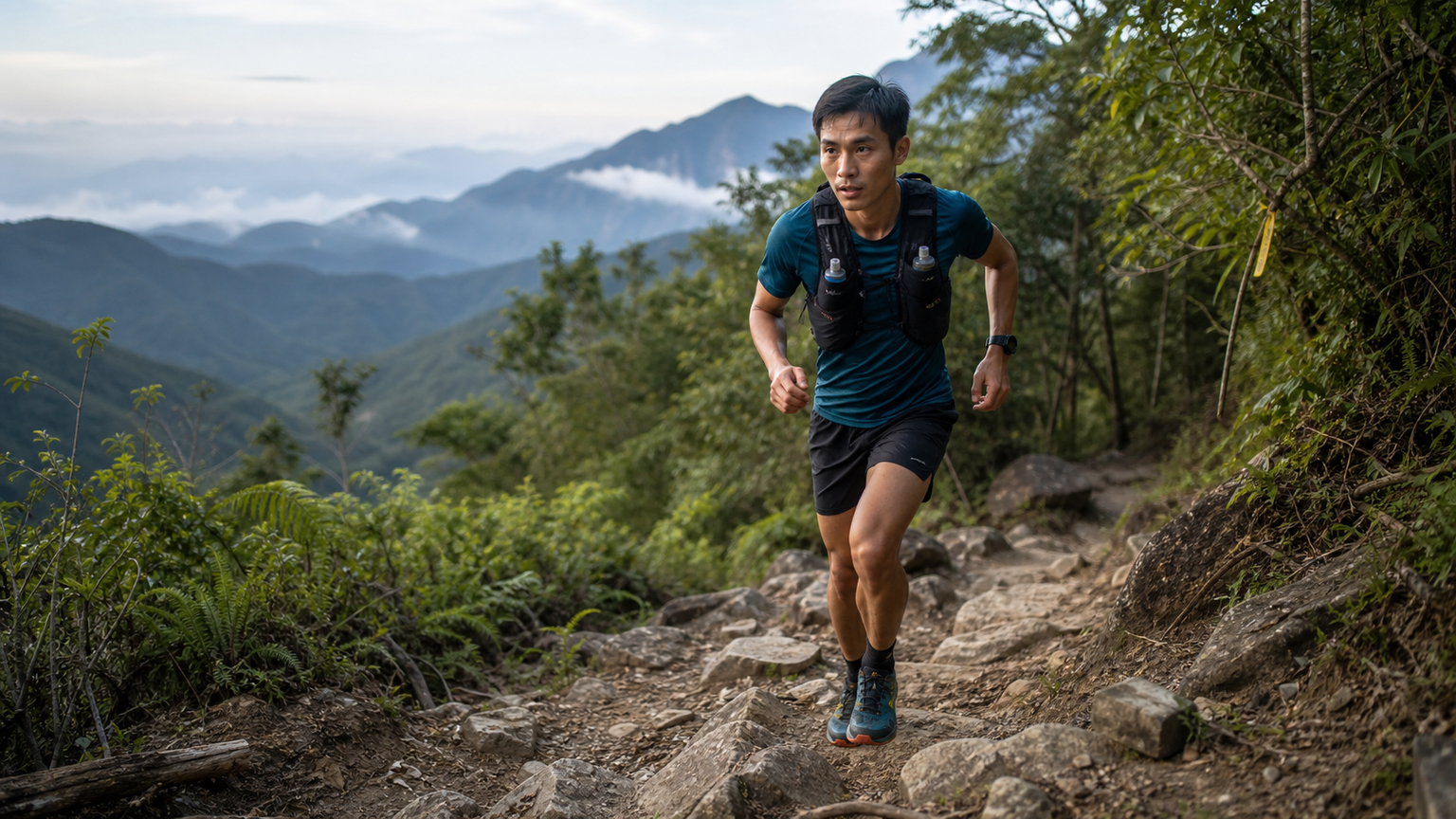
Complete Guide to Preparing for Trail Running Races: A Systematic Approach from Race Selection to Finish
Trail running has flourished in Taiwan in recent years. From Yangmingshan to Hehuanshan, from 10K beginner races to 100-kilometer ultramarathons, the race options are increasingly diverse. However, the differences between trail running and road running are far greater than most people imagine—terrain variation, elevation gain, nutrition strategies, and gear selection each require targeted preparation. This article will guide you through the complete preparation process for a trail race, starting from race selection.
Step 1: Choose a Race That Suits You
Assess Your Own Abilities
The difficulty of a trail race cannot be judged by distance alone. A 20K trail race with 2000 meters of cumulative elevation gain can demand far more from your body than a flat half marathon. When selecting a race, pay attention to three key indicators:
- Distance: For your first trail race, 15-30K is recommended
- Cumulative Elevation Gain (D+): Beginners should aim for no more than 50-80 meters per kilometer
- Altitude: Above 2500 meters, you need to consider altitude acclimatization
- Cutoff Time: Calculate whether your estimated finish time leaves enough margin
Popular Trail Races in Taiwan by Difficulty
| Difficulty | Representative Race | Distance / Elevation Gain | Suitable For |
|---|---|---|---|
| Beginner | Yangmingshan Trail Race | 15-20K / D+800m | Runners with half marathon experience |
| Intermediate | Datun Mountain Ultra-Trail | 30-50K / D+2000m | Runners with full marathon experience and trail training |
| Elite | UTMF, UTMB Series | 100K+ / D+5000m+ | Experienced trail runners |
Step 2: Build Trail-Specific Fitness
Training Periodization (16 Weeks)
Base Phase (Weeks 1-4): Build aerobic foundation and strength
- Maintain normal weekly mileage, with 30% completed on trails or dirt surfaces
- 2 lower-body strength sessions per week: squats, lunges, single-leg deadlifts, box step-ups
- Core stability training: plank variations, bird dogs, anti-rotation exercises
Specific Phase (Weeks 5-10): Strengthen climbing and technique
- Introduce “climbing intervals”: find a 200-400 meter slope, do high-intensity uphill + jog downhill, repeat 6-10 times
- Long trail runs: one 2-4 hour trail LSD (Long Slow Distance) per week
- Practice using trekking poles (if the race allows them and has long climbs)
- Simulate race terrain: train in environments as similar to the course as possible
Peak Phase (Weeks 11-14): Maximum load simulation
- Schedule 1-2 “race simulations”: complete 60-75% of the race distance, simulating nutrition and gear setup
- Cumulative elevation gain reaches the highest point of the training cycle
- Practice night running (if the race includes nighttime sections)
Taper Phase (Weeks 15-16): Recovery and fine-tuning
- Reduce mileage by 40-50%, but maintain intensity
- Final gear confirmation—do not try new gear before race day
- Adjust your daily routine to adapt to the race start time
Climbing and Descending Technique
Uphill Strategy:
- When the gradient exceeds 15%, power hiking is often more efficient than running (lower heart rate, less energy expenditure)
- Use a “short stride, high cadence” strategy—shorten your stride but keep cadence at 160-170 spm
- Place hands above the knees and push down (Power Hike technique), making good use of upper body assistance
Downhill Strategy:
- Lean slightly forward, letting gravity do the work instead of braking with your legs
- Look 3-5 meters ahead, not at your feet
- Relax your arms and let them swing naturally to aid balance
Step 3: Gear Checklist and Selection Logic
Core Gear
Trail Running Shoes: This is the most important gear investment. Key selection points:
- Outsole traction: Vibram Megagrip or equivalent rubber outsole
- Midsole protection: A rock plate is essential on rocky terrain
- Toe box width: Feet swell during long trail races, so leave half to a full size of extra room
- Recommended brands to try on: Salomon, Hoka, La Sportiva, Altra
Trail Running Pack/Vest:
- Under 15K: Waist pack or minimalist vest (under 5L)
- 15-50K: Trail vest 8-12L
- Over 50K: Trail vest 12-15L
- Key points: Water bottle placement within easy reach, elastic chest straps that don’t bounce, main compartment capacity that meets mandatory gear requirements
Mandatory Gear (required by most races):
- Water bottle or hydration bladder (minimum 1L capacity)
- Windbreaker or waterproof jacket
- Emergency blanket
- Headlamp (with spare batteries)
- Whistle
- Phone (fully charged with offline maps)
Clothing Selection Principles
- Moisture-wicking first: Avoid cotton; choose Merino wool blends or high-performance polyester
- Chafing prevention: Apply petroleum jelly or dedicated anti-chafe balm to friction-prone areas for long races
- Layering system: Mountain weather is unpredictable—base layer for wicking + mid layer for warmth + outer layer for wind and waterproofing
- Gaiters: Prevent rocks and dirt from getting into your shoes; essential for long distances
Step 4: Nutrition and Hydration Strategy
Energy Intake Formula
Energy expenditure in trail running is far higher than in road running. The general formula:
Hourly expenditure ≈ Body weight (kg) × 10-12 kcal (including elevation gain factor)
Nutrition target: Consume 200-300 kcal per hour, gradually increasing to 350 kcal once your stomach adapts.
Recommended Nutrition Combinations:
- Energy gels: One pack every 30-45 minutes (remember to take with water)
- Soft energy bars or rice balls: Supplement with solid food every 1.5-2 hours
- Electrolytes: 300-500mg of sodium per hour, via electrolyte tablets or sports drinks
- Caffeine: Use in the latter half of long races, 50-100mg per dose
Hydration Management
- Drink 400-800ml per hour, adjusted based on temperature and intensity
- Don’t wait until you’re thirsty to drink—by the time you feel thirst, you’re already 1-2% dehydrated
- Fill your bottles completely at aid stations; it’s better to carry too much than too little
Step 5: Race Day Strategy
3 Hours Before the Start
- Wake up and eat breakfast: familiar carbohydrate-based foods (rice with miso soup, white toast with peanut butter)
- Apply anti-chafe balm and chafe-prevention patches
- Confirm all mandatory gear is in your pack
Pacing Strategy
- Conservative start: Deliberately keep your heart rate low for the first 25% of the distance, starting at 90% of your goal race pace
- Steady middle: Maintain an even effort level (using heart rate rather than pace as the indicator)
- Fast finish: If your energy levels and digestive system are holding up well, you can pick up the pace in the final 25%
Mental Management
- Low points in a trail race are inevitable, usually occurring around the 60-70% mark of the distance
- Break the course into small goals: “Just get to the next aid station”
- Interact with other runners; mutual encouragement is part of trail running culture
Conclusion
The appeal of trail running lies in the fact that every step is different—no repetitive surfaces, no monotonous scenery. But this also means preparation needs to be more comprehensive. From race selection and assessment, fitness building, and gear testing to nutrition practice, every aspect deserves time and effort. Remember, in a trail race, finishing is itself a victory. Enjoy the trails, enjoy the process, and you will surely cross the finish line with a satisfied smile.
Related Reading
- Trail Running Beginner’s Guide: Transitioning from Road to Trail
- Trail Race Guide: Trail Technique, Hydration Packs, and Elevation Gain Calculation
- Trail Running Technique and Strategy: Complete Guide to Uphill/Downhill Running, Terrain Reading, Gear, Navigation, and Safety Preparation
- Taiwan Trail Running Beginner’s Guide
Live) 備戰2019彰化經典百K 賽前攻略 (已完賽請看新影片
7 年前
單車 一日北高 ( 雙城 ) 肥宅雙人瘋狂行 紀錄片 REACTO
10 年前
半日 小台灣 極限單車路線挑戰實錄
7 年前
一日北高前的高裝檢 | 北高 360 | 挑戰11小時的裝備 | 一日雙塔 | 補給
6 年前
FTL 與 SYB 車隊專訪 西進武嶺 實用攻略分享! 2小時 如何練?!你不知道的眉角!新手準備武嶺必看 EP1 | 實力派女車友 | 精華版 | 公路車 | CTYeh
4 年前
富士山KOM 賽事篇 VLOG!/ 小野田出沒!/ 完整路段分析 / 武嶺要騎多快才能拿環?/ 台灣選手 第20回Mt.富士ヒルクライム 参加!/ 公路車 / CT Yeh
2 年前
2019 夏季KOM 5小 完賽心得 準備攻略 東進武嶺 夏季登山王之路 Taiwan KOM Challenge
7 年前
2025 乘鞍岳登山賽 比賽全紀錄篇 / 完整路線攻略介紹 / 日本版武嶺 公路最高點 / 高山空拍絕景 / 明年會開團! / 公路車 / CT Yeh
10 個月前