The Complete Guide to Homemade Electrolyte Drinks: Science-Backed Formulas, Flavor Blending, and Practical Use
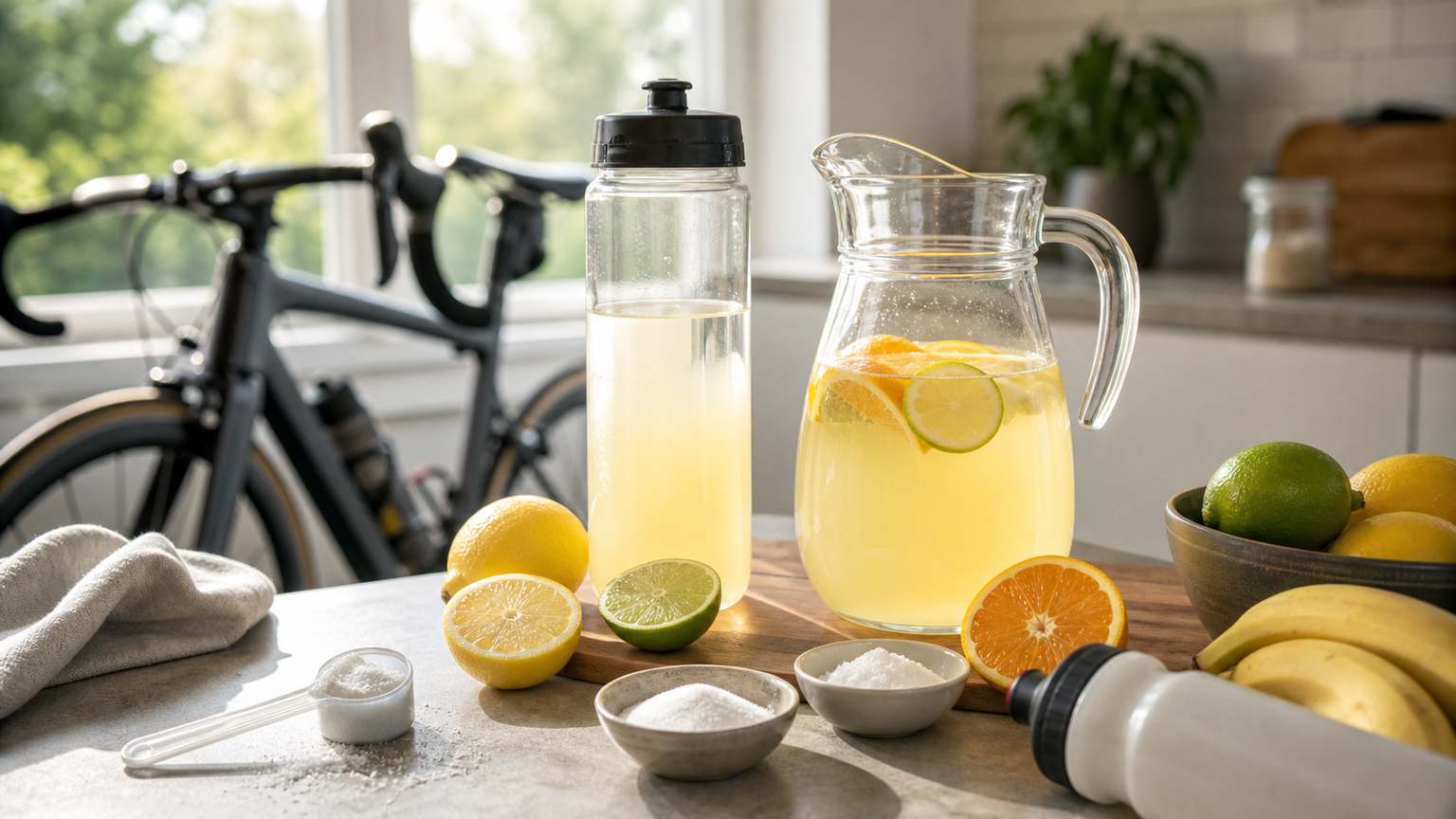
The Complete Guide to Homemade Electrolyte Drinks: Science-Backed Formulas, Flavor Blending, and Practical Use
Introduction
There’s no denying the convenience of store-bought sports drinks, but their ingredient lists are often puzzling — artificial colors, high-fructose corn syrup, unnecessary additives, and price tags that add up fast. The good news: a scientifically effective electrolyte drink can be made with basic kitchen ingredients for less than a tenth of the cost of commercial products. Even better, you can fine-tune every ingredient to match your own needs.
The Science Behind Electrolyte Drinks
Why Plain Water Isn’t the Best Choice
Drinking only plain water during exercise creates two problems:
-
Poor absorption efficiency: Plain water has zero osmotic pressure, while the most efficient intestinal water absorption relies on the sodium-glucose co-transport mechanism (the SGLT1 transporter). Adding the right amount of sodium and sugar can boost water absorption by 2-3 times.
-
Risk of dilutional hyponatremia: Drinking large amounts of plain water over a long period dilutes the sodium concentration in your blood. In extreme cases — such as replacing heavy sweat losses with plain water alone — this can lead to life-threatening hyponatremia.
The Three Pillars of an Optimal Electrolyte Drink
Sodium:
- The most important electrolyte in a sports drink
- Drives water absorption, maintains plasma volume, and helps prevent cramping
- Target concentration: 300-800 mg per liter (depending on exercise intensity and ambient temperature)
Carbohydrate:
- Activates SGLT1 co-transport to accelerate water absorption
- Provides energy to support performance
- Hypotonic drinks: 2-4% concentration (prioritizes water absorption)
- Isotonic drinks: 6-8% concentration (balances water and energy)
Potassium:
- Supports intracellular fluid balance
- Supports cardiac and skeletal muscle function
- Target concentration: 75-200 mg per liter
Why Osmolality Matters
A drink’s osmolality determines how it behaves during intestinal absorption:
- Hypotonic (<270 mOsm/L): Fastest water absorption, ideal for hydration-focused scenarios
- Isotonic (270-330 mOsm/L): Balanced absorption of water and energy — the most versatile option
- Hypertonic (>330 mOsm/L): Draws water from the body into the intestine to dilute the drink before it can be absorbed, potentially worsening dehydration
Base Recipes: Five Science-Backed DIY Electrolyte Drinks
Recipe 1: Classic Isotonic Sports Drink
Best for: 1-3 hours of moderate-to-high intensity riding
Ingredients (1 liter):
- Water: 800 ml
- 100% pure fruit juice (orange or apple): 200 ml
- Table salt: 1/4 tsp (about 580 mg sodium)
- Honey or maple syrup: 1 tbsp (about 15g carbs)

Approximate nutrition (per liter):
- Carbohydrate: ~40g (4% concentration)
- Sodium: ~580 mg
- Potassium: ~200 mg (from the juice)
- Calories: ~160 kcal
- Osmolality: approximately isotonic
Instructions:
- Mix the water and juice together
- Add the salt and honey
- Stir thoroughly until fully dissolved
- Refrigerate and use within 48 hours
Recipe 2: High-Sodium Formula for Hot Conditions
Best for: Temperatures above 32°C (90°F), heavy sweaters
Ingredients (1 liter):
- Water: 900 ml
- Coconut water: 100 ml
- Table salt: 1/2 tsp (about 1160 mg sodium)
- Honey: 2 tbsp
- Fresh lemon juice: 2 tbsp
- Baking soda: 1/8 tsp (extra sodium + acid buffering)

Approximate nutrition (per liter):
- Carbohydrate: ~35g
- Sodium: ~1300 mg
- Potassium: ~250 mg
- Magnesium: ~15 mg (from the coconut water)
- Calories: ~140 kcal
Recipe 3: Low-Calorie, Hydration-First Formula
Best for: Easy recovery rides, weight management periods, short commutes
Ingredients (1 liter):
- Water: 1000 ml
- Table salt: 1/4 tsp
- Low-sodium salt (potassium-enriched): 1/8 tsp
- Fresh lemon or lime juice: 3 tbsp
- Honey: 1 tsp (about 5g carbs, just enough to activate SGLT1)

Approximate nutrition (per liter):
- Carbohydrate: ~8g
- Sodium: ~650 mg
- Potassium: ~150 mg
- Calories: ~35 kcal
- Osmolality: hypotonic
Recipe 4: Long-Distance Endurance Formula
Best for: Rides longer than 3 hours
Ingredients (1 liter):
- Water: 750 ml
- 100% apple juice: 250 ml
- Maltodextrin powder: 30g (if available)
- Table salt: 1/3 tsp (about 770 mg sodium)
- Low-sodium salt: 1/8 tsp
- Fresh ginger juice: 1 tsp (helps settle the stomach)

Approximate nutrition (per liter):
- Carbohydrate: ~60g (6% concentration)
- Sodium: ~850 mg
- Potassium: ~250 mg
- Calories: ~240 kcal
- Osmolality: isotonic to slightly hypertonic
Recipe 5: Post-Race Recovery Electrolyte Drink
Best for: Immediate rehydration after training or racing
Ingredients (750 ml):
- Coconut water: 500 ml
- Water: 250 ml
- Table salt: 1/4 tsp
- Honey: 1 tbsp
- Fresh orange juice: 100 ml
- Mint leaves: a few (optional, aids digestion)

Approximate nutrition (per 750ml):
- Carbohydrate: ~45g
- Sodium: ~700 mg
- Potassium: ~600 mg (coconut water is potassium-rich)
- Magnesium: ~40 mg
- Calories: ~180 kcal
Advanced Adjustment Techniques
Adjusting Sodium Based on Sweat Rate
| Sweat Level | Sodium per Liter | Salt to Add |
|---|---|---|
| Light sweating (<500 ml/hr) | 300-400 mg | 1/8 tsp/liter |
| Moderate sweating (500-1000 ml/hr) | 500-700 mg | 1/4 tsp/liter |
| Heavy sweating (>1000 ml/hr) | 800-1200 mg | 1/3-1/2 tsp/liter |
| Salty sweater | 1000-1500 mg | 1/2 tsp/liter |
Principles for Adjusting Carbohydrate Concentration
- Hydration-focused (<1 hour of exercise): 2-3% carb concentration
- Balanced hydration and energy (1-3 hours): 4-6% carb concentration
- Energy-focused (>3 hours, with additional plain water): 6-8% carb concentration
The Advantage of Mixed Carbohydrate Sources
Research shows that combining glucose and fructose (roughly a 2:1 ratio) can raise intestinal carbohydrate absorption from 60 grams per hour to 90-100 grams per hour, because the two sugars use different transporters (SGLT1 and GLUT5).
Ways to achieve this in a DIY formula:
- Honey (naturally contains both glucose and fructose)
- Fruit juice + sucrose (sucrose hydrolyzes into equal parts glucose and fructose)
- Maltodextrin + fructose (an advanced option)
Flavor Blending Tips
Natural Ways to Make Your Drink Taste Better
- Citrus: Lemon, lime, orange — the classic sports drink flavor profile
- Ginger: Fresh ginger juice adds a distinctive flavor and may help ease exercise-induced nausea
- Mint: A cooling sensation that’s especially welcome on hot rides
- Cucumber: Sliced and steeped for a refreshing note
- Watermelon juice: Naturally contains L-citrulline, which may support blood flow
- Passion fruit: A sweet-tart flavor that masks the taste of salt
How Temperature Affects Taste
Cold drinks (5-10°C) mask saltiness and excessive sweetness. If your formula tastes too salty at room temperature, it may taste just right once chilled. It’s best to fine-tune the flavor close to the temperature at which you’ll actually drink it.
Common Mistakes and How to Avoid Them
Mistake 1: Concentration Too High
Adding too much sugar or electrolyte powder to your bottle creates a hypertonic drink. Symptoms include bloating, nausea, and even diarrhea.
Fix: Stick closely to the recipe — it’s better to go slightly weak than too concentrated.
Mistake 2: Neglecting Sodium
Adding only sugar and flavoring without salt produces a tasty drink that hydrates poorly.
Fix: Sodium is the core of any electrolyte drink. Don’t skip it, even if it makes the drink taste a bit salty.
Mistake 3: Using Sea Salt Without Adjusting the Amount
Sea salt and refined salt have slightly different sodium content (sea salt is about 38% sodium, refined salt about 39% — not a huge difference, but their differing grain sizes mean the same volume can weigh differently).
Fix: For the most accuracy, weigh salt with a kitchen scale rather than measuring by the teaspoon.
Mistake 4: Improper Storage
DIY drinks made with real fruit juice contain no preservatives and spoil quickly at room temperature.
Fix: Refrigerate and use within 48 hours. For race day, it’s best to make it fresh that morning.
Cost Comparison
| Item | Cost per Liter (estimated) | Notes |
|---|---|---|
| Commercial sports drink | NT$40-80 | Convenient but full of additives |
| Electrolyte effervescent tablets | NT$25-50 | Convenient but low in carbs |
| Sports drink powder mix | NT$20-40 | Portable |
| DIY Recipe 1 | NT$8-15 | Most economical |
| DIY Recipe 4 | NT$15-25 | Contains more juice |
Over the course of long-term training, DIY electrolyte drinks can save you a significant amount of money while giving you far better control over your ingredients.
Formulas for Special Scenarios
A Supplementary Drink for Carbohydrate Loading
During pre-race carb loading, a higher-carbohydrate drink can help:
- 700ml water + 300ml apple juice
- 2 tbsp honey
- 1/4 tsp salt
- About 70g carbs per liter
Sip throughout the day, in addition to your regular meals, to boost carbohydrate intake.
An Energizing Drink for Night Races or Long Challenges
- 800ml cold-brewed tea (black or green)
- 2 tbsp honey
- 2 tbsp lemon juice
- 1/4 tsp salt
- Contains approximately 40-60mg natural caffeine
Conclusion
A DIY electrolyte drink is not a lesser substitute — it’s a scientifically validated, fully customizable, and extremely low-cost sports nutrition solution. Once you understand the basic principles of balancing sodium, carbohydrates, and water, you can mix the perfect drink for any training or racing scenario.
Start with the most basic Recipe 1, test it during training, and fine-tune it based on your own taste and how your body responds — you’ll soon land on the perfect formula for you.
Further Reading
- The Science of Sports Drinks: When Do You Need Them, How to Choose, or Should You DIY?
- Sports Drinks or Plain Water: Hydration Choices for Long Rides and Runs
- Dehydration and Electrolytes During Exercise: When You Need to Replenish
- Post-Exercise Electrolyte Drinks vs. Plain Water: Comparing Renal Water Retention Efficiency
CT暗黑廚房) 車友必備 宇宙無敵鮮蚵湯 幫助訓練恢復 天然食補 好市多 超肥鮮蚵 破PR
7 年前
#公路車 #Fitting 靠人工智慧APP 幫你調整單車
6 年前
靠單車減肥35公斤 心得分享與整理
7 年前
日本最夯 透明奶茶 喝起來像什麼呢? 調味去
8 年前
詳測) 小米 電動打氣筒 公路車胎要充多久? 值得買嗎? 米家充氣寶 小心燙手!
7 年前
水金九不厭五分 10度寒流冷到不願停!feat. 卡卡 / 公路車 / CT Yeh
6 個月前
單車 一日北高 ( 雙城 ) 肥宅雙人瘋狂行 紀錄片 REACTO
10 年前
西進武嶺 免費訓練分析服務 Intervals | 練不夠還是練過頭?你哪一種類型選手?AI模型告訴你! | 備戰神器 | 公路車 訓練 | CT Yeh
4 年前