The Complete Trail Running Shoe Buying Guide: Everything You Need to Know
Trail running has grown rapidly in Taiwan in recent years, with more and more runners heading from suburban hiking trails to high-mountain traverses. However, choosing trail running shoes is far more complex than choosing road shoes — the wrong pick doesn’t just hurt performance, it can cause injury. This article walks you through everything you need to know about buying trail running shoes, from the ground up.
Trail Shoes vs. Road Shoes: The Core Differences
Before we talk about buying, let’s understand the core differences between trail and road running shoes:
Outsole
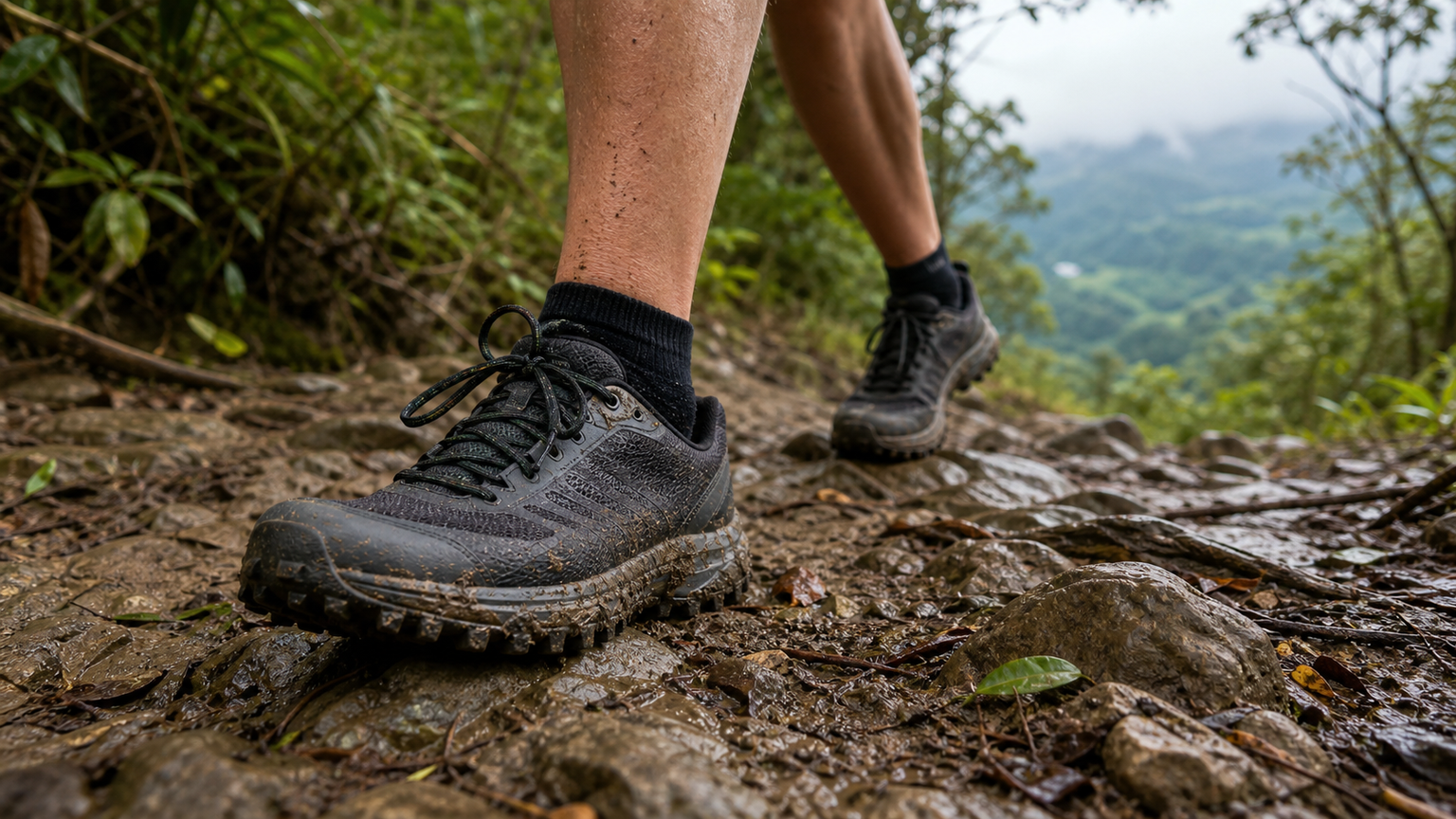
Road shoe outsoles are built for durability and light weight, while trail shoes need deep lugs for traction. The depth, shape, and pattern of the lugs all affect performance on different terrain.
Midsole
Trail shoe midsoles are usually firmer and more protective than road shoes, and many models add a rock plate to prevent sharp rocks from piercing the sole.
Upper
Trail uppers need stronger abrasion resistance and foot lockdown, while still managing breathability and drainage. Many models use tear-resistant materials with reinforced toe bumpers.
Drop
Trail shoes typically have a lower heel-to-toe drop (4-8mm), and some minimalist models go all the way to zero drop, which helps with balance on uneven terrain.
Choosing Shoes by Terrain
1. Hard-Packed Dirt Trails / Gravel Paths
Representative routes: Yangmingshan trails, Four Beasts Mountain (Taipei)
This is the most common trail surface, and shoe selection here is relatively simple:
- Lug depth: A moderate 3-4mm is sufficient
- Midsole firmness: Medium, balancing cushioning and ground feel
- Recommended shoes: Salomon Sense Ride 5, Hoka Speedgoat 5, ASICS Fuji Lite 4
2. Muddy, Slippery Terrain
Representative routes: Northern Taiwan’s rainy-season trails, valley/creek routes
Taiwan’s rainy climate makes muddy trails a regular occurrence:
- Lug depth: 5mm or deeper
- Lug spacing: Wide spacing to prevent mud from clogging the tread
- Upper material: Quick-drying, drainage-friendly design
- Recommended shoes: Salomon Speedcross 6, Inov-8 Mudclaw G 260, La Sportiva Bushido III
3. Technical Rocky Terrain
Representative routes: Jianlong Ridge, Yuanzui Mountain, Yushan’s Front Five Peaks
Technical terrain demands precise foot feel and reliable grip:
- Lug design: Sticky rubber outsoles such as Vibram Megagrip
- Midsole: Firmer, paired with a rock plate
- Upper: Reinforced lockdown and protection
- Recommended shoes: La Sportiva Bushido III, Scarpa Spin Ultra, Salomon S/Lab Ultra 3
4. Long-Distance Ultras / Trail Races
Representative races: UTMF, TNF100, and major Taiwan trail races
Long distances call for more cushioning and comfort:
- Midsole thickness: A thicker cushioning foam
- Toe box width: A wider fit to accommodate feet that swell after hours of running
- Recommended shoes: Hoka Tecton X 2, The North Face Vectiv Pro 2, Salomon Ultra Glide 2
Key Buying Considerations
Sizing
Trail running shoes should generally be a half to a full size larger than your road running shoes, for three reasons:
- Feet swell during long runs
- Toes need room to move forward on descents
- You’ll likely be wearing thicker trail running socks
Fitting tip: Wear the socks you’d actually run in, lace the shoes up properly, and you should have about one thumb’s width of space in front of your toes.
Lacing Systems
- Traditional laces: Highly adjustable, letting you fine-tune fit for different sections of trail
- Quicklace systems: Fast and convenient adjustment, a signature feature of Salomon’s lineup
- BOA dial systems: Found on some higher-end models, offering precise micro-adjustment at the cost of slightly more weight
Waterproof or Not
This is one of the most debated topics among trail runners:
Advantages of waterproof (GTX) shoes:
- Keeps feet dry during brief water crossings or light rain
- Warmer in cold winter conditions
Disadvantages of waterproof shoes:
- Poor breathability, feet can overheat easily
- Once water gets in over the collar, it drains very slowly
- Heavier overall
Recommendation: Taiwan’s climate is humid and hot, so non-waterproof shoes are more practical in most situations. Water getting in through the shoe collar is almost inevitable, so quick-drying and fast drainage matter more than waterproofing. Only consider a waterproof model for winter high-mountain trips or short outings where you’re certain you won’t cross water.
Rock Plates
A rock plate is a rigid, thin insert embedded in the midsole that protects the sole of your foot from sharp rocks.
- You need a rock plate if: You run on rocky terrain, run long distances, or have sensitive feet
- You may not need one if: You prefer ground feel, run mostly on soft dirt, or prioritize a lightweight shoe
Brand Recommendations and Positioning
Salomon
The leading brand in trail running, with the most complete lineup — from the entry-level Sense Ride to the race-focused S/Lab series, covering nearly every need. The Quicklace system is its signature feature.
Hoka One One
Famous for maximalist cushioning, with the Speedgoat series being a trail running classic. Great for runners seeking cushioned protection, and extremely popular in long-distance ultra races.
La Sportiva
An Italian mountain brand unmatched in technical terrain performance. The Bushido series suits rocky terrain, while the Akasha series suits long distances.
Inov-8
A British brand known for extreme grip. The Mudclaw series dominates muddy terrain, and its G-Grip graphene outsole offers remarkable durability.
Recommendations for Beginners
If you’re new to trail running, these three models are the safest starting points:
- Salomon Sense Ride 5 (an all-rounder suited to most terrain)
- Hoka Speedgoat 5 (thick cushioning, great for long distances)
- Nike Pegasus Trail 5 (a great transition shoe from road to trail)
Conclusion
There’s no single right answer when choosing trail running shoes — what matters most is understanding your running environment, distance needs, and personal preferences. Start with a versatile all-rounder trail shoe, then add specialized pairs as your experience grows and your needs become more specific. One last reminder: always break in new shoes thoroughly before race day — run at least 50km in them first.
Related Reading
- Trail Running Shoe Buying Guide: Grip and Protection for Mountain Terrain
- Trail Running Shoes vs. Road Running Shoes: A Complete Comparison of Grip, Protection, and Cushioning
- Trail Running Shoe Buying Guide: A Comprehensive Comparison of Grip, Waterproofing, Protection, and Weight
- 2026 Trail Running Shoe Buying Guide: Balancing Grip, Rock Plates, and Waterproofing
單車 一日北高 ( 雙城 ) 肥宅雙人瘋狂行 紀錄片 REACTO
10 年前
崇越盃武嶺冠軍高手 賽前JJSC 群峰會精華!對應大數據分析,會有落差嗎?/ feat. JJSC中部公路車約騎 /公路車 / CT Yeh
2 年前
單車 梅山36灣 坡度介紹 路段介紹 空拍 (相關遊記影片,請參考說明或我的頻道喔,歡迎訂閱)
6 年前
一日北高前的高裝檢 | 北高 360 | 挑戰11小時的裝備 | 一日雙塔 | 補給
6 年前
2025 自行車錶排行榜 兩萬車友大數據 / Garmin Bryton 排名會大洗牌嗎? / 全新的碼表前身分析 /公路車 / CT Yeh
1 年前
大家都在開箱的...單車用藍芽對講耳機真的有幫助嗎? SENA BiKom 20 長距離旅遊 & 海鷗繞圈賽 實際體驗心得 / 公路車 / CT Yeh
9 個月前
CT 喇低賽) 武嶺牽車 才是王道 西進牽車四小時內秘訣 攝手位置 如何判斷 防抽筋小秘訣
7 年前
太平山單車員工旅遊 | 這樣玩CP值最高!| 公路車
5 年前