Complete Guide to Weather Adaptation in Cycling Races: On-the-Spot Strategies from Scorching Sun to Torrential Rain
Cycling Race Weather Adaptation Guide: On-the-Spot Strategies from Scorching Sun to Torrential Rain
Weather: The Biggest Unknown in Racing
You can control your training, your nutrition, and your equipment, but you cannot control the weather. In outdoor cycling races, conditions can shift from clear skies to torrential rain, or from calm to strong gusts, within a matter of hours. Riders who can adapt quickly to changing weather often open up gaps on their rivals in harsh conditions.
Weather doesn’t just affect comfort—it directly impacts:
- Thermoregulation and energy expenditure
- Pacing strategy and power output
- Safety risks and bike-handling difficulty
- Equipment choices and refueling needs
- Mental state and decision-making
Hot Weather (Above 30°C)
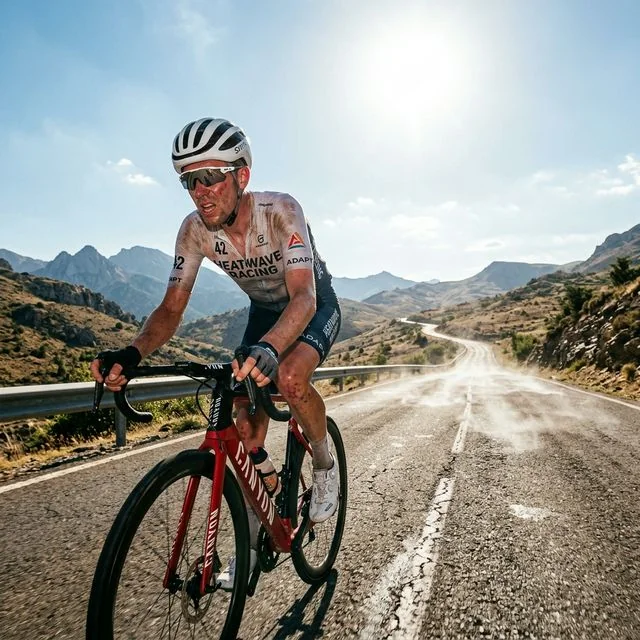
How Heat Affects the Body
When the ambient temperature exceeds 30°C, the body needs to shunt large volumes of blood to the skin for cooling, directly reducing the blood supply delivered to the muscles. Research shows that in a 35°C environment, athletic performance can drop by 10-20%.
Physiological effects:
- Heart rate rises by 10-20 bpm (at the same power output)
- Sweat rate can reach 1-2.5 liters per hour
- Core body temperature rises faster
- Cognitive function and decision-making decline
- Gastrointestinal absorption efficiency decreases
Pacing Adjustment Strategy
Golden rule: In hot weather, pace by heart rate rather than power.
Specific adjustments:
- Lower target power by 5-10%
- Set a heart rate ceiling, not exceeding 88% of maximum heart rate
- Be more conservative in the first half, saving energy for the rising temperatures in the second half
- Accept that speeds will be slower than in cooler weather
Hydration and Cooling Strategy
Hydration frequency:
- Drink 150-250 ml every 10-15 minutes
- Replenish 500-800 mg of sodium per hour
- Don’t wait until you’re thirsty to drink
- At feed stations, grab water both to drink and to pour over yourself
Cooling techniques:
- Head cooling: Pour water over the top of your head and the back of your neck
- Wrist cooling: Pour ice water over the inside of your wrists (near the artery)
- Ice pack method: Place ice inside the back of your jersey (if available at feed stations)
- Spray method: Use your bottle to spray water on your arms and legs, using evaporation to cool down
Equipment Adjustments
- Choose the most breathable jersey (light-colored, mesh fabric)
- Use a helmet with good ventilation (multi-vent design)
- Carry extra bottles or a hydration pack
- White or light-colored arm sleeves provide sun protection without absorbing too much heat
- Ensure your sunglasses have good airflow to prevent fogging
Danger Signs of Heat Illness
If you experience any of the following symptoms, immediately reduce intensity or stop racing:
- Dizziness or blurred vision
- Nausea or vomiting
- Stopping sweating (this is a dangerous sign of heatstroke)
- Confusion
- Severe headache
- Skin becoming dry and flushed
Cold Weather (Below 10°C)
How Low Temperatures Affect the Body
Riding in cold weather presents different challenges:
- Reduced muscle contraction efficiency
- Increased joint stiffness
- Longer warm-up required
- Decreased finger dexterity (affects shifting and braking)
- Respiratory tract irritation from cold air
The Layering Rule
Three-layer system:
| Layer | Function | Recommendation |
|---|---|---|
| Base layer (moisture-wicking) | Moves sweat away from the skin | Merino wool or synthetic base layer |
| Mid layer (insulation) | Retains body heat | Thermal jersey or fleece-lined jersey |
| Outer layer (windproof) | Blocks wind and rain | Lightweight, packable windbreaker |
Key areas to keep warm:
- Head: Thin cap or Buff worn under the helmet
- Neck: Neck warmer or snood
- Core: Thermal jersey + windproof vest
- Hands: Long-finger gloves (winter gloves recommended below 10°C)
- Legs: Leg warmers or thermal bib tights
- Feet: Winter socks + shoe covers
Pacing and Warm-Up Adjustments
- Extend warm-up time to 30-40 minutes
- Ride conservatively for the first 15 minutes to let muscles fully warm up
- No special power adjustments needed (power output is usually unaffected in cold weather as long as you’re warm enough)
- Watch out for the sudden drop in perceived temperature on descents—put on your windbreaker before descending
Special Caution on Descents
Descending in cold weather is the most dangerous moment:
- Perceived temperature drops sharply due to the wind chill effect
- Fingers may become too stiff to brake effectively
- The road surface may have ice or standing water
- Recommendation: Stop before descending to put on all your warm gear, and flex your fingers to ensure dexterity
Strong Wind Weather
How Wind Affects Pacing
Wind is the biggest external factor affecting cycling speed. A 10 m/s headwind can slow you down by 15-20% at the same power output.
Wind direction categories and strategies:
Direct headwind:
- Increase power by 3-5% (power is more efficient at lower speeds)
- Get as low as possible in your position
- If there’s a group, stay within it
- Don’t let the low speed numbers affect your mindset
Direct tailwind:
- Decrease power by 3-5% (the marginal benefit of extra power is low at high speeds)
- Enjoy the speed, but don’t relax too much
- Use tailwind sections to recover
Crosswind:
- Crosswinds are the most dangerous wind direction
- Grip the handlebars firmly (drops are safer)
- Lean your body slightly into the wind
- Increase the safe distance from other riders
- Be extra cautious of gusts on exposed sections
Half-headwind and half-tailwind:
- Adjust power based on the predominant direction
- Watch for sudden wind shifts near buildings, trees, or bridges
Wind Strategy for Group Riding
In races with a peloton, the wind direction determines the best position:
- Headwind: Stay inside the group or directly behind the front riders
- Crosswind: Line up on the leeward side of the wind direction (echelon formation)
- When taking pulls: Shorten your time at the front in headwind sections; you can pull longer in tailwind sections
Equipment Adjustments
- Disc wheels or very deep-section rims are not suitable in strong winds (unstable in crosswinds)
- If strong winds are forecast, consider switching to shallower rims
- Make sure there are no loose items on your bike (they could blow away)
- Make sure bottles are firmly secured
Racing in the Rain
The Physics of Wet Roads
The biggest danger of riding in the rain is the significant reduction in road surface friction. The coefficient of friction on wet roads is only 50-70% of that on dry roads. This means:
- Braking distance increases by 40-100%
- Lean angles in corners must be reduced
- The rear wheel may slip when accelerating
Braking Technique
Disc brakes:
- Perform significantly better than rim brakes in the rain
- Still brake earlier (risk of road slippage)
- Avoid sudden, hard braking
Rim brakes:
- Wet rims drastically reduce braking performance
- Need to “pre-brake”: lightly touch the brakes early to let the brake pads wipe the water film off the rims
- Braking distance can increase by 3-5 times
- Carbon rims perform even worse when wet (if using carbon rims, consider switching to an aluminum wheelset)
Cornering Safety
Cornering in the rain is the most likely time to crash. Here are the key safety principles:
- Reduce corner entry speed: At least 20-30% slower than in dry conditions
- Brake in a straight line: Complete your deceleration before the corner; do not brake while turning
- Reduce lean angle: Keep the bike more upright
- Avoid hazardous areas:
- Road markings (very slippery)
- Manhole covers (metal surfaces are extremely slippery)
- Colored pavement markings
- Piles of fallen leaves
- The outside edge of the road (where water accumulates)
- Smooth inputs: Make all handling movements more gradual
- Look ahead: Look where you want to go, not at what’s directly in front of you
Tire Pressure Adjustment
In the rain, consider lowering tire pressure by 5-10 psi:
- Lower pressure increases the contact patch, improving grip
- But don’t lower it too much, to avoid snakebite punctures
- Tubeless systems have an advantage in the rain (they can run lower pressures)
Vision Management
Rainy conditions pose a major visibility challenge:
- Use clear or yellow lenses (yellow enhances contrast in overcast conditions)
- A small cap visor can block some rain
- Maintain a larger gap when riding in a group (to reduce spray)
- Wipe your lenses frequently
Special Nutrition and Fueling Considerations
- Dehydration is easy to underestimate in the rain (you can’t feel yourself sweating)
- Maintain your normal hydration schedule
- Energy gel packaging can be hard to tear open with wet hands—pre-tear a corner
- Food carried on your person may get soaked by rain—use waterproof packaging
Mixed Weather and Sudden Changes
Weather Changes in Mountain Races
In climbing or mountain races, weather can change dramatically at different altitudes:
- Temperature drops approximately 0.6-1°C for every 100 meters of elevation gain
- Cloud, fog, strong winds, or rain may be present at the summit
- Your body generates a lot of heat while climbing, making it easy to underdress
- Once you reach the summit and transition to descending, the perceived temperature drops sharply
Mountain Weather Contingency Kit:
Carry the following gear with you (in jersey pockets or a saddle bag):
- Ultralight windbreaker (compressible to the size of a fist)
- Thin arm warmers
- Tissue (for wiping lenses)
Dealing with Thunderstorms
If you encounter a thunderstorm during a race:
- Estimating lightning distance: Seconds between seeing the flash and hearing the thunder / 3 = approximate distance (in kilometers)
- If lightning is within 5 km, consider seeking shelter
- Do not take shelter under an isolated large tree
- Carbon fiber frames do not increase your risk of being struck by lightning, but metal attachments might
- If race organizers issue a stoppage order, comply immediately
Pre-Race Weather Checks and Preparation
Weather Forecast Check Schedule
| Time Point | Action |
|---|---|
| One week before the race | Check long-term weather trends, make initial gear plans |
| Three days before the race | Confirm the forecast, finalize gear configuration |
| One day before the race | Check the hourly forecast, adjust details |
| Race morning | Final confirmation, make final gear decisions |
Essential Weather Information to Check
- Temperature (at start time and expected high/low)
- Probability of precipitation and expected rain windows
- Wind speed and direction
- Humidity
- Perceived temperature (especially wind chill on descents)
The “Plan A/B” Preparation Method
For races with uncertain weather, prepare two plans simultaneously:
Plan A (Good Weather):
- Standard jersey and bib shorts
- Dark lenses for sunglasses
- Normal tire pressure
Plan B (Bad Weather):
- Add windproof/waterproof layers
- Clear/yellow lenses
- Lower tire pressure
- Extra nutrition (you burn more energy in cold weather)
Mental Adjustment: Embracing the Weather
Shifting Your Mindset
When facing harsh weather, your mindset is the biggest differentiator:
- Negative mindset: “The weather is so bad, today is definitely going to be a bad ride”
- Positive mindset: “Bad weather affects everyone equally—whoever is best prepared wins”
The truth is: in bad-weather races, more people will give up or ride conservatively. If you are well-prepared and have the right mindset, your relative ranking is likely to be even better.
Enjoying the Challenge
Some of the most memorable race experiences happen precisely in the worst weather conditions. The sense of accomplishment from finishing in wind and rain far exceeds comfortably completing a ride in perfect weather.
Conclusion
Weather is uncontrollable, but your response to it is entirely within your control. Prepare in advance, stay flexible, and prioritize safety—these three principles will keep you competitive in any weather conditions. Next time you see an unfavorable race-day forecast, don’t be discouraged—smile instead, because you know you’re already prepared.
Related Reading
- Weather Strategies for Road Races: Adjusting for Rain, Heat, and Strong Winds
- Weather Strategies for Long-Distance Riding: Real-Time Adjustments for Sudden Rain, Strong Winds, and Heat
- Cycling Weather Strategies: A Safe Riding Guide for Rain, Strong Winds, and Heat
- Hot Weather Riding Survival Guide: Cooling Strategies and Heatstroke Prevention for Summer Training
#公路車 #Fitting 靠人工智慧APP 幫你調整單車
6 年前
靠單車減肥35公斤 心得分享與整理
7 年前
2025 自行車錶排行榜 兩萬車友大數據 / Garmin Bryton 排名會大洗牌嗎? / 全新的碼表前身分析 /公路車 / CT Yeh
1 年前
單車賞雪 裝備準備及注意事項分享 | 公路車
5 年前
下雨天就是要改車 #ceramicspeed #bike
1 年前
單車 一日北高 ( 雙城 ) 肥宅雙人瘋狂行 紀錄片 REACTO
10 年前
大武山後門26%歡樂陡坡!JJSC南台灣單車行Day2 / 被颱風追著跑 / 公路車 / CT Yeh
2 年前
西進武嶺 自製新版AI配速表產生器 x 賽前攻略 抱佛腳! 沒有功率計也可以產生配速表嗎?有什麼其他眉角賽前要注意的呢? | 西進武嶺 / 東進武嶺 KOM 攻略 | 公路車 | CT Yeh
4 年前