Selected Scenic Routes in Northern Taiwan: A Road Cycling Guide to Yangmingshan, North Coast, and Jiufen
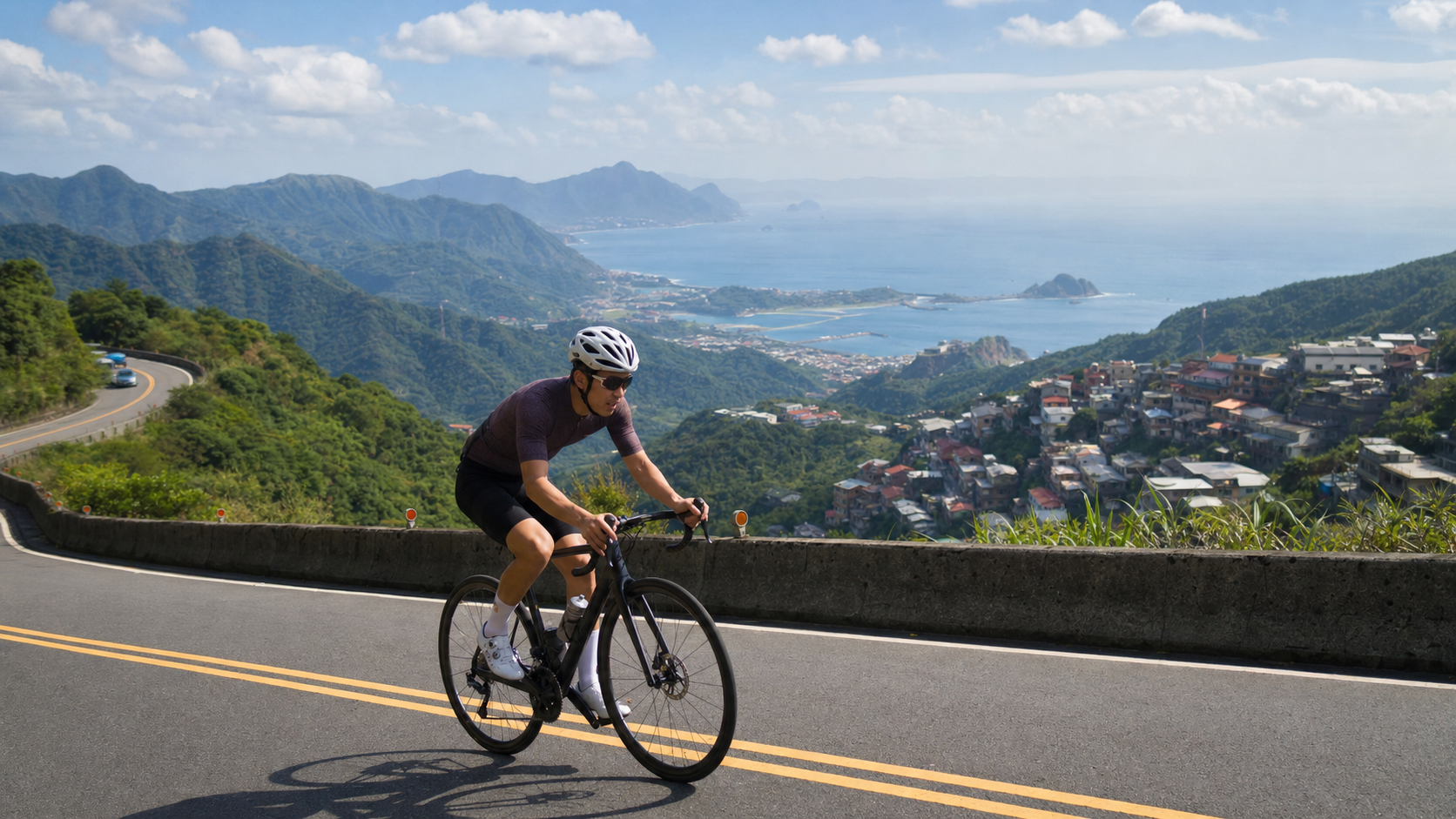
Scenic Route Selection in Northern Taiwan: Road Cycling Guide to Yangmingshan, North Coast, and Jiufen
Route Overview: Taipei City・New Taipei City・Keelung City | Start Varies by route | Finish Yangmingshan / North Coast / Jiufen | Distance approx. 30 to 60 km per route | Elevation gain 500 to 1,200 m per route
Taiwan’s mountainous terrain, extensive coastline, and dramatic topographical changes have fostered a world-class cycling environment. Scenic Route Selection in Northern Taiwan deserves an in-depth feature because it condenses the essence of cycling in Taiwan into a single route. This article will start with the overall outline of the route, break down the terrain and gradients section by section, and then extend to pacing strategy, refueling rhythm, safety risks, and pre-race training cycles, hoping that whether you are a first-time visitor or a seasoned rider looking to set a new personal record (PR), you will have a complete and three-dimensional understanding of this route before setting off.
1. Route Overview and Geographic Background
This route is located in Taipei City・New Taipei City・Keelung City, connecting landmarks such as Yangjin Highway, Xiaoyoukeng, and Shimen on the North Coast. It is a classic route passed down by word of mouth among local riders. From a geographic perspective, Taiwan’s mountain ranges, monsoon patterns, and land-sea boundaries profoundly influence the riding experience of every route. The three selected routes in Northern Taiwan cover steep climbs, coastal roads, and mountain towns, offering Greater Taipei riders a curated combination to experience diverse landscapes in one go.
Understanding the “personality” of a route is the first step in planning a ride. We can imagine the entire route as a piece of music: a warm-up section as the prelude, a main theme that gradually builds tension, a climax that truly tests your willpower, and finally a closing section that returns to calm. Only by grasping the overall structure first can you invest the right effort in the right sections, rather than burning all your matches at the start.
- Route characteristics: Yangmingshan is steep, the North Coast is flat, and Jiufen’s mountain trails are steep
- Recommended season: Spring and autumn are best; avoid the winter northeast monsoon and rain
- Overall difficulty positioning: Varies by individual fitness; it is recommended to first assess your sustained climbing endurance and long-distance experience before deciding on the category and target time.
2. Section-by-Section Terrain and Gradient Breakdown
The most effective way to ride a route well is to break it into several “psychologically manageable” segments, setting pacing and refueling goals for each. Below, based on terrain characteristics, the route is divided into three main parts: the warm-up section, the main climb (or main cruise) section, and the decisive section.
2-1 Warm-Up Section: Establish Rhythm, Avoid Overheating
The early section after departure is key to establishing rhythm. A common mistake many riders make is going out too hard at the start, driven by adrenaline, leading to an early “bonk” in the middle and later stages. The correct approach is to keep your heart rate in the aerobic zone (approximately 70% to 80% of maximum heart rate), starting at an intensity slightly below what feels comfortable, allowing the body to gradually enter a working state.
Cadence in this section should be maintained at 85 to 95 rpm, using a lighter gear ratio and higher cadence to warm up the legs, avoiding the accumulation of excessive lactate from grinding a big gear from the start. At the same time, use this period to check your equipment: tire pressure, shifting, brakes, and the location of your supplies, ensuring everything is ready.
2-2 Main Section: The Core Tension of the Route
After entering the core of the route, the terrain characteristics (Yangmingshan is steep, the North Coast is flat, and Jiufen’s mountain trails are steep) will truly begin to test your abilities. If this is a climbing route, focus on “sustainable maximum steady output,” meaning riding at an intensity close to but not exceeding your lactate threshold; if this is a flat or coastal route, the focus is on maintaining efficient cruising and paceline rhythm while properly handling crosswinds.
| Pacing Principles | Climbing Route | Flat / Coastal Route |
|---|---|---|
| Intensity basis | Power approx. 75–88% of FTP, lower edge of heart rate threshold | Power approx. 70–80% of FTP, upper edge of aerobic heart rate |
| Cadence | 70–85 rpm, adjusted by gradient | 90–100 rpm, maintaining fluidity |
| Gear strategy | Reserve a light gear for the steepest sections, shift early | Use mid-to-large gears for cruising on flats, downshift into headwinds to maintain cadence |
| Refueling timing | Refuel energy and fluids every 30–45 minutes | Refuel every 40–60 minutes, pay attention to electrolytes |
In this section, the most important principle is “conserving strength.” The art of pacing lies in this: when you feel “I could actually go a bit faster right now,” that is often the correct intensity. Suppress the extra urge and save it for the true decisive section.
2-3 Decisive Section: The Sum of Willpower and Technique
The final section of the route is often where success or failure is determined. If the finish is at the top of a climb, this is usually the steepest, highest-altitude, and coldest section, where fatigue has accumulated and the air is thinner—only the strength saved in the earlier sections and unwavering willpower can carry you to the finish. If it is a long flat route, the final section requires fighting against accumulated fatigue and declining focus.
When descending or on the return leg, always put “safety” ahead of “speed.” Take an outside-inside-outside line through corners, complete braking before entering the turn, avoid heavy braking mid-corner, keep your center of gravity low, and look toward the exit. Mountain roads in Taiwan often have fallen leaves, moss, gravel, and slippery surfaces. Better to go slower than to risk your safety.
3. Highlights and Must-See Scenery Along the Way
The most captivating aspect of this route is the rich cultural and natural scenery along the way. The key landmarks are listed below. It is recommended to slow down and savor them when it is safe to do so—after all, cycling is not just about data, but about encountering this land.
| No. | Highlight Landmark | Riding Suggestion |
|---|---|---|
| 1 | Yangjin Highway | Landmark along the route; slow down, be mindful of photo stops and traffic flow |
| 2 | Xiaoyoukeng | Landmark along the route; slow down, be mindful of photo stops and traffic flow |
| 3 | Shimen, North Coast | Landmark along the route; slow down, be mindful of photo stops and traffic flow |
| 4 | Yehliu | Landmark along the route; slow down, be mindful of photo stops and traffic flow |
| 5 | Jiufen Mountain Town | Landmark along the route; slow down, be mindful of photo stops and traffic flow |
Behind every landmark lies a story of Taiwan—whether it is a history of pioneering, a center of faith, or forests and coastlines guarded by generations. As you pass these places between pedal strokes, take an extra look; that is the most precious nourishment of cycling in Taiwan.
4. Refueling Strategy and Stop Arrangements
In long-distance and climbing rides, refueling often accounts for half of success or failure. During high-intensity exercise, glycogen is continuously depleted, and once it runs out, you experience the energy crash commonly known as “bonking.” Smart riders adopt the principle of “small amounts, frequent intake, refuel early,” rather than waiting until they are hungry or thirsty to replenish.
4-1 Main Refueling Stops
- Yangmingshan Commercial Area: An ideal stop for water, refueling, and a short rest.
- Jinshan Old Street: An ideal stop for water, refueling, and a short rest.
- Jiufen Old Street: An ideal stop for water, refueling, and a short rest.
4-2 Refueling Rhythm Recommendations
- Fluids: Replenish approximately 500–750 ml per hour, increasing in high heat or high intensity. Monitor sweating and thirst levels to avoid dehydration and avoid over-drinking, which can dilute electrolytes.
- Carbohydrates: High-intensity riding requires approximately 60–90 grams of carbs per hour, which can be supplied by energy gels, energy bars, bananas, or local snacks. For long rides, consider electrolyte tablets to supplement sodium and prevent cramps.
- Local cuisine: One of the great joys of Taiwan’s routes is turning refueling stops into culinary adventures. Local snacks along the way not only replenish calories but also become memorable highlights of the journey. However, during racing, stick to foods that are easy to digest and gentle on the stomach.
5. Safety Risks and Equipment Checks
No matter how beautiful the route, safety always comes first. For this route, here are the risks that require special attention:
- Mountain fog and rain: Anticipate in advance, reduce speed, and leave room for reaction.
- Strong coastal winds: Anticipate in advance, reduce speed, and leave room for reaction.
- Holiday traffic: Anticipate in advance, reduce speed, and leave room for reaction.
Equipment Checklist:
- Helmet: Wear it on every ride, and confirm the strap and fit.
- Lights and reflectors: Turn on front and rear lights in tunnels, early morning, evening, or fog, and wear high-visibility clothing.
- Tire condition and spare tubes: Check tire pressure and tread before departure; carry inner tubes, tire levers, and a pump/CO2.
- Warmth and sun protection: Temperature differences are large at high altitudes or on descents; prepare a windbreaker and arm warmers; on flats and coastal roads, pay attention to sun protection and hydration.
- Communication and ID: Keep your phone fully charged, carry ID and some cash, and let family know your route and estimated return time.
6. Pre-Race Training Cycle Recommendations
To complete this route safely and with a sense of accomplishment, it is recommended to prepare with an 8- to 12-week periodized training plan. Below is a general framework that riders can adjust based on their own foundation:
| Phase | Focus | Example Content |
|---|---|---|
| Weeks 1–3 (Base Phase) | Build aerobic foundation | 2–3 long aerobic rides per week, heart rate in Zone 2, gradually extending duration |
| Weeks 4–6 (Build Phase) | Improve threshold and climbing ability | Add threshold intervals (e.g., 4×8 minutes), repeated climbing workouts |
| Weeks 7–9 (Specific Phase) | Simulate route demands | Schedule long rides close to target distance and elevation gain, rehearse refueling and pacing |
| Weeks 10–12 (Taper Phase) | Fine-tune condition | Reduce training volume, maintain intensity, rest fully and load glycogen in the final week |
Beyond training, do not neglect stretching, strength, and rest. Core and lower-body strength improve pedaling efficiency and stability, while adequate sleep is the foundation of recovery and progress. Treat training, nutrition, and recovery as the three legs of a tripod—none can be missing.
7. Weather, Season, and Time-of-Day Selection
Taiwan sits at the boundary of the subtropics and tropics, with the towering Central Mountain Range intercepting moisture, so weather affects riding far more dramatically than one might imagine. For this route in Taipei City・New Taipei City・Keelung City, spring and autumn are best; avoid the winter northeast monsoon and rain is the optimal timing verified by local riders, but even in the good seasons, there are many details worth noting.
- Afternoon thunderstorms: Especially in summer, convective thunderstorms are common in Taiwan’s mountain areas in the afternoon. They are not only slippery and dangerous, but lightning is a lethal threat. It is recommended to “start early and return early,” completing the main climbs or itinerary before noon to avoid unstable afternoon weather.
- Fog and visibility: High-altitude and valley sections are prone to fog in the afternoon, and a sudden drop in visibility greatly increases the risk of encounters with vehicles. In fog, be sure to turn on front and rear lights, wear bright clothing, and reduce speed.
- Temperature differences and hypothermia: Taiwan’s elevation changes can create all four seasons within a single route. Sweat-soaked clothing from climbing can rapidly draw away body heat on long high-altitude descents, causing hypothermia and muscle stiffness. Carrying a windbreaker, arm warmers, and even thin gloves is essential for long climbing routes.
- Monsoon and crosswinds: On coastal and outlying sections during the winter northeast monsoon, crosswinds and headwinds greatly increase riding difficulty and danger. In strong winds, reduce speed, hold the drops to lower wind resistance, and maintain a safe lateral distance from companions.
Choosing a departure time is not just about avoiding bad weather, but also about avoiding peak traffic. Tourist hotspots are often crowded on weekends, while early mornings on weekdays are relatively quiet, allowing you to focus more on the ride itself.
8. Equipment Setup and Gear Ratio Recommendations
“Sharpen your tools before you start your work.” Given the terrain characteristics of this route (Yangmingshan is steep, the North Coast is flat, and Jiufen’s mountain trails are steep), whether your equipment setup is reasonable directly affects how easily you can finish.
| Item | Recommended Setup | Description |
|---|---|---|
| Gear ratio | For climbing routes, recommend compact crank 50/34 up front, 11–32T or larger cassette at the rear | Leave margin for knees and lungs, avoid grinding and injuring knees |
| Wheelset | Low-profile lightweight wheels for climbing; mid-to-high profile for flats and coastal roads | Balance light climbing and efficient flat cruising |
| Tire pressure | Adjust by body weight and tire width; slightly lower in mountains and wet roads | Improve grip and comfort, reduce puncture risk |
| Brakes | Check brake pads and hydraulic/cable systems before departure | Long descents are a severe test for brakes; ensure stopping power |
Pedaling and posture: Over long distances, correct frame size and bike fitting can prevent cumulative injuries to the knees, lower back, and wrists. If you plan to take on similar routes long-term, investing in a professional bike fitting is worthwhile. Standing to climb (out of the saddle) can engage different muscle groups and relieve seated pressure, but it is more energy-intensive, so use it strategically when the gradient steepens or when you need a short burst of acceleration.
9. Pacing Math: Managing Your Effort with Numbers
Many riders ride by feel, ending up either too conservative and leaving regrets, or too aggressive and collapsing midway. In fact, by mastering a few simple numerical concepts, you can allocate your energy more scientifically.
- Negative split principle: In an ideal long ride, the average intensity of the second half should be equal to or slightly higher than the first half. In other words, “hold back” in the early section, keeping the effort at a level where you can still hold a conversation.
- Climbing time estimation: Climbing 100 meters of vertical elevation generally takes a typical rider about 8 to 15 minutes, depending on gradient and fitness. With this route’s approximate 500 to 1,200 m per route of elevation gain, vertical climbing alone could take several hours—be sure to factor this time into your refueling and weather planning.
- Power-to-weight ratio (W/kg): Climbing performance is highly dependent on power-to-weight ratio. If you can sustain an output of 2.5 to 3 watts per kilogram, most classic Taiwan climbs can be completed in a reasonable time; to chase results, you will need to push this number higher.
- Heart rate anchoring: For riders without a power meter, heart rate can serve as the pacing basis. Keeping your heart rate in the main section at the lower edge of your threshold (approximately 85% of maximum heart rate) is the sweet spot balancing speed and endurance.
Apply these principles to the terrain of Taipei City・New Taipei City・Keelung City, and you will find that “slow is fast”—every bit of energy saved in the early sections will repay you twofold in the decisive section.
10. Common Beginner Mistakes and FAQ
Q1: What is the most common mistake when challenging this route for the first time?
A: Starting too fast. Adrenaline causes people to unconsciously accelerate in the early section, leading to a collapse in the middle and later stages. Deliberately keep the early intensity low.
Q2: How much refueling should I prepare?
A: Better to have more than less. Estimate the calories needed based on route distance and elevation gain, then bring an extra 20% as a buffer. Energy gels, energy bars, and electrolyte tablets are standard for long rides.
Q3: What should I do if it rains or fog rolls in?
A: Safety first. If the weather clearly deteriorates, do not push it. Reduce speed, turn on lights, maintain distance, and if necessary, take shelter nearby or turn back. The mountain is not going anywhere; getting home safely is the most important thing.
Q4: Is it better to ride solo or with a group?
A: For routes with sparse refueling options and complex road conditions (such as the risk points mentioned in this route), riding with companions allows mutual support and rotating pace-setting, making it safer and more enjoyable. However, whether riding solo or in a group, always inform someone of your itinerary and estimated return time.
Q5: How do I know if I am ready?
A: If you can complete a long ride in training covering approximately 70–80% of the target distance with similar elevation gain without being completely exhausted, you generally have the foundation to take on the challenge. The rest is up to pacing and willpower.
11. Mindset and Conclusion
Scenic Route Selection in Northern Taiwan is not just a route; it is a mirror reflecting yourself. It will honestly tell you whether your preparation is sufficient, your pacing is appropriate, and your willpower is firm. When you stand at the finish line and look back at the road you have traveled, that sense of accomplishment cannot be fully measured by any data.
Finally, three phrases for all riders who want to take on this route: Respect the route, respect your body, respect this land. Do your homework, manage your rhythm, and take in the scenery. You will find that every route in Taiwan is a journey of dialogue with yourself. May you ride safely, ride joyfully, and write your own story.
This article serves as a riding guide and training reference. Actual road conditions, opening status, and race rules are subject to the organizer and official announcements. Mountain and coastal weather is highly variable; be sure to check real-time weather and road information before departure. Ride within your limits and put safety first.
Related Reading
- Five Classic Routes on Yangmingshan: Fengguizui, Lengshuikeng, Balaka, Datunshan, Xiaoyoukeng
- Taiwan Road Cycling Climbing Training Map: The Best Training Climbs from North to South
- Yilan Beiyi Highway Riding Guide: The Challenging Route from Taipei to Yilan over the Snow Mountain Range
- Taiwan Cycling Island Tour Northern Section: Scenery and Challenges from the North Coast to Yilan
太平山單車員工旅遊 | 這樣玩CP值最高!| 公路車
5 年前
爬坡ITT實境)台中 魔王 松鼠坡 首航 6:12 大肚山 大三元 科福路
8 年前
台北闊瀨陡坡 騎旅 / 日本單車雜誌編輯車友臨時加入!/ 髮香才是最強的 / feat. 北迴歸線小隊 / 公路車 CT Yeh
6 個月前
單車 一日北高 ( 雙城 ) 肥宅雙人瘋狂行 紀錄片 REACTO
10 年前
虎豹潭!日本老師來台一日約騎 台灣車友熱情招待私房路線 / CT Yeh
21 天前
#北橫 + #北進武嶺 最硬的員工旅遊 EP1 | #公路車 #拉拉山 | 明池 | 武嶺 | 武陵農場 | 雲海 | Taiwan Cycling Route Wulin
6 年前
大禹嶺 到 武嶺牌樓 全程前後實況錄影 | 北進武嶺 | 東進武嶺 | KOM | 訓練台 | 坡度分析 | Taiwan KOM Last 10 km HARD | 公路車
6 年前
台灣登山王之路 KOM 全程參賽4K臨空錄影 PART1 穿越峽谷地形! #東進武嶺 太魯閣 / 燕子口 / 天祥 / 西寶 PART1 (公路車 / CT Yeh)
3 年前