文章導覽
Why Do You Need a Power Meter?
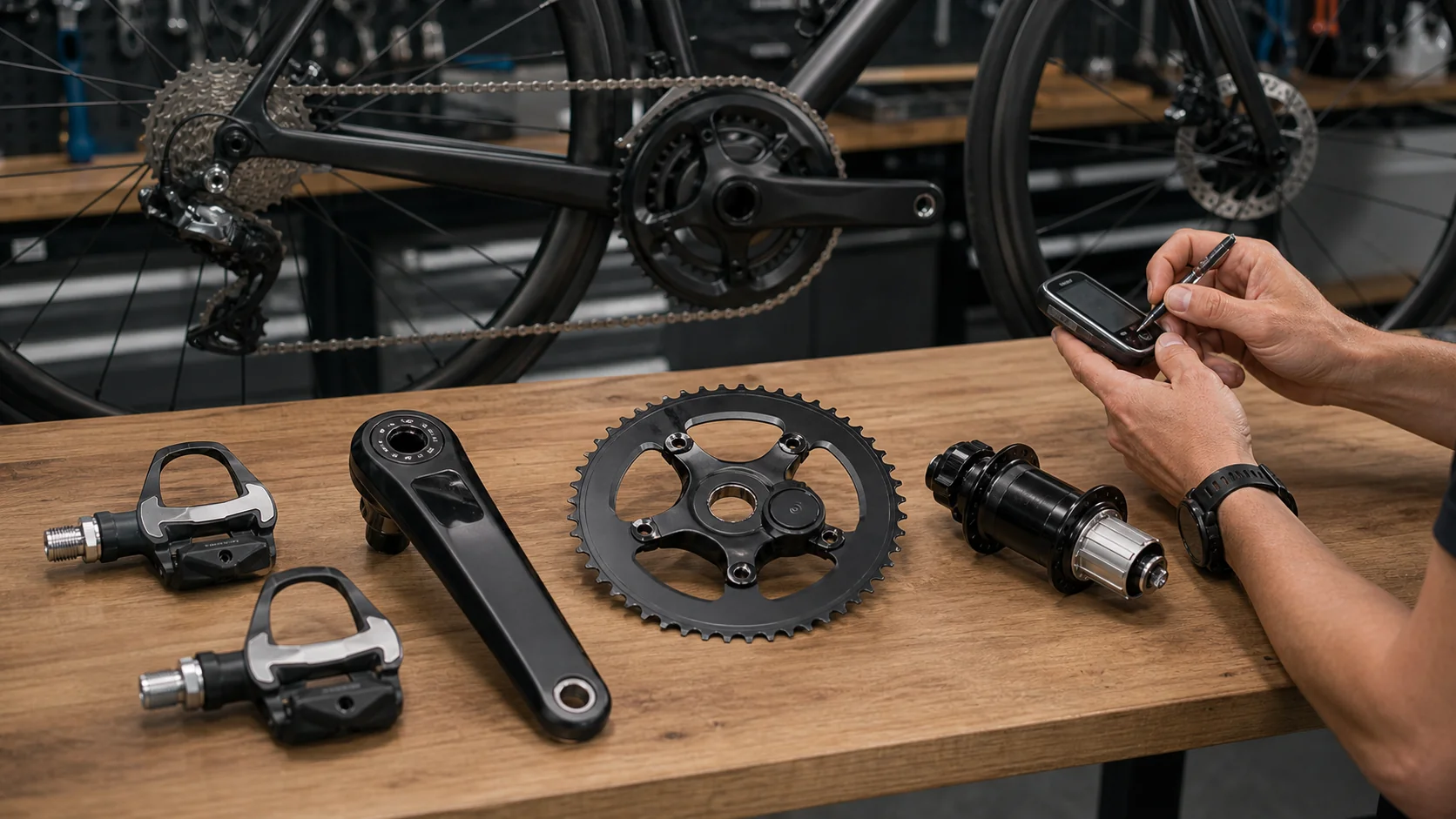
A power meter is the only tool that lets you objectively quantify your riding intensity. Heart rate is affected by weather, sleep, caffeine, and countless other factors, and perceived effort is even less reliable. But power is power — 200 watts is always 200 watts.
Types of Power Meters
1. Pedal-Based Power Meters
Representative products: Garmin Rally, Favero Assioma, LOOK Powermeter
Pros:
- Easy installation, just like swapping clipless pedals
- Can be transferred between different bikes
- Measures left/right power balance simultaneously (dual-sided versions)
Cons:
- Limited to specific cleat systems (SPD-SL, LOOK, SPD)
- Typically 20-50g heavier than standard pedals
- Thicker pedal body results in a higher stack height
Best for: Riders with multiple bikes, or anyone who wants simple installation
2. Crank-Based Power Meters
Representative products: Stages Power, 4iiii Precision, SRAM Rival/Force/Red AXS Power
Pros:
- Usually the most affordable option (single-sided versions)
- Doesn’t restrict pedal choice
- Minimal added weight
Cons:
- Single-sided versions only measure one leg and double the reading to estimate total power
- Installation may require specialized tools
- Switching bikes requires a compatible crank
Best for: Budget-conscious riders, or beginners wanting to try power-based training
3. Hub-Based Power Meters
Representative products: PowerTap (discontinued, but still available on the secondhand market)
Pros:
- Measurement point closest to actual drive output
- Doesn’t affect crank or pedal choice
Cons:
- Tied to a specific wheelset
- Shrinking market availability
- Cannot measure left/right balance
4. Spider-Based Power Meters
Representative products: Quarq DZero, Power2Max NG
Pros:
- High accuracy (typically ±1%)
- Dual-sided measurement
- Doesn’t affect pedal or crank choice (but requires a compatible chainring spider)
Cons:
- Higher price point
- Installation requires replacing the chainring spider
Accuracy Comparison
| Type | Typical Accuracy | Consistency |
|---|---|---|
| Spider-based | ±1-1.5% | Very High |
| Pedal-based | ±1-2% | High |
| Crank-based (dual-sided) | ±1.5-2% | High |
| Crank-based (single-sided) | ±2-5%* | Moderate |
*Error in single-sided power meters mainly comes from the assumption of left/right leg balance
Best Value Picks for 2025
- Best entry-level: 4iiii Precision (single-sided) — approx. NT$8,000-10,000
- Best mid-range: Favero Assioma Duo-Shi (dual-sided pedal-based) — approx. NT$18,000-22,000
- Best high-end: Garmin Rally RK200 (dual-sided LOOK cleat) — approx. NT$28,000-32,000
Buying Advice
- If your budget is limited, a single-sided crank-based power meter is the best entry point
- If you own multiple bikes, prioritize a pedal-based power meter
- If you want maximum accuracy, choose a spider-based or dual-sided pedal-based power meter
- Don’t give up the cleat/pedal system you love just for the sake of a power meter
Related Reading
- Power Meter Buying Guide: A Complete Comparison of Pedal-Based, Crank-Based, and Hub-Based Options
- Power Meter Buying Guide: Comparing Pedal, Crank, and Hub Solutions
- Complete Comparison of Road Bike Power Meter Types: Pedal-Based, Crank-Based, Spider-Based, and Hub-Based
- 2024 Power Meter Buying Guide: Which Power Meter Best Fits Your Budget and Needs