Iron, Vitamin D, and Micronutrients for Endurance Athletes: The Complete Guide to Iron Deficiency Symptoms, Blood Test Interpretation, and Bone Health
Coach’s Opening: The Athlete Who “Trained Hard but Got Slower and Slower”
In fifteen years of coaching, the sentence I dread most from an athlete is: “Coach, lately I don’t know why, but the same workout I used to handle easily—now after riding 40 km I feel completely drained, my heart rate feels off, and no matter how much I sleep I can’t recover.”
When that sentence comes up, ninety percent of coaches’ first reaction is “training volume is too high, time to back off.” But the cases I’ve handled tell me a significant portion aren’t overtraining—it’s micronutrients quietly running dry—and the two most common culprits are iron and vitamin D.
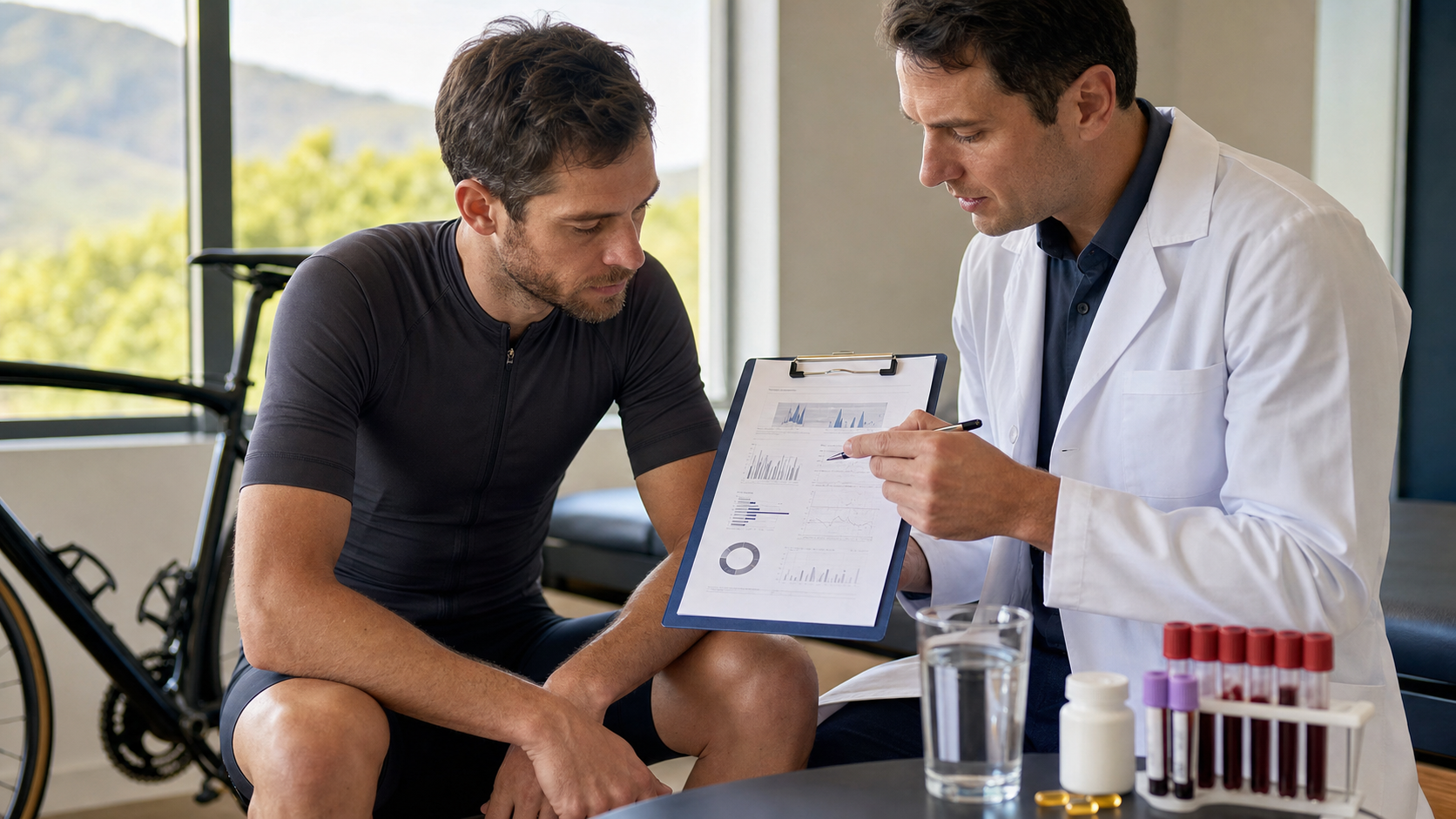
One athlete stands out in my memory. Let’s call him A-Zhe, a 35-year-old office worker preparing for his first 113 half-ironman. His power-based workout compliance was over ninety percent, and his sleep was decent. But three months before race day, his Zone 2 rides required near-threshold heart rates just to hold pace, and on long climbs his legs weren’t even sore yet—he’d just “power down” first. I didn’t add more training, and I didn’t just tell him to rest for a week. Instead, I asked him to get a full blood panel. The results came back: hemoglobin was still in the normal range, but serum ferritin was down to single digits. That’s the classic “iron deficiency without anemia”—a standard health check will tell you “normal,” but for an endurance athlete, it’s already a red light.
In this article, I want to lay out clearly the concepts and practical experience I’ve repeatedly validated with athletes over the years: how to actually assess iron deficiency, what vitamin D has to do with your bones and injury risk, when to get blood drawn, and how to interpret the numbers on your report. This isn’t about making you your own doctor—it’s about helping you read the report, ask the right questions, and work more intelligently with your physician and nutritionist.
一、Why Are Endurance Athletes Especially Prone to Iron Deficiency?
What Iron Is Actually Doing in the Body
Let’s start with the concept. Iron isn’t just about “building blood”—it plays at least three roles that are absolutely critical to endurance performance:
- Hemoglobin: The vehicle inside red blood cells that carries oxygen from the lungs to the muscles. Without enough iron, oxygen-carrying capacity drops, and VO2max takes a direct hit.
- Myoglobin: The protein in muscles that stores and transports oxygen, supporting your sustained aerobic output.
- Mitochondrial enzymes: Your cells’ “power plants” need iron-containing enzymes at many steps to run properly and burn fat and carbohydrates into energy.
So iron deficiency isn’t just “getting winded”—it’s the entire chain from oxygen transport to energy metabolism weakening together. That’s also why some athletes feel they can’t ride before their hemoglobin even drops—because stored iron (ferritin) runs out first, and mitochondrial and other functions are already being affected.
The Four Main Pathways Endurance Athletes Lose Iron
Why are the people who train hardest more likely to be iron deficient? There are several routes:
- Foot-strike hemolysis: This is especially pronounced in runners. With every footfall, red blood cells in the blood vessels of the foot are mechanically crushed and ruptured, and the long-term accumulation causes iron loss. Triathletes have high running volume, so this one is hard to avoid.
- Gastrointestinal micro-bleeding: During prolonged, high-intensity exercise, blood is redistributed from the internal organs to the working muscles. The intestinal mucosa becomes ischemic, which can cause micro-bleeding and iron loss.
- Sweat loss: In Taiwan’s summer, a single ride or run leaves you drenched, and sweat carries away trace amounts of iron. The amount isn’t huge, but people who train in hot, humid environments long-term can’t ignore it.
- Exercise-induced elevation of hepcidin: This one is key. After intense exercise, the body’s inflammatory signals raise hepcidin, and hepcidin suppresses iron absorption in the gut. In other words, the harder you train, the worse your body’s iron absorption efficiency becomes.
Then add two high-risk groups on top: female athletes (regular blood loss from the menstrual cycle) and vegetarian/plant-based athletes (non-heme iron from plants has a far lower absorption rate than heme iron from meat). Among the female athletes I’ve coached, the rate of iron deficiency is clearly higher than in males. That’s not a coincidence—it’s physiological reality.
二、Symptoms of Iron Deficiency: From “A Vague Tiredness” to Clear Warning Signs
The most troublesome thing about iron deficiency is that its early symptoms are all very “vague,” easily blamed on “I’ve been tired lately” or “work stress is high.” When I do an initial assessment with athletes, I ask them to check against the list below.
Common Symptom Comparison
| Aspect | Early Iron Deficiency (stored iron declining) | Advanced Iron Deficiency (oxygen transport affected) |
|---|---|---|
| Training performance | Heart rate high for same pace, Zone 2 feels harder | Clear loss of pace, “powering down” on climbs |
| Recovery | Still fatigued after full sleep, soreness won’t go away | Severely delayed recovery after consecutive training |
| General body | Declining focus, easily irritable, cold hands and feet | Pale complexion, dizziness, palpitations, breathlessness |
| Special signs | Pica (craving ice), increased hair loss | Brittle nails, spoon nails |
Here’s the key point: “heart rate high for the same pace” is one of the early signals I value most. Because oxygen-carrying capacity drops, the body has to compensate with a faster heartbeat for the same output. If you have long-term records (power, pace vs. heart rate) and suddenly notice your Zone 2 heart rate drifting 5–10 bpm higher, while weather, sleep, and stress haven’t changed noticeably, that’s worth being alert about.
But—symptoms can only make you “suspicious,” not “diagnosed.” Many of the symptoms above overlap with overtraining, thyroid issues, sleep deprivation, and psychological stress. The only thing that can truly distinguish them is a blood draw.
Here’s a practical tip I use to judge “does this look more like iron deficiency, or more like overtraining”: Overtraining usually comes with worse sleep, elevated resting heart rate, noticeably low mood, and loss of motivation to train; while athletes with pure iron deficiency often still have sleep and motivation intact—they just “can’t summon the strength, and heart rate is high for the same pace.” Of course the two can intertwine and it’s not absolute, but this rough distinction can help you decide between “back off and observe” or “get blood drawn ASAP.” My principle is: as long as there’s a long-term disconnect between output and heart rate, I always schedule a blood draw. Better to test and find nothing than to miss a problem that has a simple fix.
There’s another easily overlooked point: the “fatigue” of iron deficiency feels qualitatively different from normal post-training fatigue. Athletes often describe it as “no matter how much I sleep I can’t recover, a fatigue from deep in the bones,” rather than the kind of tired where you’re sore after a workout and bounce back after a good night’s sleep. When that description comes up, my radar lights up especially bright.
三、How to Read Your Blood Report: Ferritin, Hemoglobin, and the Easily Overlooked Markers
This section is the core of the article. Many athletes get their report and only look at whether anything on the lab sheet’s “reference range” is flagged red. For endurance athletes, that is seriously insufficient. The reason: general lab reference ranges are designed for “the average person who isn’t anemic,” with a very low threshold; but athletes need a level of “adequate reserves that can sustain high-load training.” These two standards are very different.
The Three Key Markers to Look At
- Serum Ferritin—reflects the body’s stored iron, and is the marker endurance athletes should watch most closely. It’s like the fuel gauge on your tank.
- Hemoglobin (Hb)—reflects current oxygen-carrying capacity. Hb only drops when iron deficiency reaches the “anemia” stage, so by the time it drops, you’ve usually been deficient for a while.
- Transferrin Saturation (TSAT)—reflects whether the iron “currently being transported” in the blood is sufficient.
Key concept: ferritin will sound the alarm earlier than hemoglobin. This is “iron deficiency without anemia”—hemoglobin is still normal, but stored iron is already depleted and performance is already suffering. A-Zhe from my opening story was exactly this type. If you only looked at hemoglobin, you’d never find the cause.
How to Interpret Ferritin Values (A Reference Framework for Endurance Athletes)
I need to be very honest and clear here: the numbers below are a general reference framework, and actual interpretation must be left to your physician, because ferritin is an “acute-phase inflammatory reactant.” It can be falsely elevated right after a major race or when the body has inflammation, so the numbers need to be read alongside the overall clinical picture.
| Serum Ferritin (ng/mL)* | General Interpretation (For Understanding Only, Not Diagnostic) |
|---|---|
| Below ~15 | Generally considered iron deficiency in clinical practice; oxygen-carrying capacity may already be impaired |
| ~15–30 | Low for endurance athletes; fatigue and performance decline are often already present |
| ~30–40 | Grey zone; symptomatic athletes warrant active intervention and monitoring |
| ~40–90 | Considered a more ideal reserve range by most sports science perspectives |
*Note: Different sources and laboratory units may vary slightly; the values are only meant to provide a directional understanding.
Several studies and sports medicine perspectives on athletes point out that the general population’s iron deficiency cutoff (commonly ~15 ng/mL per WHO) is too lenient for athletes; many studies can observe performance differences at ferritin levels around 30 ng/mL. Therefore, some experts recommend endurance athletes raise the cutoff to 40–50 ng/mL, or even maintain it within the 40–90 ng/mL range to be safer; if you plan altitude training, it’s even more desirable to have ferritin above 40 ng/mL beforehand to support red blood cell production (sources listed at the end).
This also explains why you can go to a regular clinic for a blood draw, and the lab tech tells you “your ferritin is normal,” yet you still feel off—because that “normal” threshold is designed for people who don’t exercise.
A Practical Reminder: Don’t Get Blood Drawn Right After a Race
Because ferritin gets elevated by inflammation, I always advise my athletes to wait at least 3–5 days after a high-intensity race or an ultra-long training session, until the body has settled, before getting blood drawn. This way, the numbers won’t be falsely inflated by inflammation, making you think your iron stores are sufficient. On the day of the blood draw, it’s also best to go in the early morning while fasting, and avoid heavy training in the one or two days prior.
A Complete Case Walkthrough: A-Zhe’s Three Months
Let’s go back to A-Zhe from the beginning. I want to lay out the entire handling process in full, because it paints a clearer picture than just listing numbers.
Step one: Suspicion. I didn’t just send him for a blood test because he said he was tired. Instead, I first reviewed his training logs. Over those three months of Zone 2 riding, he maintained roughly the same speed of 28–30 km/h, yet his heart rate drifted from his original 138 bpm up to around 150 bpm—power didn’t change, pace didn’t change, but his heart rate was stubbornly ten-plus beats higher. This long-term trend of “output and heart rate decoupling” is what made me hit the pause button.
Step two: Blood draw and referral to a physician. I asked him to get a full blood panel done, including ferritin, hemoglobin, TSAT, and 25(OH)D. When the results came back, hemoglobin was at the lower edge of the normal range, but ferritin was down to single digits and TSAT was also low. This was textbook non-anemic iron deficiency. I had him take the report to a physician familiar with athletes, and the physician evaluated the supplementation strategy—I never overstep this boundary. The coach’s job is “detection and referral”; prescriptions are left to the medical side.
Step three: Adjusting training and diet simultaneously. While waiting for the body to replenish its iron stores, I scaled down the intensity of his training plan, temporarily removed high-intensity intervals, preserved the aerobic base, but stopped adding stress to an already oxygen-deprived body. On the diet side, I asked him to change his previously careless lunch into a conscious effort to consume heme iron sources, and to separate sugary drinks and coffee from main meals by a few hours.
Step four: Follow-up testing for verification. About ten weeks later, he was retested. Ferritin had returned to a relatively safe range, and—most convincingly—his Zone 2 heart rate dropped back to near his original level, feeling much easier at the same pace. Only then did we start layering intensity back on. He ultimately completed his first 113 and beat his original target time.
The key point I want to emphasize with this case is: the coach’s role is not to diagnose or prescribe, but to “use training data as radar” to raise suspicion early, refer the athlete to the right professional, and then verify the issue is resolved through follow-up testing and training response. If you’re an athlete, you can arm yourself with the same mindset.
Why “When to Supplement Iron” Also Matters: The Hepcidin Time Window
As mentioned earlier, exercise raises hepcidin (iron regulatory hormone), which in turn suppresses intestinal iron absorption. There’s a practical extension of this worth knowing: for several hours after strenuous exercise, the body’s iron absorption efficiency is exactly at its lowest point. So one school of thought suggests that if a physician prescribes oral iron, taking it at a time point far from high-intensity training, or before training, theoretically avoids the hepcidin peak and absorption may be relatively better.
I’ll be honest: the details here vary greatly between individuals and are still being researched. Please defer to your physician’s advice on how to actually schedule it. I’m bringing this up so you understand a bigger principle: “how much you took” does not equal “how much you absorbed.” For the same iron pill, the timing of intake, whether it’s paired with vitamin C, and whether it conflicts with tea, coffee, or calcium can lead to very different absorption outcomes. This is also why follow-up testing is so important—you want to see the amount your body actually “stored,” not the amount you “swallowed.”
4. Vitamin D: Not Just for Bones, but a Gatekeeper for Injury and Recovery
After iron, let’s talk about another nutrient that Taiwanese athletes surprisingly tend to overlook—vitamin D.
Many people instinctively think, “Taiwan is so hot and the sun is so strong, how could anyone be vitamin D deficient?” That’s exactly the biggest misconception. Among the athletes I coach, the proportion with vitamin D insufficiency is surprisingly high, and the reasons are very Taiwanese:
- Thorough sun protection: Afraid of tanning or sunburn, people suit up with long sleeves, arm sleeves, and sunscreen, blocking out a large portion of the skin’s vitamin D synthesis.
- Training times avoid sunlight: In summer, it’s too hot, so many people head out before dawn or train after sunset, precisely missing the hours when sunlight is most effective for vitamin D synthesis.
- Indoor work patterns: Office workers spend all day indoors, getting pitifully little actual sun exposure.
- Swim training in indoor pools: Many triathletes do their swim sessions indoors, with even less chance of sun exposure.
Vitamin D’s Three Roles for Athletes
- Bone health: This is the most classic one. Vitamin D aids calcium absorption and bone mineralization; insufficiency raises the risk of stress fractures. For triathletes and marathoners with high running volume, this is a real injury threat.
- Muscle function and strength: Vitamin D is linked to muscle contraction and strength performance; insufficiency may affect muscle power and recovery.
- Immune and inflammatory regulation: When insufficient, athletes may have a higher chance of colds and upper respiratory infections—one cold mid-season can ruin several weeks of training.
How to Read Vitamin D Values (25(OH)D)
Vitamin D status is assessed by measuring blood levels of 25-hydroxyvitamin D, 25(OH)D. Below is a commonly cited classification framework (again, please defer to your physician’s interpretation in practice):
| Blood 25(OH)D (ng/mL)* | General Classification |
|---|---|
| Below ~20 | Deficiency; risk of stress fractures and other issues clearly elevated |
| ~21–29 | Insufficiency |
| ~30 and above | Generally considered sufficient |
| ~40–50 | Considered more ideal for athletes by some sports science perspectives |
*Note: Classification thresholds vary by organization (e.g., Endocrine Society, IOM); values are for directional understanding.
Some sports medicine perspectives note that the minimum threshold for bone health in the general population is often based on 20 ng/mL, but some organizations recommend targeting 30 ng/mL or above for the general public; for athletes, some viewpoints suggest 40–50 ng/mL is more ideal for muscle strength, injury risk reduction, and recovery. Athletes below 20 ng/mL have clearly higher risks of stress fractures, muscle soreness, and poor performance (sources listed at the end).
5. Practical Approach: The Rhythm and Action Flow of Blood Test Monitoring
Now that the concepts are covered, let’s talk about what you can actually do. The “micronutrient monitoring” I set up for athletes isn’t done on a whim—it’s rhythmically tied to the training cycle.
Recommended Annual Blood Testing Schedule
| Timing | What to Check | Coach’s Notes |
|---|---|---|
| Before the season starts (base phase) | Ferritin, hemoglobin, TSAT, 25(OH)D | Establish your “personal baseline”—most important |
| Mid-season (about 3–4 months later) | Ferritin, hemoglobin | Confirm no silent depletion under high training load |
| Before altitude training (if applicable) | Ferritin primarily | Altitude training benefits are diminished if iron is insufficient |
| When symptoms appear (anytime) | Full re-test panel | Don’t wait for the scheduled time—check if there’s a red flag |
| Follow-up after supplementation (about 8–12 weeks) | Target the previously low markers | Verify whether supplementation worked and avoid excess |
“Personal baseline” is the concept I emphasize most. Everyone’s normal value distribution differs, so a single reading has limited meaning; but if you have data from the same period over two or three consecutive years, you can see the “trend”—whether it’s stable or declining year by year. Trends catch problems earlier than single data points.
Iron Supplementation Is Not About Buying Pills and Gulping Them Down
I want to give a very serious reminder here: Never self-supplement with iron without proper guidance. There are two reasons:
- Iron overload is toxic: The body has a very limited ability to excrete iron. Over-supplementing causes it to deposit in organs like the liver, leading to damage. For people with hereditary hemochromatosis, iron supplementation makes things even worse.
- You must first confirm a “true deficiency”: Fatigue has too many causes. Supplementing iron without a blood test is like taking medication blindfolded.
The correct process is: Get blood drawn first → A physician determines whether supplementation is needed, how much, and whether oral or injectable → Follow-up testing after supplementation to confirm. This chain cannot skip any step.
Dietary Tips to Help Absorption (These Are Safe, Universal Principles)
Even without iron supplements, you can manage iron through daily diet. These principles are safe and apply to everyone:
- Prioritize heme iron: The iron in red meat, organ meats, and shellfish (heme iron) has a far higher absorption rate than the non-heme iron in plant sources. Taiwanese athletes’ love for beef noodle soup and pork liver soup actually has its rationale (just watch sodium and fat intake).
- Pair with vitamin C: When eating plant-based iron sources like dark leafy greens and legumes, pair them with a vitamin C-rich food (guava, citrus, tomatoes) to enhance non-heme iron absorption.
- Separate coffee and tea from meals: The polyphenols in tea and coffee inhibit iron absorption. Don’t drink them right before or after an iron-focused meal—space them about an hour apart.
- Don’t take calcium and iron head-to-head in the same meal: High-dose calcium interferes with iron absorption. If supplementing both, separate the timing.
How to Supplement Vitamin D (Also Test First)
Vitamin D should also be tested before supplementing. Relatively safe lifestyle strategies include:
- Moderate, protected sun exposure: During times when UV isn’t too strong (e.g., early morning or late afternoon), expose your arms and lower legs for about ten to fifteen minutes—balancing synthesis and sun protection.
- Dietary sources: Fatty fish like salmon and mackerel, egg yolks, and fortified dairy products.
- When supplements are needed, let professionals determine the dosage: Because vitamin D is fat-soluble and accumulates, excess carries risks. The dosage should be decided by a physician or dietitian based on your levels.
6. Common Mistakes and Corrections: The Pitfalls I See Athletes Fall Into Most
Over the years of coaching, I’ve seen the same mistakes repeated over and over. Here’s a “mistake–correction” comparison table to help you avoid the traps directly.
| Common Mistake | Why It’s Wrong | Coach’s Recommended Correction |
|---|---|---|
| Only looking at hemoglobin, ignoring ferritin | Stored iron depletes first; by the time Hb drops, you’ve been deficient for a long time | Blood tests must include ferritin |
| Using general reference ranges as the standard | Those are designed for non-athletes | Use an athlete’s perspective to look at trends and reserves |
| Buying iron pills on your own when feeling tired | No confirmed deficiency; iron overload is toxic | Test first, let the physician decide |
| Rushing to get blood drawn right after a long-distance race | Inflammation artificially elevates ferritin | Wait a few days after racing until the body stabilizes |
| “Taiwan is sunny, so I can’t be deficient in D” | Sun protection and daily routines greatly reduce synthesis | Test D too—don’t rely on feelings |
| No follow-up testing after supplementation | You don’t know whether it worked or if you’ve overdone it | Re-test after 8–12 weeks |
| Only testing when symptoms appear | Misses the chance to establish a baseline | Test regularly before the season and accumulate trend data |
I especially want to emphasize point four. I’ve genuinely seen athletes get blood drawn within three days after a 113 or 226 race, with ferritin “looking great”—only to re-test two weeks later after stabilizing, and the number had dropped significantly—because the first reading was an illusion propped up by inflammation. If the timing is wrong, a good report can actually hurt you.
7. Action Recommendations for Athletes at Different Levels
Not everyone needs to operate like a professional athlete. Just find where you fit based on your stage.
First-time Triathletes / Beginner Endurance Enthusiasts
- Get at least one complete baseline blood panel: Test ferritin, hemoglobin, and 25(OH)D to know your starting point.
- Take care of the dietary fundamentals: Red meat, dark leafy greens, vitamin C-rich fruits—don’t take shortcuts with supplements.
- Learn to read “heart rate at the same pace”: Develop the habit of using a heart rate monitor or power meter for comparison—this is your earliest warning system.
- See a doctor if you have obvious symptoms: Don’t self-diagnose by matching symptoms online.
Intermediate / Athletes with Specific Race Goals
- Get blood drawn at least twice a year: Before the season + mid-season, to build a trend.
- Female athletes and plant-based athletes should be more proactive: These two groups have higher iron deficiency risk; monitoring frequency can be tighter (discuss with your physician).
- Confirm iron stores before altitude training: When iron is insufficient, altitude training’s stimulation of red blood cell production is greatly diminished—essentially a wasted trip to the mountains.
- Separate race milestones from blood draw timing: Don’t let inflammation contaminate your data.
Advanced / Athletes Chasing Kona or Personal Limits
- Incorporate micronutrients into your annual periodization plan: Schedule them alongside training load and taper weeks.
- Maintain a long-term partnership with a sports medicine team: Let professionals provide individualized interpretation and supplementation strategies based on your complete blood panels and training data.
- Prioritize the holistic picture of recovery and immunity: Iron and vitamin D are just one piece of the puzzle—sleep and energy availability (avoiding Relative Energy Deficiency in Sport, RED-S) are equally critical.
- Every supplementation cycle must be backed by data before and after: Don’t rely on feelings—verify with follow-up testing.
8. Quick FAQ
Q1: I’m male and don’t eat a vegetarian diet—do I still need to worry about iron deficiency?
Yes, you do. High training volume in men can still cause foot-strike hemolysis and gastrointestinal micro-bleeding that deplete iron, though the risk is relatively lower than for women and vegetarians. It’s recommended to establish a baseline at least once.
Q2: My ferritin is at the “low end of normal,” but I have symptoms. Should I supplement?
This is precisely the gray zone, and the time when professional judgment matters most. Symptoms plus low-normal values warrant a discussion with your doctor about short-term intervention and follow-up testing, but self-supplementing is not recommended.
Q3: Can I just buy over-the-counter vitamin D supplements and take them myself?
Because vitamin D accumulates in the body and excess carries risks, it’s recommended to get your levels tested first, then let a doctor or dietitian determine the dosage and form. Don’t self-prescribe.
Q4: How long until I see results from iron supplementation?
It varies by individual. Typically, a follow-up test is scheduled around 8–12 weeks after starting supplementation, while monitoring changes in training heart rate, fatigue, and performance. The data will tell you whether it’s working.
Q5: What micronutrient-related things should I watch out for during Taiwan’s summer training?
Heavy sweating in hot, humid conditions means paying attention not just to electrolytes but also to overall nutrition and hydration. Training away from the midday sun is safer, but it also means you need to be more mindful of vitamin D—don’t rely solely on sun exposure.
Q6: I sign up for Taiwan’s triathlon races every year. How should I time my blood draws around my race season?
Looking at the typical race calendar in Taiwan, many athletes have target races in the first half of the year. My advice is: get a baseline test during the base phase (before you start building volume), then test again during your highest-volume month of the season to confirm you haven’t been silently losing iron. And be sure to avoid the few days right after a major race—wait for inflammation to subside before drawing blood.
Q7: Is it better to get my ferritin as high as possible—will that make me tougher?
No. More iron is not better; excess has toxicity risks from deposition. The goal is to maintain your stores within a “sufficient and safe” range, not to push them as high as possible. This is exactly why physician oversight and follow-up testing are necessary.
Q8: Are vegetarian triathletes doomed to be iron deficient?
Not doomed, but the risk is indeed higher. It requires more deliberate dietary planning (legumes, dark leafy greens paired with vitamin C sources) and more frequent monitoring of your numbers. Many plant-based athletes do their homework and maintain excellent iron stores.
9. Practical Tips for Taiwan
Finally, here are some very “Taiwan-specific” practical details—the kind of nuances you only encounter when coaching local athletes.
- Iron and vitamin D sources for those who eat out: Eating out is convenient in Taiwan. Beef noodle soup, braised pork rice, and oyster omelets (shellfish contain iron) are actually decent iron sources. The key is pairing and portion control—don’t just eat refined carbs. For vitamin C, a guava or citrus fruit after a meal is an easy option.
- Bubble tea and iron absorption: With the national bubble tea culture, many people pair their main meals with a tea-based drink, which happens to interfere with iron absorption. This isn’t about quitting tea—it’s about separating your tea consumption from your iron-rich meals.
- Heavy sweating in hot, humid weather: Summer training in Taiwan produces enormous sweat volumes. Over the long term, you need to pay more attention to overall nutrient density. Don’t let the heat suppress your appetite so much that you under-eat, leading to both energy and micronutrient deficiencies.
- Vitamin D squeezed between indoor swimming and sun protection: Triathletes often swim indoors, and then wear full sun protection for running and cycling. Combined, these two habits make vitamin D especially easy to overlook. That’s why I keep saying: don’t rely on the intuition that “Taiwan is sunny”—rely on blood test numbers.
- Opportunities for altitude training: Taiwan has naturally advantageous high-altitude environments (such as the mountain routes around Wuling). If you plan to use the terrain for higher-altitude training stimulus, confirming adequate iron stores before you go is especially important—if iron is low, your body can’t produce extra red blood cells even when it wants to, wasting a valuable training advantage.
Conclusion: Treat Your Body Like a Precision Machine
I often tell my athletes: no matter how expensive your frame, how accurate your power meter, or how scientific your training plan, if the “fuel tank” of iron and vitamin D is silently running dry, the machine won’t perform. The scariest thing about iron and vitamin D deficiency is that it’s quiet, slow, and easily mistaken for “just being tired lately.” By the time you notice a major performance drop, an entire season may already be lost.
Please make these habits as natural as scheduling your training plan: regular blood draws, establishing a personal baseline, timing blood draws around race calendar nodes, and the principle of “test before supplementing, re-test after supplementing.” If you can read your lab report and ask the right questions, you can become a true teammate with your doctor and dietitian—rather than staring at an incomprehensible sheet and guessing.
Take care of your micronutrients, and you’ll find that the ceiling you once blamed on “genetics” or “just being prone to fatigue” can actually be raised significantly. See you at the racecourse next time.
This article is for educational purposes and does not replace individual assessment by a physician, physical therapist, or dietitian. For any interpretation of blood tests, supplement use, and dosing, please consult a qualified healthcare professional.
References
- USA Triathlon — What Endurance Athletes Should Know About Iron Deficiency Anemia and Ferritin Screening: https://www.usatriathlon.org/articles/training-tips/what-endurance-athletes-should-know-about-iron-deficiency-anemia-and-ferritin-screening
- Iron Status and Physical Performance in Athletes (PMC, NIH): https://pmc.ncbi.nlm.nih.gov/articles/PMC10608302/
- Iron Deficiency in Athletes: Insights for Sports Nutrition (European Society of Medicine): https://esmed.org/iron-deficiency-in-athletes-insights-for-sports-nutrition/
- Role of Vitamin D in Athletes and Their Performance: Current Concepts and New Trends (PMC, NIH): https://pmc.ncbi.nlm.nih.gov/articles/PMC7071499/
- The Effect of Abnormal Vitamin D Levels in Athletes (PMC, NIH): https://pmc.ncbi.nlm.nih.gov/articles/PMC6045510/
Related Reading
- Iron and Endurance Sports: The Hidden Killer of Iron Deficiency—Why You Get More Tired the More You Train
- Iron Nutrition: The Most Overlooked Key Micronutrient for Endurance Athletes
- Vitamin D Supplementation Strategies for Athletes: A Complete Guide to Prevalence of Deficiency, Dosing, and Seasonal Adjustments
- Iron and Serum Ferritin: The Most Common Hidden Loss of Combat Power in Endurance Athletes
CT 喇低賽) 單車 比賽總是沒照片? 攝影師的觀點大公開 姿勢就是力量! 請加速1.25倍收看
7 年前
CT暗黑廚房) 車友必備 宇宙無敵鮮蚵湯 幫助訓練恢復 天然食補 好市多 超肥鮮蚵 破PR
7 年前
西進武嶺 免費訓練分析服務 Intervals | 練不夠還是練過頭?你哪一種類型選手?AI模型告訴你! | 備戰神器 | 公路車 訓練 | CT Yeh
4 年前
一日北高/長距離團騎 常見問題補充篇 / 組團或跟團的眉角 / 壯車友容易被瘦車友慢性拉爆 / 原來屁股痛可能是這個原因...? / 風場配速法 / 公路車 / CT Yeh
2 年前
CT 喇低賽) 武嶺牽車 才是王道 西進牽車四小時內秘訣 攝手位置 如何判斷 防抽筋小秘訣
7 年前
Never Stop 西進武嶺 前後雙機 完整全程錄影 訓練台 實境
8 年前
FTL 與 SYB 車隊專訪 西進武嶺 實用攻略分享! 2小時 如何練?!你不知道的眉角!新手準備武嶺必看 EP1 | 實力派女車友 | 精華版 | 公路車 | CTYeh
4 年前
CT Talk) 數據面窺看 武嶺大神們 平時的備戰 共通點 (娛樂性質XD)
7 年前