Coach’s Opening: The Finish Line Isn’t the End—It’s the Starting Point for Your Next Training Block
Every year, on the afternoon when Taitung 226, Puyuma, or the National Highway Marathon wraps up, I see two types of athletes at the recovery area.
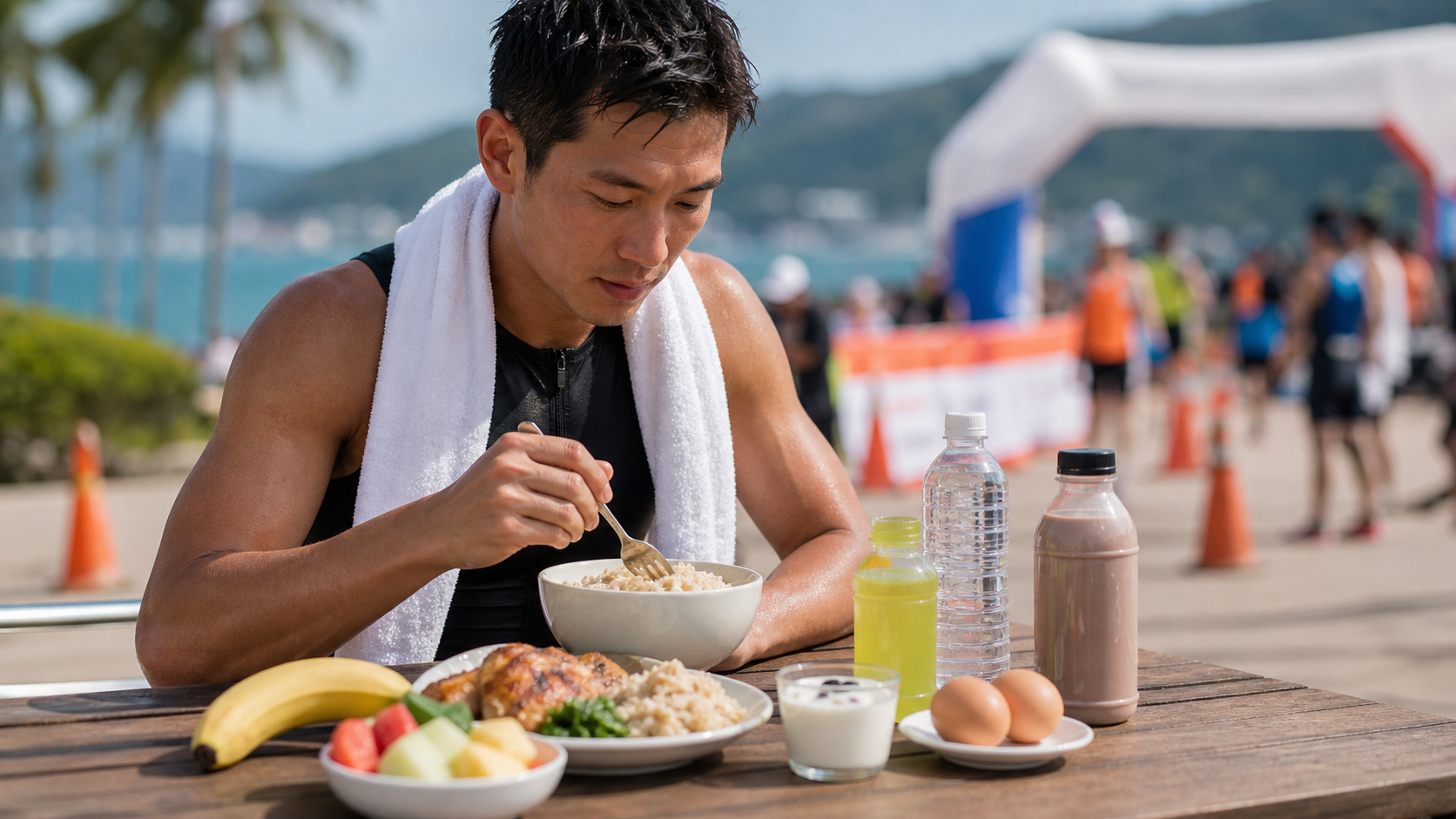
The first type catches their breath for five minutes with hands on hips after crossing the line, takes a few photos, then heads straight to the celebration dinner—drinking ice-cold beer all the way through to late-night fried chicken. The next day, they’re groaning in their hotel room, unable to get out of bed from full-body soreness, having to walk down stairs backwards. The second type looks unremarkable. After crossing the line, they walk around slowly, grab a banana and a bottle of chocolate milk, eat a proper dinner, push the alcohol aside, and the next day they’re still able to take a leisurely walk on the beach for recovery.
These two types of people often have similar fitness levels and training volumes. The difference lies in “how they treat their bodies in the 48 hours after crossing the finish line.”
I’ve been coaching athletes for 15 years, from nervous beginners who threw up before their first 51.5 to seasoned veterans who qualified for Kona. When it comes to post-race recovery, I always emphasize the same thing: “Recovery isn’t rest—recovery is active training.” The glycogen you depleted, the muscle fibers you tore, and the fluids and electrolytes you lost at the finish line won’t just magically replenish themselves. They need you to feed and repair them through the act of eating. Eat right, and you’ll be back on the bike with ease in three days. Eat wrong, and you might spend a week battling delayed onset muscle soreness (DOMS), or even waste away the fitness you worked so hard to build.
In this article, I’m going to break down the most critical recovery window—“from the finish line to 48 hours”—into a concrete eating plan with specifics on “what to eat, how much, and when.” The content will be practical, covering the golden ratio for glycogen replenishment, how to distribute protein, and the question everyone loves to ask but hates to hear—the cost of that celebration beer.
1. Building the Foundation: What Does Your Body Actually Lack After a Race?
Before we talk about “how to replenish,” you need to understand “what’s broken.” A long, high-intensity endurance event leaves four major deficits in your body:
1. Glycogen Depletion
Glycogen is the “carbohydrate warehouse” in your muscles and liver, and it’s the primary fuel for high-intensity exercise. In a race lasting over 90 minutes, muscle glycogen is almost completely emptied. When glycogen runs out, you’re not just “out of energy”—your thinking slows down and your mood deteriorates. That feeling of “empty and wanting to cry” many people experience after a race is partly caused by low glycogen and blood sugar.
2. Micro-Tears in Muscle Fibers
Especially in activities with lots of eccentric contractions (the impact of running, braking control on downhills), muscle fibers sustain countless micro-tears. This is normal and is the source of progress, but repairing it requires materials—namely, protein.
3. Significant Loss of Fluids and Electrolytes
In Taiwan’s summers, especially at hot and humid venues like Dapeng Bay or Taitung, athletes can lose 1 to 1.5 liters of sweat per hour, taking sodium, potassium, and magnesium along with it. When body weight drops by more than 2%, both performance and recovery suffer.
4. Temporary Immune Suppression
After intense, prolonged exercise, there’s a so-called “open window” period when immune function temporarily dips. This is why many people are prone to catching colds after a race. Eating well and sleeping enough are key to closing that window for your immune system.
Keep these four deficits in mind, and you’ll understand: the core mission of post-race nutrition is to “replenish carbs, repair muscle, rehydrate, and support immunity”—all four, without exception.
2. The Science (Part 1): The Golden Ratio and Time Window for Glycogen Replenishment
This is the densest concept in the entire article, so please bear with me—it will directly change what you do in the first hour after crossing the finish line.
Does the “Golden Window” Really Exist?
In the past, everyone swore by the “30-minute golden window after exercise—miss it and all is lost.” Based on current sports science, this claim is half right, half wrong.
Here’s the truth: during exercise, glucose transporter proteins (GLUT4) on muscle cell membranes surge to the surface, making muscles act like sponges that are especially good at absorbing carbs. But this high-absorption state gradually fades after exercise ends, with GLUT4 starting to “return to baseline” about 30 to 60 minutes later. So the window isn’t a door that slams shut the moment 30 minutes pass—it’s “a door that slowly closes.”
The truly critical evidence: when carbohydrate intake is delayed by 2 hours, studies observe that the rate of glycogen synthesis drops by approximately 45% (see references at the end). So you don’t need to eat frantically within seconds, but you absolutely should not wait until two hours have passed before thinking about food.
How Much Do You Need? Remember This Number
Based on current sports nutrition consensus, to rapidly replenish glycogen after a race, the recommendation is:
Consume 1.0 to 1.2 grams of carbohydrates per kilogram of body weight per hour, for the first 4 hours.
Let me translate that into understandable quantities. Using a 65 kg athlete as an example:
| Body Weight | Hourly Carb Target | Total for First 4 Hours | Equivalent (Example) |
|---|---|---|---|
| 55 kg | ~55–66 g | ~220–264 g | 1 banana (~27g) + 1 sports drink + 1 onigiri rice ball |
| 65 kg | ~65–78 g | ~260–312 g | 1 bottle chocolate milk + 2 rice balls + 1 banana |
| 75 kg | ~75–90 g | ~300–360 g | 1 bowl of rice + braised pork + 1 sports drink + fruit |
A Key Practical Detail: When Carbs Fall Short, Fill the Gap with Protein
This is a trick many athletes don’t know. If you really can’t eat that many carbs after the race (nausea and lack of appetite are common), research indicates: when carbohydrate intake falls below 0.8 g per kg per hour, adding 0.3 to 0.4 g of protein per kg per hour can help improve glycogen storage efficiency.
In other words, a recovery drink combining “carbs + protein” (like chocolate milk, or a whey-and-banana smoothie) is a highly efficient rescue option when your appetite is poor and you can’t manage a full meal. This is why I always require athletes to have a carton of shelf-stable milk or instant chocolate milk in their transition bag.
An Honest Reminder: Muscle Glycogen Won’t Be Full in Just a Few Hours
I want to set the right expectations here—don’t fool yourself. A recent study on well-trained cyclists found that even with very high carbohydrate intake (10 g per kg), what gets rapidly replenished within 12 hours is mainly liver glycogen, while muscle glycogen takes much longer to fully refill (see references at the end).
What does this mean? It means complete glycogen recovery is a “24 to 48 hour” long-term battle, not a “sprint finished in that first hour after crossing the line.” The first 4 hours are certainly important, but the next two proper meals and the following day’s three meals are all part of the recovery plan. This is also why this article extends to the “48-hour” mark.
3. The Science (Part 2): Protein “Distribution” Matters More Than “Total Amount”
Many people think that “downing a big scoop of whey after the race” is all it takes. That’s a classic misconception.
Eating Too Much at Once—Your Body Can’t Use It All
Research tells us that consuming approximately 0.3 to 0.4 grams of protein per kilogram of body weight in a single meal (about 20 to 40 grams of quality protein for most adults) is enough to drive the “muscle protein synthesis (MPS)” repair machinery to near-maximum. Eating more won’t push the synthesis rate any higher; the excess is mostly oxidized for energy or diverted elsewhere (see references at the end).
So here’s the key point: instead of slamming 60 grams in one meal, spread your protein evenly across every meal and snack throughout the day. This “small amounts, multiple times, hitting the threshold dose at every meal” approach keeps the repair machinery running at high gear all day long.
A Simple Distribution Rhythm for You
Using a 65 kg athlete as an example, here’s how I typically arrange protein for the day after a race:
| Time Period | Protein Target | Taiwan Local Food Examples |
|---|---|---|
| 0–1 hour after finish | ~20 g | 1 bottle chocolate milk / 1 scoop whey |
| Post-race meal (within 2–3 hours) | ~25–30 g | Chicken leg or fish fillet from a bento box + 1 egg |
| Afternoon snack | ~15–20 g | Unsweetened soy milk + tea egg / yogurt |
| Dinner | ~25–30 g | Hot pot meat platter + tofu + seafood |
| Before bed (optional) | ~20 g | A glass of milk / small handful of nuts + whey |
Over the course of the day, total protein lands in the reasonable range of 1.6 to 2.0 g per kg of body weight for endurance athletes, and it’s evenly distributed, hitting the threshold at every meal—far more efficient for recovery than one massive dose.
Coach’s tip: The pre-bed protein serving is especially valuable for masters athletes. As we age, muscles become more “sluggish” in their response to protein (known in research as anabolic resistance). So for athletes over 40, I insist on a pre-bed protein serving and nudge the per-meal threshold dose slightly higher.
4. The Science (Part 3): How Many Points Does That Celebration Beer Actually Cost You?
Here it is—the part everyone doesn’t want to hear.
I completely understand. After a hard-earned PB or finishing your first 226, opening an ice-cold beer to celebrate is only human. Taiwan’s race culture is especially lively—after crossing the line, friends gather for a meal, clink glasses, and the atmosphere is fantastic. But as a coach, I have a duty to lay the numbers out in front of you so you can make an informed choice.
Alcohol Does Three Bad Things
There’s a well-designed study on “post-exercise alcohol” (see references at the end). It had subjects perform a combined resistance + high-intensity interval workout, then divided them into three groups: protein only, alcohol + protein, and alcohol + carbs. The results showed:
- Compared to the “protein only” group, the “alcohol + protein” group saw muscle protein synthesis rates drop by about 24%.
- The “alcohol + carbs” group fared even worse, with a drop of about 37%.
Note this critical point: even if you’re also consuming protein, alcohol still slashes your repair efficiency by nearly a quarter. Alcohol interferes with the initial steps of cellular protein synthesis—it’s like sending a batch of workers away right when you need to build a house.
Beyond that, alcohol does two other bad things:
- Slows glycogen synthesis: Studies also observe that alcohol impairs post-exercise muscle glycogen replenishment. The carbs you worked so hard to consume get their efficiency discounted.
- Diuretic dehydration: Alcohol is a diuretic. You’ve already sweated profusely and are in a dehydrated state; adding alcohol is pouring salt on the wound, making next-day headaches and soreness worse.
Coach’s Practical Advice: Not a Ban, Just Prioritization
I’m not here to be a party pooper. Here’s how I actually handle it with my athletes:
Get the recovery work done first, then celebrate.
Specifically: the first 3 to 4 hours after crossing the line are the golden recovery window—stay completely away from alcohol during this time. Get your carbs, protein, fluids, and electrolytes topped up, and eat a proper meal. Once that’s done, if you really want a small drink in the evening to toast with your teammates, the damage will be much smaller. And remember, for every drink, add a glass of water to fill the diuretic hole.
For athletes who have training the next day or are in a multi-day event (like stage races), my stance is firmer: alcohol goes to zero for those days. Not a single bit of recovery can be wasted.
5. Practical Method: The Complete “48-Hour Eating Timeline”
Now that the concepts are covered, here’s the practical stuff. This is the template I actually give my athletes. You can copy it directly and adjust based on your body weight and appetite. The example below uses a ~65 kg athlete who just finished a standard-distance triathlon or a half-marathon or longer.
Phase 1: 0 to 30 Minutes After Finish—Hydrate First, Don’t Rush to Eat
At this point, your gut is usually still in “combat mode,” with blood flow concentrated in your limbs. Forcing solid food can cause nausea. So:
- Start with liquid carbs + protein: A bottle of chocolate milk (or a whey + banana smoothie) is the golden combination—easy to swallow, easy to absorb.
- Rehydrate with fluids and electrolytes simultaneously: Pair it with a sodium-containing sports drink. Don’t just chug plain water, or you’ll dilute your blood sodium and end up needing to pee constantly.
- Grab a banana or a few slices of toast to settle your stomach.
Phase 2: 30 Minutes to 2 Hours After Finish—First Proper Meal
Once your gut settles down, eat a proper meal that is “carb-dominant with adequate protein.” Taiwan’s eating-out environment is actually very convenient:
- Convenience store rescue kit: 2 onigiri rice balls + 1 to 2 tea eggs + a box of salad + a bottle of unsweetened soy milk.
- Restaurant rescue kit: A bowl of white rice (even with extra rice) + a chicken leg or salmon fillet + blanched vegetables + a bowl of miso soup (bonus sodium).
- Goal for this meal: ~80 to 100 g of carbs, ~25 to 30 g of protein.
Phase 3: 2 to 4 Hours After Finish—Maintain the Carb Replenishment Rhythm
Don’t think that finishing one meal means you’re done. The first 4 hours are the carb-replenishment sprint period. During this time, have something in your stomach every hour to maintain the carb rhythm:
- Fruit (bananas, sweet potatoes, onigiri) + continue sipping fluids with electrolytes.
- If your appetite has returned, this is a good time for an afternoon snack (like yogurt with fruit, or a sweet potato).
Phase 4: Dinner on Race Day—Eat a Proper Meal
This is the most psychologically relaxing and also very important meal. Hot pot is my top recommendation for a post-race dinner, for practical reasons:
- Meat platter (protein), vegetables (micronutrients, potassium), glass noodles or rice (carbs), and broth (fluids and electrolytes) all in one go.
- Warm food is gentle on a fatigued digestive system.
- The only thing to restrain yourself from is the beer sitting next to the pot (for the reasons explained above).
Phase 5: Day 2 After the Race (24 to 48 Hours)—Recovery Isn’t Over
Remember what we covered earlier: fully refilling muscle glycogen is a 24 to 48 hour long-term battle. So don’t rush back to low-carb or dieting the next day:
- Eat three normal meals with adequate carbs: Breakfast is especially important. After a night, glycogen has been depleted another round. A good breakfast (like egg crepe with soy milk, or cereal with milk and fruit) stabilizes recovery.
- Continue distributing protein: Hit the 20 to 30 g threshold at every meal.
- Keep hydrating: Monitor urine color—maintaining a pale yellow indicates your fluids are back.
- This day is typically for active recovery: an easy 30 to 45 minute ride, a swim, or a walk, combined with plenty of sleep, letting the repair machinery quietly finish its work.
6. Common Mistakes and Fixes (From the Coach’s Clinic)
These are the most common and most regrettable mistakes I’ve seen in 15 years of coaching. See if any of these fit you:
Mistake 1: “I’m Too Tired to Eat, So I’ll Just Sleep First”
Problem: You miss the door where glycogen absorption efficiency is highest, and you wake up with muscles that are both sore and empty.
Fix: When your appetite is poor, switch to liquid recovery. If you can drink it, you win. A bottle of chocolate milk or a smoothie is far better than eating nothing. Use liquids to hold the threshold, then eat solids once your appetite returns.
Mistake 2: “I Chugged Plain Water After the Race, But Felt Worse and Kept Running to the Bathroom”
Problem: Replenishing water without sodium dilutes blood sodium, causing your body to flush the water out. In severe cases, there’s even a risk of hyponatremia.
Fix: Post-race hydration must include electrolytes. Sports drinks, salty soups, or electrolyte tablets all work. This is especially important in Taiwan’s hot, humid race venues where you sweat heavily.
Mistake 3: “I Downed 60 Grams of Whey in One Go, Thinking More Equals Faster Repair”
Problem: Protein beyond the threshold doesn’t speed up repair. The excess gets oxidized, wasting both money and calories.
Fix: Switch to 20 to 30 grams per meal, evenly distributed. The repair machinery needs “steady supply throughout the day,” not “one massive dump.”
Mistake 4: “I Opened a Celebration Beer Immediately After Crossing the Line”
Problem: Alcohol cuts the golden recovery window off at the knees, dropping protein synthesis by 24 to 37%, plus dehydration.
Fix: Recover first, celebrate second. Zero alcohol for the first 4 hours. Do the necessary replenishment, then have a small drink—and pair each drink with a glass of water.
Mistake 5: “The Next Day, I Started Dieting to Avoid Gaining Weight”
Problem: Your muscle glycogen isn’t refilled and your muscles are still repairing, but you cut off the fuel and materials. Recovery stalls, and you might even lose muscle.
Fix: The 48 hours after a race are not the time for fat loss. Eat normally, eat enough, finish the recovery, then worry about other things. The caloric deficit from a big race won’t be undone by one or two days of normal eating—don’t scare yourself.
7. Actionable Advice for Athletes at Different Levels
The same science needs to be applied with different intensity depending on where you are. Find your stage below.
Beginner Triathlete / First Marathoner
Your primary goal is “building habits,” not “sweating the details.” If you just do these three things, you’re already ahead of half the field:
- Within 1 hour of finishing, drink a bottle of chocolate milk + eat a banana.
- Eat a proper meal within 2 hours (a bento box works great).
- Skip alcohol for the day and drink plenty of water.
Turn these three steps into reflex actions, and your recovery experience will immediately improve. You won’t be in so much pain the next day that you question your life choices.
Intermediate Age-Group Athlete (With PB Goals)
You have the basics down; it’s time to move to “quantified management”:
- Know your body weight and calculate “1.0 to 1.2 g carbs per kg per hour for the first 4 hours” into actual gram amounts.
- Hit the 0.3 to 0.4 g/kg protein threshold at every meal, spread across 4 to 5 times a day.
- Prepare your recovery bag before the race (shelf-stable milk, bananas, electrolyte tablets, rice balls)—don’t panic at the venue.
- Strictly schedule alcohol after all recovery actions are complete.
Elite / Multi-Day Race Athlete
For you, recovery is part of the race strategy. Every bit counts:
- Push carb replenishment to the most aggressive level—start immediately after finishing, with split doses every 30 minutes.
- Alcohol goes to zero during multi-day events.
- Manage sleep, active recovery, and nutrition as one integrated system.
- Masters athletes should pay special attention to the pre-bed protein serving to combat anabolic resistance.
8. The Underrated Fourth Pillar: Details on Fluids and Electrolytes
I’ve mentioned hydration throughout, but this deserves its own section because in Taiwan’s hot, humid race venues, dehydration is often the invisible culprit behind your “can’t get out of bed” feeling the next day—more so than glycogen or muscle damage.
Weigh Yourself First, Don’t Rely on Feelings
The most accurate and cheapest dehydration indicator is weighing yourself before and after the race. The principle is simple:
For every 1 kg of body weight lost, you’ve lost approximately 1 liter of body fluid. Post-race, you need about 1.2 to 1.5 liters of electrolyte-containing fluids to replace it.
Why 1.5 times instead of exactly 1 time? Because the water you drink won’t stay 100% in your body—some will be lost through urination. So you need to “over-replenish” slightly to truly return to balance.
Replenishing Water Without Sodium Is a Common Pitfall
I mentioned the risk of hyponatremia in the mistakes section; let me lay out the logic clearly here. Your sweat is “salty,” carrying away large amounts of sodium. If you only chug plain water after the race, the sodium concentration in your blood gets diluted lower and lower. To maintain concentration balance, your body actually flushes the water out—so you end up “thirstier the more you drink, constantly running to the bathroom, and still feeling tired.” Severe hyponatremia can even be fatal in ultra-distance events.
So the iron rule for post-race hydration is: water must be paired with sodium. Taiwan’s advantage is that there are plenty of options:
| Hydration Option | Sodium Replenishment | Coach’s Comment |
|---|---|---|
| Sports drinks | Medium | Convenient, but high in sugar; fine as part of carb replenishment |
| Electrolyte tablets in water | High, controllable | My top recommendation—clear sodium content, low sugar |
| Miso soup / clear broth | Medium-high | Warm food is gut-friendly; pairs naturally with a meal |
| Plain water | Zero | Not enough on its own; must be paired with salty food |
Urine Color: The Simplest Real-Time Dashboard
No scale? No problem—check your urine. Dark yellow to amber means you’re still dehydrated; pale yellow (like diluted lemonade) means your fluids are back. For the rest of race day, treat “keeping urine pale yellow” as a concrete, actionable mini-goal, and you won’t half-ass your hydration.
9. Should You Take Supplements? A Practical Priority List
Athletes often ask me: “Coach, should I buy a bunch of recovery supplements after a race? BCAA, glutamine, anti-inflammatory products?”
My answer has always been direct: get the “food” part right first. Supplements are the icing on the cake, not the lifeline. Here’s a practical priority list:
Priority 1: Real Food (Always Do This First)
Rice, sweet potatoes, bananas, chicken legs, fish, eggs, soy milk, milk, hot pot. These readily available items in Taiwan can get you 80 to 90% of the way on carb replenishment, muscle repair, and hydration. If this foundation isn’t solid, spending money on expensive supplements is putting the cart before the horse.
Priority 2: Convenient “Bridge” Supplements
The value of these supplements lies in being “a rescue when you can’t eat real food,” not in being more magical than real food:
- Chocolate milk / shelf-stable milk: A naturally perfect ratio of carbs to protein. The first choice for that first sip after crossing the line.
- Whey protein: Handy when your appetite is poor or you can’t hit the protein threshold with food alone.
- Electrolyte tablets: The cleanest, most controllable way to replenish sodium.
Priority 3: Things with Weaker Evidence or Situational Use
Things like BCAA and glutamine offer limited additional benefit for people who are already eating enough complete protein—because complete proteins already contain these amino acids. As for various “anti-inflammatory” supplements, here’s a special warning: part of post-race inflammation is a necessary signal for the body to “initiate adaptation.” Blindly suppressing it with high-dose antioxidants could, over the long term, interfere with training adaptations. So for these types of products, discuss them with your doctor or nutritionist before deciding—don’t add them on your own.
In one sentence: Spend your money and attention on eating three proper meals first. Supplements come later.
10. Two Real-Life Case Studies (Athlete Stories)
After all these principles, let me share two scenarios from athletes I’ve coached (scenarios adapted for teaching, data estimated based on principles) to show you the difference between “doing it right” and “doing it wrong.”
Case A: Xiao Lin, 42, “Textbook Recovery” After Finishing Taitung 226
Xiao Lin is an age-group athlete I coach, weighing 68 kg. That year, Taitung was hot and humid. He finished in just under 13 hours, and his weight dropped 2.4 kg from pre-race to post-race.
We had rehearsed the process before the race. After crossing the line, he didn’t rush to find friends for a toast. Instead:
- 0 to 30 min: Downed a bottle of chocolate milk + a bottle of electrolyte water, and nibbled on half a banana.
- Within 1 hour: Ate a bento box (chicken leg with rice and vegetables) + a bowl of soup at the athlete village.
- Next 3 hours: Topped up with a bit of fruit and electrolyte water every hour. His urine color gradually went from dark yellow back to pale yellow.
- Dinner: The whole team went for hot pot. He ate the meat, vegetables, glass noodles, and rice to his satisfaction—but didn’t touch a single drop of alcohol that night, toasting with unsweetened sparkling water instead.
- Next day: Ate three full meals as usual and took an easy walk on the beach in the morning for recovery.
The result? The next day, he messaged me: “Coach, I can’t believe I can actually walk to breakfast on my own. It’s amazing.” His 2.4 kg of lost weight came back within two days (that was water, not fat).
Case B: A-Zhe, 35, “The Price of the Celebration Dinner” After a Half-Distance Triathlon
A-Zhe was in the same race, and his fitness was actually comparable to Xiao Lin’s. But his post-finish script was the complete opposite: too excited, he went straight to drinking with a group after photos—from afternoon beer to evening stir-fry with kaoliang liquor. He ate his meals haphazardly and didn’t seriously hydrate.
The next day’s outcome: full-body soreness, headache, an upset stomach, and his planned “easy ride the next day” was canceled outright. He lay in bed all day. In his own post-race review: “I gave the golden 4 hours of recovery entirely to alcohol.”
Their fitness levels weren’t that different. What differed was the choices made in the 48 hours after crossing the line. That’s why I keep nagging about this.
11. FAQ
Here are the questions athletes most often throw at me in the LINE group, with quick answers.
Q1: Do I need to go through all this trouble for short distances (like a 51.5 standard triathlon or a 10K road race)?
When the intensity and duration are shorter and glycogen depletion isn’t as complete, you can scale the replenishment down proportionally. But the basic actions of “some carbs + protein after finishing, and hydrating with sodium” are still worth doing, especially when it’s hot and you’re sweating a lot. The longer and harder the race, the more important this protocol becomes.
Q2: I’m cutting fat. Do I still need to eat this many carbs after a race?
Yes. The post-race recovery window is when your body’s carbohydrate utilization efficiency is at its highest. Carbs consumed during this time mostly go toward glycogen replenishment, not fat storage. Save the fat loss for regular training days. Don’t take a knife to the very 48 hours when your body needs repair the most—that will only tank your recovery and cost you muscle.
Q3: How can vegetarians/vegans hit the protein threshold?
Absolutely possible. Combinations of soy milk, tofu, tempeh, edamame, chickpeas, and quinoa can easily add up to 20 to 30 grams of protein per meal. The trick is diversifying sources to cover the amino acid profile, and since plant protein digestibility is slightly lower, aim for the upper end of the per-meal target range. Taiwan’s vegetarian-friendly environment makes this easy to achieve.
Q4: Do I have to drink whey or sports drinks? I only want real food.
You don’t need supplements at all. Whey and sports drinks are just “convenient tools.” You can complete recovery fully with real food (rice, sweet potatoes, meat, eggs, milk, fruit). Supplements are for situations where you “can’t eat, can’t assemble the right mix, or are short on time.”
Q5: Can I drink coffee after a race?
Moderate coffee is fine. Some studies even suggest that caffeine combined with carbs slightly aids glycogen replenishment. But coffee has a mild diuretic effect, so don’t make it your only hydration source, and don’t drink strong coffee close to bedtime and compromise your sleep—sleep is the #1 recovery tool; don’t sacrifice it for coffee.
Q6: So, can I have a celebration drink or not?
You can, but save it for last. After completing the first 4 hours of replenishment, eating a proper meal, and hydrating adequately, a small evening drink to celebrate will carry much less cost. Remember: one drink, one glass of water. If you have training the next day or it’s a multi-day event, hold off and complete your recovery to the fullest.
12. Quick Reference Chart: See at a Glance How Much to Eat
Here’s a master chart you can save to your phone and follow directly after a race (using a 65 kg athlete as an example; scale proportionally for other body weights):
| Timeline | Carb Target | Protein Target | Fluids/Electrolytes | Alcohol |
|---|---|---|---|---|
| 0–30 min | Liquid carbs primarily (~30–50g) | ~20 g (liquid) | Sports drink for sodium | Zero |
| 30 min–2 hrs | Meal 80–100 g | 25–30 g | Continue hydrating | Zero |
| 2–4 hrs | Continue 60–78 g per hour | Snack 15–20 g | Hydrate based on urine color | Zero |
| Dinner that day | Adequate carbs (hot pot/meal) | 25–30 g | Soup for sodium | Only a small drink after recovery is complete |
| Day 2 | Adequate carbs at all three meals | 20–30 g per meal | Keep urine pale yellow | Zero for multi-day racers |
Conclusion: Treat Recovery as a Gold Medal You’re Guaranteed to Win
I often tell my athletes: “Your race performance is built through training, but whether you can ‘stand back up and come back stronger’ after a race is built through eating and sleeping.”
Every watt and every step you fought for on the course deserves to be treated well. From the finish line to 48 hours, this seemingly unremarkable recovery window actually holds the code to your next improvement. Replenish carbs correctly, distribute protein properly, exercise some discipline with that beer, and drink enough water—none of this is hard. What’s hard is making it a fixed ritual after every race.
Next time you cross the finish line, don’t collapse right away. Grab that bottle of chocolate milk and tell yourself: “Recovery begins now.” That’s what a mature endurance athlete looks like.
See you at the finish line—and in the recovery room.
This article is educational content and does not replace individual assessment by a physician, physical therapist, or nutritionist.
References
- Post-exercise carbohydrate recommendations (post-race carb intake and the effect of delayed eating on glycogen synthesis): https://www.precisionhydration.com/performance-advice/nutrition/post-exercise-carbohydrate-recommendations/
- Fuchs et al., The Journal of Physiology — Differences in liver vs. muscle glycogen replenishment with 10 g/kg carbs: https://physoc.onlinelibrary.wiley.com/doi/10.1113/JP289115
- Study on the effect of post-exercise alcohol intake on muscle protein synthesis (PLOS ONE): https://journals.plos.org/plosone/article?id=10.1371%2Fjournal.pone.0088384
- Relationship between single-meal protein dose and muscle protein synthesis (Frontiers in Nutrition): https://www.frontiersin.org/journals/nutrition/articles/10.3389/fnut.2019.00147/full
- Review of nutritional strategies for post-exercise recovery and subsequent performance (PMC): https://pmc.ncbi.nlm.nih.gov/articles/PMC12297025/
Related Reading
- Post-Race Recovery Nutrition: The Golden Strategy After the Finish Line—A Complete Guide to Glycogen Replenishment, Protein, and Fluid/Electrolyte Balance
- Triathlon Race Day Nutrition Plan: Complete Templates for 51.5, 70.3, and 226 Distances
- The Complete Post-Race Recovery Diet Guide: A Nutritional Repair Plan from the Finish Line to Your Next Race
- Ultramarathon Recovery Nutrition: A Phased Dietary Strategy for the 72 Hours After Finishing
CT暗黑廚房) 車友必備 宇宙無敵鮮蚵湯 幫助訓練恢復 天然食補 好市多 超肥鮮蚵 破PR
7 年前
#KOM 夏季登山王之路 比賽實況 #東進武嶺
7 年前
西進武嶺 免費訓練分析服務 Intervals | 練不夠還是練過頭?你哪一種類型選手?AI模型告訴你! | 備戰神器 | 公路車 訓練 | CT Yeh
4 年前
Live) 備戰2019彰化經典百K 賽前攻略 (已完賽請看新影片
7 年前
西進武嶺 自製新版AI配速表產生器 x 賽前攻略 抱佛腳! 沒有功率計也可以產生配速表嗎?有什麼其他眉角賽前要注意的呢? | 西進武嶺 / 東進武嶺 KOM 攻略 | 公路車 | CT Yeh
4 年前
FTL 與 SYB 車隊專訪 西進武嶺 實用攻略分享! 2小時 如何練?!你不知道的眉角!新手準備武嶺必看 EP1 | 實力派女車友 | 精華版 | 公路車 | CTYeh
4 年前
2019 夏季KOM 5小 完賽心得 準備攻略 東進武嶺 夏季登山王之路 Taiwan KOM Challenge
7 年前
2021 96聯賽 桃園市長盃 4K多視角實況 當天選手瓦數/推力比/均速/時間 即時數據分析 | 公路車 | CT Yeh
5 年前