Race Anxiety Management: From Pre-Race Insomnia to Shaking on the Start Line—A Triathlon Coach's Field Notes
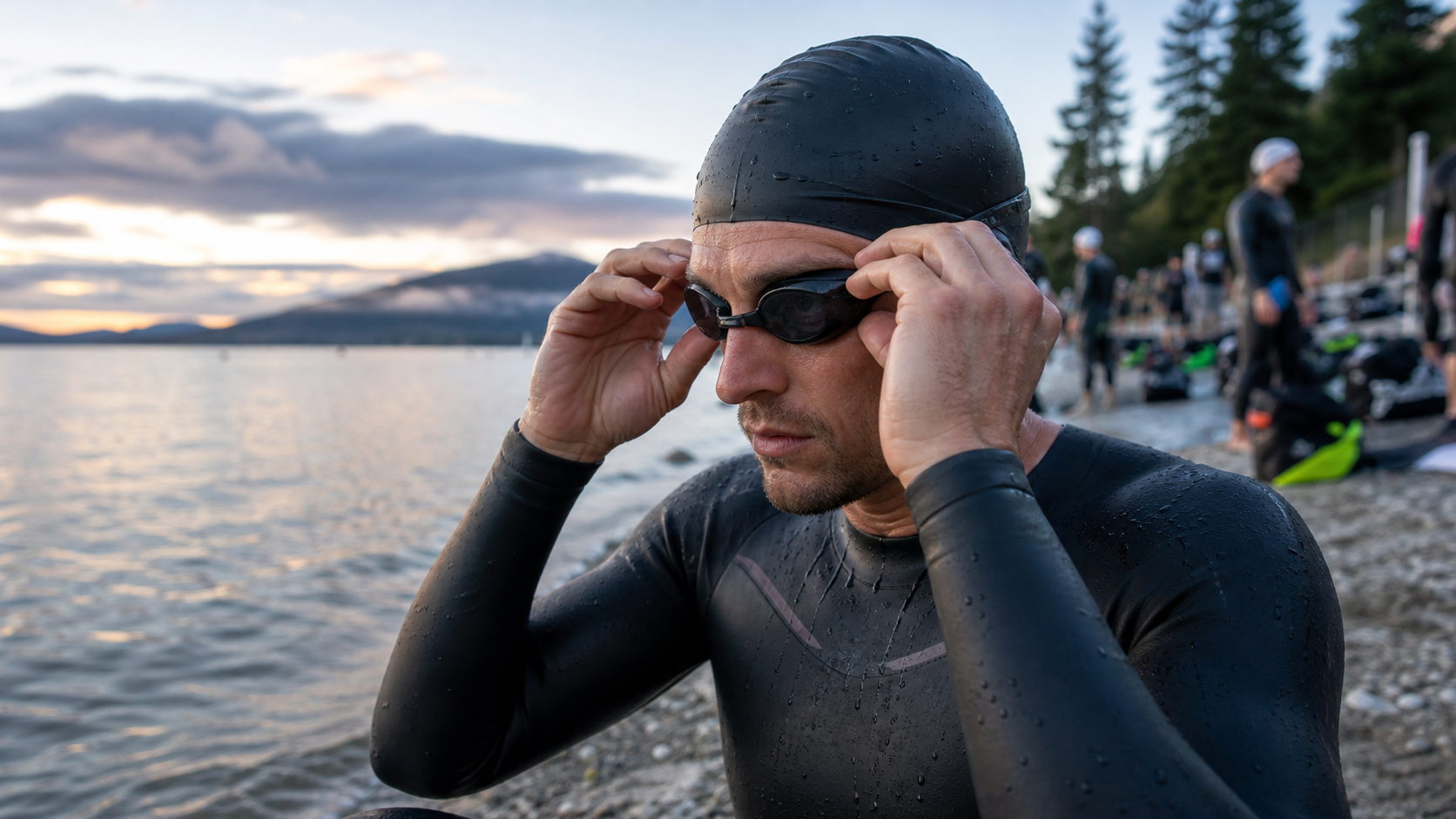
“Coach, I can hold a steady pace on a 50-meter swim in training, but the moment I get to the start line, my heart rate spikes to 180 and my hands shake so badly I can’t even put on my goggles.”
In my fifteen years of coaching athletes, I’ve heard this exact sentiment over a hundred times. The people saying it range from office workers tackling their first 51.5 standard-distance triathlon to veterans who’ve already podiumed in their age group and are chasing a Kona slot. Anxiety doesn’t disappear just because you get stronger — it just changes its form and keeps following you around.
Today’s article isn’t about training plans or gear. It’s about the you who stares at the ceiling at 3 a.m., fumbles through transition, and feels your legs turn to jelly on the start line. This is a deep dive into “race anxiety.” I’ll lay out the sports science concepts, the methods I’ve actually used with my athletes, and the most common mistakes I see them make — all in one go.
The Bottom Line First: Anxiety Is Not Your Enemy
Many athletes come to me for the first time to talk about their mental state and open with: “Coach, I want to completely eliminate my nervousness.”
I usually pour cold water on that right away: Completely eliminating anxiety is often not a good thing.
On race day, your heart rate runs high, your palms sweat, your stomach churns — these are all your body mobilizing resources for you. Adrenaline raises blood sugar, increases blood flow to muscles, and speeds up your reactions. An athlete who feels “nothing at all” about the race and stays perfectly calm usually doesn’t perform well, because they haven’t entered a state of readiness.
The problem is never “whether you have anxiety” — it’s “whether the amount of anxiety is right.” That brings us to one of the most classic curves in sports psychology.
Conceptual Foundation: The Inverted-U Theory and Your “Sweet Spot”
What Is the Inverted-U Theory
The inverted-U hypothesis, proposed by Yerkes-Dodson, states: Performance improves as your physiological and psychological “arousal” rises, but only up to a certain point; beyond that point, performance starts to decline.
If you plot it on a graph, it’s an upside-down U-shaped curve:
- Left side (arousal too low): Drowsy, sluggish, unfocused. You might be too relaxed, not warmed up enough, and your body isn’t awake when the gun goes off.
- Middle (arousal just right): This is your “sweet spot.” Focused, alert, smooth movements, clear sense of time.
- Right side (arousal too high): Heart racing, shallow breathing, narrowed vision (the so-called “tunnel vision”), and impaired memory and judgment. You forget your nutrition, miscalculate your pace, and fumble through transition.
According to the research on this curve (see references at the end), excessively high arousal interferes with attention, memory, and problem-solving through negative effects — which is exactly why some athletes “train great but race terribly.”
Key Detail: The Harder the Task, the Lower the Sweet Spot
Here’s an important point many people overlook: The optimal point on the inverted-U curve shifts with task difficulty.
For simple, well-practiced movements that have become reflexive (like the pedaling rhythm you’ve built over thousands of kilometers), you can actually handle a very high arousal level — you might even push harder the more fired up you get. But for complex, unfamiliar tasks that require fine judgment (like sighting buoys in open water, choosing your line through a downhill corner, or adjusting your pacing strategy mid-race), the sweet spot shifts noticeably to the left — it only takes a little anxiety to max you out, and any more starts causing mistakes.
Let me use a table to help you understand: the same athlete needs different arousal levels at different stages of a triathlon.
| Race Stage | Task Nature | Ideal Arousal Level | Typical Disaster When Too High |
|---|---|---|---|
| Swim Start (open-water sighting, crowd contact) | Complex, unfamiliar, requires judgment | Low to moderate | Erratic breathing rhythm, off-course, panic-induced heart rate |
| Bike Main Segment (steady pedaling, pace control) | Well-practiced, automatable | Moderate to high | Blowing up early, heart rate out of zone, collapse in the back half |
| Run Finish (willpower against fatigue) | Well-practiced but painful | Moderate to high | Pace out of control, cramping, mental breakdown |
| Transition T1/T2 (many steps, error-prone) | Complex, requires checklists | Moderate | Forgetting helmet, running to the wrong rack, untied shoelaces |
Once you understand this table, you’ll see why “getting yourself as hyped as possible before the race” is a huge misconception. What you need isn’t maximum hype — it’s landing in your sweet spot at every single stage.
The Body’s Mechanism Behind the Curve: Gas and Brakes
I often use the “gas and brakes” analogy to help athletes understand what’s happening in their bodies. The process of arousal rising is essentially the sympathetic nervous system being activated: adrenaline and cortisol secretion increase, heart rate and breathing speed up, blood flow is redistributed from the internal organs to the large muscle groups, and blood sugar is mobilized. Evolutionarily, this is the “fight-or-flight” survival response our ancestors had when encountering a wild beast.
The problem is, your body can’t tell the difference between “a lion charging at me” and “a race I care deeply about.” Its response to both is nearly identical. The ascending part of the inverted-U curve is this system activating appropriately and helping you mobilize resources; the descending part is this system over-activating and starting to work against you — which is when the three danger signs I always warn my athletes about appear:
- Tunnel vision: Your attentional field narrows involuntarily, locking onto what’s right in front of you and ignoring aid stations, course markers, or even other athletes’ lines.
- Fine motor control loss: Hands shaking so much you can’t put on goggles, tie your shoes, or press your watch button — these are signs of poor coordination in small muscle groups when arousal is too high.
- Narrowed, rigid thinking: The normally adaptable you becomes stuck reacting in the most instinctive (often wrong) way, unable to calculate pace or recall strategy.
The benefit of understanding this mechanism is that you stop treating these physical reactions as “something’s wrong with me” and instead recognize, “Oh, my sympathetic nervous system is pushing too hard right now — I need tools to apply some brakes.” That recognition itself is the foundation for every technique that follows.
Which Side of the Curve Are You On? A Self-Assessment
Before I teach you the tools, let’s figure out where you are. When performance suffers, the prescriptions for low arousal versus high arousal are complete opposites — one needs to be brought up, the other needs to be brought down. Use this table to compare your pre-race and in-race states:
| Observation Indicator | Arousal Too Low (Left Side) | Sweet Spot (Middle) | Arousal Too High (Right Side) |
|---|---|---|---|
| Mood | Sluggish, sleepy, indifferent | Anticipatory, focused, eager | Panicked, nauseous, mind going blank |
| Body | Slow movements, can’t warm up | Quick reactions, smooth movements | Shaking hands, heart palpitations, stomach churning |
| Attention | Wandering, easily distracted | Focused on the task at hand | Tunnel vision, fixating on details |
| Common Result | Too slow out of the gate, never gets going | Performs normally or even exceeds expectations | Blows up early, mistakes pile up |
| What to Do | More warm-up, put on music, get moving | Maintain status quo, don’t change anything | Lengthen exhales, narrow your focus |
Most triathletes’ problems fall on the right side, but some veterans, or athletes fatigued from back-to-back races, actually get stuck on the left side with no drive. Honestly assess where you are first, then choose your tools — otherwise you’ll apply the wrong fix.
Where Anxiety Comes From: Three Common Triggers
Before getting into methods, let’s break anxiety down. When I work with athletes, I categorize pre-race and in-race anxiety into three sources, because different sources require different tools.
- Anxiety from the unknown: A distance you’ve never done, a course you’ve never ridden, waters you’ve never swum. The brain hates uncertainty and fills the void by imagining worst-case scenarios.
- Anxiety from expectations and self-imposed demands: You set a goal, told your friends, paid a hefty entry fee, trained for six months. This “I can’t afford to lose” pressure pushes arousal past the limit.
- Misinterpreting physiological signals: Fast heart rate, shaking hands, needing the bathroom — these are neutral bodily responses, but if you interpret them as “I’m doomed,” the anxiety snowballs and reinforces itself.
Remember point three — it’s the key to “cognitive reappraisal” later on.
Pre-Race Insomnia: What to Do That Night
Let’s tackle the most common question first: can’t sleep the night before the race.
I want to give you a fact that will immediately put your mind at ease: A poor night’s sleep before the race affects your performance far less than you think.
What really matters is the sleep two to three nights before the race. In other words, if you want sleep to work in your favor, focus on Thursday and Friday, not Saturday night before the race. Ironically, many people end up making themselves even more sleepless because of the pressure to “get a full night’s rest” — this is classic anxiety self-amplification.
My pre-race sleep principles for athletes:
- Adjust your circadian rhythm in advance: Races usually require waking up at 5 or 6 AM (in Taiwan, the Puyuma Cup, Challenge Taiwan, and LAVA series all require check-in before dawn). Start going to bed half an hour to an hour earlier three to four days before the race — don’t wait until the last night to try to sleep early.
- Don’t force yourself to lie in bed if you can’t sleep: If you’re still wide awake after half an hour, get up and do something boring (check your gear for tomorrow one more time, listen to a bland podcast), and go back to bed only when you feel drowsy. Lying in bed fighting anxiety only reinforces the “bed = anxiety” connection.
- Lower your expectations for the last night: Tell yourself, “Even if I don’t sleep at all tonight, I can still finish the race tomorrow.” This statement alone will relax you enough to fall asleep more easily.
- Avoid caffeine and screens: Many Taiwanese athletes have habits of afternoon bubble tea and scrolling through course videos on their phones at night — resist the urge the night before the race.
Practical Method 1: Breathing — Your Built-In Brake
If anxiety pushes you to the right side of the inverted-U curve, breathing is the only autonomic nervous system switch you can “directly control with conscious effort.”
Why Breathing Works
Our autonomic nervous system is divided into the sympathetic (gas pedal) and parasympathetic (brake) branches. Anxiety = overactive sympathetic activity. According to research on slow breathing (see references at the end), slow, controlled breathing suppresses sympathetic activity, enhances parasympathetic response, and lowers heart rate and blood pressure; HRV (heart rate variability) is also the metric most consistently showing significant improvement in studies.
Research generally indicates that slowing breathing to roughly 4.5 to 6.5 breaths per minute (known as resonance breathing or coherent breathing) best balances sympathetic-vagal responses under stress for most adults. Additionally, some studies comparing extended-exhalation patterns like “inhale 4 seconds, exhale 6 seconds” found that even a single session of slow breathing is sufficient to control physiological arousal before facing a stressor.
The key point here is: exhalation should be longer than inhalation. During inhalation, the sympathetic nervous system is slightly activated; during exhalation, the parasympathetic system takes over. So “extending the exhale” is stepping on the brake.
Two Breathing Techniques I Actually Teach Athletes
A. 4-6 Extended Exhalation Breathing (for pre-race and before entering the water)
| Step | Action | Seconds | Mental Cue |
|---|---|---|---|
| 1 | Inhale through the nose | 4 seconds | “I’m ready” |
| 2 | Exhale naturally (mouth slightly open) | 6 seconds | “Let go” |
| 3 | Repeat | 6 to 10 cycles | Feel the shoulders drop |
One cycle is 10 seconds, which is 6 breaths per minute — right in the range recommended by research. Do two minutes of this standing on the shore before entering the water, and you’ll noticeably feel your heart rate pulling back from spiraling out of control.
B. Box Breathing (for transition zones and moments requiring calm judgment)
Inhale 4 seconds, hold 4 seconds, exhale 4 seconds, hold 4 seconds — drawing a square. This rhythm leans toward “stabilizing” rather than “calming,” making it suitable when you need to stay alert but not lose control — for example, in the final seconds before entering T1, letting yourself think through your transition steps clearly.
The Golden Rule of Breathing: Practice It Daily
I must emphasize this very firmly: Breathing techniques are not magic you learn on race day.
If you haven’t practiced regularly, you won’t remember how to inhale or exhale when your heart rate hits 180 on race day. I require athletes to build breathing into their daily routine: five minutes before bed every night, two minutes during cool-down after every training session, and a few cycles while waiting at red lights during commutes. Practice it until it becomes a reflex — only then will it help you on race day.
I typically give athletes a simple four-week habit-building plan. It doesn’t require much time; the key is “daily exposure, making it a habit”:
| Week | Practice Content | Frequency | Goal |
|---|---|---|---|
| Week 1 | 4-6 extended exhalation before bed, 5 minutes | Daily | Familiarize with the rhythm, learn nose-in mouth-out |
| Week 2 | Add 2 minutes after training cool-down | Daily | Stay steady even when heart rate is elevated |
| Week 3 | Breathing immediately after high-intensity intervals | 2-3 times per week | Practice under stress, simulate race conditions |
| Week 4 | Full race simulation (breathing + routine + scripts) | At least once | Chain all three tools into reflex actions |
After four weeks, this breathing is no longer a technique you have to “remember” to use — it becomes an automatic response your body performs under stress. That’s the state we’re aiming for.
Practical Method 2: Pre-Race Routine — Caging Uncertainty
Remember that the first source of anxiety is “the unknown”? The best weapon against the unknown is establishing a fixed pre-race routine, turning every minute before the race into “the known.”
Elite athletes perform nearly identical actions before the start — not because of superstition, but because a familiar process tricks the brain into thinking “everything is under control,” naturally bringing arousal levels back to the sweet spot.
When designing routines for athletes, I count down from 90 minutes before the race and create a checklist:
| Pre-Race Time | Routine Action | Purpose |
|---|---|---|
| T-90 min | Arrive, use the restroom, pick up timing chip, set up transition area | Eliminate “running out of time” anxiety |
| T-60 min | Last solid food intake, drink water, apply race number | Stabilize blood sugar and digestion |
| T-45 min | Dynamic warm-up, easy jog or spinning | Bring arousal up from too low |
| T-30 min | Practice swim/bike, adapt to water temperature and feel | Eliminate panic from “unfamiliarity” |
| T-15 min | 4-6 breathing for two minutes, recite three race strategy sentences | Bring arousal back to the sweet spot |
| T-5 min | Get into position, focus on your own breathing rhythm | Block out thoughts of comparing with others |
The greatest value of this checklist is giving you “the next thing to do” when your mind goes blank. The scariest part of anxiety isn’t a fast heart rate — it’s the feeling of losing control from “I don’t know what to do right now.” With a checklist, you always have a next step.
Practical Method 3: Cognitive Reappraisal — Changing Your Lens on Your Heartbeat
As mentioned earlier, the third source of anxiety is “misinterpreting physiological signals.” Cognitive reappraisal is precisely the tool for this.
From “I’m So Nervous” to “I’m Ready”
There’s a highly practical technique in psychology called anxiety reappraisal / relabeling. The core concept is: anxiety and excitement are physiologically almost identical — racing heart, sweaty palms, adrenaline surge. The only difference is which label you attach to it.
When you tell yourself “I’m so nervous, I need to calm down,” you’re fighting against your body — but the gas pedal is already floored. You can’t push it back, and you’ll only spiral further into panic.
Conversely, when you tell yourself “I’m so excited, my body is wound up and ready to perform,” you’re not fighting your body — you’re going with its direction and giving it a positive interpretation. The same heart rate of 140 can either break you down or get you ready to race.
I once coached a sprint triathlete who always felt nauseous with fear before entering the water. I had her change her script from “What do I do, I’m about to fall apart” to “This heart rate means I care, it means I’m ready.” Over three races, her pacing stability at the start visibly improved. We didn’t change her heart rate; we changed her interpretation of it.
The Three-Sentence Reappraisal Exercise
I ask athletes to prepare three “pre-race mantras,” written in their phone notes or on their arm, and repeated silently before the race:
- About the body: “This nervousness is my engine warming up.”
- About the process: “I just need to focus on the next hundred meters / the next aid station.”
- About the outcome: “I’ve trained enough. Do the process right, and the result will take care of itself.”
The second sentence is especially important—it pulls attention away from “Will I fail?” (outcome-oriented, anxiety-producing) and back to “What should I do right now?” (process-oriented, anxiety-reducing). This is one of the most effective cognitive strategies for bringing arousal levels back to the sweet spot.
Common Mistakes and Corrections
Having coached so many athletes, I’ve compiled the most common mistakes. Check whether any apply to you.
Mistake 1: Waiting until race day to start managing anxiety.
Correction: Breathing techniques, routines, and reappraisal scripts all need to be “rehearsed” during pre-race training. Treat several long-distance training sessions as simulation races—go through nutrition, gear, and mental scripts exactly as you would on race day.
Mistake 2: Trying to completely eliminate anxiety.
Correction: The goal is to “regulate to the sweet spot,” not to “zero it out.” Moderate nervousness is a good thing. Instead of fighting it, channel it.
Mistake 3: Blasting off at the start following someone else’s pace.
Correction: This is the most classic disaster of over-arousal. The swim start at Taiwan triathlons is often a chaotic washing-machine scene with everyone charging off at once. If you panic, you speed up and your breathing rhythm falls apart. Stick to the strategy you set at T-15; be conservative for the first three hundred meters.
Mistake 4: Treating pre-race insomnia like the end of the world.
Correction: As mentioned earlier, the key is the two or three nights before. If you can’t sleep the final night, accept it—don’t let the anxiety of “why can’t I fall asleep” pile on.
Mistake 5: Ignoring gastrointestinal signals.
Correction: Anxiety churns your stomach, and many people can’t eat or keep running to the bathroom before a race. Test during training what your stomach can handle under stress—don’t experiment with new nutrition on race day. Early-morning convenience stores and hotel breakfast options at Taiwan races are limited, so prepare your pre-race meal the day before.
Actionable Advice for Athletes of Different Levels
There’s no one-size-fits-all answer to anxiety management. I prescribe different approaches based on the athlete’s stage.
First-Timer Finish Group (First Triathlon)
Your biggest enemy is “the unknown.” Key actions:
- Scout the course early: Seeing it in person is best; if not, study the course map, elevation profile, and swim route until you know them cold. Many Taiwan races (like Challenge Taiwan at Taitung’s Living Lake, LAVA at various locations) publish course information.
- Lower your goal to “finishing”: For your first time, don’t set a time goal. “Safe, happy, finished” is the win. This dramatically reduces expectation-based anxiety.
- Master just one breathing technique: 4-6 extended exhales, practiced until it’s reflexive. No need to overcomplicate it.
Advanced Age-Group Group (Chasing PB, Racing for Results)
Your biggest enemy is “expecting too much of yourself.” Key actions:
- Break goals into process goals: Don’t just stare at total time. Focus on controllable processes like “maintain technique in the swim,” “keep heart rate in zone on the bike,” and “stay conservative in the first half of the run.”
- Build a complete routine: Write out your T-90 to T-5 checklist and rehearse it until it’s automatic.
- Focus on cognitive reappraisal: Your problem often isn’t a lack of effort—it’s caring too much, which leads to over-arousal. The “excitement” relabeling technique works especially well for you.
Elite/Qualification Group (Kona, World Championship Slots)
Your technique and fitness are no longer the issue; fine psychological tuning is the deciding factor. Key actions:
- Mental rehearsal for specific weak segments: For example, if you get anxious on downhill corners, repeatedly visualize yourself nailing the turn (imagery training).
- Build a “reset” mechanism: Things will go wrong in a race (flat tire, cramp, getting passed). Design a reset phrase in advance (e.g., “solve one problem at a time”) to prevent a single mistake from triggering a chain-reaction collapse.
- Fine-tune arousal with greater precision: You already know your sweet spot. On race day, treat it like tuning an instrument—if arousal is too low, bring it up with warm-up and music; if too high, bring it down with breathing.
A Complete Real-World Scenario: Tying the Tools Together
Let me use a fictional but typical scenario to string all the tools together into one line.
Xiao Ya is an office worker signed up for a 51.5 standard-distance triathlon—her second race. A week out, she starts getting so nervous she can’t sleep.
- Four days out: She goes to bed half an hour earlier, prioritizing solid sleep on Wednesday and Thursday, and doesn’t obsess over the final night.
- Night before: After lying awake for half an hour, she gets up, double-checks her gear list, listens to a bland podcast, and accepts that “even without much sleep, I can still finish.” She falls asleep anyway.
- T-90 minutes: She follows her checklist to set up transition, use the restroom, and pin on her number. Because every step is familiar, her anxiety doesn’t spiral.
- T-15 minutes before the swim: Standing by Living Lake, she does two minutes of 4-6 breathing and silently recites her three mantras. “This nervousness is my engine warming up.” “I just need to focus on the next hundred meters.” “I’ve trained enough.”
- Gun goes off: The washing-machine scene is the same, but she holds her conservative pace, reinterpreting her spiking heart rate as “I’m ready,” and her breathing rhythm never breaks.
- Transition area: She steadies herself with box breathing and follows her rehearsed steps without fumbling.
Xiao Ya didn’t become less nervous—she learned to work with her nervousness. That is the entire spirit of race-day anxiety management.
Worth noting: in her first race, she did everything backwards. The night before, she forced herself into bed at ten, stared at the ceiling until 2 a.m., and got more anxious the longer she lay there. The next day, she arrived early but had no checklist, and watching everyone else set up their transition areas methodically made her panic. At the swim start, she charged off with the strong-looking athletes around her, blew through her energy in the first three hundred meters, lost her breathing rhythm, and nearly raised her hand for help at the buoy. She wasn’t weak—her bike and run splits in that first race were actually good. She simply lost because she had zero tools for managing her arousal level. In her second race, with the same body and the same heart rate, a different approach produced a completely different outcome. That’s why I always say: for amateur athletes, the return on investment from mental training is often higher than squeezing in a few more interval sessions.
Local Variables in Taiwan Races Should Also Factor into Anxiety Management
Taiwan triathlons have several local characteristics that directly affect your arousal level and are worth rehearsing in advance:
- Cold, damp early mornings: At northern races during northeast monsoon season, early-morning temperatures can drop to the low teens Celsius. Shivering onshore before the swim can easily be misread as “shaking from fear,” doubling your anxiety. Prepare warm clothing, warm up properly before entering the water, and eliminate physical cold so it doesn’t blend with mental panic.
- Summer heat and humidity: Southern and eastern summer races are oppressively hot and humid. Dehydration and electrolyte loss will push your heart rate up and make you irritable. Rely on calm pacing and a steady nutrition rhythm—don’t mistake physiological heart palpitations for panic.
- Eating out and pre-race meals: Race venues in Taiwan are often surrounded only by convenience stores, making it hard to find familiar, easily digestible food the night before. Preparing your pre-race meal a day or two in advance (like your usual rice balls, bananas, or energy bars) removes one more source of “will my stomach act up later?” anxiety.
FAQ: Questions Athletes Ask Me Most Often
Q: Can I take calming substances or drink alcohol to stop feeling nervous?
A: I strongly advise against it. This pushes you to the left side of the inverted-U curve (arousal too low), dulling your reactions and slowing your judgment—which is actually dangerous. Moreover, any supplement or medication may raise concerns regarding safety and sports regulations. Anxiety should be managed with techniques, not numbed with external substances.
Q: How much warm-up should I do?
A: This is precisely about “actively bringing your arousal up.” If you tend to get nervous easily (arousal already high), your warm-up can be gentler; if you tend to be sluggish and unmotivated (arousal too low), you need a more complete dynamic warm-up to wake yourself up. There’s no standard answer—it depends on which side of the curve you’re on today.
Q: What if I suddenly panic during a race?
A: Immediately do “extended exhales”—even while swimming, you can deliberately lengthen your exhale during breathing. At the same time, narrow your focus to “the next stroke” or “the next landmark,” using process goals to shut down runaway imagination. If necessary (especially during the swim leg), roll onto your back, float, or grab a buoy to rest for a few seconds. Safety always comes before results.
Q: Does imagery training (mentally rehearsing the race) actually work?
A: For many athletes, yes. It turns the unfamiliar into the familiar and reduces anxiety about the unknown. Close your eyes, use a first-person perspective, and bring in as much detail as possible (water temperature, wind direction, course elevation) to rehearse a successful race. A few minutes a day in the week before the race is enough. One small tip: don’t only rehearse “everything going smoothly”—also rehearse the version where “something goes wrong but I handle it calmly.” For example, imagine getting kicked or passed during the swim, then see yourself taking a deep breath, lengthening your exhale, and continuing to stroke. That way, when it really happens, your brain has a memory of “I’ve practiced this, I know what to do” to draw on.
Q: I’m fine on the bike leg every time, but the moment I hit the run leg I start overthinking and wanting to quit. Is this also anxiety?
A: This is a classic case of “fatigue amplifying anxiety.” The run leg is when your body is most exhausted, your willpower is at its lowest, and your brain is most prone to negative thoughts. At this point, the inverted-U curve often isn’t about arousal being too high—it’s that you’re being dragged down by the pain, and your attention is completely consumed by “I’m so tired, how much longer.” The prescription is to “chunk” the run—don’t think about “ten more kilometers,” just think “make it to the next aid station” or “run to the next utility pole.” Breaking one enormous, overwhelming goal into a series of small goals that don’t scare you is the most effective mental tool for the final stretch.
Q: I’m the type who “can’t get motivated before a race and only gradually gets into it once the race starts.” What should I do?
A: You’re on the left side of the curve, opposite to most people. Your prescription isn’t relaxation—it’s actively bringing your arousal up: a more complete dynamic warm-up, listening to higher-tempo music, cheering each other on with teammates, and doing a few short sprints before the race to raise your heart rate. Others are suppressing adrenaline; you need to wake it up. Knowing which type you are matters far more than blindly applying “relaxation techniques.”
Q: I’ve practiced breathing techniques, but I still panic at the venue. Does that mean I have no talent for this?
A: It has nothing to do with talent. It’s usually insufficient practice, or “only practicing when calm, not under pressure.” I recommend deliberately creating pressure during training and then applying the tools: for example, after a set of high-intensity intervals while your heart rate is still elevated, immediately do four to six extended exhales, teaching your body to “bring itself back down with breathing even at a high heart rate.” This kind of “practice under pressure” transfers to race day far better than practicing on a yoga mat.
Conclusion: Make Anxiety Your Propeller
In fifteen years of coaching athletes, I’ve become increasingly convinced of one thing: the difference between elite athletes and average athletes often isn’t about who gets nervous—it’s about who knows better how to coexist with nervousness.
If you can’t sleep before a race, it means you care; if you’re trembling at the start line, it means your body is already wound up for this moment. These signals are neither good nor bad in themselves—good or bad depends on how you interpret and regulate them.
Keep the inverted-U theory in mind—what you want isn’t maximum excitement, but just the right amount. Use breathing techniques as your brakes, use routines to cage the unknown, and use cognitive reappraisal to change the lens through which you view your heartbeat. Practice these three tools in daily training, and on race day they’ll show up exactly when you need them most.
Next time you stand on the start line and your heart starts racing again, I hope you can smile and say to yourself: “The engine’s warmed up. Time to go.”
See you on the course.
This article is for educational purposes and does not replace individual assessment by a physician, physical therapist, or nutritionist. If your pre-race anxiety has severely affected your daily life, sleep, or mental health, please seek professional medical or psychological counseling.
References
- Yerkes-Dodson Law of Arousal and Performance — Simply Psychology: https://www.simplypsychology.org/what-is-the-yerkes-dodson-law.html
- Arousal and performance: revisiting the famous inverted-U-shaped curve — Trends in Cognitive Sciences: https://www.cell.com/trends/cognitive-sciences/fulltext/S1364-6613(24)00078-0
- Effects of voluntary slow breathing on heart rate and heart rate variability: A systematic review and meta-analysis — ScienceDirect: https://www.sciencedirect.com/science/article/abs/pii/S0149763422002007
- Slow breathing for reducing stress: The effect of extending exhale — ScienceDirect: https://www.sciencedirect.com/science/article/pii/S0965229923000249
Related Reading
- Race Anxiety Management: The Mental Shift from Fear to Focus
- Managing Pre-Swim Nerves: Analyzing Pre-Race Anxiety from a Sports Psychology Perspective
- Pre-Race Anxiety in Cycling: Techniques for Converting Nervousness into Performance Drive
- Pre-Race Anxiety Management: How to Turn Nervousness into Race Momentum
[教學] Premiere 影片 手震 修正 教學 防抖 單眼 影像 GoPro 穩定 Video Stabilization
8 年前
CT 喇低賽) 武嶺牽車 才是王道 西進牽車四小時內秘訣 攝手位置 如何判斷 防抽筋小秘訣
7 年前
西進武嶺 免費訓練分析服務 Intervals | 練不夠還是練過頭?你哪一種類型選手?AI模型告訴你! | 備戰神器 | 公路車 訓練 | CT Yeh
4 年前
CT 喇低賽) 單車 比賽總是沒照片? 攝影師的觀點大公開 姿勢就是力量! 請加速1.25倍收看
7 年前
CT Talk) 數據面窺看 武嶺大神們 平時的備戰 共通點 (娛樂性質XD)
7 年前
西進武嶺 自製新版AI配速表產生器 x 賽前攻略 抱佛腳! 沒有功率計也可以產生配速表嗎?有什麼其他眉角賽前要注意的呢? | 西進武嶺 / 東進武嶺 KOM 攻略 | 公路車 | CT Yeh
4 年前
福隆鐵人團練隨拍
8 年前
Live) 備戰2019彰化經典百K 賽前攻略 (已完賽請看新影片
7 年前