How Bones Adapt to Exercise: Impact, Load, and Bone Density—An Overlooked Concern for Endurance Athletes
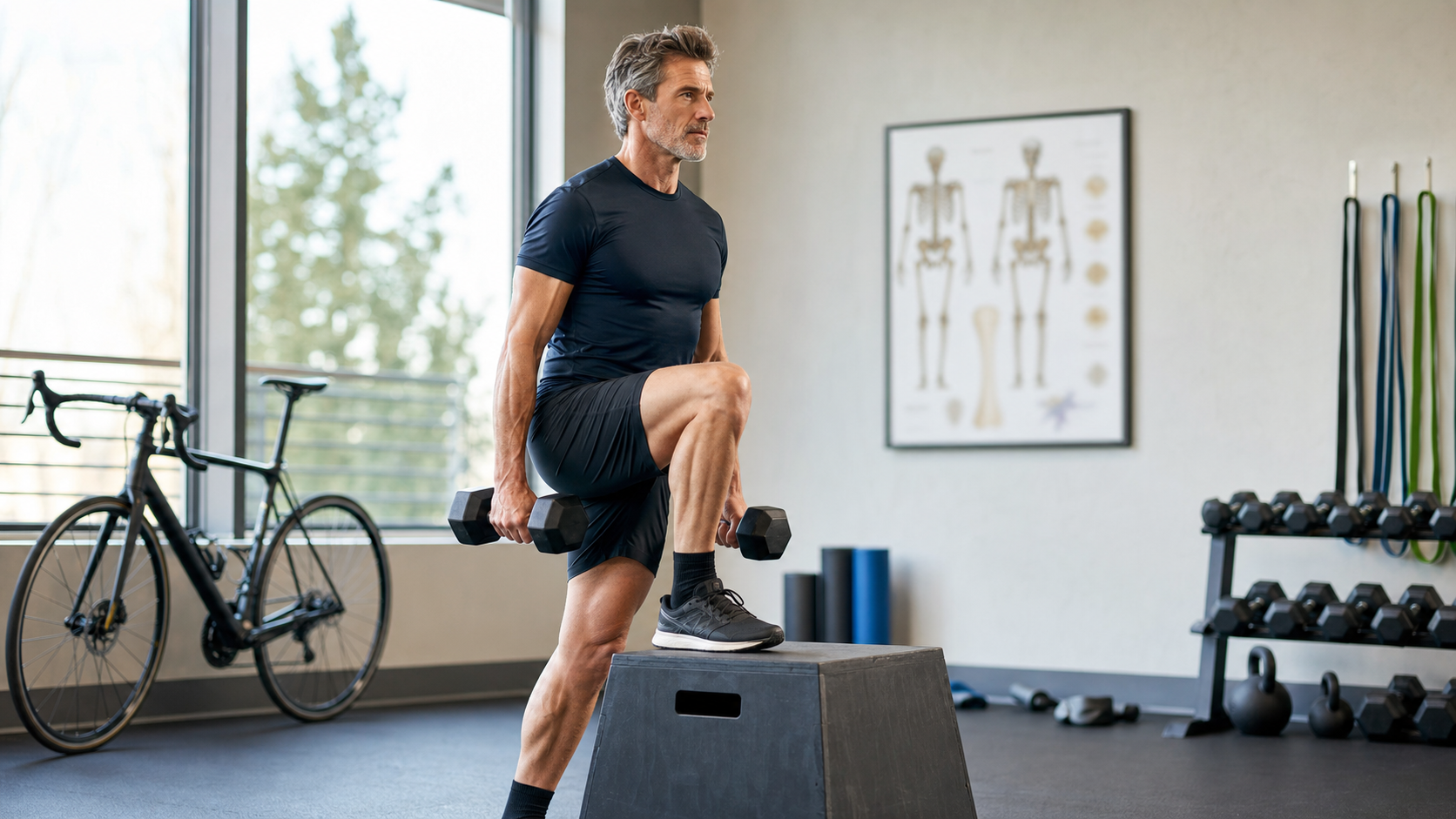
Starting with a “Very Healthy” Cyclist
I still remember a cyclist who came to me for training consultations years ago—let’s call him A-Kai. In his early forties, he rode six days a week, easily logging over 1,000 kilometers a month, had climbed Wuling several times, and had a body-fat percentage that made gym-goers envious. By every surface metric, he was a “very healthy” middle-aged man. Then one rainy day, he slipped on his commute. A side fall that didn’t look serious ended up fracturing his radial bone at the wrist, and during rehab his doctor suggested a bone density scan.
The results came back: A-Kai’s Z-scores for femoral neck and lumbar spine bone density were both in negative territory, falling into the low range for his age. He looked at me, baffled, and asked: “Coach, I exercise this much—how could my bones be worse than someone who doesn’t move at all?”
That question holds one of the most counterintuitive and most easily overlooked pieces of the entire science of skeletal exercise. Exercise can indeed strengthen bones—but not all exercise is the same, and bones follow very clear “rules of the game” when it comes to adapting to exercise. In my more than a decade of coaching athletes at various levels and general fitness populations, cases like A-Kai’s—“superb cardiorespiratory fitness, yet bone mass quietly slipping away”—are far more common than people think. In this long-form article, I want to walk you through the full story of how bones adapt to exercise, the way I’d explain it to an athlete in a coaching session.
Foundational Concepts: Bones Are Alive, and They’re “Picky”
Many people assume bones are a fixed scaffold—like steel rebar in a building, set in place and never changing. That’s the biggest misconception. Bone is a living tissue in constant demolition and construction, undergoing “bone remodeling” throughout your entire life: osteoclasts tear down old or damaged bone, and osteoblasts build new bone. The tug-of-war between these two crews determines whether your bone density trends up or down.
Wolff’s Law: The “Use It or Lose It” Version for Bone
In the nineteenth century, German anatomist Julius Wolff observed something: the internal structure of bone rearranges and strengthens itself according to the mechanical loads it bears. This later became known as Wolff’s Law. In plain terms: however you use your bones, that’s what they become. Where force is regularly applied, trabeculae become denser and cortical bone thickens; where force is absent for long periods, bone tissue gets broken down and “recycled.”
The key to bone sensing force lies in osteocytes. These are the most abundant cells in bone and the most sensitive to mechanical signals. When bone deforms slightly under load, interstitial fluid inside the bone flows, osteocytes sense this fluid shear stress, and they convert the “mechanical signal” into a “biochemical signal,” directing osteoblasts and osteoclasts on whether to build or resorb—a process called mechanotransduction.
There’s a crucial threshold concept here. Bone doesn’t just “get stronger with any movement”—it needs to exceed a certain strain threshold to trigger building. In research, when bone experiences strain below a certain lower limit, the body decides “this bone isn’t being used much” and initiates loss; only when strain rises high enough (significantly above daily levels) does it stimulate bone formation. This is why the “peak intensity” and “novelty” of loading matter more than sheer “volume” for stimulating bone—and this is precisely the pain point for endurance athletes. (Further reading: Wolff’s law - Wikipedia, Physiology, Bone Remodeling - StatPearls)
Why “Impact” Builds Bone Better Than “Endurance”
Putting the principles above into practice, it becomes clear:
- High-impact, multi-directional, explosive movements (jumping, sprinting, rapid direction changes, loaded squats) create peak bone strain—the strongest osteogenic stimulus.
- Smooth, repetitive, non-weight-bearing movements (swimming, cycling) burn plenty of calories and are excellent for the cardiorespiratory system, yet they produce almost no peak bone impact.
That’s why basketball players, gymnasts, sprinters, and resistance-trained individuals generally have higher bone density, while swimmers and cyclists tend to have lower values. Your bones are “picky”—they only pay attention to “challenging forces” and remain indifferent to “gentle repetition.”
The Timescale of Bone Adaptation: Slow to Build, Fast to Lose
Here’s another harsh but important fact: bone “building” is far slower than bone “loss.” Muscles show gains within weeks, but meaningful changes in bone density are measured in “months” or even “years.” Conversely, once stimulation stops (e.g., injury with bed rest, zero gravity in space, or long-term engagement only in non-weight-bearing exercise), bone loss can be surprisingly rapid. Clinically, patients on prolonged bed rest or with limb immobilization can show measurable bone loss within weeks—a textbook demonstration of Wolff’s Law in reverse: if you don’t give your bones force, they quietly dismantle themselves.
This “slow to build, fast to lose” characteristic yields two practical takeaways. First, building bone stock takes time and consistency—you can’t just do it sporadically. Second, the bone you accumulate in youth is your lifelong savings. Peak bone mass is typically reached in your twenties to thirties, followed by a slow decline. If overtraining combined with insufficient energy intake prevents adolescents and young adults from banking enough bone, catching up later is extremely difficult. That’s why I often tell parents who bring their kids to train: don’t let your children overtrain and under-eat during their critical developmental years.
The Endurance Athlete’s Hidden Risk: The More You Ride, the Thinner Your Bones?
This is the point I most want you to take to heart. Cycling is an almost “zero-impact” sport: you sit on the saddle, your body weight is supported by the frame, and your legs produce smooth, circular force through the pedals—your knees, hips, and spine barely experience any landing impact. That’s great for your joints, but for osteogenic stimulation, it’s nearly a “blank slate.”
What the Research Says
Multiple studies on competitive road cyclists consistently show that cyclists have significantly lower bone density than general control groups, and even lower than runners. In one dataset spanning different competitive levels, the prevalence of low lumbar spine bone density was roughly 53% among professional cyclists, about 32% among elite cyclists, and only about 13% in controls. Another study of elite cyclists found that the highest proportion of low bone density (Z-score < -1.0) was at the femoral neck (about 34%), followed by total hip at about 31%, total body at about 21%, and lumbar spine at about 18%. Notably, even among cyclists who also did resistance training, a considerable proportion were still classified as having low bone density. (Sources: Prevalence of fracture and low BMD in competitive road cyclists - FASEB Journal, Bone health in elite Norwegian endurance cyclists and runners - PubMed)
These numbers should be interpreted carefully—different studies use different populations, measurement sites, and classification criteria, so figures vary and shouldn’t be taken as absolute values for “every cyclist.” But together they point in one clear direction: large volumes of cycling alone are insufficient to maintain—let alone increase—bone mass, and some high-volume athletes are actually at a relative disadvantage.
Three Stacked Risk Factors
The bone density concerns for endurance athletes usually don’t stem from a single cause, but rather from several factors stacking together:
- Lack of bone-specific impact loading: As mentioned earlier, cycling and swimming provide extremely low osteogenic (bone-building) stimulation.
- Low Energy Availability (LEA): This is the most critical and often most overlooked factor. When your energy expenditure chronically exceeds your intake, your body enters “power-saving mode,” suppressing hormones that protect bone (such as sex hormones), which puts the brakes on bone formation. This is also the core of Relative Energy Deficiency in Sport (RED-S / REDs).
- Inadequate micronutrient intake: Chronic dieting or restricted eating often leads to deficiencies in calcium, vitamin D, and iron—all essential raw materials for bone formation.
LEA and RED-S have often been labeled as “female athlete” issues, but male athletes are equally susceptible. A-Kai is a classic example: high training volume, deliberately maintaining low body fat, and no impact sports or resistance training whatsoever—all three risk factors hit him at once. (Further reading: Female Athlete Triad and REDs: Nutritional Management - NCBI, Low Energy Availability in Athletes 2020 review - NCBI)
Bone Stimulation Comparison Across Sports
The table below is a core tool I often use to explain to athletes “why cross-training matters”:
| Sport Type | Bone Impact/Peak Strain | Benefit to Bone Density | Cardiorespiratory Benefit | Joint Stress |
|---|---|---|---|---|
| Jumping/Plyometrics (box jumps, jump rope) | Extremely High | Excellent | Moderate | Moderate to High |
| Resistance Training (squats, deadlifts) | High (axial loading) | Excellent | Low | Manageable |
| Running (especially with speed changes/hills) | Moderate to High | Good | High | Moderate to High |
| Ball/Multi-directional Sports | High | Good | Moderate to High | Moderate |
| Brisk Walking/Hiking (including hills) | Low to Moderate | Fair | Moderate | Low |
| Cycling | Extremely Low | Almost None | Extremely High | Extremely Low |
| Swimming | Extremely Low (non-weight-bearing) | Almost None | High | Extremely Low |
Please note that this table is not telling you to stop cycling or swimming. Cycling and swimming are excellent for cardiovascular health, metabolism, weight management, and joint protection. The key point is: if your primary sport is a low-impact endurance activity, you must deliberately add bone stimulation through other means.
Another Case: A Female Cyclist Who Thought Losing Her Period Meant “Peak Fitness”
I’d like to share another case that deserves even more attention. Xiao-Jie (pseudonym) was a very dedicated amateur female cyclist in her early thirties. To perform well in hill climb races, she controlled her diet very strictly and kept her body weight extremely low. At one point, her period stopped—and instead of being concerned, she thought, “This proves how lean and fit I’ve become.” It wasn’t until a training crash—a relatively minor impact—caused a stress fracture near her pelvis that she sought medical attention and was diagnosed with low bone density, which then uncovered the underlying issues.
In sports medicine, this is a textbook case of the “Female Athlete Triad”: low energy availability, menstrual dysfunction (such as amenorrhea), and decreased bone density—all three interconnected. The more comprehensive framework is the previously mentioned RED-S (Relative Energy Deficiency in Sport), which expands the impact to both men and women, affecting multiple systems including metabolic, immune, cardiovascular, hormonal, and skeletal health.
There are several key concepts I must make absolutely clear:
- Losing your period is absolutely not a “badge of fitness”—it’s a distress signal from your body. It indicates chronic energy deficiency and suppressed bone-protective hormones.
- About 90% of peak bone mass is built during adolescence. If energy deficiency and hormonal disruption occur during the growth years, it can create a bone bank deficit that may never be fully recovered.
- The core of RED-S treatment is not “take more calcium supplements,” but rather restoring adequate energy intake to get hormones and menstruation back on track, allowing bone-building processes to restart. (Sources: Female Athlete Triad and REDs: Nutritional Management - NCBI, Low Energy Availability in Athletes 2020 review - NCBI)
With the help of a gynecologist and a nutritionist, Xiao-Jie gradually increased her energy intake, brought her weight back to a healthy range, her period returned, and her training was restructured to include resistance training. Her performance didn’t decline—in fact, she became more resilient because she was healthier. I often use this case to remind all coaches and athletes: performance and health are never opposites; in the long run, health is the foundation of performance.
Practical Approach: How to Train for Both Performance and Bone Health
The good news is that building bone doesn’t require sacrificing the cycling or swimming you love. You only need to carve out a small block of time each week for “high-quality, high-stimulus” bone training, and the benefits are substantial. Bone-building responses respond best to “novel, multi-directional, high-peak” loads, and they saturate quickly—repeating the same movement dozens of times yields rapidly diminishing returns, so “short and explosive, with variety” beats “long and repetitive.”
Three Pillars of Bone-Strengthening Training
- Resistance Training (Axial Loading): Squats, deadlifts, split squats, rows, overhead presses, and other multi-joint, large muscle group movements apply axial load along the spine and long bones of the lower limbs—one of the most efficient ways to stimulate bone density in the lumbar spine and hips.
- Impact/Plyometric Training: Jump rope, box jumps, countermovement jumps, single-leg landing stabilization—these generate high-peak ground reaction forces. This is a great entry point for those intimidated by heavy lifting, but progression should be gradual with attention to landing technique.
- Multi-Directional and Explosive Movements: Shuttle runs, lateral movements, uphill sprints—these break the “single-plane, smooth power output” pattern of cycling and expose bones to “forces they haven’t seen before.”
Sample Weekly Bone Maintenance Plan for Endurance Athletes
Below is a sample weekly schedule I often give to adult athletes whose primary sport is cycling or swimming and who want to build bone. This is a teaching template, not a prescription—actual volume should be individualized based on your age, injury history, and training experience:
| Day | Primary Training | Bone-Strengthening Content | Notes |
|---|---|---|---|
| Monday | Cycling (aerobic endurance) | Jump rope before bed: 3 sets × 30 seconds | Impact introduction, low barrier |
| Tuesday | Rest or swimming | Resistance Training A: squats, deadlifts, rows | Large muscle groups, can add load |
| Wednesday | Cycling (intervals) | None (allow recovery) | Avoid fatigue accumulation |
| Thursday | Cycling (easy) | Box jumps/countermovement jumps: 3 sets × 8 reps | Focus on landing cushioning |
| Friday | Rest | Resistance Training B: split squats, overhead press, single-leg deadlift | Add unilateral and balance work |
| Saturday | Long ride | Brisk uphill walk for 15 minutes after riding | Weight-bearing + light impact |
| Sunday | Complete rest | Stretching, mobility work | Recovery day |
The logic behind this arrangement is to “slot” bone stimulation into the gaps of your endurance training—roughly two resistance sessions and two to three short impact sessions per week, totaling less than 3 extra hours, yet providing the osteogenic signals your primary sport completely lacks.
The Principle of Progressive Overload in Resistance Training
Many endurance athletes worry that lifting weights will make them “bulky, heavier, and hurt their cycling performance.” This is an unnecessary concern. When resistance training targets bone health, the focus is on sufficient loading intensity, not building large muscles. The principles are as follows:
- Start with bodyweight and light loads, focusing on proper form, especially spinal neutrality and hip hinging in squats and deadlifts.
- Progressively increase weight to allow the body to gradually adapt to higher axial loads. Bone adaptation is slower than muscle adaptation, so don’t rush.
- 2 sessions per week, with 4-6 compound movements each session is sufficient; you don’t need bodybuilding-style high training volume.
- If you have no prior resistance training experience, it is strongly recommended to first learn proper technique from a qualified coach to avoid accumulating injuries from poor form.
Nutrition: The Building Blocks and Energy for Bone Formation
To build bone, mechanical stimulation alone isn’t enough; you also need adequate energy and bone-building nutrients. This is the most common pitfall for endurance athletes—maximizing training volume while neglecting nutrition.
Three Key Nutritional Factors
First, prioritize “eating enough.” Low energy availability is the number one killer of bone density. If you are in a long-term energy deficit (especially cyclists and runners intentionally restricting weight), no amount of calcium and vitamin D can rescue bone formation that is suppressed by hormonal brakes. On high training volume days, make sure to replenish carbohydrates and protein. Don’t treat hunger as a badge of honor.
Second, calcium and vitamin D are the cement and workers for bone. The recommended daily calcium intake for general adults and athletic populations is roughly 1,000 to 1,200 mg, and vitamin D is about 800 to 2,000 IU (equivalent to 20 to 50 micrograms) per day. Actual needs vary based on sun exposure, diet, and blood levels. Although Taiwan has abundant sunshine, office workers in urban areas spend long hours indoors and commute fully covered in sun protection, making vitamin D deficiency quite common. (Source: Female Athlete Triad and REDs: Nutritional Management - NCBI)
Third, protein is not the enemy of bone. There’s an old myth that “high protein harms bones,” but for athletic populations, adequate protein actually supports bone and muscle maintenance. Just aim for balance; avoid extremes.
Reference Dosage Table for Calcium and Vitamin D
The following is an educational general reference range, not a personalized prescription. Before supplementing, it’s recommended to get blood tests and consult a physician or dietitian:
| Nutrient | General Reference Daily Intake Range | Common Taiwanese Food Sources | Notes |
|---|---|---|---|
| Calcium | Approximately 1,000–1,200 mg | Dried small fish, dried tofu, black sesame, dark leafy greens, dairy products | Better absorption when taken in divided doses |
| Vitamin D | Approximately 800–2,000 IU (20–50 mcg) | Sun exposure, salmon, egg yolks, fortified dairy | Those deficient need blood tests before supplementing |
| Protein | Approximately 1.4–2.0 g per kg of body weight (during training periods) | Chicken breast, tofu, eggs, fish | Distribute across meals |
| Energy | Adequate intake based on training volume | Whole grains, root vegetables, quality fats | Avoid long-term deficits |
Practical Advice for Eating Out in Taiwan
Eating out is convenient in Taiwan, but getting enough calcium isn’t always easy. Here are some practical tips I often give my clients:
- Add an extra serving of dark leafy greens (sweet potato leaves, bok choy, amaranth) to your bento box; don’t just pick the meat.
- Have a glass of unsweetened soy milk or milk with breakfast or as a snack for an easy calcium boost.
- Choose dried tofu or firm tofu from cold dishes or braised food stalls; their calcium content is higher than you’d think.
- Don’t pick out the dried small fish or dried shrimp in soups—they are excellent sources of calcium.
- Find time each day to get 10-15 minutes of sunlight (avoiding the harshest midday sun) to help your body produce vitamin D naturally.
Common Mistakes and Corrections
Over the years, I’ve seen many well-intentioned but misguided approaches. Here are the most common mistakes endurance athletes make:
Mistake 1: Assuming “High Training Volume Automatically Covers Bone Health”
This is exactly A-Kai’s misconception. Cardiovascular health and bone health are two different things. Correction: Recognize whether your main sport is a low-impact activity. If so, you must schedule additional resistance and impact training to compensate for the lack of bone stimulation.
Mistake 2: Long-Term Weight Suppression and Treating Hunger as Discipline
Many cyclists desperately cut weight to improve their power-to-weight ratio, staying in a chronic energy deficit. This might help short-term climbing numbers, but long-term, it depletes bone reserves and disrupts hormones. Correction: Match training volume with intake. For weight loss, use a modest deficit, do it in phases, and continuously monitor your status (sleep, mood, injuries, and for women, menstrual cycles).
Mistake 3: Completely Avoiding Resistance Training
“I’m a cyclist, why would I lift weights?”—I’ve heard this countless times. The truth is, resistance training not only builds bone but also reduces injury risk and improves pedaling economy. Correction: Start with basic bodyweight movements and treat strength training as an investment in “protecting your health and extending your athletic career.”
Mistake 4: Doing Too Much Impact Training Too Soon
Bone adaptation takes time. If you jump from zero directly to high-intensity jumping or heavy deadlifts, the risk of injury is high. Correction: Progress gradually. Build technique and tissue tolerance with low-impact, low-load work first, then slowly increase volume and intensity.
Mistake 5: Ignoring Warning Signs and Not Getting Checked
Recurrent stress fractures, unexplained bone pain, menstrual irregularities in women, and changes in libido or morning erections in men can all be warning signs of RED-S or bone density issues. Correction: Don’t self-diagnose; see a doctor. Taiwan’s National Health Insurance makes it easy to get checked. Family medicine, orthopedics, and endocrinology departments can all help with assessment, and a DXA bone density scan can be arranged if necessary.
Actionable Advice for Readers at Different Levels
If You Are a “General Fitness Enthusiast”
You don’t need to become an athlete, but you should build the right mindset:
- Engage in weight-bearing or impact activities at least 2 times per week—hiking, climbing stairs, jumping rope, or simple weight training all count.
- Don’t be afraid of weight training; start with bodyweight and light dumbbells.
- Eat a balanced diet, get some sun, and consume enough calcium. Don’t starve yourself long-term just to be thin.
- If you’re middle-aged or have a family history of osteoporosis, consider discussing bone density testing with your doctor.
If You Are a “Serious Endurance Athlete” (Cyclists, Runners, Triathletes, Swimmers)
You are the group this article is most aimed at:
- Schedule resistance and impact training into your fixed weekly plan—it’s not optional; it’s mandatory.
- Take energy availability seriously: high training volume requires adequate food intake; avoid chronic deficits.
- Regularly self-check for RED-S warning signs (fatigue, injuries, menstrual irregularities in women, hormone-related symptoms in men).
- If you’ve had a stress fracture or recurrent bone discomfort, proactively arrange for a bone density test and professional evaluation.
If You Have “Been Told Your Bone Density Is Low”
Don’t panic first—bone density can be improved, but it requires a methodical approach:
- See a doctor first to evaluate for secondary causes (hormonal, nutritional, medication-related, or disease-related) and determine if medication is needed.
- Under professional guidance, gradually build up resistance and impact training; don’t attempt high-intensity movements on your own.
- Ensure adequate energy, calcium, and vitamin D intake, ideally with a dietitian’s help if needed.
- Bone adaptation is a long-term project measured in “months” and “years.” Patience and consistency are key.
A Simple Self-Checklist
I often ask my clients to use this checklist for self-assessment. The fewer boxes you can tick, the more attention you need to pay:
| Checklist Item | Done? |
|---|---|
| I do at least 2 sessions of weight-bearing or impact training per week | □ |
| My dietary energy intake matches my training expenditure | □ |
| My daily calcium intake is roughly adequate, and I get moderate sun exposure | □ |
| I don’t intentionally keep myself in a state of chronic hunger | □ |
| I don’t have recurrent stress fractures or unexplained bone pain | □ |
| (For women) My menstrual cycle is regular | □ |
| I have a general idea of my bone density status, or I will get it checked when needed | □ |
Coach’s Mailbox: The Most Common Bone Questions from Athletes
Over the years of coaching athletes, a few questions come up almost every month. I’ve compiled them into an FAQ so you can easily check your own situation:
Q1: I’m just a weekend cyclist. Do I really need to worry about bone density?
If your exercise is almost exclusively cycling or swimming, and you don’t do any weight-bearing, jumping, or resistance training in your daily life, then you are indeed getting less skeletal stimulation than someone who does weight-bearing exercise. However, recreational cyclists typically aren’t in the extreme situation of professional athletes—long-term high-volume training combined with an energy deficit—so the risk is relatively lower. The simplest approach is: add 1-2 sessions of weight-bearing or impact activity per week, such as brisk walking uphill, climbing stairs, jumping rope, or light resistance training. This can significantly fill that gap.
Q2: Isn’t drinking milk and taking calcium supplements enough to take care of my bones?
This is the most common misconception. Calcium and vitamin D are the “raw materials,” but without mechanical stimulation—the “construction order”—no amount of raw materials will prompt your bones to build. Moreover, if you’re in a long-term energy deficit and your hormones are suppressed, no amount of calcium supplements can reverse the brakes on bone formation. The correct sequence is: eat enough energy → provide mechanical stimulation to bones → ensure adequate calcium and vitamin D. All three are essential.
Q3: I’m older now. Won’t training like this actually cause injury?
Quite the opposite—the older you get, the more you need resistance and balance training. This isn’t just about bone density; it also maintains muscle strength and balance, reducing the risk of falls and fractures. The key is “progressive overload” and “proper technique.” For older adults with chronic conditions or joint issues, it’s advisable to start under the guidance of a professional coach or physical therapist, using an intensity that suits you, and building up safely.
Q4: If cycling doesn’t help my bones at all, should I just stop riding?
Don’t think that way at all. Cycling is excellent for your cardiovascular system, weight management, metabolism, and joint protection—it’s a wonderful sport. The issue has never been that “cycling is bad,” but that “only cycling” leaves a gap in skeletal stimulation. Keep enjoying your rides; just add resistance and impact training on top, and you get the best of both worlds.
Q5: Should I get a bone density test (DXA)?
If any of the following applies to you, it’s worth discussing with your doctor: long-term high-volume, low-impact training combined with deliberate weight suppression, a history of stress fractures, menstrual irregularities (for women), a family history of osteoporosis, or being older and having gone a long time without weight-bearing exercise. Medical access is convenient in Taiwan—family medicine, orthopedics, or endocrinology departments can all help with assessment. Don’t scare yourself unnecessarily, but don’t ignore it either.
Q6: Will drinking coffee or cola make my bones weaker?
Moderate caffeine intake has a very limited effect on bone health for most people, so there’s no need to give up your morning coffee. What really matters is whether your overall diet is balanced and whether your energy and calcium intake are sufficient—not any single beverage. If you’re replacing meals or milk with sugary drinks, the real issue is the overall nutritional structure, not the caffeine itself.
Condensing the Concepts into Three Sentences
If you can only remember three things from this long article, I hope they are these:
- Bones are mercenary—they only respond to challenging loads—no matter how much low-impact endurance exercise you do, it can’t fill the gap in skeletal stimulation.
- Eating enough matters more than eating perfectly—chronic energy deficit is the number one killer of bone density. Don’t mistake starvation for discipline.
- Bones build slowly but break down quickly—start early and stay consistent—your bone bank is a lifetime savings account, and today’s consistent training is a deposit for your future self.
Conclusion: Let Your Bones Keep Up with Your Ambitions
Back to A-Kai’s story. He spent nearly a year incorporating two resistance training sessions and several short impact sessions into his weekly schedule, replacing his habit of deliberately suppressing his weight with adequate intake, and supplementing calcium and vitamin D. A year later at his follow-up, his bone density numbers had clearly improved—and more importantly, he rode more steadily, had fewer injuries, and his athletic lifespan looked set to extend much longer.
The core message I want to leave you with is: Exercise can make bones stronger, but only the “right kind” of exercise. Bones are mercenary—they only respond to challenging loads, adequate energy, and proper raw materials. If you love low-impact endurance sports like cycling and swimming, make sure you proactively add bone-specific stimulation. Don’t let impressive cardiovascular numbers mask the silent loss of your bone bank. Your ambitions deserve a skeleton that can support them.
Bone adaptation is a slow, meticulous, long-term project. You can’t rush it, but as long as the direction is right and you stay consistent, time will be on your side. Set aside a little time for your bones starting today—your future self will thank you for the decision you make now.
This article is for educational purposes and does not replace individual diagnosis and treatment advice from a physician, physical therapist, or nutritionist. If you have a history of osteoporosis, stress fractures, or any chronic condition (such as diabetes, hypertension, heart disease, or endocrine disorders), please consult a qualified medical professional for a personalized assessment before making any training or nutritional changes.
References
- Wolff’s law - Wikipedia
- Physiology, Bone Remodeling - StatPearls, NCBI Bookshelf
- Prevalence of fracture and low bone mineral density in competitive road cyclists - FASEB Journal
- Bone health in elite Norwegian endurance cyclists and runners: a cross-sectional study - PubMed
- Female Athlete Triad and Relative Energy Deficiency in Sport (REDs): Nutritional Management - NCBI
- Low Energy Availability in Athletes 2020: An Updated Narrative Review - NCBI
Related Reading
- The Bone Bank: Athletes’ Battle to Protect Bone Density
- Skeletal Adaptation in Running: Risk Factors for Stress Fractures and Improving Bone Density
- The Impact of Long-Term Cycling on Bone Density: Why Cyclists Need to Add Gravity-Based Training
- Cycling and Osteoporosis: Bone Density Issues in Low-Impact Sports and Supplementation Recommendations
一個測試有沒有認真練車的方法😂 #公路車
10 個月前
爬陡坡被爆胎的車友跑步超車 #cycling #里佳部落
9 個月前
一日北高前的西濱集訓 | 跟著11小時軍團 | 300W踩不動的大逆風 | 輪車破風差幾瓦?
6 年前
西進武嶺 免費訓練分析服務 Intervals | 練不夠還是練過頭?你哪一種類型選手?AI模型告訴你! | 備戰神器 | 公路車 訓練 | CT Yeh
4 年前
#公路車 #Fitting 靠人工智慧APP 幫你調整單車
6 年前
戰略) Zwift Race 如何咬在第一集團 如何評估自己要開多少推力 (請開1.5倍速看)
7 年前
靠單車減肥35公斤 心得分享與整理
7 年前
大禹嶺 到 武嶺牌樓 全程前後實況錄影 | 北進武嶺 | 東進武嶺 | KOM | 訓練台 | 坡度分析 | Taiwan KOM Last 10 km HARD | 公路車
6 年前