Sex Differences in Athletic Performance: Physiological Basis, Sources of Performance Gaps, and Training Implications
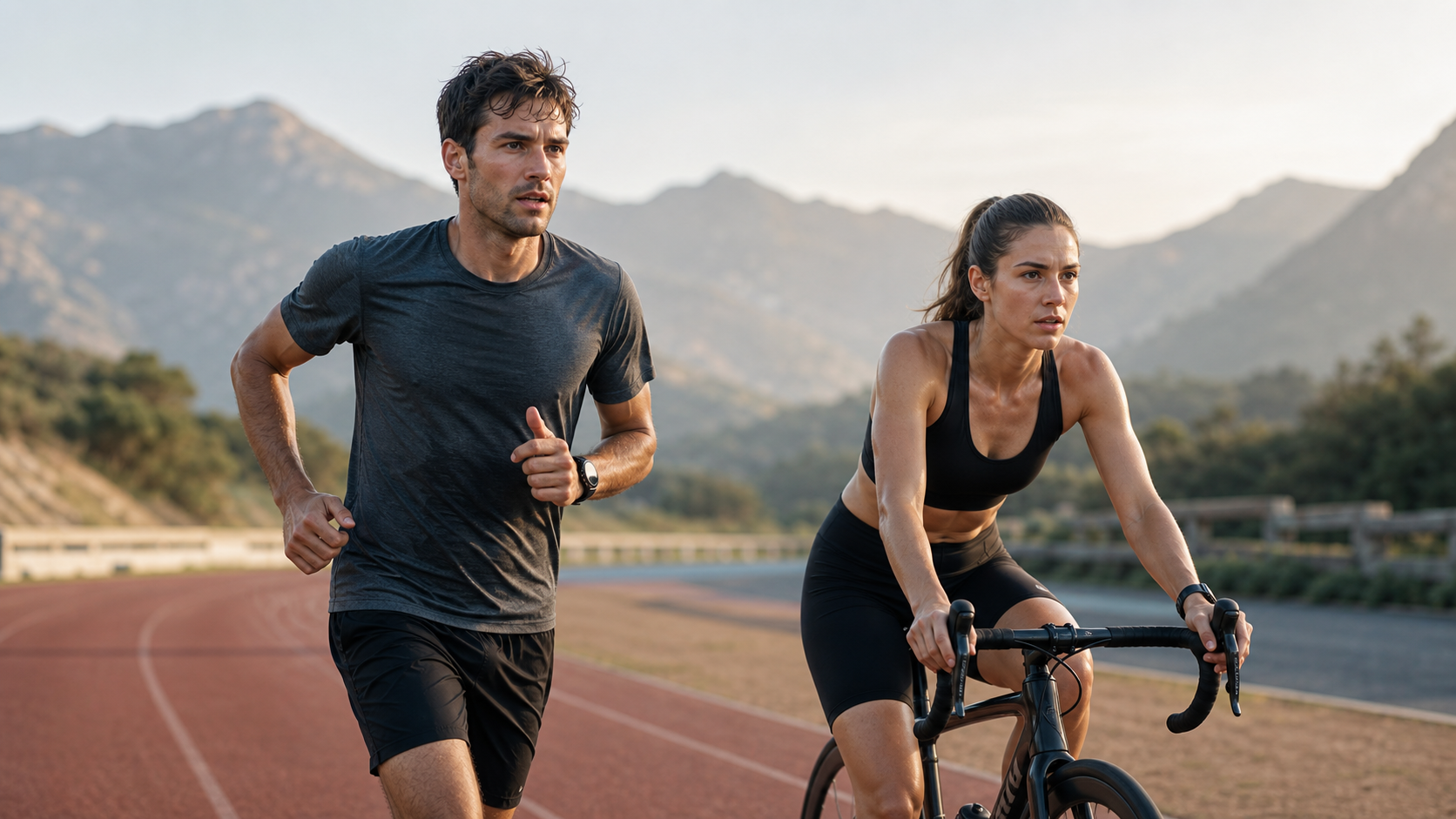
Starting with a Training Camp for a Married Couple
I once coached a fascinating married couple. The husband, A-Zhe, and wife, Xiao-Jie, signed up for my endurance training camp together. They cycled together, ran together, and even ate almost identically. Interestingly, during the physical re-test in the eighth week of camp, Xiao-Jie came to me with a question: “Coach, our training plans are almost identical, and I don’t think I’m trying any less than he is. Why is his power output and pace just that much faster than mine? Am I training wrong somewhere?”
In my fifteen years of teaching, I’ve been asked this question no fewer than a hundred times. Behind it lies a very important, yet often misunderstood topic—sex differences in athletic performance.
My initial answer to Xiao-Jie was this: “You’re not training wrong. Your rate of improvement is actually very similar; it’s just that your starting lines are different. Most of this gap is determined by physiology, and effort alone can’t completely erase it. But at the same time, there’s a portion you can narrow through smarter training.”
This article is my attempt to write out the full answer I gave Xiao-Jie that day, for everyone who shares her confusion. Whether you’re a female athlete trying to understand your body, a man wanting to better understand your partner’s training, or a coach leading a team, I hope that after reading this, you’ll have a more mature, less anxious understanding of “difference.” Because the purpose of understanding difference has never been to rank who’s superior, but to train every body more precisely.
Setting the Record Straight First: Differences are “Averages,” Not “Ceilings”
Before diving into physiology, I want to establish three principles. These three principles run through the entire article and are always covered in the first session of my training camp.
First, we’re talking about group averages, not individual limits. When I say “men have higher average oxygen-carrying capacity,” I mean a trend calculated from thousands of people. In reality, a well-trained female athlete’s VO2max can far exceed that of a sedentary male. Averages tell us about group trends but can never be used to predict you as an individual.
Second, the size of the difference varies by event. You’ll see shortly that the sex gap in sprinting, endurance, and ultramarathon running are completely different. This means “sex difference” isn’t a fixed number, but a set of numbers that fluctuate based on energy systems, duration, and environmental conditions.
Third, trainability is actually very similar between men and women. This is the point I want to emphasize most. Although the starting points differ, women’s “adaptive response” to training stimuli is very close to men’s—give the right stimulus, and the body will respond. So sex differences are absolutely not an excuse for “it’s useless for women to train.” Quite the opposite, it reminds us to invest training resources where they matter most.
Keep these three points in mind, and let’s look at where the body actually differs.
Physiological Basis One: Oxygen-Carrying Capacity (The Core of the Endurance Gap)
If I had to pick just one factor to explain the sex gap in endurance performance, I’d unhesitatingly choose oxygen-carrying capacity.
The essence of endurance sports is a competition of efficiency in “delivering oxygen to the muscles and burning fuel into energy within the muscles.” And in the “delivering oxygen to the muscles” part, men hold a significant average advantage, due to a chain of interconnected structural differences:
- Hemoglobin concentration: Men’s average hemoglobin concentration in the blood is about 10–15% higher than women’s. Hemoglobin is the protein in red blood cells responsible for carrying oxygen; the higher the concentration, the more oxygen the blood pumped with each heartbeat can carry.
- Total hemoglobin mass: Not just concentration—men also have higher total blood volume and total hemoglobin mass, meaning their entire “oxygen transport fleet” is larger.
- Heart size and stroke volume: Men generally have larger hearts, allowing them to pump more blood per contraction (higher stroke volume), delivering more oxygenated blood at the same heart rate.
- Lung volume: Men have larger average lung volumes, allowing them to process more air during ventilation.
Combined, these differences show up in the most direct indicator—VO2max. According to sports physiology literature, men’s body-weight-adjusted VO2max is on average higher than women’s, and this gap is decisive in endurance performance. Research also indicates that for every additional gram of total hemoglobin mass, absolute VO2max increases by roughly 4 ml/min, showing just how much the oxygen-carrying “hardware” matters for endurance.
I often use an analogy with my athletes: VO2max is like an engine’s maximum air intake. With the same technique and the same willpower, an engine with greater air intake simply holds up better during long-duration, high-intensity output. This is why when Xiao-Jie and A-Zhe climbed Wuling together, on that final stretch of high-altitude steep climbing, A-Zhe could sustain a power output that was simply a notch higher—that wasn’t a difference in willpower; it was a difference in oxygen transport hardware.
Is Women’s Oxygen-Carrying Capacity a Total Loss? No.
Here, I want to give female physiology its due credit. Women actually have an advantage in fuel utilization efficiency: multiple studies have observed that at the same relative intensity, women tend to use a higher proportion of fat for fuel, sparing precious glycogen. This becomes highly significant in ultra-long distances (ultramarathons, long-distance triathlons)—when races stretch into many hours and glycogen depletion becomes the deciding factor, women’s “fuel-efficient” metabolic profile actually narrows the sex gap considerably. This also aligns with observations in the literature: the sex gap in ultramarathons can drop to around 4%, far smaller than the roughly 10% gap in middle-distance running.
Physiological Basis Two: Muscle Mass and Strength (The Source of the Power and Sprint Gap)
If oxygen-carrying capacity dominates endurance, then muscle mass and strength dominate power and sprinting.
Men have higher average absolute muscle mass, with the difference especially pronounced in the upper body. This is primarily driven by hormones (more on this in the next section). The muscle mass difference leads to several direct consequences:
- Higher maximal strength and power output: Short-duration, high-intensity efforts (sprinting, jumping, attack surges) rely heavily on muscle cross-sectional area—this is the area where the average male advantage is greatest.
- Asymmetric upper/lower body differences: Many data sources indicate that the relative strength gap between men and women is smaller in the lower body than the upper body. This has practical training implications—women face a smaller relative disadvantage in lower-body-dominant events (like cycling pedaling, running push-off) than in purely upper-body events.
- Body fat percentage: Women have higher average body fat percentages, which is a natural reproductive physiological requirement, not a sign of being “not lean enough.” However, in events requiring overcoming body weight (climbing, jumping), higher body fat affects power-to-weight ratio.
This explains why the sex gap in sprint events is usually smaller than in middle- and long-distance events—wait, that sounds counterintuitive? Actually, the literature shows the sex gap in track sprinting is slightly smaller than in middle-distance events, for complex reasons (related to technique and explosive power ceilings). This reminds us that the causes of the gap are multifactorial and can’t be forced into a single variable.
My approach in coaching is: Don’t compare absolute numbers; look at relative progress. Xiao-Jie’s squat might never catch up to A-Zhe’s absolute weight, but her relative strength (strength divided by body weight) improvement curve runs almost parallel to his. A coach’s job is to help each person climb their own curve, not to force women to benchmark against men’s absolute values.
Physiological Basis Three: Hormones (The Thread Connecting the First Two)
The differences in oxygen-carrying capacity and muscle mass, when traced to their roots, largely come back to hormones.
Testosterone is the key player. It promotes muscle growth, enhances red blood cell production, and may also be linked to larger heart size. After puberty, testosterone rises dramatically in males—this is precisely why the performance gap between men and women only becomes pronounced after puberty. Before puberty, the performance difference between boys and girls is actually quite small. I think this is worth telling young athletes and their parents: it’s completely normal for elementary school girls to outrun boys. Don’t let being overtaken after puberty make you doubt yourself.
Estrogen and the menstrual cycle add another layer of complexity. Estrogen affects energy metabolism, thermoregulation, connective tissue elasticity, and more. In practice, many female athletes ask whether they should adjust training around their menstrual cycle. My stance has always been conservative and practical:
- Individual responses to the cycle vary enormously. Rather than applying some generic “periodized training plan” found online, it’s better to track your own data. I have female athletes keep a simple training log, recording daily energy, strength sensation, sleep, and perceived exertion for two to three consecutive months, to find their own patterns rather than applying averages.
- Don’t use your cycle as an excuse to stop training, but don’t push through either. If certain days feel particularly bad, swap that day’s high-intensity session for technique work or aerobic maintenance. Training is a long-term accumulation; one or two days won’t make or break you.
- If something abnormal appears—such as long-term menstrual irregularities, amenorrhea combined with recurring stress fractures—this could be a warning sign of energy deficiency (see the “Common Mistakes” section later), and you must seek medical attention. This is beyond a coach’s scope.
The hormone thread reminds us: sex differences aren’t static; they shift with age, life stage, and even the monthly cycle. Good training must account for this “dynamism.”
How Big Is the Performance Gap, Really? Let the Numbers Speak
The question athletes ask most is, “So how much difference is there, exactly?” I’ve put together a table showing the approximate range of the gap across different event types. Please note these are observed values from elite-level world records/top performances, and I’ve deliberately presented them as ranges—they are not guaranteed precise numbers for you or me.
| Event Type | Sex Performance Gap (Approximate Range) | Primary Determining Factors | Notes |
|---|---|---|---|
| Short Sprint | ~9–11% | Muscle mass, explosive power | Gap slightly smaller than middle-distance |
| Middle-Distance Running | ~11–12% | Mixed aerobic + anaerobic | Gap relatively pronounced |
| Long-Distance Running (Marathon) | ~10–12% | Primarily oxygen-carrying capacity | Smaller gap at world-record level |
| Ultramarathon / Ultra-Long Distance | Can be as low as ~4–6% | Fat metabolism efficiency, heat/pain tolerance | Where female advantages shine most |
| Swimming | ~6–10% | Buoyancy, body fat distribution also matter | Higher body fat provides buoyancy advantage |
Regarding the overall average, long-term observations in sports physiology literature show that since 1983, the gap between men’s and women’s world records has stabilized at around 10% (different studies give averages of about 10% to 12%, with running events around 10–11%). Recent analyses also indicate this gap is still slowly narrowing in the 21st century, because female athletes’ rate of improvement is slightly faster than males’ in many events—behind this largely reflects female sports’ training resources, participation base, and scientific sophistication catching up, not just physiology.
I want to emphasize this point specifically: part of the gap is not purely physiological; it’s caused by history and resources. Women’s competitive sports have received systematic resource investment for a much shorter time than men’s. Training science, nutritional support, and participation numbers are still growing. So when we see the gap narrowing, it’s both evidence of female physiological potential being more fully developed and a rebuttal to the fatalism that “the gap is entirely determined by birth.”
Practical Methods: Where Training Should Be the Same, Where It Should Differ
After all the science, let’s get to the most practical question: knowing there are differences, should training actually change?
My core answer is: The principles of training are the same for men and women, but the parameters and priorities need to be individualized. Let’s break this down.
What Should Be the Same
- Progressive overload: Regardless of sex, muscles and the cardiorespiratory system follow the iron rule of “give a stimulus slightly above what you’re used to → recover → adapt.” Women need to lift heavy and do intervals too. Don’t self-demote because of your sex.
- Training structure and periodization: The logic of base phase, build phase, taper, and recovery weeks applies to both men and women.
- Technique over intensity: Pedaling efficiency, running form, breathing rhythm—the return on investment for these technical aspects is equally high for both sexes. In fact, for those with weaker oxygen-carrying hardware, the marginal benefit of technical efficiency is even greater.
What Should Differ (Individualized)
| Aspect | Practical Adjustments for Female Athletes | Rationale |
|---|---|---|
| Upper-body strength | Don’t avoid it; schedule it more proactively | Relative gap is larger in the upper body, so there’s more room to improve |
| Iron nutrition | Pay more attention to iron intake and monitoring | Menstruation causes iron loss; deficiency directly impairs oxygen-carrying capacity |
| Calorie and energy availability | Ensure adequate intake, especially during high training volume | Women are at higher risk of low energy availability |
| Menstrual cycle | Use a log to find personal patterns; adjust flexibly | Individual variation exceeds group averages |
| Bone health | Resistance training + adequate calcium/vitamin D | Prevents stress fractures and long-term bone loss |
| Pacing strategy (ultra-long distance) | Can trust your pain tolerance and fuel efficiency more | Ultramarathon sex gap is small; female advantages are clear |
The one I most want to highlight from this table is iron. Due to regular iron loss from menstruation, female athletes have a significantly higher rate of iron deficiency (even iron-deficiency anemia) than males. And iron is the raw material for making hemoglobin—iron deficiency directly weakens your oxygen-carrying hardware, which is fatal for endurance athletes. For my female athletes in Taiwan who have long-term symptoms like “out of breath no matter how I train, slow recovery, pale complexion, tired just from climbing stairs,” I always recommend a blood test to check hemoglobin and ferritin. Taiwan’s National Health Insurance makes seeing a doctor easy, and a blood draw isn’t expensive—this investment is well worth it. But don’t self-supplement iron blindly—iron overdose is toxic. You must get tested and have a physician determine whether and how much to supplement.
A Sample Weekly Training Plan for a Female Endurance Athlete
Here’s a concrete reference framework. This is a prototype I designed for a female office-worker athlete who can train 6–8 hours per week and is preparing for a half marathon (the actual plan would be adjusted based on her test results and lifestyle):
| Day | Content | Focus |
|---|---|---|
| Monday | Rest / stretching & recovery | Recovery after weekend long run |
| Tuesday | Easy aerobic run 40–50 min (conversational pace) | Build aerobic base |
| Wednesday | Full-body resistance training (including upper body & core) 40 min | Strengthen relative weaknesses, protect bones |
| Thursday | Interval run: after warm-up, 5–6 x 3 min moderately hard + jog recovery | Raise aerobic ceiling |
| Friday | Rest or easy cross-training on bike | Active recovery, reduce impact |
| Saturday | Tempo run 25–35 min (slightly pressured but sustainable) | Lactate threshold |
| Sunday | Long slow run, increasing duration weekly | Endurance and fat-burning metabolism |
Please note: this plan does not cut resistance training or intervals because of sex; in fact, it explicitly includes resistance (especially upper body). Individualization does not mean downgrading—this is the concept I most want to convey.
Common Mistakes and Corrections (Female Athletes, Please Read This Section Carefully)
In fifteen years of coaching, I’ve seen too many examples of people going down wrong paths because of “misunderstanding sex differences.” Here’s a comparison table:
| Common Mistake | Why It’s Harmful | Correct Approach |
|---|---|---|
| Women afraid to lift heavy, fearing “getting bulky” | Women have low testosterone; normal training makes it extremely difficult to build a bodybuilder physique. They miss out on strength and bone-protection benefits | Embrace resistance training; pursue strength and tone |
| Using “skipping meals” to control weight | Falls into low energy availability, harming hormones, bones, immunity | Eat enough before training; manage weight through total intake and quality, not starvation |
| Ignoring iron, pushing through chronic fatigue | Iron deficiency directly destroys oxygen-carrying capacity; no amount of training will improve it | Get regular blood tests; have a physician evaluate whether to supplement iron |
| Self-negation by comparing to male absolute numbers | Starting lines are different; this only builds frustration | Track your own relative progress curve |
| Pushing through high-intensity sessions during menstrual discomfort | Increases injury risk, impairs recovery | Adjust flexibly; swap high intensity for technique or aerobic maintenance |
| Men thinking “more volume equals winning” and over-stacking | Ignores recovery, risks overtraining | Men also need to prioritize tapering and sleep |
Here, I want to speak with some gravity about the Female Athlete Triad / Relative Energy Deficiency (understand it as: the vicious cycle of eating too little + hormonal disruption + bone loss). In the endurance world, where leanness and performance are pursued, this is a severely underestimated health risk. Early warning signs include: menstrual irregularities or amenorrhea, unexplained fatigue and performance plateaus, and recurring stress fractures. If you or an athlete you coach shows these signs, this cannot be fixed by adjusting a training plan—please seek professional evaluation from a physician, gynecologist, and nutritionist. I’m putting this here because I’ve genuinely seen cases where ignoring it ended athletic careers and even harmed long-term health.
The Taiwan Context: Climate, Eating Out, and Healthcare
Let’s bring the principles above into the reality of living in Taiwan, with a few very practical reminders.
Climate (hot and humid): Taiwan’s summers are hot and humid, which is a burden for both sexes. But it’s worth noting that sex differences in thermoregulation become more pronounced under extreme conditions. Practical advice is simple: move high-intensity sessions to early morning or evening in summer, proactively hydrate and replace electrolytes, and don’t push through when you feel overheated. This is especially important for female athletes preparing for races in summer, because heat and humidity amplify fatigue and disrupt recovery.
Eating out and nutrition: Eating out is convenient in Taiwan, but the two most common pitfalls for female athletes are “insufficient protein” and “poor iron absorption.” Practical tips:
- Actively add a clear protein source to every meal (a serving of meat, fish, eggs, or soy products). Don’t let a bento box become a large box of rice with a few vegetables.
- For iron, red meat, dark leafy greens, and legumes are common sources. Pair them with vitamin C-rich foods (like guava or citrus) to aid absorption. Separate tea and coffee from main meals to avoid interfering with iron absorption.
- Don’t be afraid of carbohydrates during high training volume. Glycogen is your fuel, and women especially should not go hungry during high-volume periods.
Healthcare environment: Taiwan’s National Health Insurance has a low barrier to access—this is our advantage. For iron deficiency, anemia, menstrual irregularities, or suspected energy deficiency, blood tests and outpatient consultations are relatively accessible. My consistent stance is: when your body sends abnormal signals, get tested and consult a professional early—it’s better than scaring yourself online or randomly supplementing nutrients. Especially for issues involving menstruation, bone health, or suspected anemia, coaches and internet information cannot replace a physician’s individual judgment.
Actionable Advice for Readers at Different Levels
Finally, let me condense the entire article into an actionable checklist. Find your level and follow along.
If You’re a Beginner Female Athlete
- Don’t self-demote: Resistance training and intervals are for you too. Don’t automatically drop to the “easy version” because of your sex.
- Build the habit first, then talk intensity: Three months of consistent training is worth a hundred times more than one week of intense training followed by quitting.
- Eat enough, sleep enough: At this stage, your biggest enemy isn’t training too little; it’s recovering too poorly.
- Keep a simple log: Track energy, strength sensation, and sleep. Start getting to know “your own body.”
If You’re an Advanced Female Athlete
- Make iron and energy availability routine monitoring: Get regular blood tests and ensure adequate intake. This is the ceiling on whether you can keep breaking through.
- Add extra work on relative weaknesses: For most women, upper body and core are relatively untapped areas.
- Fine-tune using your own cycle patterns, rather than applying online templates.
- Be more confident in ultra-long distances: That’s the stage where your fuel efficiency and pain tolerance shine brightest.
If You’re a Male Athlete or Someone Who Wants to Understand Their Partner
- Don’t use your absolute numbers as the standard to demand of her—look at relative progress.
- Understand the weight of iron, energy, and hormones in women’s training: These are variables you might not think about, but they’re crucial for her.
- Don’t be superstitious about “more volume wins” yourself: Recovery, sleep, and tapering matter just as much for you.
If You’re a Coach
- Shared principles, individualized parameters: Write these eight characters into your coaching philosophy.
- Make health monitoring (iron, energy, menstruation, bone density) part of routine conversations with female athletes—don’t wait until something goes wrong.
- Create an environment where female athletes feel comfortable discussing their bodies: Many problems become big problems because people are too embarrassed to speak up.
In-Depth Case Studies: What Three Female Athletes Taught Me
After all the theory, I want to use three real scenarios (details adjusted to protect privacy, but the situations and handling logic are real) to show you how “individualization” actually plays out.
Case One: Ya-Han, Who Trained Hard but Kept Hitting a Plateau
Ya-Han was a female runner with three years of experience, stuck at a 4:30 marathon. Her training volume was actually substantial—her weekly mileage was even higher than the men in her group—but she just got more and more tired with stagnant results. When she came to me, her first words were, “Coach, am I just not born to run?”
I didn’t change her training plan first. I asked her to get a blood test. The results showed low ferritin and hemoglobin at the lower edge of normal. This was a classic case of iron deficiency in a female endurance athlete—heavy running training (especially the repeated foot-strike impact that accelerates red blood cell destruction) combined with menstrual losses had left her oxygen-carrying hardware in a chronic deficit. She wasn’t not born to run; her engine had been running without oxygen.
The approach: first, physician evaluation, iron supplementation under medical guidance, and dietary adjustments. At the same time, I cut her training volume by 20% and added recovery. Three months later, her ferritin had rebounded, and she said herself, “Running at the same pace doesn’t feel as breathless anymore.” That season, she broke 4 hours in the marathon.
The lesson from this case: When a female athlete “can’t improve no matter how she trains,” my first suspicion is often not the training plan, but whether the raw materials for oxygen-carrying capacity are sufficient. This is the blind spot male coaches most easily overlook.
Case Two: Yi-Jing, Who Avoided Weights for Fear of Getting Bulky
Yi-Jing was a triathlon enthusiast—decent at swimming, running, and cycling—but she tended to fade on climbs and in the later stages of races. Looking at her training records, I noticed she had almost no resistance training—because she was afraid that “lifting weights would make my legs bulky and ruin my physique.”
This is one of the most common myths in the Chinese-speaking female sports community. I spent considerable time explaining to her: women’s testosterone levels are only a fraction of men’s, and normal resistance training makes it nearly impossible to build a bodybuilder’s physique. On the contrary, appropriate strength training improves pedaling power, running economy, and protects joints and bones.
I scheduled two strength sessions per week for her, focusing on lower-body compound movements. Six months later, her climbing power had noticeably improved, her late-race fading problem was largely resolved, and—her legs didn’t get bulky at all. If anything, they looked more toned.
The lesson from this case: For female athletes, strength training is often “the greatest treasure delayed by fear.” Individualization isn’t about making women’s training plans easier; it’s about filling in what needs to be filled.
Case Three: Xiao-Qi, Who Nearly Got Hurt Chasing Leanness
Xiao-Qi is the case I least want to revisit, but the one I most must tell. She was a gifted young runner who, to chase performance, pushed her body weight very low and strictly controlled her diet. At first, her results did improve. But a few months later, her period stopped, her performance began to collapse, and she suffered a stress fracture during a training session.
This is the textbook case of Relative Energy Deficiency (eating too little → hormonal disruption → bone loss) I mentioned earlier. She had taken “lighter equals faster” as gospel, not realizing that when energy intake is chronically insufficient, the body shuts down functions it deems “non-essential”—her period stopped, her bones became brittle. These were her body’s distress signals.
I immediately had her stop the weight loss, referred her to sports medicine and a nutritionist, and it took a considerable amount of time to slowly repair her body. She later told me, “I thought I was chasing my peak, but I was actually dismantling my own foundation.”
The lesson from this case: I’m including it here hoping that every female athlete chasing performance, and every coach working with female athletes, treats “eating enough” with the same importance as “training enough.” Leanness has its value, but performance bought with health is like borrowing from a loan shark—eventually, you have to pay it back. I say this in every training camp.
Special Chapter on Strength Training: The Most Underrated Piece of the Puzzle for Women
Because so many female athletes have suffered from the “fear tax” when it comes to strength training, I want to dedicate a section to clarifying this.
First, let’s bust the myth: women doing resistance training will not easily get bulky. The reason is simple—muscle hypertrophy is highly dependent on testosterone, and women’s testosterone levels are naturally far lower than men’s. With normal strength training, what women primarily gain is “improved neural recruitment efficiency” and “increased relative strength”—becoming stronger and more toned, not dramatically bigger. To actually build a bodybuilder’s physique requires effort, diet, and even pharmacological intervention far beyond ordinary training.
So what are the benefits of strength training for female athletic performance?
- Improved movement economy: Stronger muscles use less energy at the same pace, effectively raising your endurance capacity.
- Joint protection and injury risk reduction: Strong muscles are armor for joints—insurance for a runner’s knees and a cyclist’s lower back.
- Bone protection: Resistance training is one of the most effective ways to stimulate bone formation, which is hugely significant for women’s long-term bone health (especially post-menopause).
- Improved body composition: Increasing muscle mass raises basal metabolic rate, which is a fundamental solution for those wanting to manage their physique.
My strength training principles for female endurance athletes are simple:
| Principle | Specific Practice |
|---|---|
| Focus on compound movements | Squats, deadlifts, lunges, rows, presses—multi-joint movements with the highest payoff |
| Dare to use challenging weights | Don’t just grab pink dumbbells for endless reps; appropriately heavy, low-rep work is what builds strength |
| Don’t neglect upper body and core | These are relative weaknesses for women, with the most room for improvement |
| 2 sessions per week, separated from endurance sessions | Don’t stack high-intensity strength and high-intensity endurance on the same day; it impairs recovery |
| Movement quality over weight | Especially for deadlifts; better to go lighter and get the form right |
If you’re a woman who has never touched weight training, I strongly recommend finding a qualified coach for a few sessions to learn the basics of squats and deadlifts correctly. Taiwan’s fitness environment is mature now, and finding a good coach isn’t hard. This investment will save you from a lot of injuries and detours.
Frequently Asked Questions (FAQ)
Over the years, a few questions have come up so often I could recite them from memory. Here they are, all in one place.
Q1: Can women exercise during their period? Is it harmful?
A: For the vast majority, exercising normally during your period is completely fine. In fact, regular exercise can help alleviate menstrual discomfort. The key is to “listen to your body”—if a particular day feels really bad, downgrade the high-intensity session to easy aerobic work or rest. No need to push through, and no need to stop entirely. If your menstrual pain is severe enough to affect daily life, that’s a separate issue that warrants seeing a doctor—don’t just silently endure it.
Q2: Should I actually follow a “menstrual cycle training plan”?
A: My stance is conservative. The scientific evidence on this is still developing, and individual variation is enormous. Rather than applying a generic template, I recommend tracking your own data, finding your patterns, and adjusting from there. For most recreational athletes, nailing the fundamentals of training and recovery matters far more than finely tuning around your cycle.
Q3: Are women inherently unsuited to explosive, strength-based sports?
A: No. Women have lower average absolute strength, but that doesn’t mean “unsuited.” There are outstanding female athletes in weightlifting, sprinting, and track cycling. Suitability is a question of interest and talent, not something sex can determine. Don’t let stereotypes close any doors for you.
Q4: Can women pursue athletic performance after menopause?
A: Absolutely, and they should be even more active. After menopause, declining estrogen accelerates bone and muscle loss. At this point, regular resistance training and endurance exercise aren’t just for performance—they’re for health and quality of life. Many people only start exercising in middle age and still train impressively. If you have chronic conditions (like hypertension, heart disease, diabetes, etc.), please consult a physician before starting a new exercise program for an individualized assessment.
Q5: What can male readers take away from this article?
A: Two things. First, don’t use your absolute numbers to measure—or worse, belittle—the female athletes around you. Second, many of the principles here (valuing recovery, not being superstitious about volume, the value of strength training) apply to you just as much. Understanding difference ultimately benefits both sexes.
Conclusion: Understanding Difference Is About Treating Every Body More Fairly
Let’s return to Xiao-Jie’s question from the beginning. On the last day of camp, her half-marathon finish time had improved by nearly ten minutes from when she signed up, and the sense of accomplishment on her face was even brighter than A-Zhe’s. She later told me her biggest takeaway wasn’t those ten minutes, but “finally stopping comparing myself to my husband’s numbers, and instead comparing myself to who I was before.”
That’s exactly the intention behind this article. Sex differences in athletic performance are a real physiological fact—oxygen-carrying capacity, muscle mass, hormones—these differences, on average, do separate men’s and women’s world records by about 10%. But this fact should never become a reason for anyone to limit themselves, nor should it be used to deny the value of women’s sports. Difference reminds us: every body has its strengths and its needs. Good training is about helping each person travel far and healthy along their own curve.
Understanding difference has never been about ranking who’s superior, but about treating every body more precisely and more fairly. That’s the sentence I most want to leave you with from fifteen years of teaching.
This article is educational content and cannot replace individual diagnosis and treatment advice from a physician, physical therapist, or nutritionist. If you have menstrual abnormalities, suspected anemia, stress fractures, energy deficiency, or any health concerns, please seek professional medical evaluation. Do not self-diagnose or self-supplement nutrients.
References
- Sex Differences in VO2max and the Impact on Endurance-Exercise Performance (PMC): https://pmc.ncbi.nlm.nih.gov/articles/PMC9105160/
- Sex Differences in Maximal Oxygen Uptake Adjusted for Skeletal Muscle Mass in Amateur Endurance Athletes (PMC): https://pmc.ncbi.nlm.nih.gov/articles/PMC10218102/
- Expanding the Gap: An Updated Look Into Sex Differences in Running Performance (Frontiers in Physiology / PMC): https://pmc.ncbi.nlm.nih.gov/articles/PMC8764368/
Related Reading
- Training Physiology Differences Between Women and Men: Beyond Body Size, Concepts of Metabolism and Hormonal Cycles
- Different Strokes for Different Folks: Sex Differences in Endurance Training and Scientific Responses
- The Real Physiological Differences in Female and Male Endurance: From Substrate Utilization to Thermoregulation, What the Evidence Can and Cannot Say
- Physiological Characteristics of Female Ultramarathon Runners: Research on the Gap Narrowing with Distance
西進武嶺 免費訓練分析服務 Intervals | 練不夠還是練過頭?你哪一種類型選手?AI模型告訴你! | 備戰神器 | 公路車 訓練 | CT Yeh
4 年前
崇越盃武嶺冠軍高手 賽前JJSC 群峰會精華!對應大數據分析,會有落差嗎?/ feat. JJSC中部公路車約騎 /公路車 / CT Yeh
2 年前
CT Talk) 數據面窺看 武嶺大神們 平時的備戰 共通點 (娛樂性質XD)
7 年前
[教學] Premiere 影片 手震 修正 教學 防抖 單眼 影像 GoPro 穩定 Video Stabilization
8 年前
CT 喇低賽) 單車 比賽總是沒照片? 攝影師的觀點大公開 姿勢就是力量! 請加速1.25倍收看
7 年前
#公路車 #Vo2Max #最大攝氧量 測驗 體驗 | 心肺測試
6 年前
一日北高/長距離團騎 常見問題補充篇 / 組團或跟團的眉角 / 壯車友容易被瘦車友慢性拉爆 / 原來屁股痛可能是這個原因...? / 風場配速法 / 公路車 / CT Yeh
2 年前
FTL 與 SYB 車隊專訪 西進武嶺 實用攻略分享! 2小時 如何練?!你不知道的眉角!新手準備武嶺必看 EP1 | 實力派女車友 | 精華版 | 公路車 | CTYeh
4 年前