The Science of Power Training: From Cycling to Running Power, Advantages, Controversies, and Application Boundaries
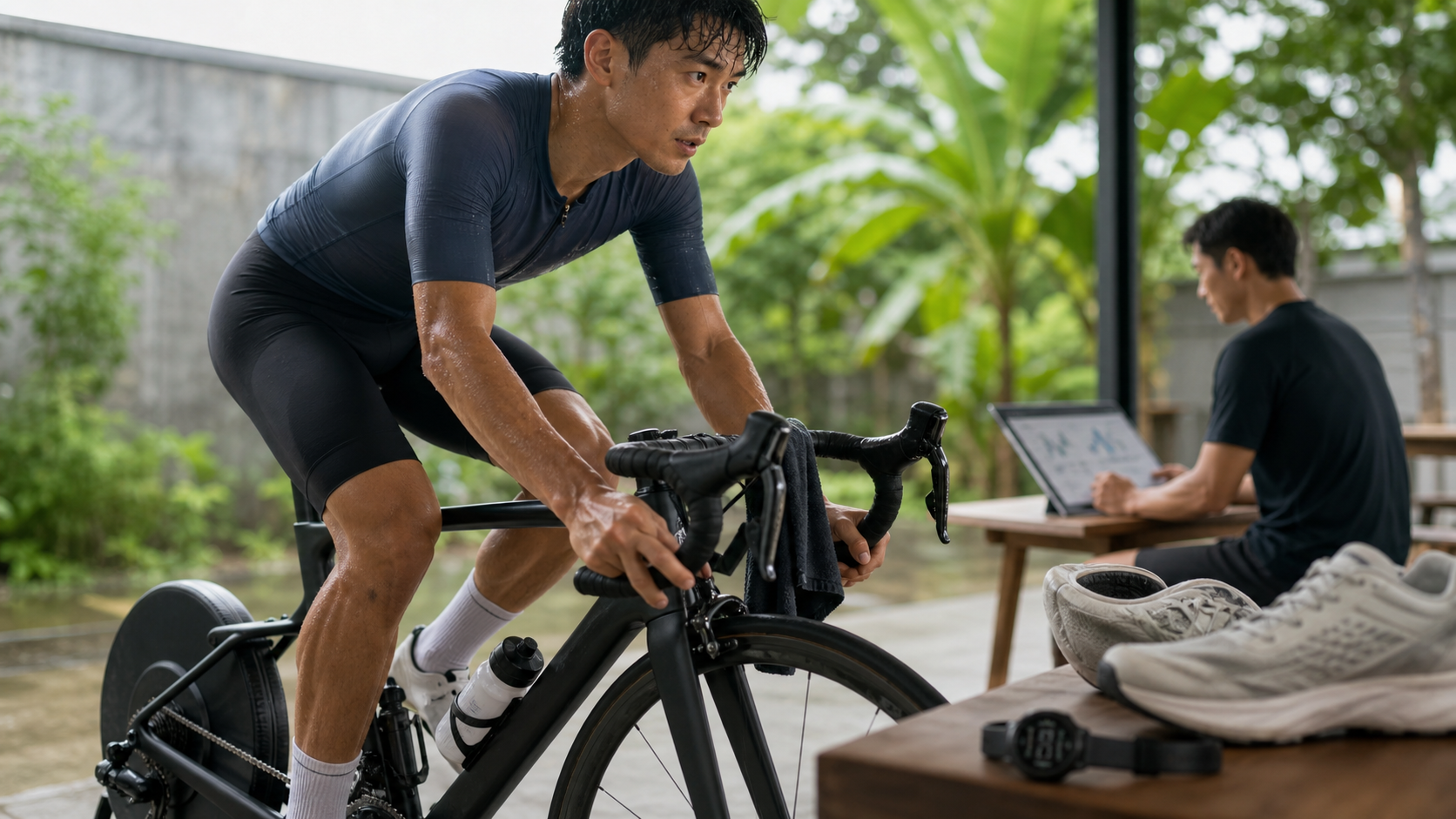
Opening: The Power Meter My Athlete Kept Complaining Was Too Expensive
I still remember about twelve years ago, an athlete who had been training with me long-term—let’s call him A-Zhe—installed his newly purchased power meter, and within the first week, he angrily messaged me: “Coach, this thing is lying to me. I clearly felt like I was riding incredibly hard today, but the numbers are lower than last week.”
I only replied with one sentence: “Congratulations, this is the first time you’ve seen your true self.”
That statement sounds a bit cryptic, but it almost perfectly encapsulates my core insight from fifteen years of coaching athletes at various levels and general fitness populations on “power training.” Heart rate can deceive you, feel can deceive you, and speed can be fooled by wind, hills, and road surface—but power is the mechanical output you’re actually putting into the pedals at that moment. It doesn’t care if you slept poorly last night, whether you’ve had your coffee, or what kind of mood you’re in—you push how many watts, and it records how many watts. This almost cold-blooded honesty is precisely why it has become the gold standard for modern endurance training.
Over the years, power meters have gone from a luxury toy costing tens of thousands of dollars that only pro teams could afford, to standard equipment that everyday cyclists consider when getting started. More interestingly, this trend of “training with power” has also blown into the running world in recent years. Running power meters have started appearing on many runners’ shoes and watches. But is running power really all that it’s made out to be? Is it the same thing as cycling power? This is exactly what I want to lay out clearly for you in this long-form article.
This article will be on the longer side because this topic deserves to be explored thoroughly. I’ll start with the concepts and physiological foundations, introduce you to the difference between FTP and Critical Power (CP), then honestly confront the controversies and limits that still exist with running power, and finally give you—whether you’re a beginner just getting a power meter or a seasoned athlete looking to go further—a set of practical approaches that actually work in Taiwan’s humid, hot climate, common terrain, and lifestyle.
1. Why Power? First, Understand “Training Metrics”
The Three Questions a Training Metric Must Answer
Any good training metric is essentially helping you answer three questions:
- How hard am I working right now? (Intensity monitoring)
- Have I actually improved? (Longitudinal tracking)
- How should I plan my next session? (Prescription basis)
Over the past two decades, endurance athletes have primarily relied on three things to answer these questions: perceived exertion (RPE), heart rate, and speed/pacing. Each has its uses, but each also has its pitfalls.
The Inherent Flaws of Three Traditional Metrics
Let’s start with heart rate. Heart rate is the body’s “response” to intensity, not the intensity itself. Between the two lies a layer of physiological delay and various interferences: hotter weather, slight dehydration, poor sleep the night before, caffeine, emotional stress—all of these can push your heart rate upward as a whole. This is called cardiac drift. On a summer afternoon riding Beiyi Highway or Yangmingshan in Taiwan, at the same pedaling intensity, your heart rate might inexplicably run 10 to 15 bpm higher in the latter half—not because you’re working harder, but because your body is desperately trying to dissipate heat. If you naively back off based on heart rate, you’re wasting a perfectly good session.
Next, speed/pacing. Speed is a “result,” and results are contaminated by too many external factors. Headwinds, climbs, rolling resistance, tire pressure—all of these make “the same effort” produce completely different speeds. Cruising at 38 km/h with a tailwind along the riverside and grinding out 24 km/h against the northeast monsoon could be the exact same physiological load, yet the speed numbers are worlds apart.
Finally, perceived exertion (RPE). RPE is actually a precious ability; experienced athletes’ feel can be startlingly accurate. But its problem is that it “can’t be recorded, can’t be compared, and can be carried away by emotions,” and beginners’ feel usually isn’t calibrated yet.
Power’s Three Key Advantages
What makes power special is that it directly measures the mechanical work you input into the system, in watts (W). It has three advantages that other metrics struggle to combine:
- Immediacy: The moment you push down, the wattage appears—no heart-rate-style delay. During intervals, this is invaluable—you can lock intensity into the target zone within two seconds of starting.
- Immunity to environmental contamination: Heat, wind, hills, dehydration—none of these change the fact that “200 watts is 200 watts.” It cleanly separates “effort” from “result.”
- Precisely quantifiable training load: Because it’s an objective number, we can calculate training stress, track fatigue accumulation, and plan periodization.
A-Zhe eventually understood completely. That day he felt he was “riding incredibly hard” but power was low was actually because he hadn’t slept well the night before and had a hint of a cold coming on—his body simply couldn’t produce his usual wattage. It was his feel that was deceiving him; power exposed the illusion. This is the most fascinating and most brutal thing about power.
2. The Scientific Foundation: FTP, Critical Power, and the Power-Duration Curve
The Starting Point: The Longer You Hold Power, the Lower the Number
Here’s an intuitive but important fact: the power you can sustain is inversely related to how long you need to sustain it. You can explode at 800 watts for five seconds, but if you need to hold it for an hour, you might only manage 220 watts. Plotting the “maximum average power” corresponding to different “durations” gives you what’s called the power-duration curve. This curve is almost a physiological fingerprint for every athlete.
A large part of sports science over the past few decades has been about figuring out “how to describe this curve concisely with one or two numbers” so we can set training zones and predict performance. Currently, there are two mainstream approaches: FTP and Critical Power (CP).
FTP: Functional Threshold Power
FTP (Functional Threshold Power) is typically defined as the highest average power you can sustain for approximately one hour. Because actually doing a one-hour test is too painful, in practice it’s commonly estimated using a 20-minute all-out test and taking 95%.
FTP’s biggest advantage is that it’s simple, intuitive, and practical. It helps you divide training into several common zones—Recovery, Endurance, Tempo, Sweet Spot, Threshold, VO2max, Anaerobic—and it serves as a common language for coaches prescribing sessions and cyclists chatting. For the vast majority of general fitness populations, FTP is sufficient and has a low barrier to entry.
Critical Power (CP): A More Physiologically Grounded Model
Critical Power (CP) is a concept more deeply rooted in exercise physiology. It’s the mathematical asymptote of the power-duration curve—that is, the theoretical upper limit of power you can sustain “almost indefinitely without continuously accumulating fatigue,” practically interpreted as the boundary between the “heavy” and “severe” exercise domains.
The CP model also adds a highly valuable parameter called W′ (pronounced “W prime”), which you can think of as a finite energy battery above your threshold. When you exert power above CP, you’re draining this battery; when it’s empty, you can’t hold on anymore. This dual-parameter “CP + W′” model can simultaneously describe your aerobic engine (CP) and anaerobic capacity (W′), making it more accurate at predicting performance for specific durations. According to BikeRadar’s overview and related research discussions, CP is particularly helpful for distinguishing between riders with “aerobic” versus “anaerobic” characteristics, because it separates the two capacities.
How to Choose Between Them? My Practical Advice
The table below is what I lay out when explaining the differences to my athletes:
| Aspect | FTP (Functional Threshold Power) | Critical Power CP (+ W′) |
|---|---|---|
| Essence | Highest power sustainable for ~1 hour (commonly estimated via 20-min × 95%) | Mathematical asymptote of the power-duration curve |
| Testing method | Single 20-minute test is more common | Requires 2–3 all-out efforts of different durations (e.g., 3 min, 12 min) for curve fitting |
| Additional information | A single number | Adds W′, which describes anaerobic capacity |
| Advantages | Simple, intuitive, easy to communicate | More physiologically grounded, more accurate at predicting performance for specific durations |
| Disadvantages | Can be inaccurate for riders with highly distinct characteristics | More cumbersome testing, requires software fitting |
| Suitable for | General cyclists, beginner to advanced | Data enthusiasts, competitive athletes, coaches |
My practical advice: Start with FTP to build your foundation and establish training habits. Once you’ve been training for six months to a year and start wanting to “fine-tune,” then introduce CP and W′. For ninety percent of the general fitness population, getting FTP measured accurately, setting zones correctly, and executing the plan properly matters far more than agonizing over which model to use. No matter how refined the tool, execution is the true dividing line.
3. Running Power: A Controversy We Must Honestly Face
Having covered the beauty of cycling power, I need to turn the conversation to something often obscured by marketing hype: running power and cycling power are not actually the same thing.
Cycling Power vs. Running Power: Fundamentally Different Measurement
Cycling power measurement is direct physical measurement. The power meter is mounted on the crank, pedal, or hub, and directly measures “force × angular velocity.” This is solid mechanical work with a clear physical definition and verifiable standards. How much torque you apply and how fast you spin, multiplied together, gives you power—no tricks.
Running is more complicated. When running, you don’t have a rotating axis like a crank where torque can be directly measured. Running power meters on the market (such as Stryd mounted on the shoe, or watch/chest-strap-derived solutions) actually use accelerometers, inertial sensors, and other data to “estimate” a number called ‘power’ through the manufacturer’s proprietary algorithms.
This difference is crucial: cycling power is “measured,” while running power is largely “calculated and model-estimated.”
What Does Science Say? The Honest Version
I need to be very careful here and only state what’s actually supported by the literature. Based on a study published in the journal Sports examining Stryd’s measurement validity at submaximal speeds, and subsequent validity studies under different conditions, several key points can be summarized:
- The “power” estimated by running power meters shows a strong positive correlation with oxygen uptake and external mechanical work—that is, it “correlates reasonably well” with physiological load and has value as a relative indicator of training intensity.
- However, it tends to underestimate absolute power values, and its accuracy under different conditions (such as uphill running) remains unclear. A recent study on incline running also notes that whether Stryd can accurately monitor training intensity during uphill running has yet to be conclusively determined.
- A structural problem is that the estimation algorithm is a proprietary black box, and combined with the lack of a “gold standard” device for measuring external mechanical work in running, it makes comprehensive, independent validation by the academic community very difficult.
So, Can Running Power Be Used at All?
My stance is this: Yes, it can be used—but you need to clearly understand what you’re using.
If you understand running power as “a relative intensity metric that responds quickly to intensity changes and is relatively unaffected by grade and wind,” then it’s extremely useful—especially for locking in effort during hill repeats and intervals, where it’s far more stable than pace. When you’re running hills on Yangmingshan, pace will fluctuate wildly with the grade, but power gives you a relatively consistent reference for effort.
But if you treat it as “an absolute physical quantity that can be directly compared across brands and individuals,” or compare brand A’s wattage against brand B’s, that’s misuse. Running power numbers are only most reliable for longitudinal comparison on the same device and the same person.
The table below lays out the differences:
| Aspect | Cycling Power | Running Power |
|---|---|---|
| Measurement essence | Direct measurement (force × angular velocity) | Sensor data + proprietary algorithm estimation |
| Physical definition | Clear, verifiable | Defined by manufacturer models, lacks accepted gold standard |
| Cross-brand comparability | Relatively high (has physical benchmark) | Low; numbers should not be compared across devices |
| Correlation with physiological load | High | Correlates reasonably well, but tends to underestimate absolute values |
| Best use | Absolute intensity prescription, cross-device tracking | Relative intensity metric on the same device, hill repeats and intervals |
| Known limits | Calibration error, left-right leg balance | Uphill accuracy undetermined, algorithm black box |
To summarize the correct mindset for running power in one sentence: treat it as “a smarter, more interference-resistant aid to perceived exertion,” not “an absolutely precise physical ruler.” That way, you won’t be led astray by marketing hype, and you’ll genuinely benefit from its strengths.
4. Practical Methods: How to Use Power to Plan Training (Including Specific Workouts)
Now that the concepts are covered, here’s something you can directly copy and apply. The following uses cycling power as the main demonstration (running power can be applied similarly using the “relative intensity” concept, but remember absolute values only compare to yourself).
Step 1: Measure Your FTP
The most common method with the least burden on the average person is the 20-minute test: after a thorough warm-up, find a stretch of road without traffic light interruptions (riverside paths or a trainer are ideal), ride at a steady all-out effort for 20 minutes, and take 95% of the average power from those 20 minutes as your FTP.
For example: suppose an athlete weighing 68 kg has a 20-minute average power of 240 watts. Their FTP would be approximately 240 × 0.95 ≈ 228 watts, giving a power-to-weight ratio of about 3.35 W/kg. With this number, all zones can be derived.
Step 2: Set Your Power Zones
Below is the common seven-zone power model (expressed as a percentage of FTP), which serves as the underlying framework for my training plans:
| Zone | Name | % of FTP | Feel | Primary Training Purpose |
|---|---|---|---|---|
| Z1 | Recovery | < 55% | Very easy, can chat | Active recovery, lactate clearance |
| Z2 | Endurance | 56–75% | Easy, can breathe through nose | Aerobic base, fat metabolism |
| Z3 | Tempo | 76–90% | Somewhat breathless but controllable | Aerobic endurance, muscular endurance |
| Z4 | Threshold | 91–105% | Very breathless, can’t speak full sentences | Raise FTP, lactate tolerance |
| Z5 | VO2max | 106–120% | Extremely breathless, blows up in minutes | Maximal oxygen uptake |
| Z6 | Anaerobic | 121–150% | Legs burning, counted in seconds | Anaerobic capacity, W′ |
| Z7 | Sprint | > 150% | All-out explosive effort | Neuromuscular, peak power |
Step 3: Turn Zones into Workouts
Having zones alone is useless; you need to turn them into a weekly executable plan. Using an advanced cyclist with a base who can train 3–4 times per week as an example, a typical “raise FTP” week could look like this:
| Day | Workout | Primary Zone | Duration |
|---|---|---|---|
| Monday | Complete rest or easy walk | — | — |
| Tuesday | Sweet Spot Intervals: 3 × 12 min @ 88–93% FTP, 5 min rest between | Z3–Z4 | 75 min |
| Wednesday | Easy recovery ride | Z1–Z2 | 45 min |
| Thursday | Threshold Intervals: 4 × 8 min @ 95–105% FTP, 4 min rest | Z4 | 75 min |
| Friday | Rest | — | — |
| Saturday | Long endurance ride (can include a climb) | Z2, with some Z3 | 2.5–3 hours |
| Sunday | VO2max Intervals: 5 × 3 min @ 110–118%, 3 min rest | Z5 | 60 min |
This table isn’t meant for you to copy verbatim—everyone’s recovery capacity, life schedule, and race goals differ—but it gives you the concept of “intensity distribution”: lots of easy (Z1–Z2) + a small amount of precise high intensity (Z4 and above), with moderate intensity (Z3) in moderation. This is the “polarized/pyramidal” distribution logic that the endurance training world talks about ad nauseam but genuinely works.
Taiwan-Specific Execution Reminders
- Schedule high-intensity sessions in the morning or evening during summer: Taiwan’s summer midday heat and humidity push perceived temperatures to 35°C or higher. Doing VO2max intervals at noon not only hurts performance but also raises heatstroke risk. Power is especially useful here—even if your heart rate is elevated from the heat, you can still lock in true intensity with power.
- The trainer is a Taiwanese cyclist’s best friend: During the plum rain season, typhoon season, and northeast monsoon season, an indoor trainer paired with a power meter keeps your plan from being interrupted by weather, completely eliminates wind and traffic light interference, and gives you the cleanest data.
- Climbs are natural power venues: Long climbs like Beiyi Highway, Yangmingshan, and Wuling are excellent venues for steady threshold power output, unlike flat roads where tailwinds and headwinds disrupt things.
Step 4: Use Power to Quantify Training Load and Nutrition
One of power’s most underrated values is that it turns “how hard was this session really” into a number that can be summed. Because every second of wattage is recorded, we can estimate a session’s training stress—the higher the intensity and the longer the duration, the greater the accumulated stress. You don’t need to memorize complex formulas; just understand one principle: training stress should be like savings—accumulated steadily, with regular opportunities for recovery to digest it, rather than one massive spike followed by three days of collapse. I often remind my athletes that two or three consecutive weeks of soaring stress without a scheduled deload week is the most common path to injury or overtraining.
Power also makes nutrition calculable. The higher the intensity and the greater the proportion above Z3, the more the body relies on carbohydrate for fuel, and the faster glycogen depletes. Using endurance cycling sessions as an example, here’s how I generally frame a rough nutrition range (actual needs vary by individual, depending on body weight, sweat rate, and gut tolerance):
| Workout Type & Duration | Primary Zone | Carbohydrate Intake (Rough Range) | Hydration Reminder (Adjust Up for Taiwan’s Heat/Humidity) |
|---|---|---|---|
| Recovery/Endurance ride under 1 hour | Z1–Z2 | Usually covered by daily diet; extra intake often unnecessary | ~500–750 ml per hour, depending on sweat rate |
| Endurance/Tempo session 1–2.5 hours | Z2–Z3 | ~30–60 g carbs per hour | 500–1000 ml per hour, higher end in humid heat |
| Long session over 2.5 hours / includes high intensity | Z2–Z4 mixed | ~60–90 g carbs per hour, requires gut training | 750–1000 ml per hour, pay attention to electrolytes |
This table is a “rough direction” rather than precise calculation. The key point is to understand: the harder and longer the session, the more aggressive and earlier your fueling needs to be—don’t wait until you’re hungry or thirsty. Taiwan’s summer sweat rates are high, so hydration and electrolytes often need to trend toward the upper end of the range. Whether your gut can absorb high carbohydrate loads also needs to be trained gradually in practice—never try it for the first time on race day.
5. Common Mistakes and Corrections
Over the years, I’ve seen too many people buy a power meter and use it incorrectly, wasting a truly excellent tool. Here are the most common pitfalls:
Mistake 1: Testing FTP Once and Using It All Year
Your fitness is dynamic. If you train seriously, FTP will rise noticeably within weeks; if you stop training or get sick, it will drop. If FTP isn’t updated, all your zones are wrong. My recommendation is to retest every 6–8 weeks, or whenever you clearly feel “the workouts are getting easier.”
Correction: Build retesting into your periodization plan as a milestone. Training new fitness with an old FTP is like running in shoes a size too small.
Mistake 2: Trying to “Break Records” Every Session
Many people get addicted the moment they install a power meter, wanting to set a new average wattage record on every ride—even forcing an easy Z2 recovery ride into Z3. This is the “gray zone trap”—intensity that’s neither here nor there, accumulating fatigue without training the system you intended.
Correction: On recovery days, honestly stay in Z1–Z2 and resist the itch to check power. The discipline of easy days often determines the quality of your hard days. I often tell my athletes: “Easy days need to be easy enough, so hard days can be hard enough.”
Mistake 3: Not Zero-Calibrating the Power Meter
Power meters can drift from zero due to temperature, mounting/dismounting, and time. Taiwan’s large temperature swings between morning and evening, and moving between air-conditioned and outdoor environments, can all cause readings to drift. Without regular zero offset calibration, your data is garbage in, garbage out.
Correction: Do a zero offset calibration before every ride, and make it as habitual as putting on your helmet.
Mistake 4: Comparing Absolute Running Power Numbers with Others
I covered this earlier, but it bears repeating. If you see someone in a group chat with a higher running “critical power” number than yours and feel anxious, that’s completely unnecessary—different devices, different algorithms, and different body-weight calculation methods mean the numbers simply can’t be directly compared.
Correction: Compare running power only against “your past self, on the same device.” Look at trends, not how you stack up against others.
Mistake 5: Looking Only at Power and Discarding Feel and Heart Rate
Power is a great metric, but it’s not the only one. When you notice “the same power but abnormally high heart rate,” that’s often a warning sign of overtiredness, an impending illness, or dehydration. If you stubbornly push through based on power alone, you’ll miss the body’s distress signals.
Correction: Look at power, heart rate, and perceived exertion together. Power tells you “how much you’re outputting,” while heart rate and feel tell you “what that output is costing your body.” Cross-referencing all three gives you the complete picture.
6. Actionable Advice for Readers at Different Levels
No matter what stage you’re at, I hope you finish reading with at least one thing you can do right away.
If You’re a Beginner (Just Got a Power Meter or Haven’t Bought One Yet)
- Don’t rush into advanced concepts like CP or W′. At this stage, the most important thing is to build the habit of “looking at power and recording power.”
- Do a 20-minute test, calculate your FTP, and set up your zones. Simply knowing “Z2 is X watts for me” will keep your easy rides from secretly becoming too hard.
- Spend most of your time on Z2 endurance riding. The aerobic base is the foundation of everything; there’s no need to pile on high intensity at this stage.
- Mentally, treat power as a “truth-revealing mirror” rather than a “report card”—it’s there to help you see reality clearly, not to make you anxious.
If You’re an Advanced Athlete (Been Using Power for a While)
- Start paying attention to “intensity distribution.” Review your data from the past month and see if you’ve fallen into the gray zone too much.
- Introduce structured interval workouts (like the Sweet Spot, Threshold, and VO2max sessions above), and retest FTP every 6–8 weeks.
- If you’re a runner, start using running power as a relative intensity tool for hill repeats and intervals, but remember to only compare against yourself.
- You can begin exploring the concepts of CP and W′. If your software supports it, try doing multi-effort testing and curve fitting—it will give you a better understanding of your “anaerobic battery.”
If You’re a Veteran/Competitive Athlete
- Incorporate CP/W′ into your decision-making. Race attacks, drafting, and solo breakaways are essentially all about managing your finite W′ battery.
- Do specificity training based on race demands: if your target race is a long climb, focus more on threshold and CP; if it’s a criterium with repeated sprints, focus more on W′ recovery ability.
- Use data wisely but don’t be enslaved by it: elite athletes’ feel is actually extremely accurate. Let power validate your feel, not replace it.
7. Frequently Asked Questions (FAQ)
Q: Do I absolutely need to buy a power meter to train well?
A: Not necessarily. Heart rate combined with calibrated perceived exertion can train you very well, especially during the aerobic base phase. A power meter is a tool to “make you more precise and efficient,” not a necessity without which you can’t train. If budget is limited, master heart rate and feel first.
Q: Is a running power meter worth buying?
A: It depends on your use case. If you frequently run on varied hills and intervals and want a relative intensity metric that’s more resistant to interference than pace, it has value. But if you mainly run on flat riverside paths, pace is already quite adequate, and the marginal benefit of running power is lower. Be sure to go in with the correct expectation of “relative metric, compare only with yourself.”
Q: Is power-to-weight ratio (W/kg) really that important?
A: It’s very important in climbing and gravity-resisting situations, because you’re fighting your own body weight. But on flat roads, absolute power (total watts) and aerodynamics matter more. Don’t over-mythologize W/kg; it’s just one of many aspects.
Q: If I train with power, do I still need to look at heart rate?
A: Yes. The two are complementary. Power is “how much you output,” and heart rate is “what your body pays for it.” An abnormally elevated heart rate at the same power is a very important fatigue and health warning sign, especially worth watching during Taiwan’s muggy summers.
Conclusion: The Tool Is Honest, but the Person Training Is Responsible
Back to A-Zhe’s story at the beginning. He later became one of my athletes who was best at “reading” his own data, and because he learned early to distinguish between “feel” and “fact,” he’s progressed steadily and healthily over the years. He often says that power meter he once complained was too expensive turned out to be the most worthwhile money he’s ever spent—not because the numbers made him faster, but because it forced him to be honest with himself.
The science of power training isn’t actually complicated at its core: use an objective, interference-resistant, quantifiable metric to cleanly separate “effort” from “result,” allowing you to truly see yourself and plan training with precision. Cycling power achieves this almost perfectly; running power is still on its way—a useful tool that requires you to stay clear-eyed and aware of its limits.
But no matter how good the tool, that old saying still holds: the tool is honest, but the person training is responsible. A power meter won’t help you sleep, won’t help you eat right, and won’t make you complete your workouts on time. It will only faithfully record everything you do. May you use that honesty well.
If you’re struggling to train in Taiwan’s humid, hot weather, remember: power lets you lock in true intensity even in summer when your heart rate is soaring; and it lets you accumulate real, uncompromised fitness on the trainer during typhoon days. Take it slow, build the foundation solidly, and you’ll go far.
This article is educational content and does not replace individual diagnosis or treatment advice from physicians, physical therapists, or nutritionists. If you have chronic conditions such as heart disease, hypertension, or diabetes, or if you experience chest tightness, dizziness, or abnormal breathlessness during exercise, please seek medical evaluation first and adjust training intensity individually under professional guidance.
References
- BikeRadar — Could Critical Power be a better alternative to FTP for training? https://www.bikeradar.com/advice/fitness-and-training/critical-power
- Relationship Between the Critical Power Test and a 20-min Functional Threshold Power Test in Cycling (PMC) https://www.ncbi.nlm.nih.gov/pmc/articles/PMC7862708/
- Validity of the Stryd Power Meter in Measuring Running Parameters at Submaximal Speeds (Sports / PMC) https://www.ncbi.nlm.nih.gov/pmc/articles/PMC7404478/
- Reliability and validity of the Stryd Power Meter during different walking conditions (ScienceDirect) https://www.sciencedirect.com/science/article/abs/pii/S0966636221006275
- Validity of Stryd Running Power for Estimating Metabolic Demand During Incline Treadmill Running (IJSPP) https://journals.humankinetics.com/view/journals/ijspp/21/4/article-p597.xml
Related Reading
- Power Meter Training Beginner’s Guide: FTP Testing and Five-Zone Workout Design Complete Guide
- Common Misconceptions in Power Training: Training Blind Spots Behind Over-Reliance on Numbers
- Common Mistakes in Power Training: The Psychological Trap of Over-Reliance on Power Numbers
- The Science and Misuse of Functional Threshold Power (FTP): Test Method Comparisons, Stability, and Why It’s Been Mythologized
西進武嶺 8000名單車友數據分析 PART1 | 從新手到高手數量/瓦數/推力比/FTP推力比/功率計使用率 大解析 | 公路車 | CTYeh
5 年前
Fitting訓練兩用功率車 ! Thinkrider ST900 完整實測!/ 坡度升降 / 鄰居測試/ smart bike/公路車/ CT Yeh
2 年前
RAMP FTP Test 直播 究竟能撐到幾瓦 訓練台 Gravat Zwift
6 年前
全台首發!邁金P715踏板功率計!市場價格撼動者再出招 / 功率對比實測 / FAVERO ASSIOMA 可參考! / 公路車 / CT Yeh
1 年前
車友來我家測FTP...好硬啊🤣 #cycling #公路車
2 年前
ThinkRider 智騎 XXPRO 訓練台,高階機種功能 只要 1/3價格!? 實測功率對比、噪音實測 / 公路車 / CT Yeh
1 年前
西進武嶺配速器 3.0更新 / NEW 免功率FTP估算! / 大數據xAI體能模型 / 如何模擬人止關前集團效應 / 配速儲存功能 / AI全台自行車賽事行事曆 / 公路車 / CT Yeh
1 年前
西進武嶺 免費訓練分析服務 Intervals | 練不夠還是練過頭?你哪一種類型選手?AI模型告訴你! | 備戰神器 | 公路車 訓練 | CT Yeh
4 年前