The Science of Blood Flow Restriction Training (BFR): Why 30% of the Weight Can Deliver 70% of the Results
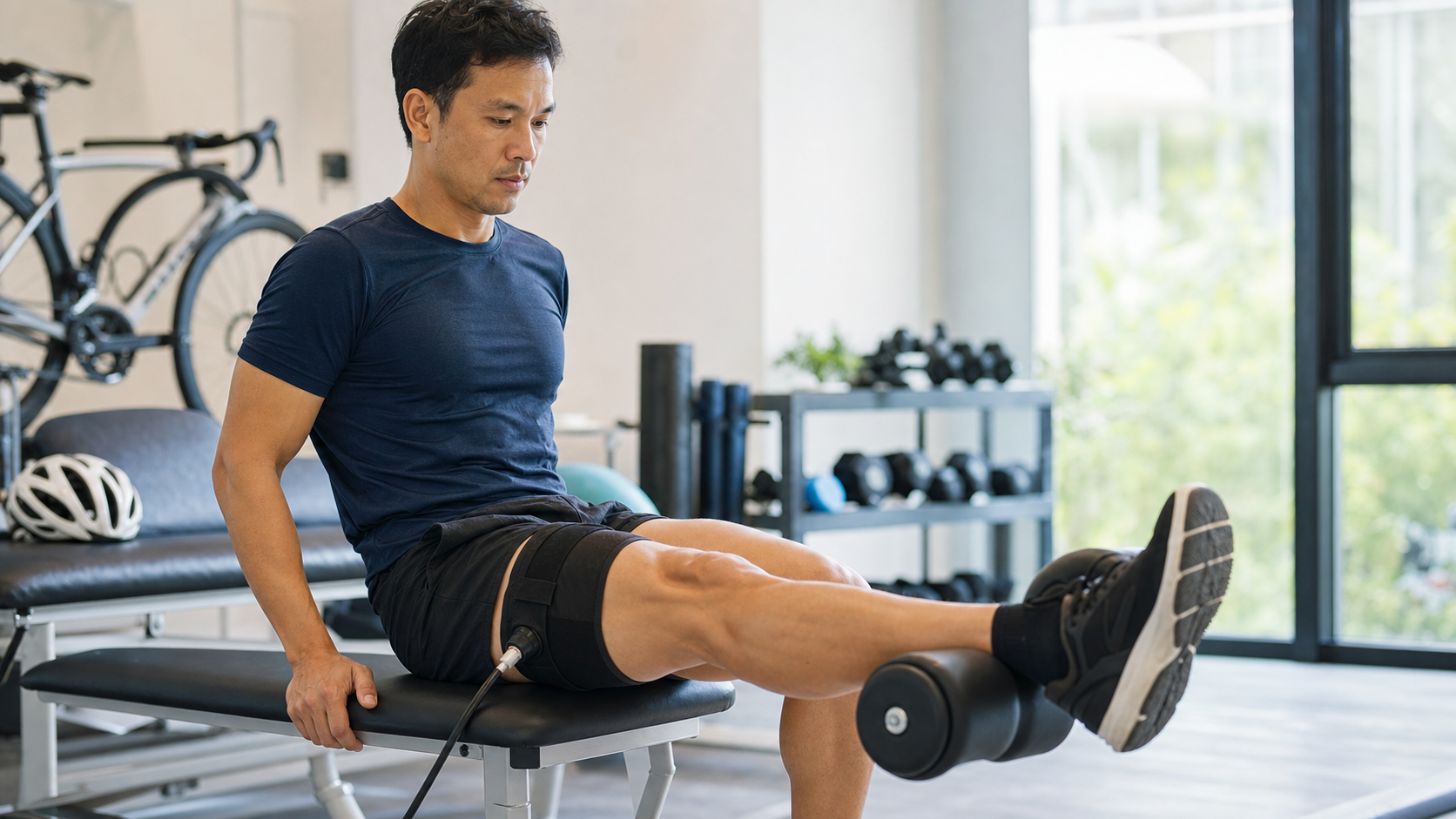
Starting with a Client Who Had Knee Surgery
A few years ago, I worked with a cyclist in his forties—let’s call him A-Hong. He came to me three weeks after ACL reconstruction surgery. You could tell at a glance that his right quadriceps was a full size smaller than his left, and he unconsciously favored his left leg even just going up and down stairs. His orthopedic surgeon had told him, “No weight-bearing, no heavy loads,” but he was desperate to get back to Wuling by the end of the season, and the anxiety was eating him alive.
With the traditional rehab approach, at this stage he’d only be doing unweighted straight-leg raises and electrical stimulation—and muscle loss often outpaces muscle regrowth. But what I set up for him instead was a type of occlusion training—Blood Flow Restriction Training, or BFR. The load was less than 30% of the maximal strength of his healthy leg, with a wide cuff strapped around the top of his thigh. After one set, he was drenched in sweat, his thigh burning and swollen. Eight weeks later, at his follow-up, the circumference gap between his two legs had shrunk from three centimeters to under one. His doctor even asked if he’d secretly been sneaking off to lift weights.
In this article, I want to explain this training method clearly—the one that uses very light loads yet produces results close to heavy training. Behind it is not mysticism but a whole body of systematic literature supporting the underlying exercise physiology. Whether you’re a seasoned athlete trying to break through a plateau, someone recovering from surgery, or just a curious beginner wondering “what’s all the hype about occlusion training,” it’s worth ten minutes to understand the principles—because used incorrectly, it carries risks; used correctly, it’s one of the very few shortcuts that bypasses heavy loading.
What BFR Actually Does: “Brake the Veins, Leave the Arteries a Crack Open”
Let’s start with the most commonly misunderstood point: BFR does not completely cut off blood flow. If you truly occluded all blood flow, that’s a tourniquet—something surgeons use—and prolonged application would cause tissue ischemia and necrosis.
The essence of BFR is “partial restriction”: a wide cuff is placed at the proximal end of the limb (top of the thigh or upper arm) and inflated to a specific pressure so that venous return is substantially restricted, but arterial blood can still get in. The result is that blood keeps pouring into the muscle but has trouble flowing back to the heart. The muscle swells up like a waterlogged sponge (this “engorged” feeling is called pooling in English), while the muscle interior enters a state of hypoxia and metabolic waste accumulation.
The key pressure parameter in the literature is expressed as a percentage of “Arterial Occlusion Pressure (AOP).” AOP is the pressure required to completely cut off arterial blood flow—and it differs from person to person and site to site, depending on your blood pressure, limb circumference, and cuff width. In practice, the commonly used pressure range is roughly 40% to 80% of AOP—the lower limbs typically use higher pressures (around 60% to 80%), while the upper limbs, having less muscle mass and being more pressure-sensitive, use lower pressures (around 40% to 50%). One study comparing different pressures found that 70% AOP and 80% AOP produced very similar physiological responses, but 70% felt significantly less strenuous subjectively, so for most people, around 70% is a sweet spot with great cost-effectiveness.
Why Does “Hypoxia + Metabolic Accumulation” Build Muscle?
This is the core of the whole mechanism. Let me break it down the way I explain it to my clients, in plain language:
- Earlier recruitment of fast-twitch muscle fibers. Normally, when you lift a light load, your body only calls on the fatigue-resistant but not-very-hypertrophic slow-twitch fibers (Type I). But under hypoxic conditions, the slow-twitch fibers tire quickly, and the body is forced to recruit the fast-twitch fibers (Type II)—which normally only come out for heavy loads—much earlier to help out. Fast-twitch fibers are exactly the ones with the greatest hypertrophy potential.
- Metabolic stress. Lactate, hydrogen ions, inorganic phosphate, and other metabolites accumulate heavily, stimulating muscle protein synthesis through intracellular signaling pathways and potentially promoting endocrine responses like growth hormone release.
- Cell swelling signals. The very fact that the muscle is engorged with blood is itself considered a signal that promotes anabolism and inhibits catabolism.
Interestingly, systematic reviews have shown that the hypertrophy of slow-twitch (Type I) fibers induced by low-load BFR training is at least comparable to, and sometimes greater than, that of fast-twitch fibers—which is different from the typical pattern of heavy-load training that preferentially targets fast-twitch fibers. For endurance athletes (like us cyclists and runners), this is a particularly noteworthy characteristic.
I often use a simple analogy to help clients understand: imagine the muscle is a factory. On a normal easy day, a few workers (slow-twitch fibers) are enough to handle the job, while the big, strong workers (fast-twitch fibers) wait in the back. Heavy-load training is like “directly hauling an oversized load”—you have to call out the big guys from the start. BFR, on the other hand, is like “turning off the factory’s air conditioning and making the floor hot and oxygen-starved”—the first few workers quickly collapse from heat exhaustion, and the foreman is forced to call the big guys in the back to help carry, even though the load itself is actually light. The end result: you’ve worked the big guys just the same, but your joints and tendons never had to bear the stress of moving heavy weight. That’s the most intuitive picture of how BFR achieves “low load, yet high-threshold fiber recruitment.”
Low Load, High Results: This Isn’t Hype, It’s What the Literature Says
This is the most eye-opening aspect of BFR. The golden rule of traditional hypertrophy is “to build muscle, you need to lift at least 65% to 85% of your one-rep max (1RM).” Below that threshold, the stimulus is generally considered insufficient.
But the conclusions of multiple systematic reviews and meta-analyses are remarkably consistent: low-load BFR training, using 20% to 30% of 1RM, can induce muscle hypertrophy comparable to heavy-load training at 70% to 85% of 1RM. In other words, an exercise that would normally require lifting 70 kg can now be done with 20-some kilograms plus a cuff, and you’ll still get similar gains in circumference.
However, there’s an important caveat I need to be honest about, so you don’t have unrealistic expectations:
- Muscle hypertrophy (size gain): Low-load BFR ≈ heavy loads—they’re comparable.
- Maximal strength (getting stronger): Low-load BFR is typically slightly inferior to heavy loads. If your goal is pure absolute strength, you still need to lift heavy.
The reason for this difference is easy to understand: much of the improvement in maximal strength comes from neural adaptations and familiarity with the very act of “handling heavy loads”—something light weights can’t replicate. So when I talk to clients, I’m straightforward: BFR is a master at “growing” muscle, but when it comes to “peaking” strength, it’s a supporting tool, not the main event.
The table below lays out several training modalities side by side, and you’ll get a clearer picture:
| Training Modality | Typical Load | Reps per Set | Primary Effect | Joint/Tendon Stress | Best For |
|---|---|---|---|---|---|
| Traditional Heavy Load | 70–85% 1RM | 6–12 | Hypertrophy + Maximal Strength | High | Healthy individuals who can handle heavy loads |
| Traditional Low Load (no cuff) | 20–30% 1RM | 15–30 | Primarily muscular endurance, limited hypertrophy | Low | Beginners, endurance-oriented |
| Low-Load BFR | 20–30% 1RM | 15–30 (fatigue-oriented) | Hypertrophy close to heavy loads, slightly less strength | Low | Post-injury, older adults, joint discomfort, experienced lifters wanting to spare their joints |
| High-Load BFR | 40–70% 1RM | 8–15 | Hypertrophy + partial strength | Moderate | Advanced lifters looking for variety |
Once you understand this table, you’ll see why orthopedics, physical therapy, and sports performance all use BFR—it’s almost the only method that builds muscle size at loads light enough to keep joints pain-free. For someone who just had knee surgery, or a sixty-year-old with knee osteoarthritis who’s afraid to squat, this characteristic is practically tailor-made.
Practical Application: Dosing, Programming, and How to Apply the Cuff
Now that you understand the concepts, let’s get to the execution details where most people go wrong. The effectiveness and safety of BFR depend heavily on “getting the pressure right, doing enough reps, and placing the cuff correctly.”
Standard Dose Parameters
The most frequently cited parameters in the literature, and the ones I actually use with my athletes, are as follows:
| Parameter | Recommended Range | Notes |
|---|---|---|
| Cuff Placement | Most proximal portion of the upper arm or thigh | Place at the limb root, not over the muscle belly or joint |
| Cuff Pressure (Lower Limb) | 60%–80% of AOP | Individualized; those with higher blood pressure start at the lower end |
| Cuff Pressure (Upper Limb) | 40%–50% of AOP | The upper limb is more sensitive to pressure; do not apply lower-limb values |
| Training Load | 20%–30% 1RM | This is the core of low-load BFR |
| Sets and Reps | Four sets: 30-15-15-15 | First set 30 reps, remaining three sets 15 reps each, ~75 reps total |
| Inter-set Rest | 30–60 seconds | Deliberately short to maintain hypoxia and metabolite accumulation |
| Cuff Inflation Timing | Keep inflated throughout the entire set | Deflate only after all four sets; do not release between sets |
| Weekly Frequency | 2–3 times | Can be increased to nearly daily in early post-injury rehab, but requires professional supervision |
The 30-15-15-15 rep scheme is a classic BFR prescription. The first set is deliberately high (30 reps) to drive the muscle into deep fatigue. The following three sets are only 15 reps each, but because blood flow is restricted and metabolites cannot clear, you will find them extremely challenging. This combination of “short rest, high reps, near-failure” is exactly what triggers the anabolic signaling pathway.
Three Practical Points for Applying the Cuff
- Place it most proximally: For the thigh, place it just below the groin at the thigh root; for the upper arm, place it below the deltoid. Placing it too low (e.g., above the knee) is not only ineffective but may also compress nerves.
- Wide cuffs are better than narrow ones: The wider the cuff, the lower the absolute pressure needed to achieve the same restriction, making it gentler on the tissue. This is why professional BFR equipment uses wide pneumatic cuffs rather than random elastic bands or tourniquets—DIY makeshift cuffs are the thing I most want to talk people out of; the pressure is uncontrollable and the risk is high.
- Tightness should be quantifiable: Ideally, use professional equipment with a pressure gauge or AOP measurement capability. If truly unavailable, fall back on a “subjective tightness scale of 0 to 10,” aiming for around 7 for the lower limb and 5 for the upper limb. After exercise, the skin should look flushed and feel full, not pale or numb—pale, numb, or tingling means it is too tight; release immediately.
A Sample Lower-Limb BFR Workout for Cyclists
Using the template I often give riders in the off-season or returning from injury as an example (assuming contraindications have been ruled out and pressure has been individualized):
| Exercise | Sets × Reps | Load | Inter-set Rest |
|---|---|---|---|
| Wall Sit / Leg Press | 30-15-15-15 | 20%–30% 1RM | 30–45 seconds |
| Leg Extension (Quadriceps) | 30-15-15-15 | 20%–30% 1RM | 30–45 seconds |
| Leg Curl (Hamstrings) | 30-15-15-15 | 20%–30% 1RM | 30–45 seconds |
| Calf Raise | 30-15-15-15 | Bodyweight or light load | 30 seconds |
Total cuff time for the entire session should be capped at no more than 15 to 20 minutes per single site before deflating—this is an important safety limit. Afterward, your thighs will feel as heavy as lead, which is normal; however, if you experience dizziness, nausea, palpitations, or unusual pain outside the cuffed area, stop and deflate immediately.
Debunking Myths: Six Common Misconceptions About BFR
In all my years of coaching, I have found that people’s misconceptions about BFR often outnumber their actual understanding. Let me lay out the six most common ones clearly:
| Myth | Fact |
|---|---|
| “The tighter it is, the more painful, the more effective.” | Wrong. 70% and 80% AOP yield similar results; going too tight only increases risk without adding growth. |
| “BFR can completely replace weight training.” | Not recommended for healthy individuals. It builds hypertrophy close to heavy lifting, but is slightly inferior for maximal strength; the two are best combined. |
| “Grabbing any elastic band and wrapping it is BFR.” | Dangerous. Uncontrollable pressure is the biggest source of risk; use measurable, wide cuffs. |
| “BFR inevitably causes muscle or nerve damage.” | Risk is manageable at proper doses. Most injuries come from operational errors like excessive tightness, prolonged duration, or incorrect placement. |
| “Results are faster than heavy lifting.” | No. The timeline for muscle growth is similar to regular training; the advantage is “achieving it with light loads,” not “achieving it faster.” |
| “It is only useful for rehab.” | No. It is also applicable to sports performance, prevention of age-related sarcopenia, and variety in training programs for healthy populations. |
I often show this table directly to new athletes, because once the wrong ideas are cleared out, the correct approach can take root. The most damaging ones are the first and third—too many people think BFR is about “who can endure the most pain,” or that casually wrapping a band counts as occlusion. These two misconceptions are exactly where injuries happen.
A Detail Often Overlooked: Breathing and the Valsalva Maneuver
Many people unconsciously hold their breath and strain (like bearing down as if constipated) during the later sets of BFR. Under conditions of occlusion and already elevated blood pressure, this can spike blood pressure even further, adding extra cardiovascular strain. I remind my athletes to keep breathing smoothly throughout and exhale on exertion—do not hold your breath. This small detail may seem trivial, but for those with higher blood pressure, it is a crucial safety habit.
Safety and Applicability: Where the Red Lines Are
This is the section I believe cannot be skipped in this entire article. BFR is effective, but it is, after all, “actively restricting blood flow”—not everyone is suited for it, and it is not a set-and-forget tool.
Relative Contraindications and High-Risk Populations
For the following groups, I strongly advise against attempting BFR on your own without prior medical professional assessment:
- Those with a history of thrombosis or at risk for deep vein thrombosis (DVT): Restricting venous return theoretically may increase risk; this is the group requiring the most caution.
- Those with poorly controlled hypertension, cardiovascular disease, or heart conditions: Blood pressure rises during occlusion and requires physician evaluation.
- Diabetics (especially those with peripheral vascular disease or retinopathy): Peripheral circulation and vasculature are already fragile and require individualized assessment and supervision.
- Pregnant women, those with open wounds or infections in the lower limbs, or those with coagulation disorders.
- Those with retinal or intraocular pressure-related conditions: Some review literature has explored the association between BFR and ocular health, making this an area of concern.
I want to emphasize the word individualization. The groups above are not “absolutely forbidden from BFR,” but rather “must first have their personal condition evaluated by a physician or physical therapist.” Two people with diabetes—one with well-controlled blood sugar and no complications, the other with established peripheral vascular disease—are worlds apart in terms of suitability. This article cannot give you a diagnosis; only your attending physician and therapist can.
Common Mistakes and Corrections
Over the years of coaching athletes, the BFR mistakes I’ve seen can be summarized in this table:
| Common Mistake | What Happens | Correct Approach |
|---|---|---|
| Cuff too tight (chasing “tighter is more effective”) | Arteries also compressed, numbness, tingling, potential nerve damage | Quantify using AOP percentage or subjective tightness; err on the lower side |
| Using heavy loads with BFR | Defeats the purpose of “low-load joint protection,” multiplies risk | Stick to 20%–30% 1RM for low-load BFR |
| Rest periods too long between sets | Metabolites cleared, hypoxic environment lost, diminished results | Keep rest to 30–60 seconds |
| Single session occlusion time too long | Prolonged tissue hypoxia, dizziness, even fainting | Release pressure within 15–20 minutes per body part |
| Using elastic bands or leg straps as DIY occlusion | Pressure completely uncontrollable; the most dangerous approach | Use wide, professional equipment with measurable pressure |
| Cuff placed over a joint or muscle belly | Compresses nerves and blood vessels, poor results | Place cuff at the most proximal point of the limb |
| Skipping warm-up and going straight into occluded training | High cardiovascular strain, increased injury risk | Warm up without occlusion first, then proceed to BFR |
The one I most want to highlight is the first: “Tighter is more effective” is the most widespread and most dangerous myth. Research has clearly shown that 70% AOP and 80% AOP produce similar results, but going tighter only causes more pain and higher risk without yielding additional growth. BFR isn’t about who can endure the most pain; it’s about who sets the pressure just right.
Second Case Study: A 68-Year-Old with Knee Osteoarthritis Who Avoids Squatting
Let me share a case very different from A-Hong’s, to show you another side of BFR. Auntie Li is 68 years old with knee osteoarthritis. Her doctor says she hasn’t reached the point of needing a knee replacement, but she’s already afraid to squat or climb stairs, and her thigh muscles have been atrophying year after year. The problem with traditional strength training is: to actually work the quadriceps, the load often reaches a level that aggravates her knee pain; but if the load is light enough to be pain-free, it’s insufficient stimulus. This is the classic dilemma for older adults—“effective loads hurt, pain-free loads don’t work.”
BFR fits precisely into this gap. My prescription for her was seated leg extensions at only 20% 1RM (light enough that her knee felt no pain at all), with the lower-limb cuff set at 60% AOP (a conservative starting point), twice a week. Initially she was skeptical—“can something this light really work?”—but by the third set she was exclaiming, “Why is this so burning?” Three months later, she could slowly squat down and stand back up using the handrail, and she no longer needed to stop and catch her breath halfway up the slope to the market at the end of her street. This kind of functional improvement is a tangible boost to an older adult’s quality of life.
Here’s a conservative starter protocol for older adults / those with degenerative joint conditions, for reference when professional supervision is available:
| Week | Exercise | Load | Occlusion (Lower-Limb AOP) | Frequency |
|---|---|---|---|---|
| Weeks 1–2 (Adaptation) | Seated leg extension | 20% 1RM | 50%–60% | 2x per week |
| Weeks 3–4 | Leg extension + wall sit (shallow) | 20%–25% 1RM | 60% | 2–3x per week |
| Weeks 5–8 | Leg extension + shallow squat + calf raise | 25%–30% 1RM | 60%–70% | 2–3x per week |
The key is “progress slowly, progress under supervision”: start at the conservative end of the pressure range, confirm the older adult tolerates it well with no dizziness or blood pressure issues, then make small weekly adjustments. For older adults doing BFR, I always insist on professional supervision, because they have a higher rate of comorbid chronic conditions and may have a diminished ability to perceive discomfort.
Why Endurance Athletes in Particular Should Know About BFR
For endurance-focused athletes like cyclists and runners, there are two points about BFR especially worth noting.
First, as mentioned earlier, low-load BFR induces slow-twitch muscle hypertrophy comparable to fast-twitch. Slow-twitch fibers are the primary drivers of endurance performance, which means the muscle “profile” built by BFR isn’t identical to the fast-twitch-dominant result of pure heavy lifting—and may be more “suited” to endurance athletes.
Second, and more practically important—it lets you maintain your legs when you can’t train them. Consider these scenarios: a bit of knee inflammation mid-season, tendons struggling under high training volume, or a minor injury requiring reduced joint impact. In these situations, forcing heavy squats only makes things worse, while doing nothing leads to muscle loss. BFR maintains the stimulus with just 20% of the load, effectively helping you “preserve your capital” during low periods.
Here’s how I typically position it within the overall training plan:
| Training Phase | BFR’s Role | Pairing |
|---|---|---|
| Pre-season preparation (healthy) | Supplementary, occasional variation | Main focus remains sport-specific riding + traditional strength |
| Mid-season minor injury/joint discomfort | Primary maintenance tool | Reduce or pause high-impact strength training |
| Post-season recovery | Low-impact muscle maintenance | Pair with easy aerobic work |
| Post-injury rehabilitation | Phase-specific protagonist (per medical advice) | Progress according to physiotherapist’s plan |
The core message of this table: BFR is a supporting player when you’re healthy and can lift heavy, but when you’re injured, dealing with joint discomfort, or need protection, it may be the only viable primary tool. Understanding its value is what allows it to be there for you on the day you need it.
Local Context in Taiwan: Climate, Facilities, and Healthcare
Putting this method back into the reality of daily life in Taiwan, a few local points are worth mentioning:
Climate and hydration. Taiwan’s summers are humid and hot. BFR training places significant metabolic demand and cardiovascular strain, and dehydration increases the risk of dizziness and blood pressure fluctuations. I usually advise trainees to do it in an air-conditioned room, hydrate well before and after, and avoid pushing through it on a stuffy rooftop or in a garage without AC.
Facilities and equipment. Professional pneumatic BFR cuffs are becoming increasingly common in sports medicine clinics, some gyms, and physical therapy centers in Taiwan, and some rehabilitation clinics also offer BFR rehab programs. If you’re in the post-injury population, I’d recommend going directly to a facility equipped with BFR devices and therapists trained in their use—far safer than buying equipment and improvising on your own.
Nutrition for those who eat out often. Muscle hypertrophy requires adequate protein support. Eating out is convenient in Taiwan, but the common pattern is “high in carbs, insufficient in protein.” With BFR training, I usually ask trainees to ensure every meal includes a clear protein source—a portion of chicken breast, a piece of fish, an egg, or a glass of unsweetened soy milk all work—aiming for roughly 1.6 grams of protein per kilogram of body weight per day, so the stimulus you work hard to create isn’t wasted for lack of building materials. (Actual numbers should still be adjusted based on individual circumstances and dietitian recommendations.)
National Health Insurance and medical access. Taiwan’s convenient healthcare access is our advantage. If you have any of the chronic conditions or vascular concerns mentioned earlier, first make an appointment with a cardiologist, family medicine physician, or rehabilitation specialist, clearly state “I want to do blood flow restriction training,” and ask for their assessment. The barrier is very low, but it can eliminate the vast majority of risks. Having a convenient medical system and not using it would be a shame.
Actionable Advice for Readers at Different Levels
If You’re a Beginner / Post-Injury Rehabilitation Patient
- Don’t buy equipment and improvise on your own. The first step is to get assessed by a professional facility or a coach/therapist with BFR experience.
- Start with the most conservative pressure (around 60% lower-limb AOP) and the most basic movements, letting your body adapt to the sensation of “exercising under occlusion.”
- In the post-injury phase, treat BFR as a tool for “maintaining and rebuilding muscle mass,” following your doctor’s progress plan, and don’t rush back to full intensity.
If You’re an Experienced Trainer / Endurance Athlete
- Treat BFR as a joint-protective variation in your programming. When training volume is high, your knees or elbows are slightly irritated, but you don’t want to stop training, using low-load BFR to maintain muscle mass is a smart choice.
- During the off-season or recovery after a major event, use BFR to maintain leg strength with low impact, avoiding muscle loss from complete rest.
- Don’t treat it as a panacea. To build maximal strength and progress absolute force, you still need to lift heavy—BFR is a complement, not a replacement.
Three Common Principles for Everyone
- Quantify the pressure, err on the low side: Use equipment that can measure AOP, and aim for around 70%.
- Set a time limit for single-limb occlusion: Always release the pressure within 15 to 20 minutes.
- See a doctor first if you have chronic conditions: If you have concerns related to blood clots, cardiovascular disease, diabetes, or high blood pressure, get your doctor’s approval first.
Frequently Asked Questions FAQ
Q: Does BFR always hurt?
A: You will feel noticeable fullness, soreness, and a burning sensation, especially in the later sets, but that is the soreness of “tired muscles,” not “tingling, numbness, or sharp pain.” If you experience numbness or a tingling sensation, the band is too tight—release it immediately.
Q: How long until I see results?
A: Muscle hypertrophy typically takes several weeks to two or three months of consistent training to show visible changes in circumference, which is similar to conventional strength training—there are no shortcuts. The advantage of BFR is “achieving this effect with very light loads,” not “doing it faster.”
Q: Is doing only BFR enough?
A: For people who are injured or cannot load their limbs, BFR can be the primary modality during that phase. But for healthy individuals who can train normally, the ideal approach is to incorporate BFR as one component of an overall program, combined with traditional strength training, cardio, and sport-specific work.
Q: Can I keep the cuff on for the entire workout?
A: No. Continuous occlusion on a single limb should be limited to 15 to 20 minutes before releasing the pressure, and the timer resets when you switch to a different limb. Prolonged continuous occlusion is an unnecessary risk.
Q: My blood pressure is a bit high. Can I do it?
A: Ask your doctor first. Blood pressure rises during occlusion, and individuals with poorly controlled hypertension should only attempt it after medical evaluation—do not self-assess.
Q: Can BFR cause blood clots?
A: For generally healthy individuals with no history of blood clots, current literature does not show that BFR significantly increases the risk of thrombosis when used at the correct dose (proper pressure, reasonable duration). However, for those with a history of blood clots or who are at high risk, this is the aspect that requires the most caution and must be evaluated medically. This is also why “population screening” always comes first in BFR.
Q: Can BFR be used on the upper limbs?
A: Yes, the biceps and triceps are common applications. But remember that the upper limbs are more sensitive to pressure, so the occlusion pressure should be lower than for the lower limbs (around 40%–50% of AOP)—do not simply apply the lower-limb numbers.
Q: Do I need to re-measure AOP every session?
A: Ideally, the pressure should be individualized and will vary slightly with body position and daily condition. Professional equipment usually performs a quick measurement before training. If you use a fixed pressure, it is better to set it conservatively and always use “skin flushed red rather than pale, with no numbness or tingling” as an on-site safety indicator.
Conclusion: A Useful Tool That Demands Respect
Back to Ahong, the guy with the knee surgery from the beginning. He not only made it back to Wuling, but his limb circumference and strength also caught up to his healthy leg. But I have always emphasized one thing to him: what helped him recover was not the “magic cuff,” but the entire discipline of “using the right pressure, staying safe, and following medical advice.”
BFR is one of the few tools in sports science in recent years that has truly changed the game—it turned “building muscle with low loads” from theory into an actionable prescription, and it is a genuine blessing for post-injury populations, older adults with joint degeneration, and seasoned athletes looking to spare their joints. But it is also a tool that demands respect: pressure settings, time control, and population screening—getting any one of these wrong can turn help into harm.
If this article has taken you from “heard of it but didn’t understand it” to “understand the principles and know where the red lines are,” then it has achieved its purpose. The remaining step—especially if you have any chronic conditions or post-injury status—must be left to professional evaluation. Do not improvise on your own.
This article is educational content and cannot replace individual diagnosis and treatment advice from a physician, physical therapist, or nutritionist. If you have conditions such as blood clots, cardiovascular disease, diabetes, or high blood pressure, or if you are in a post-injury rehabilitation phase, please consult your primary care physician and physical therapist for an individualized assessment before starting any blood flow restriction training.
References
- Blood Flow Restriction Training: Implementation into Clinical Practice — https://pmc.ncbi.nlm.nih.gov/articles/PMC5609669/
- A Useful Blood Flow Restriction Training Risk Stratification for Exercise and Rehabilitation — https://pmc.ncbi.nlm.nih.gov/articles/PMC8963452/
- Hypertrophic effects of low-load blood flow restriction training with different repetition schemes: a systematic review and meta-analysis (PeerJ) — https://peerj.com/articles/17195/
- Fiber-Type-Specific Hypertrophy with the Use of Low-Load Blood Flow Restriction Resistance Training: A Systematic Review — https://www.mdpi.com/2411-5142/8/2/51
- Acute effects of blood flow restriction training at various arterial occlusion pressures on muscle activation, blood lactate responses, and RPE in healthy adult males (Frontiers in Physiology) — https://www.frontiersin.org/journals/physiology/articles/10.3389/fphys.2025.1620294/full
- Resistance Training with Blood Flow Restriction and Ocular Health: A Brief Review — https://pmc.ncbi.nlm.nih.gov/articles/PMC9410392/
Related Reading
- Systemic Effects of Blood Flow Restriction Training: Multi-Organ Impact of Hypoxic Signaling
- A Complete Guide to Blood Flow Restriction Training (BFR) for Cyclists’ Post-Injury Rehabilitation
- Blood Flow Restriction Training (BFR) for Cyclists: The Science of Low-Intensity Training with Cuffs
- Application of Blood Flow Restriction Training (BFR) to Cyclists’ Lower Limbs: Research on Low-Load, High-Benefit Training
RAMP FTP Test 直播 究竟能撐到幾瓦 訓練台 Gravat Zwift
6 年前
西進武嶺 免費訓練分析服務 Intervals | 練不夠還是練過頭?你哪一種類型選手?AI模型告訴你! | 備戰神器 | 公路車 訓練 | CT Yeh
4 年前
一日北高/長距離團騎 常見問題補充篇 / 組團或跟團的眉角 / 壯車友容易被瘦車友慢性拉爆 / 原來屁股痛可能是這個原因...? / 風場配速法 / 公路車 / CT Yeh
2 年前
一個測試有沒有認真練車的方法😂 #公路車
10 個月前
靠單車減肥35公斤 心得分享與整理
7 年前
台北闊瀨陡坡 騎旅 / 日本單車雜誌編輯車友臨時加入!/ 髮香才是最強的 / feat. 北迴歸線小隊 / 公路車 CT Yeh
6 個月前
大禹嶺 到 武嶺牌樓 全程前後實況錄影 | 北進武嶺 | 東進武嶺 | KOM | 訓練台 | 坡度分析 | Taiwan KOM Last 10 km HARD | 公路車
6 年前
一日北高常見問題大集合 | 攻略 | 路線 | 訓練 | 補給 | 自行車 單車 | 一日雙城 | 雙塔 | TWB北高360 | 屁股痛
6 年前