The Science and Misuse of Functional Threshold Power (FTP): Comparing Test Methods, Stability, and Why It Has Been Deified
Opening: The Message That Made Me Write This
A few years ago, on a Sunday evening, I had just returned from leading a hill-climbing group ride on Yangmingshan when my phone buzzed with a message from one of my athletes. He sounded dejected: “Coach, I retested my FTP this week and it dropped nearly 30 watts. Have all my recent training sessions been wasted? Am I getting worse?”
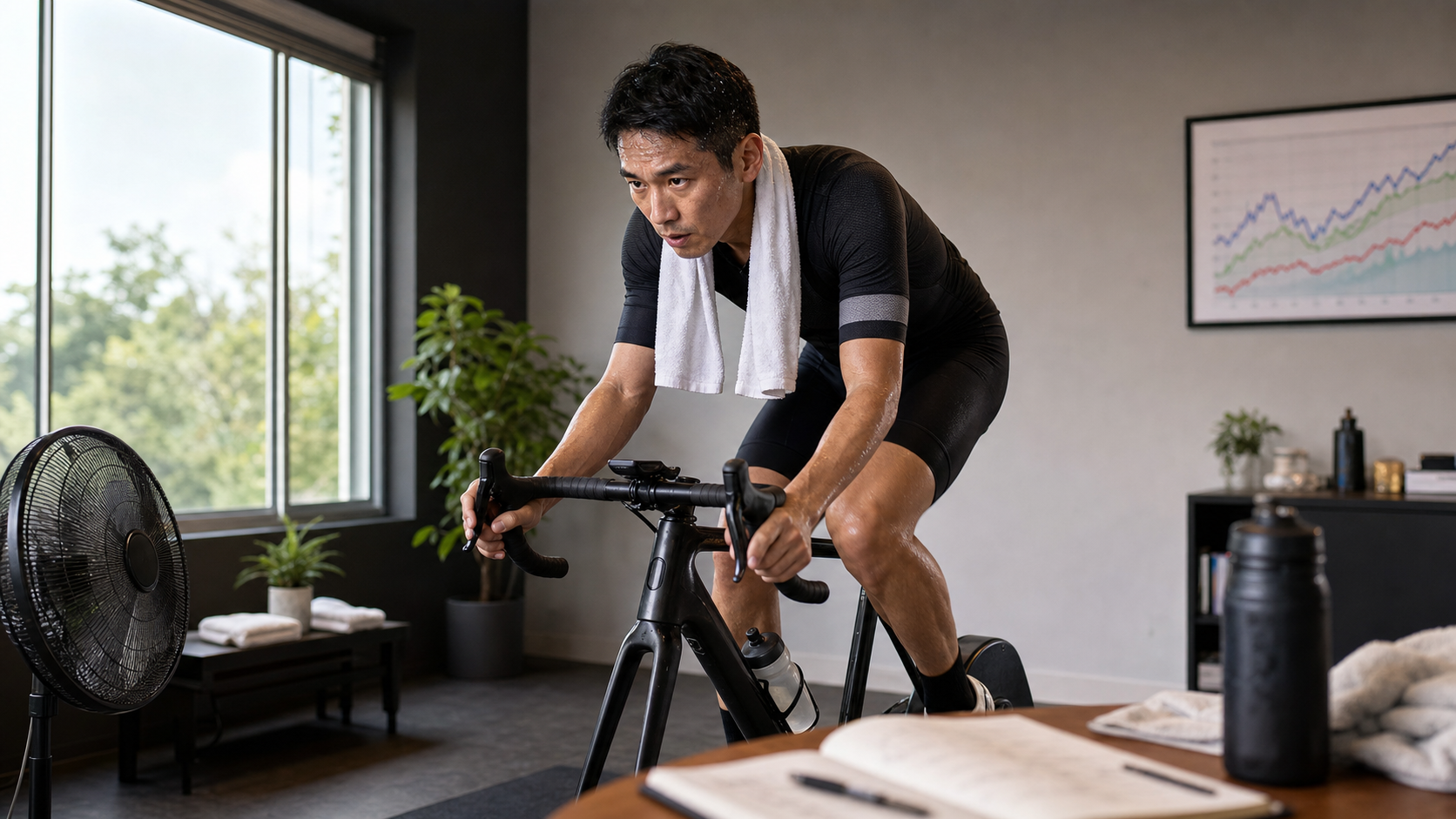
I asked him to calm down, then hit him with three questions: Which test method did you use this time? How many hours did you sleep the night before? What was the temperature in Taipei during the test, and did you have a fan on? He paused and replied: “Last time I did the 20-minute test, but this time I used the ramp test in the app. I was working overtime until almost 2 a.m. the night before, and that afternoon it was stuffy and hot indoors—about 32 degrees, I guess. I didn’t turn on the AC because I didn’t want to disturb my family.”
I laughed. Where exactly had he regressed? He had simply used a different ruler, under different weather, in a different physical state, to measure different things—and then subtracted them directly. That’s the most classic picture of FTP misuse: an estimate treated like a precise reading on a bathroom scale, a training tool turned into a character assessment.
Over the past fifteen years, I’ve coached professional team riders, perennial amateur race podium finishers, and also office workers in their forties who only started cycling and just want to lose weight healthily. FTP is almost always the first number everyone asks about. It’s useful—extremely useful—but it’s also the metric I’ve seen most deified and most frequently misread. In this article, I want to lay out in one go: the scientific basis of FTP, the differences between test methods, how stable it really is (or isn’t), and why it’s been elevated to mythic status. After reading this, I hope you can put FTP back where it belongs: a handy tool, not a report card hanging around your neck.
What Exactly Is FTP? Let’s Define It Clearly First
Functional Threshold Power (FTP) is most commonly defined as: the highest power output you can sustain at a maximal steady-state effort for approximately one hour, measured in watts (W).
This concept matters because it attempts to describe a physiological tipping point—below this intensity, your body can roughly maintain a balance between “lactate production” and “lactate clearance”; once you exceed it, metabolic byproducts begin to accumulate faster, and you’re forced to slow down within a relatively short time. In exercise physiology, this boundary goes by several related but not identical terms: lactate threshold, maximal lactate steady state (MLSS), and critical power (CP).
Let me plant a crucial idea here that we’ll return to repeatedly: FTP attempts to “estimate” this physiological threshold, but it is not itself the lactate threshold directly measured in a lab. Based on the research I’ve found, the relationship between FTP and lactate-related parameters is actually “correlated but not equivalent”—some studies find no significant difference and high correlation between the two, while others clearly point out that FTP is not the same as lactate threshold parameters (see references at the end). In other words, FTP is a clever, practical surrogate marker—it lets you get a “good enough” training anchor without having to lie down in a lab and get your finger pricked for blood every time. But a surrogate is ultimately a surrogate; it carries error, and that error is the root of every story that follows.
Why Is One Hour So Critical?
Many people, upon first hearing “power sustained for one hour,” instinctively ask: Then why don’t I just ride for a full hour to measure it? The answer is: very few people are actually willing to do it, and even fewer can do it accurately. Going all-out for a full hour is brutally demanding on both the mind and muscles, and a slight pacing mistake (going out too hard and blowing up later, or starting too conservatively) ruins the entire effort. So clever coaches and the sports science community developed various “shorter, easier-to-execute” tests, then used a conversion factor to approximate that one-hour value. This brings us to the proliferation of test methods.
FTP’s Greatest Practical Value: Setting Training Intensity Zones
Let me make one thing clear first: even with all its errors, FTP remains extremely useful. Its core purpose is to divide training into intensity zones. With an FTP anchor, you can calculate the target power for every workout, ensuring that “easy rides” are truly easy and “intervals” are truly ridden at the right effort. Below is a commonly used zone framework in practice (different schools cut the zones slightly differently; here’s an easy-to-understand version for you).
| Zone | Name | % of FTP | Training Purpose | Perceived Effort / Sustainable Time |
|---|---|---|---|---|
| Z1 | Recovery | Below 55% | Active recovery, cool-down | Barely any effort, can chat |
| Z2 | Endurance | 56–75% | Aerobic base, fat utilization | Easy, can ride for hours |
| Z3 | Tempo | 76–90% | Aerobic endurance, fatigue resistance | Somewhat challenging, can speak short sentences |
| Z4 | Threshold | 91–105% | Raising FTP itself | Very breathless, minutes up to about an hour |
| Z5 | VO₂max | 106–120% | Raising maximal oxygen uptake | Extremely breathless, 3–8 minutes |
| Z6 | Anaerobic | 121% and above | Anaerobic capacity, explosiveness | Can’t last more than a few minutes |
You’ll notice: if FTP is off by just 10%, the entire zone table shifts, and every single workout you do will be at the wrong intensity. This is the deeper reason I advise against casually testing whenever you feel like it, and against mixing different methods—when FTP is wrong, it’s not just one number that’s wrong; it’s every workout for the next six to eight weeks.
Comparison of Mainstream FTP Test Methods
I’ve compiled the testing methods most commonly encountered by Taiwanese cyclists into the table below. Note that the “estimation bias direction” here reflects common practical tendencies, not hard rules—individual variation is enormous.
| Test Method | Execution | Conversion Method | Main Advantages | Main Disadvantages / Bias Tendency |
|---|---|---|---|---|
| 20-Minute Test | Ride all-out for 20 minutes, take average power | Average power × 0.95 | Closest to true one-hour intensity, most cited in research | Requires strong pacing skill, high psychological pressure, going out too hard ruins the whole effort |
| Ramp Test | Power increases in steps until exhaustion | Last minute average × 0.75 (coefficients vary by source) | No pacing needed, highly repeatable, beginner-friendly | Tends to “overestimate” FTP for athletes with strong anaerobic capacity |
| 8-Minute Test | Ride all-out for 8 minutes (sometimes done twice for sampling) | Average power × 0.90 | Shorter time, less suffering | Relies more on anaerobic contribution, prone to overestimation, pacing still matters |
| Lab Lactate / Gas Analysis | Incremental load with blood sampling or gas exchange measurement | Threshold read directly | Closest to physiological truth, most complete data | Expensive, requires booking a sports science lab, limited resources in Taiwan |
| Long-Term Power Data Estimation | Platform algorithms back-calculate from your actual ride history | Algorithm automatic | No need for a painful dedicated test, reflects real performance | Requires sufficient and sufficiently hard data; underestimates if you rarely go all-out |
The 20-Minute Test: Classic but Hard to Execute
The 20-minute test is the most classic method. Its logic is: a maximal 20-minute effort will produce a power output slightly higher than what you could sustain for a full hour, so you multiply by 0.95 (i.e., take 95% of it) to estimate FTP. For example: if a rider averages 250 watts over 20 minutes, the FTP estimate is 250 × 0.95 = 237.5 watts.
This 0.95 coefficient didn’t come out of thin air—it compensates for the fact that “20 minutes is shorter than 60 minutes, so you’ll ride harder than your one-hour intensity.” This method is close to reality and widely adopted in research; its drawback is: pacing is its mortal enemy. I’ve seen too many athletes fire off the starting gun with an adrenaline surge, spike to record numbers in the first five minutes, start fading by minute ten, and spend the final ten minutes barely holding on without collapsing—the average power from such a test reflects neither true ability nor can it be reliably reproduced on retesting.
Ramp Test: No Pacing Needed, but Prone to Overestimating Some Riders
The Ramp test has exploded in popularity in recent years thanks to indoor training platforms like Zwift. It increases power in stages until you can no longer turn the pedals, then uses the maximum power from the final stage to estimate FTP. Its biggest advantage is that it removes the pacing variable—you don’t need a strategy, just push until you fail. This makes it highly repeatable; with the same equipment and protocol, you can test regularly and consistently.
But it has a critical issue with individual differences. The data I’ve found makes this clear: two riders might both produce 300 watts on a 20-minute test, but on a Ramp test, one might hit 330 watts while the other only manages 270 watts. The source of this difference is anaerobic capacity. Riders with strong anaerobic capacity and explosive power (think of those who sprint hard and fly up short climbs) tend to have their FTP overestimated by the Ramp test. Conversely, pure endurance riders who excel at sustained output on long climbs may be underestimated. This is why I often advise my athletes: do both tests and compare the gap—it reveals whether you lean more toward an anaerobic or aerobic profile.
Three Real Cases: How Different Methods “Create” Different Riders
To give you a clearer picture, I’ll use three athletes (fictional scenarios, but reflecting real patterns) to show how the same person can be “measured” differently depending on the test.
Case 1: A-Zhe, 35, former sprinter background, strong anaerobic power. His 20-minute test estimated FTP at 285 watts, but the Ramp test conversion came out as high as 315 watts. That’s a 30-watt difference! Many people’s first instinct is, “The Ramp test must be more accurate—I’m really 315.” Wrong. A-Zhe’s anaerobic capacity is so dominant that the Ramp test’s short, all-out-to-failure format allowed him to pour a huge anaerobic contribution into the final minute, inflating the result. If he actually used 315 watts to plan his threshold workouts, he’d find he couldn’t hold that “should-be-holdable-for-an-hour” intensity, making training both painful and injury-prone. For A-Zhe, the 20-minute test is the more honest yardstick.
Case 2: Shu-Fen, 48, marathon runner turned cyclist, pure endurance type. Her situation is the opposite: the Ramp test came out low, while the 20-minute test was higher, because she can sustain output near threshold for a long time but lacks the anaerobic firepower to go all-out until failure in one burst. If she only trusted the Ramp number, she’d underestimate herself, set her workouts too easy, and waste her powerful aerobic engine.
Case 3: Xiao-Lai, 29, trains on a trainer in a stuffy apartment during the week. His issue isn’t type—it’s environment. In the same week, I had him test first in a hot, un-air-conditioned room, then a few days later in a ventilated space with two fans and air conditioning. The latter was nearly 20 watts higher. Xiao-Lai didn’t get stronger in three days; he was just shackled by the heat the first time. This is the most common invisible drain during Taiwan’s summers.
These three cases all point to the same thing: an FTP measurement is always the result of “a specific person, using a specific method, in a specific environment, in a specific physical state.” Talking about “his FTP” while stripping away any of those conditions is incomplete.
Stability: How “Stable” Is FTP, Really?
This is the part I most want to emphasize to every rider. FTP is not a stable number like height; it’s an estimate, and estimates have confidence intervals. Going back to the athlete in the opening example, of the 30 watts he lost, how much was real fitness change and how much was measurement error? Let’s break down the factors that affect FTP readings.
| Factor | Potential Impact on FTP Reading | Common Scenario in Taiwan |
|---|---|---|
| Different test methods | Can differ by 10–30+ watts | Last time 20-minute, this time Ramp—directly incomparable |
| Sleep deprivation | Clearly lowers output | Overtime, shift work, late nights with kids |
| High ambient temperature | Heart rate rises, output drops | Hot, stuffy indoor spaces in Taiwan summer without AC or fans |
| Dehydration / insufficient fluid intake | Performance declines | Heavy sweating in humid heat without adequate replacement |
| Caffeine and diet | May slightly boost or fluctuate | A bubble tea or black coffee before the test |
| Different/uncalibrated power meters | Systematic offset | Switching trainers, spin bikes, or power meter brands |
| Psychology and motivation | Major impact on all-out tests | Testing alone vs. with someone cheering you on makes a big difference |
Once you understand this table, you’ll see: subtracting two FTP values from different conditions and taking the difference—most of the time, that gap is noise, not signal.
A Practical Interpretation Principle
My principle when coaching athletes is: unless test conditions are highly consistent (same method, same equipment, same time of day, similar physical state), I almost never interpret small changes in a single FTP reading (e.g., within ±5 watts). I place more weight on trends—whether numbers are steadily rising, falling, or flat across several tests under similar conditions. Trends are far more honest than a single data point.
Here, I want to give Taiwanese riders a special local warning: testing indoors in summer without a fan or air conditioning is like discounting yourself on purpose. Heat is the invisible killer of power. For the same athlete, when I had him retest in a well-ventilated environment facing two large fans, his power often “came back.” He didn’t get stronger; his body was just no longer dragged down by the stuffy heat. So if you’re testing FTP in Taiwan’s summer, make sure you manage cooling properly—otherwise, you’re measuring “your performance in the heat,” not “your fitness.”
Why Is FTP Deified?
Now that we’ve covered the science, let’s talk about the real soul of this article: the deification of FTP. This isn’t a scientific issue; it’s a psychological and cultural one.
Source of Deification 1: It Became Social Currency
The cycling world loves comparisons, and FTP happens to be a single number that can be pulled out and compared. “What’s your FTP?” has almost become the opening line for riders sizing each other up. When a training metric becomes social currency, it starts carrying things it was never meant to carry—self-esteem, identity, social standing. So people begin “testing for the number,” even manipulating conditions to make it look good: testing at the coolest time of day, choosing the method most favorable to them, or fiddling with the power meter. At that point, FTP is no longer a training tool; it’s a report card for face.
Source of Deification 2: Treating a Single Number as the “Full Picture of Ability”
FTP is an excellent threshold intensity metric, but it falls far short of representing a rider’s complete ability. I often tell my athletes there are at least several things it can’t measure:
- Anaerobic capacity and sprint power: Final sprints, explosive short steep climbs—FTP barely reflects these.
- Endurance / fatigue resistance: Two riders with the same FTP—one can still hold FTP after two hours, the other cracks after one. This difference is huge in long-distance events (think Taiwan’s KOM Challenge or the long climbs like Westbound Wuling).
- Power-to-weight ratio: For climbing, watts must be divided by body weight (W/kg) to mean anything. A 70 kg rider with 250 W FTP won’t beat a 58 kg rider with 235 W FTP on a climb.
- Technique, nutrition, pacing, psychology: In actual racing, these often determine results more than FTP itself.
Treating FTP as the full picture of ability is like judging someone’s basketball skill by their height—correlated, but far from the whole story.
Source of Deification 3: Mistaking an “Estimate” for a “True Value”
This is the most fundamental scientific misunderstanding. As repeatedly explained above, FTP is a proxy/estimate for lactate threshold, not a true value directly measured in a lab. Research itself shows FTP is “correlated but not equal” to lactate parameters. Since it’s an estimate, it inherently carries an error margin. Treating an estimate with error as a true value accurate to the decimal point and obsessing over it is itself a methodological mistake.
Source of Deification 4: Indoor Platforms Gamified FTP
In recent years, indoor training platforms have turned cycling into an online competition, where FTP directly affects your group placement and ranking in virtual races. This is good in itself—it makes training more fun and motivating. But the side effect is: FTP shifted from a “training reference” to a “ranking score.” When the number is directly tied to your competitive performance and pride, cheating incentives, inflation incentives, and anxiety all follow. I’ve had athletes deliberately test on the coolest early morning, fasted, loaded with caffeine, just to chase a flashy Ramp number to “move up a group”—then spend the entire next training cycle chasing an intensity they can’t actually sustain, getting more exhausted and discouraged by the week. This isn’t FTP’s fault; it’s that we’ve put it in the wrong place.
A Healthy Mindset: Treat FTP as a “Dashboard,” Not a “Finish Line”
I like to use driving as an analogy. FTP is like a reading on your dashboard—it tells you how deep to push and how much longer you can hold on, which is useful information. But no one drives just to make the dashboard numbers look good. You drive to get somewhere and enjoy the ride. Cycling is the same. FTP serves your riding goals (finishing a challenge, losing weight healthily, keeping up with a group ride, or simply enjoying the satisfaction of climbing), not the other way around—your riding shouldn’t serve a number. Once that relationship gets reversed, the fun starts to fade.
Common Mistakes and Fixes
I’ve compiled the mistakes I’ve seen repeatedly over the years, along with fixes. You can check directly whether you’ve fallen into any of them.
Mistake 1: Switching Test Methods and Comparing Numbers Directly
Symptoms: Last time you did a 20-minute test, this time a Ramp test, and then you say you’ve improved or regressed.
Fix: Stick to one method as your primary test and use it consistently to track trends. If you want to switch methods, that’s fine, but treat that switch as a “recalibration”—don’t subtract across different methods.
Mistake 2: Testing Too Frequently
Symptoms: Testing every two weeks and letting the numbers dictate your emotions.
Fix: For the average amateur rider, testing once per training block is enough—roughly every 6 to 8 weeks. An all-out test is itself a significant load; testing too often disrupts training and amplifies noise.
Mistake 3: Not Controlling Environment and Body Condition
Symptoms: Testing the day after staying up late, testing in a stuffy indoor room without airflow, or testing the day after drinking alcohol.
Fix: Treat the test like a mini race. Sleep normally the night before, avoid high-intensity work before the test, ensure cooling and hydration, and pick a consistent time slot. Only with consistent conditions are the numbers comparable.
Mistake 4: Chasing Only the Absolute FTP Value, Ignoring W/kg and Other Abilities
Symptoms: Obsessively chasing watts while ignoring body weight, or completely skipping sprint and endurance training.
Fix: Climbing-oriented riders should focus on W/kg; at the same time, schedule anaerobic, endurance, and technical training. A high FTP is just one piece of the puzzle.
Mistake 5: Using FTP to Judge Your Self-Worth
Symptoms: When FTP drops, you feel like you’re not good enough and deny all your effort.
Fix: Bring FTP back to being a tool. It serves your training, not a rating of your character. If you can’t get past this mental hurdle, fixing the other four mistakes won’t matter.
Actionable Advice for Readers at Different Levels
Riders at different stages should have different attitudes and uses for FTP. Here’s what I’d actually recommend.
If You’re a Beginner Just Starting Out
- Start with a Ramp test. It requires no pacing, is the friendliest for beginners, and is the least likely to produce weird numbers due to pacing mistakes.
- Don’t rush to compare with others. You’ll improve quickly at this stage, and the numbers will climb fast—the key is building a consistent riding habit.
- Remember that FTP is just an anchor for setting your training zones, not a report card.
- Common beginner venues in Taiwan like riverside bike paths (Dajia, Xindian River, Erchong Floodway) are great for steady output, but watch out for traffic lights and pedestrians; an indoor trainer is actually a cleaner environment for testing FTP.
If You’re an Intermediate Rider with Some Foundation
- Use a fixed primary test method to track trends, while occasionally cross-checking with another method to determine whether you lean more anaerobic or aerobic.
- Start paying attention to W/kg, especially if your goals are long climbs like Wuling, Jianzhong-Jianzhong, and similar.
- Standardize your test environment: the same trainer, the same time slot, a fan on, and proper hydration.
- Test only every 6 to 8 weeks, and focus your attention on the quality of your regular workouts rather than the test itself.
If You’re a Competitive Rider Chasing Results
- Consider doing at least one lab lactate or gas exchange test (available at some university sports science departments and sports medicine centers in Taiwan) to cross-reference your FTP estimate against the lab’s true value and calibrate your training zones.
- FTP is just one of many metrics—you should pay more attention to your segment power curve (best power at 1 sec, 5 sec, 1 min, 5 min, 20 min, 60 min), your ability to hold power under fatigue, and race scenario simulations.
- Plan your test timing around your season, avoiding fatigue contamination before and after races.
A Simple “One-Week Test Preparation” Checklist
| Time Point | What to Do |
|---|---|
| 3 days before | Reduce training volume, avoid high-intensity fatigue buildup |
| 1 day before | Get a full night’s sleep, eat light, avoid alcohol, easy ride or rest |
| Test day | Fixed time slot, warm up thoroughly for 15–20 minutes, have fan and water ready |
| During test | Pace according to the method (be conservative in the early part of a 20-minute test), focus on steady output |
| After test | Cool down, record the day’s environment and body condition for future comparison |
Why Climbers Must Pay Attention to W/kg
Taiwan is a climber’s paradise—Wuling, Fengguizui, Jianzhong-Jianzhong, Wuzhi Mountain… our signature challenges are almost all uphill. For climbing, it’s you who carries your body weight up the mountain, so power-to-weight ratio (W/kg) is the real key, not absolute watts. The table below gives you a rough reference (these are approximate ranges only; individual variation is large, and this is not a scoring chart).
| W/kg (FTP divided by body weight) | Roughly Corresponding Rider Category |
|---|---|
| Below 2.0 | Beginners, primarily riding for health |
| 2.0–3.0 | Regular riders, able to complete standard challenge routes |
| 3.0–4.0 | Advanced amateurs, comfortable on long climbs |
| 4.0–5.0 | Competitive amateurs, strong climbers |
| 5.0 and above | Elite / professional level |
The most important use of this table isn’t to rank yourself against others, but to remind you: losing one kilogram of body weight and adding a few watts of FTP have interchangeable effects on climbing. For many Taiwanese riders, making your eating-out choices a bit lighter, cutting back on a few sugary hand-shaken drinks, and controlling body fat will often make you faster uphill than squeezing out a few extra watts. Of course, weight loss should be healthy and gradual—don’t resort to extreme dieting just for W/kg, as that will hurt your training quality and isn’t worth it. If needed, consult a nutritionist for a personalized plan.
A Common FAQ
Q: I don’t have a power meter. Can I still measure FTP?
A: You can roughly gauge training intensity using heart rate or perceived exertion alone, but that isn’t FTP (the definition of FTP is inherently tied to power). You could use the concept of “lactate threshold heart rate” as a substitute—it’s still an estimate, and you still need to be aware that heart rate is significantly affected by heat, dehydration, and caffeine, especially noticeable in Taiwan’s summers.
Q: If my FTP drops, does it definitely mean I’ve gotten worse?
A: Not necessarily. First rule out differences in methodology, sleep, heat, equipment, and motivation. Many “declines” are actually due to worsened testing conditions, not worsened fitness.
Q: How often should I test?
A: For amateur riders, roughly every 6 to 8 weeks is sufficient. Rather than testing frequently, focus on executing each workout plan solidly.
Q: The Ramp test and 20-minute test give very different results. Which one is correct?
A: Both are “correct”—they just emphasize different aspects. The gap itself is information: a large difference usually means your anaerobic capacity is relatively prominent. The key is to pick one as your primary testing method and track trends with it.
Q: How long does it take for FTP to improve? What’s a normal rate of improvement?
A: Beginners often see rapid FTP gains in the first few months of regular training, because the body is quickly awakened from a state of “almost no foundation.” But the closer you get to your training ceiling, the slower the progress and the more refinement it requires. So don’t hold yourself to the pace of your beginner months—when you could gain a big chunk in a single month—after you’ve been training for three years. That’s an unfair comparison. As long as the trend is upward, even if slow, that’s a good thing.
Q: Can I directly apply my indoor FTP to outdoor riding?
A: You need to watch out for two discrepancies. First, equipment: indoor trainers and outdoor power meters may have systematic differences, so it’s best to establish a baseline for each. Second, cooling: outdoors there’s wind and generally better heat dissipation, while indoors without a fan, heat can drag you down. So a more rigorous approach is to test indoors and outdoors separately, and don’t mix the numbers.
Q: I have high blood pressure / heart conditions. Can I do a maximal FTP test?
A: A maximal test is a very high-intensity effort. If you have high blood pressure, heart disease, diabetes, or other chronic conditions, be sure to consult your physician first and undergo an individualized assessment before proceeding. With Taiwan’s National Health Insurance making medical access convenient, getting a cardiopulmonary and basic health evaluation before starting high-intensity training is a worthwhile investment. If you experience chest tightness, chest pain, dizziness, cold sweats, or abnormal palpitations during the test, stop immediately and seek medical attention. Don’t gamble your health for the sake of chasing a number.
Q: So should I spend money on laboratory testing or not?
A: If you’re a rider who rides purely for health and enjoyment, you really don’t need to—using the free Ramp or 20-minute test with consistent conditions is more than enough. If you’re a competitive rider seriously chasing results and want to calibrate your training zones with maximum precision, a one-time laboratory test can provide valuable personalized information and is worth considering. Costs and resources vary across Taiwan; it’s best to inquire with universities that have sports science laboratories or sports medicine centers.
When to Retest, and When to Trust the Old Numbers
Here’s one final practical guideline. Students often ask me: “My workouts are getting easier—should I retest?” My principle is—use feel as the trigger, use conditions as the gatekeeper.
- Signals that you should consider retesting: Threshold workouts that used to be hard now feel noticeably easier, you can push higher power at the same heart rate, and you’ve had several consecutive weeks of good recovery and smooth training. These usually mean you’ve genuinely gotten stronger and your zones should be adjusted upward.
- Situations where you should hold off on retesting: Right after a high-load week, disrupted sleep, a busy and stressful work period, or especially hot and humid weather. Testing under these conditions will have your numbers polluted by your state, which can mislead you.
- When in doubt, trust the old numbers and make small adjustments: If you just feel “maybe a little stronger,” you don’t necessarily need to do a painful maximal test. You can first bump your training power up slightly (e.g., 2–3%) and try it for a few sessions. If your body responds well, then do a formal retest. This saves you one ordeal and avoids being led astray by the noise of a single measurement.
Remember, testing itself has a cost—it’s exhausting, it takes up a session that could have been used for solid training, and it brings emotional fluctuations. So more frequent testing isn’t better; one test done at the right time and under the right conditions beats ten done carelessly.
Conclusion: Putting FTP Back in Its Proper Place
Back to the student from the opening. In the end, I had him retest using the same method, in a ventilated environment, and well-rested. Not only did his numbers come back, they climbed steadily over the following months. His real takeaway wasn’t those few watts—it was finally no longer letting a single number hold his emotions hostage.
FTP is a good tool. It helps us set training zones, plan workouts, and track long-term trends—it does these things very well. But ultimately, it is an estimate with inherent error, a proxy for lactate threshold, not the full picture of your ability, and certainly not a score for your character. It’s influenced by weather, sleep, methodology, equipment, and mood. Understanding this allows you to use it properly—and to cut yourself some slack.
Next time someone asks you what your FTP is, you can smile and give them the number, while knowing in your heart: this is just one estimate from one ruler. Your ability is far richer than a single number. What truly determines whether you enjoy riding—whether you can still smile on the last few kilometers of Wuling—has never been just FTP.
Ride happy, and ride smart.
This article is educational content and cannot replace individual diagnosis and treatment advice from physicians, physical therapists, or nutritionists. If you have chronic conditions such as high blood pressure, heart disease, or diabetes, or if you experience chest pain, dizziness, or abnormal shortness of breath during high-intensity testing, stop immediately and seek medical attention.
References
- The relationship between FTP and lactate threshold (related but not equivalent): Is the Functional Threshold Power a Valid Surrogate of the Lactate Threshold? (PubMed)
- FTP is not equivalent to lactate parameters: Functional Threshold Power Is Not Equivalent to Lactate Parameters in Trained Cyclists (PubMed)
- Discussion of FTP as an alternative to lactate thresholds in road cycling: Functional Threshold Power as an Alternative to Lactate Thresholds in Road Cycling (PubMed)
- FTP physiology and explanation of the 20-minute × 0.95 conversion: The FTP Test: Physiology and New Protocols (TrainingPeaks)
- Comparison of accuracy and individual variability between Ramp and 20-minute tests: FTP Ramp Test vs 20-Minute Test — Which Is More Accurate? (Roadman Cycling)
Related Reading
- FTP Testing Methods Compared: Accuracy Analysis of the 20-Minute Maximal Effort vs Ramp Test
- A Comprehensive Comparison of FTP Testing Methods: Accuracy and Applicable Scenarios of the 20-Minute Test vs Ramp Test
- The Physiological Mechanisms of Functional Threshold Power (FTP): A Detailed Analysis of the Lactate Balance Point
- Common Mistakes in Power Training: The Psychological Trap of Over-Reliance on Power Numbers
RAMP FTP Test 直播 究竟能撐到幾瓦 訓練台 Gravat Zwift
6 年前
西進武嶺 8000名單車友數據分析 PART1 | 從新手到高手數量/瓦數/推力比/FTP推力比/功率計使用率 大解析 | 公路車 | CTYeh
5 年前
車友來我家測FTP...好硬啊🤣 #cycling #公路車
2 年前
西進武嶺配速器 3.0更新 / NEW 免功率FTP估算! / 大數據xAI體能模型 / 如何模擬人止關前集團效應 / 配速儲存功能 / AI全台自行車賽事行事曆 / 公路車 / CT Yeh
1 年前
西進武嶺 免費訓練分析服務 Intervals | 練不夠還是練過頭?你哪一種類型選手?AI模型告訴你! | 備戰神器 | 公路車 訓練 | CT Yeh
4 年前
單車AI教練!全新 ChatGPT4o 幫你分析訓練成果!排武嶺課表,分析騎車姿勢! 太神了! / 公路車 / CT Yeh / feat. 緯緯
2 年前
#公路車 台北 #風櫃嘴 23:47 全台單車實境請訂閱鎖定
7 年前
Fitting訓練兩用功率車 ! Thinkrider ST900 完整實測!/ 坡度升降 / 鄰居測試/ smart bike/公路車/ CT Yeh
2 年前