Exercise and Hormones Fully Explained: Testosterone, Cortisol, and Growth Hormone — Decoding Your Endocrine Signals
Starting with One Athlete’s Blood Test Report
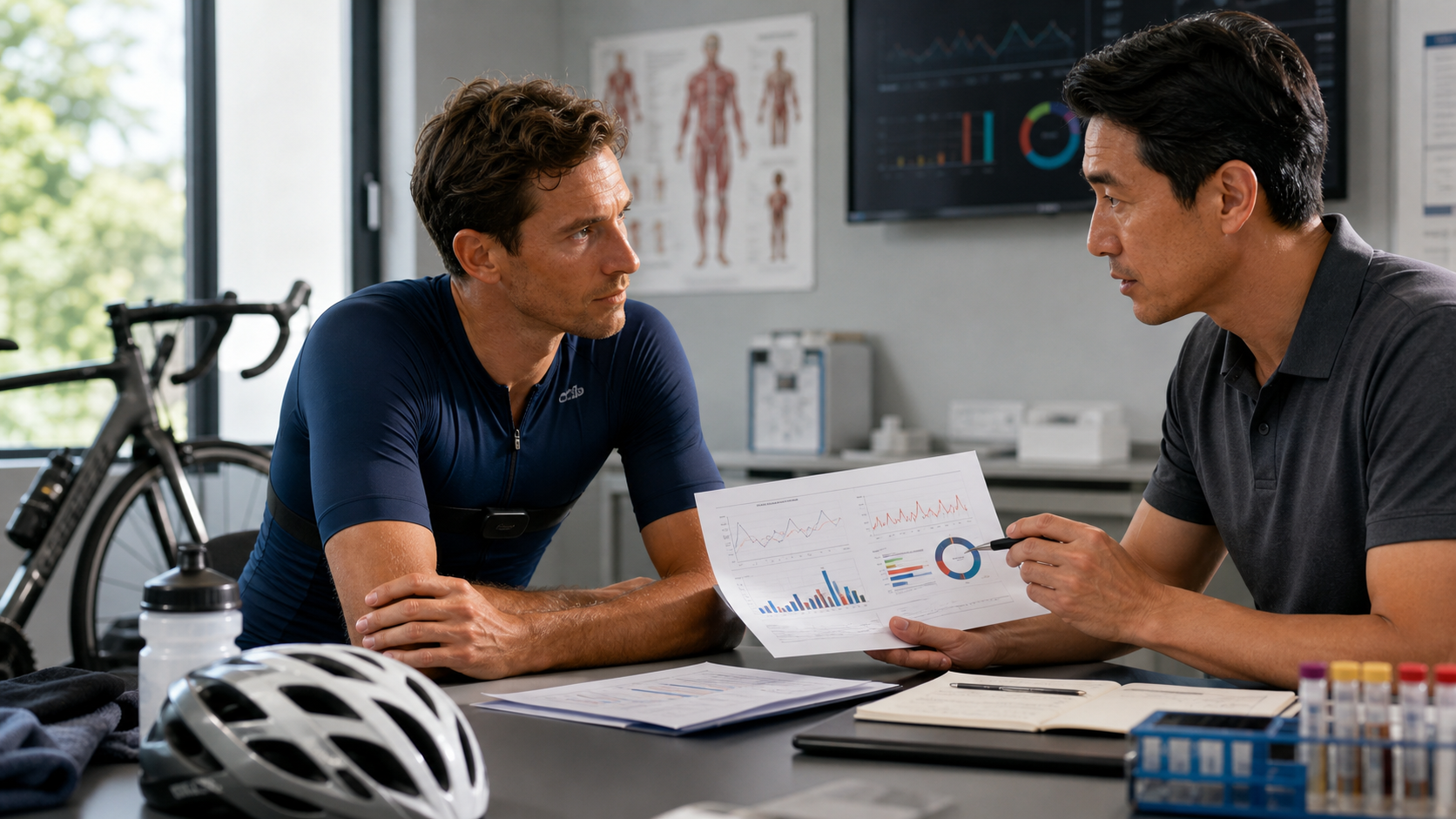
A few years ago, I coached a road cyclist in his early 30s who was an amateur but trained hard. During the winter base phase, he piled on 18 hours per week, climbed over 10,000 meters, and dropped 3 kg of body weight. But in a team time trial, his FTP didn’t go up — it dropped by nearly 15 watts. He was anxious, paid out of pocket for a full hormone blood panel, and came to me with the results: “Coach, my testosterone is low and my cortisol is high. Am I done for? Do I need to take some supplements?”
Looking at that sheet, what I was actually thinking wasn’t “what should he supplement” but “how many hours have you been sleeping these past few weeks, how much have you eaten, and how many rest days have you taken?” Because in the world of exercise physiology, hormones like testosterone, cortisol, and growth hormone are never numbers you can pull out and “treat” in isolation — they are the body’s integrated response to training, nutrition, sleep, and stress. Once you understand them, you gain an extra pair of eyes, allowing you to hit the brakes before you truly hit the wall.
In this article, I want to explain exercise and hormones clearly, in the same tone I use with my athletes: how hormones change during and after exercise, whether the testosterone/cortisol ratio (T/C ratio) can really serve as an overtraining indicator, what endocrine signals the body sends when it’s on the edge of overreaching, and most importantly — what you can practically do in Taiwan’s everyday riding, eating-out, and National Health Insurance environment.
Bottom line first: Hormones are signals, not targets. What you need to adjust is training, sleep, nutrition, and stress; hormones will naturally return to where they should be.
The Three Main Characters: What Each One Does
The world of exercise endocrinology is vast, but for endurance and strength athletes, three main characters are worth knowing. I like to remember them by the roles of “build, break down, and repair.”
Testosterone: The Primary “Building” Hormone
Testosterone is the most well-known anabolic hormone. In men, it’s mainly produced by the testes; in women, the ovaries and adrenal glands secrete smaller amounts — but don’t underestimate that small amount in women — it’s important for muscle repair, bone density, libido, and mood. Testosterone’s roles are roughly:
- Promoting muscle protein synthesis, aiding post-training repair and adaptation
- Maintaining bone density (especially critical for cyclists, whose weight-bearing stimulus on bones is low)
- Influencing red blood cell production, libido, mood, and motivation
During resistance training — especially sessions involving large muscle groups, multi-joint movements, moderate-to-high intensity, and short rest intervals — testosterone shows an acute rise, typically peaking 15 to 30 minutes after exercise and then declining. This transient rise is thought to be linked to muscle remodeling signals, but it’s worth noting: the causal relationship between acute hormonal fluctuations and long-term muscle growth is still debated in the scientific community. Don’t equate “my testosterone spiked after this set” directly with “I’ll definitely build more muscle.”
Cortisol: The Misunderstood “Breaking Down” Hormone
Cortisol is a stress hormone secreted by the adrenal glands. Many people fear it, viewing it as a muscle killer. But that’s a major misunderstanding. Cortisol’s normal jobs include:
- Mobilizing energy during exercise and stress (breaking down glycogen and fat, and protein when necessary)
- Maintaining blood sugar and blood pressure stability
- Participating in anti-inflammatory and immune regulation
- Following a circadian rhythm: highest in the early morning to help you wake up, lowest at night to help you fall asleep
A rise in cortisol during exercise is normal and necessary — it helps mobilize energy to complete your workout. The problem isn’t whether it rises; it’s whether it stays chronically elevated long-term and whether the circadian rhythm gets disrupted. In a healthy athlete, cortisol should be high when it should be high and low when it should be low. In someone who is chronically overtrained, sleep-deprived, and stressed, the cortisol rhythm becomes flattened and chaotic — that’s the real trouble.
Growth Hormone (GH): The Nighttime “Repair” Hormone
Growth hormone is secreted by the pituitary gland. Although secretion declines after adulthood, it remains critical for tissue repair, fat metabolism, connective tissue, and bone health. It has two important secretion windows:
- High-intensity exercise with significant metabolic stress (e.g., short rest intervals, interval or resistance training with pronounced lactate accumulation) stimulates acute GH secretion
- Deep sleep (especially slow-wave sleep in the first few hours after falling asleep) is the day’s biggest GH secretion peak
This is why I often tell my athletes: Your recovery doesn’t happen in the gym; it happens in bed. Sacrificing sleep to train more is like cutting off your largest block of GH secretion — it’s not worth it.
A Side Note: These Hormones Don’t Work in Isolation
Many people think of testosterone, cortisol, and growth hormone as three independent faucets. In reality, they sit within an interconnected regulatory network — the hypothalamus and pituitary issue commands from above, while the testes/ovaries and adrenal glands execute below. Any change in training, sleep, nutrition, or stress ripples through this network and affects multiple hormones at once. This is why looking at a single number often leads to misjudgment: you think high cortisol is the problem, but it might be a downstream result of sleep deprivation; you think low testosterone needs supplementation, but it might be a signal of chronic energy deficit. If you misidentify the upstream cause, no amount of downstream fixing will help.
The table below summarizes the roles of the three main characters:
| Hormone | Primary Role | Response During Exercise | Key Influencing Factors |
|---|---|---|---|
| Testosterone | Building (anabolic) | Can rise acutely with large muscle groups, moderate-to-high intensity | Sleep, body fat, age, chronic stress |
| Cortisol | Mobilizing energy (catabolic) | Rises with intensity and duration; normal | Training load, sleep, life stress, circadian rhythm |
| Growth Hormone | Repair and metabolism | Can rise acutely with high metabolic stress exercise | Deep sleep, exercise intensity, blood sugar status |
The T/C Ratio: Can the Testosterone/Cortisol Ratio Actually Be Used?
This is the question I get asked most often, and it’s also the concept most easily misused, so it deserves a proper discussion.
The Original Concept of the T/C Ratio
Testosterone represents anabolism, cortisol represents catabolism, and dividing the two gives the testosterone/cortisol ratio (T/C ratio, also called the anabolic index). In theory, it reflects the body’s “building vs. breaking down” balance. Historically, some believed that a drop of more than ~30% in resting T/C ratio could be an indicator of overtraining; a high ratio meant good recovery, effective training, and possibly approaching peak condition. Because the concept was intuitive, it became quite popular.
But Recent Evidence Has Poured Cold Water on It
I have to be honest here: recent systematic reviews have expressed clear reservations about using the resting T/C ratio to detect overtraining. According to a systematic review on the hormonal aspects of overtraining syndrome (PMC5541747), the basal (resting) hormones of overtrained athletes — including cortisol, testosterone, and their ratio — were mostly normal compared with healthy athletes in most cases. Across the studies reviewed, the T/C ratio differed from healthy controls in only about half of them, with roughly 40% showing a decrease and about 10% actually showing an increase.
An even more interesting finding: hormonal abnormalities in overtraining appear mainly in “stimulation tests,” not in resting blood draws. When overtrained athletes underwent maximal exercise tests, their growth hormone and ACTH (adrenocorticotropic hormone) responses became blunted — meaning the body’s hormonal response to stress weakened. This aligns with another review’s view: after intensified training periods, the hypothalamic–pituitary–gonadal axis (HPG axis) response to stressors is suppressed, and the exercise-induced rise in testosterone becomes smaller.
Why Is Resting Blood Draw So Insensitive?
I often use an analogy to explain this: a resting blood draw is like “checking the gauges when the engine is off,” while a stimulation test is like “stepping on the gas to see how the engine responds.” An engine that’s about to fail might show nothing when idle, but the moment you hit the throttle, the problem reveals itself. The same goes for an overtrained body—sit quietly and draw blood, and the numbers might all fall within normal range, but put real exercise stress on it, and its hormonal response to stress (the rise in GH, ACTH, testosterone) becomes sluggish and weak.
The takeaway for amateur athletes is this: you don’t actually need expensive stimulation tests, because your daily training itself is a stimulation test. When you notice the same workout plan becoming unusually hard, recovery abnormally slow, and form stubbornly refusing to improve, that’s living proof that your body’s response to stress has deteriorated—more real than a single resting blood sample.
A Plain-Language Translation for Practitioners
If I were to translate the academic jargon into everyday language, here’s what I’d tell my athletes:
- A single resting T/C ratio blood draw has limited value. It fluctuates widely and varies greatly between individuals; one number doesn’t decide your fate.
- Trends matter more than single points. If you have a baseline, tracking your own changes over the long term is more useful than comparing against someone else’s “normal range.”
- Hormones aren’t a first-line tool. For the vast majority of amateur athletes, subjective fatigue, sleep quality, morning heart rate/heart rate variability (HRV), and training performance—these cheap and immediate indicators—tell you “you’re overdoing it” earlier and more sensitively than a self-paid blood test.
So back to the rider at the start—his low testosterone and high cortisol were likely not a disease, but a normal adaptive response under functional overreaching. What I had him do wasn’t take supplements, but cut volume, catch up on sleep, and eat properly. Three weeks later, his numbers returned on their own, and his FTP climbed back up with them.
The Endocrine Spectrum of Overtraining: From “Functional Overload” to “Overtraining Syndrome”
Many people think “pushing too hard” is an on-off switch, but it’s actually a continuous spectrum. Understanding this spectrum means you won’t panic at the first sign of fatigue, nor wait until you crash to realize what’s happening.
| Stage | Plain-Language Description | Manifestations | Recovery Time Needed |
|---|---|---|---|
| Acute Fatigue | Normal tiredness after a hard session | Very tired after training, energy returns the next day | Hours to 1 day |
| Functional Overreaching (FOR) | Short-term dip after deliberately piling on volume | Performance temporarily drops, bounces back stronger after adequate rest | Days to 1 week |
| Non-Functional Overreaching (NFOR) | Insufficient recovery, starting to become imbalanced | Performance stagnates or declines, mood worsens, sleep disrupted | Weeks to months |
| Overtraining Syndrome (OTS) | Systemic breakdown | Long-term performance decline, susceptibility to infection, low mood, hormonal and autonomic dysregulation | Months or even longer |
Key concept: Functional overreaching is part of training—even a necessary evil for progress; what you truly want to avoid is sliding into NFOR and OTS. And as mentioned earlier, by the time hormonal blood markers are clearly abnormal, it’s often already too late, so we need an earlier warning system.
What “Non-Blood” Signals Does Your Body Give You First?
Before the hormone numbers turn ugly, your body has usually been complaining for a long time:
- Morning resting heart rate inexplicably elevated (5 to 10 bpm or more above normal for several consecutive days)
- Heart rate variability (HRV) persistently trending downward
- Worse sleep quality: feeling exhausted yet sleeping lightly, waking easily in the middle of the night (a classic sign of disrupted cortisol rhythm)
- Declining mood and motivation: losing interest in training, irritability, poor concentration
- Stagnant or declining performance: the same power or pace feels harder
- Changes in appetite, abnormal weight fluctuations
- Recurrent minor colds, slow wound healing (suppressed immunity)
These signals combined are earlier and more reliable than any single hormone number.
Three Real-Life Scenarios: How Hormonal Signals Show Up in People
Abstract talk gets blurry after a while, so let me use three common case types (scenarios adapted for teaching, data within general physiological ranges, not specific individuals) to paint a clearer picture.
Scenario One: A Triathlon Beginner in a Cutting Phase, Getting Weaker with Each Session
A 40-year-old triathlon beginner, aiming to finish a half-distance race while also wanting to lose 5 kg, simultaneously ramped training volume from 5 hours a week to 10 and cut daily calorie intake to well below expenditure. Three weeks later, he found himself out of breath climbing stairs, unable to sleep at night, and completely lacking motivation to train.
This is a classic case of low energy availability: with chronically insufficient calories and carbohydrates, the body downshifts “non-essential” functions to save energy, including suppressing testosterone and raising cortisol, leading to worse recovery and a worse mood. My approach was simple—put the weight-loss goal on hold first, bring daily calories and carbs back up to reasonable levels, and scale training back to a manageable range. Let the body feel safe first, then talk about performance. Two weeks later, he was sleeping again, and his training motivation had returned.
Scenario Two: A Veteran During a Work Crunch, Numbers Unchanged but Form Collapsing
A veteran with ten years of training experience hadn’t actually added much to his plan, but during that period his company project was in overdrive and he was working late into the night every day. His training power dropped, his temper worsened, and minor colds kept coming. He also went for a blood test, and his testosterone and cortisol both came back within “normal range,” leaving him even more confused: “My numbers are normal, so why do I feel so terrible?”
This ties right back to the earlier point: the hormonal abnormalities of overtraining/overstress often don’t show up in a resting blood draw, but in a blunted response to stress. Moreover, cortisol only recognizes total stress—it doesn’t distinguish between work and exercise. His problem wasn’t training at all; it was life stress + sleep deprivation eating away his recovery. The solution wasn’t in the gym, but in “treating training as easy, stress-relieving rides during this period, and coming back hard once the project is done.”
Scenario Three: A Female Cyclist Around Menopause, Overlooked Hormonal Changes
A female cyclist in her early 50s noticed that the same training plan had become especially hard to recover from, sleep quality had declined, and body composition was shifting. During this period, a woman’s hormonal environment (including estrogen and others) is naturally in transition, which in turn affects recovery, bone density, and body composition. My advice to her was: make strength training and adequate protein a staple of her routine (particularly important for maintaining muscle and bone density), be even stricter about sleep and stress management, and encourage her to seek individualized assessment through gynecology or family medicine if she experienced significant discomfort. These issues vary greatly between individuals and shouldn’t be forced into a framework built around male athletes.
The Four Levers That Influence Hormones: Sleep, Nutrition, Stress, Training
Rather than worrying about how to “directly raise testosterone,” it’s better to put your effort into the four levers that genuinely shift your hormonal environment. These four are also exactly the framework I use to prioritize with my athletes.
| Lever | Impact on Hormones | Practical Approach in the Taiwan Context |
|---|---|---|
| Sleep | Deep sleep is the biggest GH secretion window; insufficient sleep lowers testosterone and disrupts cortisol rhythm | Fixed bedtime, less blue light from phone before bed, shift workers should use blackout curtains and a quiet environment |
| Nutrition | Chronic calorie/carb deficiency lowers testosterone and raises cortisol; insufficient protein slows repair | When eating out, proactively add protein (beans, fish, eggs, meat) and vegetables; don’t just eat a bread roll after training |
| Stress | Life stress and exercise stress share the same cortisol system and can compound | Actively reduce volume during high-stress periods; treat training as stress relief rather than adding more pressure |
| Training | Appropriate stimulus brings adaptation; excessive volume without recovery leads to endocrine imbalance | Periodization, deload weeks, avoid lingering in the moderate-intensity gray zone long-term |
Sleep: The Most Underrated “Anabolic Window”
I often say that if you could change just one thing to improve your hormonal environment, it would be sleeping well. Deep sleep is the single biggest daily peak of growth hormone secretion and the core window for overall bodily repair. Chronic sleep deprivation lowers testosterone and disrupts the circadian rhythm of cortisol, trapping you in a cycle of “the more tired you are, the worse you sleep; the worse you sleep, the more tired you are.” Many people in Taiwan have habits of shift work, overtime, and late-night phone scrolling with a midnight snack—all of which are stealing your recovery. Treat sleep as part of your training and manage it deliberately; the payoff will be enormous.
Nutrition: Don’t Let “Saving” Turn into “Harming”
Crashing calories too low during weight loss, or staying low-carb long-term, isn’t good for your hormones. Carbohydrates are especially important for endurance athletes; chronic insufficiency can easily suppress testosterone and elevate cortisol. Post-training nutrition (carbs + protein) helps with recovery and stabilizing the hormonal environment. Eating out in Taiwan is convenient but tends to be high in fat and sodium, and low in protein and vegetables. Consciously filling those gaps is more practical than any supplement.
Frequently Asked Questions (FAQ)
Q: Should I pay out-of-pocket for hormone blood tests?
A: If you’re a general amateur athlete without obvious symptoms, usually not. First, take care of your sleep, nutrition, training, and stress. Subjective feelings and self-monitoring with heart rate/HRV are sufficient. If you have clear symptoms like chronic fatigue, a noticeable drop in libido, or mood disturbances, the right move is to see a doctor, who will decide whether testing is needed and how to interpret it—rather than getting a blood draw yourself just to scare yourself.
Q: Do testosterone-boosting or growth-hormone-boosting supplements work?
A: Evidence for many of these products on the market is weak, and they may even carry safety or banned-substance risks (especially for athletes subject to drug testing). Instead of spending money gambling on supplements, invest your money and time in sleep, food, and training structure—those are the real levers that shift your hormonal environment. Before using any supplement, consult a physician or dietitian.
Q: Does the time of the blood draw affect the results?
A: Yes, and significantly. Both testosterone and cortisol have clear circadian rhythms, typically peaking in the early morning. Different times, different sleep states, recent training, and stress can all make the numbers jump around. This is why a “single blood draw” shouldn’t be used to make major judgments—trends are what matter.
Q: Should women worry about these things too?
A: Yes, but the framework differs. Women’s baseline testosterone is naturally much lower, so the focus is more on the overall hormonal environment, energy availability, bone density, and hormonal changes across different life stages. Female athletes especially need to avoid chronic energy deficiency and incorporate strength training and adequate nutrition into their daily routine.
Q: Would not training at all improve my hormones?
A: No. Regular exercise itself is positive for long-term hormonal health; the problem lies in “excessive volume without recovery.” The answer isn’t to stop training, but to train smart and rest enough.
Practical Approach: Turning Hormone Knowledge into Training Decisions
That’s enough science—here’s what you can use directly. This is the monitoring and adjustment framework I actually use with my athletes.
Layer 1: A 30-Second Daily Self-Check
No expensive equipment needed—just a chart and a pen. I have athletes fill this out every morning after waking up:
| Monitoring Item | How to Record | Red Flag Warning |
|---|---|---|
| Subjective sleep quality | Rate 1 to 5 | ≤2 for 3 consecutive days |
| Morning energy/fatigue | Rate 1 to 5 | High fatigue for 3 consecutive days |
| Training motivation | Rate 1 to 5 | Clearly don’t want to move, resisting training |
| Muscle soreness | Rate 1 to 5 | Soreness that lingers and won’t go away |
| Morning resting heart rate | bpm (record if you have a watch) | 5 to 10 bpm above baseline |
If red flags appear for several consecutive days, it’s time to scale back that week’s training volume or schedule a full rest day. This is far smarter than waiting for a blood test report.
Layer 2: If You Have a Device, Add HRV and Sleep Tracking
Many sports watches and rings now measure HRV and sleep. The point isn’t to chase some “standard value,” but to establish your own baseline and then look at deviations. A persistently declining HRV, continuously low deep-sleep hours, combined with subjective fatigue, are clear signals to reduce volume.
Layer 3: Training Structure Itself Needs Breathing Room
The foundation of hormonal balance comes from training design. A few principles:
- Periodization: Schedule a deload week after a big training block—for example, 3 weeks of building volume, then cut to about 60% in week 4—giving the body time to convert “functional overload” into adaptation.
- Intensity distribution: Don’t do moderate-to-high intensity every day in endurance training. Most of the time should be easy aerobic base work, concentrating high intensity on a few key days. Daily moderate intensity (the so-called “grey zone”) is the easiest way to keep cortisol chronically elevated without getting corresponding gains.
- Sleep trumps extra training: If you can only choose one, always choose sleep. Deep sleep is central to growth hormone secretion and overall recovery.
- Nutrition can’t be neglected: Chronic energy deficiency (especially too-low carbs) suppresses testosterone and raises cortisol. This is especially common in riders during weight-loss phases.
Common Mistakes and Fixes: The Pitfalls I See Most Often in My Athletes
Mistake 1: Treating Acute Hormonal Spikes as a Training Goal
Some people, trying to “spike testosterone and growth hormone,” force every session into a lactate-soaked, short-rest hell workout. The problem: the causal link between acute hormonal rises and long-term adaptation is still debated, and doing this kind of session daily actually raises chronic stress load. Fix: The training goal should be “progress and sustainability.” Hormonal fluctuations are a byproduct, not a KPI.
Mistake 2: Panicking or Supplementing Wildly After a Single Blood Draw
Seeing one low testosterone reading and immediately buying various “testosterone-boosting” supplements is the behavior I most want to talk people out of. A single number is heavily influenced by sleep, draw time (morning vs. evening differs a lot), recent training, and stress. Fix: If you’re genuinely concerned, see a doctor for evaluation—looking at trends, symptoms, and a full workup—rather than self-diagnosing or blindly supplementing based on a single point. Taiwan’s NHI makes seeing a doctor easy; if you have clear symptoms (chronic fatigue, noticeably reduced libido, mood issues), go through proper medical channels instead of buying supplements online.
Mistake 3: Using “Grinding Harder” to Mask Insufficient Recovery
When performance drops, training even harder is the most common vicious cycle—and this is exactly the typical path from NFOR sliding into OTS. Fix: When performance declines, your first reaction should be “Am I recovering enough?” Check sleep, nutrition, and life stress first, rather than mindlessly adding volume.
Mistake 4: Ignoring the Big Variable of Life Stress
Cortisol doesn’t distinguish between “exercise stress” and “work stress”—it only recognizes the total load. Someone with a chaotic job, family issues, and trying to maintain high training volume is carrying far more total stress than what the training plan shows on paper. Fix: Factor life stress into your training load calculation. Actively reducing volume during high-stress periods isn’t laziness; it’s smart.
Mistake 5: Two Pitfalls Specific to the Taiwan Context
- Eating out is high-fat, high-sodium, and lacking in protein and vegetables: Chronic nutritional imbalance drags down recovery. Fix: When eating out, consciously fill the protein (beans, fish, eggs, meat) and vegetable gaps. Don’t just grab a bread roll after training and call it done.
- The hidden stress of hot, humid summer training: Taiwan’s summers are hot and humid. The same workout in a hot environment produces a greater cortisol and overall physiological stress response, with higher dehydration risk. Fix: In summer, moderately reduce intensity, avoid midday heat, and stay on top of fluids and electrolytes. Don’t push through with winter standards.
Debunking the Three Most Widespread Hormone Myths
In years of coaching, I encounter a few myths almost every season. Let’s clear them up once and for all.
Myth 1: “Cortisol is a bad hormone; you should try to keep it as low as possible.”
Wrong. Cortisol is an essential hormone for survival; its rise during exercise is the body’s normal way of mobilizing energy. The real problem is never “having cortisol,” but “chronically elevated levels and disrupted circadian rhythm.” Instead of trying to suppress cortisol, take care of your sleep, stress, and recovery so it rises and falls as it should.
Myth 2: “If testosterone spikes during a workout, that means this routine builds the most muscle.”
Not necessarily. The causal relationship between acute hormonal fluctuations and long-term muscle/performance adaptation is still debated in the scientific community. Treating a single hormonal spike as a guarantee of training effectiveness is an oversimplified gym legend. What truly drives progress is consistent long-term training stimulus plus adequate recovery—not the 15-minute hormonal peak after a particular set.
Myth 3: “If my numbers are normal, I’m fine.”
Also incorrect. As emphasized repeatedly, hormonal abnormalities from overtraining/overstress often hide in the “response to stress,” not in resting numbers. Your sleep, mood, motivation, and performance are far more sensitive frontline indicators. Don’t let a normal blood test report override the fact that your body is loudly protesting.
Actionable Advice for Readers at Different Levels
If You’re a Beginner Just Starting Out
- Don’t touch hormone blood tests. What you need most right now is consistent training, good sleep, and adequate food—your body will reward you handsomely.
- Learn to use the simplest subjective feelings (sleep, fatigue, motivation) as self-monitoring, and build the habit of a 30-second daily log.
- Remember that “rest is part of training.” Don’t get swept along by the over-the-top training plans you see online.
If You’re an Advanced Enthusiast with Some Foundation
- Introduce structured periodization and deload weeks—don’t let yourself linger in the gray zone long-term.
- If you have a sports watch, start tracking HRV and morning heart rate to establish your own baseline.
- Learn to recognize the early signs of NFOR and hit the brakes before sliding into OTS.
If You’re a High-Intensity Athlete Approaching Competition
- Hormone testing can serve as a supplement for trend monitoring, but it must be paired with professional interpretation from a coach/sports medicine specialist, and should be read as a trend rather than a single data point.
- During high-volume periods, pay extra attention to sleep, nutrition (especially carbohydrates and total calories), and life stress management.
- If you experience several weeks of declining performance, mood and sleep issues, or recurrent infections, take it seriously—seek medical attention proactively and cut volume significantly. Recovery from OTS can take months.
A Simple Weekly Self-Monitoring Table Example
Finally, here’s a framework you can copy directly—stick it on the fridge or save it on your phone:
| Day | Sleep (1-5) | Fatigue (1-5) | Motivation (1-5) | Morning HR (bpm) | Today’s Decision |
|---|---|---|---|---|---|
| Mon | Follow the plan | ||||
| Tue | Follow the plan | ||||
| Wed | Adjust as needed | ||||
| Thu | Follow the plan | ||||
| Fri | Adjust as needed | ||||
| Sat | Long aerobic session | ||||
| Sun | Complete rest |
The rule is simple: if any item shows a red flag for 3 consecutive days, cut the remaining volume for the week or take an extra rest day. Don’t argue with your body.
Over time, you’ll realize the greatest value of this table isn’t in any single day’s score—it’s in helping you turn “feelings” into “evidence.” When you’re fatigued, your judgment is at its worst, and you’re most likely to convince yourself that “pushing through a little more is fine.” With several days of it in black and white, you have objective grounds to call a stop for yourself. Among the athletes I’ve coached, those who developed the habit of tracking almost always fell into deep overtraining less often—not because they trained less, but because they reduced volume at the right time, turning every bit of effort into real progress instead of digging their bodies into an ever-deeper hole.
A quick reminder: this table isn’t meant to turn you into someone who stares at numbers anxiously all day. Fill it in, take a look, make a decision—30 seconds, done. The whole story of hormones and recovery boils down to one sentence—give stimuli consistently, then let the body repair properly. The table just helps you hold up the “repair” half.
Conclusion: Treat Hormones as a Dashboard, Not a Steering Wheel
Back to that cyclist’s story. He eventually flipped his entire training philosophy: he stopped chasing logged hours and learned to listen to his body—cut volume when sleep was poor, rest when motivation was low, and push hard when he felt great. Over the course of a season, his FTP hit a personal best, and he barely fell into that “training harder but getting weaker” black hole all year.
Testosterone, cortisol, growth hormone—these hormones are like the needles on a dashboard, telling you the current state of the engine. But the one holding the steering wheel is always your decisions about training, sleep, nutrition, and stress. Reading the needles is about making better decisions, not trembling while staring at them.
I hope this article gives you a bit more composure and a bit less anxiety the next time you think, “Why am I getting more tired the more I train?” Push hard when it’s time to push, and rest easy when it’s time to rest—that’s the wisdom that will let you ride and run for a lifetime. The hormonal world of exercise may seem complex, but what you really need to remember is just this: take care of the four pillars—sleep, nutrition, stress, and training—and your body’s endocrine system will naturally handle the rest. Everything else, leave to time and consistent accumulation. Wishing you long rides and healthy runs on every mountain road and in every race across Taiwan.
This article is for educational purposes and does not replace individual diagnosis and treatment advice from a physician, physical therapist, or nutritionist. If you experience prolonged fatigue, a noticeable drop in libido, mood disturbances, or recurrent infections, please seek medical attention early and have a professional conduct an individualized assessment.
References
- Hormonal aspects of overtraining syndrome: a systematic review (PMC): https://pmc.ncbi.nlm.nih.gov/articles/PMC5541747/
- The Testosterone: Cortisol Ratio – A Tool with Practical Use and Research Potential in Endocrinology (PMC): https://pmc.ncbi.nlm.nih.gov/articles/PMC12604835/
- Overtraining and the endocrine system. Can hormones indicate overtraining? (Society for Endocrinology): https://www.endocrinology.org/endocrinologist/153-autumn-24/features/overtraining-and-the-endocrine-system-can-hormones-indicate-overtraining/
Related Reading
- Does Exercise Really Build “Manly Hormones”? A Complete Scientific and Practical Guide to Exercise, Testosterone, and Men’s Health
- Exercise and Hormonal Balance: A Coach’s Guide to Understanding Endocrinology—Turning Training into a “Regulatory Switch” Rather Than a Stressor
- Hormonal Responses to Cycling Training: The Relationship Between Testosterone, Cortisol, and Training Plans
- Hormonal Responses to Running: Cortisol, Testosterone, and Training Adaptations
西進武嶺 免費訓練分析服務 Intervals | 練不夠還是練過頭?你哪一種類型選手?AI模型告訴你! | 備戰神器 | 公路車 訓練 | CT Yeh
4 年前
#公路車 #Vo2Max #最大攝氧量 測驗 體驗 | 心肺測試
6 年前
FTL 與 SYB 車隊專訪 西進武嶺 實用攻略分享! 2小時 如何練?!你不知道的眉角!新手準備武嶺必看 EP1 | 實力派女車友 | 精華版 | 公路車 | CTYeh
4 年前
一日北高/長距離團騎 常見問題補充篇 / 組團或跟團的眉角 / 壯車友容易被瘦車友慢性拉爆 / 原來屁股痛可能是這個原因...? / 風場配速法 / 公路車 / CT Yeh
2 年前
單車AI教練!全新 ChatGPT4o 幫你分析訓練成果!排武嶺課表,分析騎車姿勢! 太神了! / 公路車 / CT Yeh / feat. 緯緯
2 年前
福隆鐵人團練隨拍
8 年前
如果Pogačar騎西進武嶺可以多快?會破2嗎?各種情況深度推估探討 / 公路車 / CT Yeh
2 年前
#公路車 #Fitting 靠人工智慧APP 幫你調整單車
6 年前