Beta-Alanine and Muscle Buffering Capacity: The Hidden Throttle for High-Intensity Sprints—Dosage, Side Effects, and Practical Use for Taiwanese Riders
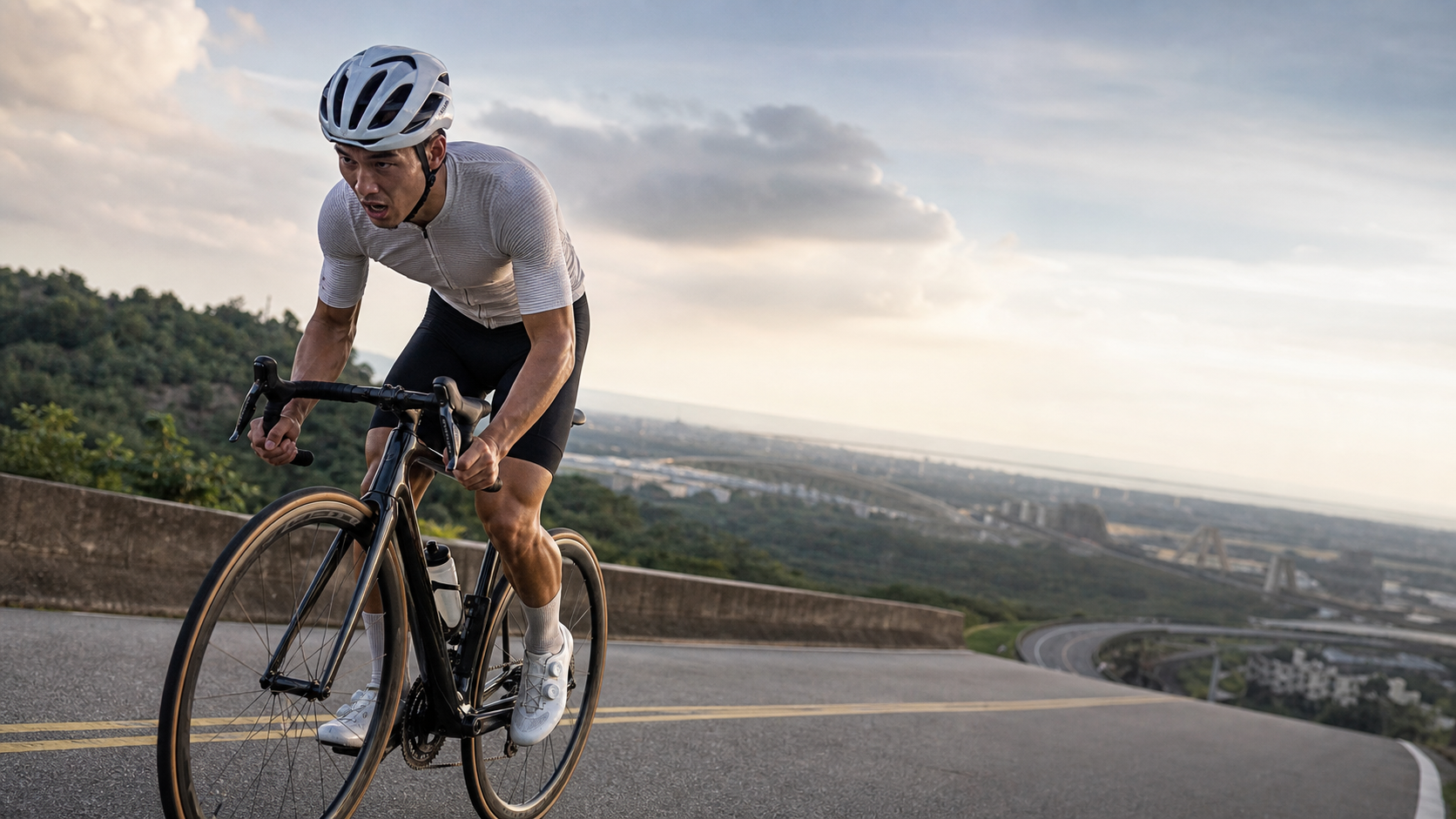
Starting with a Sprint at the Guandu Bridge
I still remember the first time my athlete A-Zhe came to see me. He was an amateur road cyclist who trained regularly on weekends with his team around the Guandu Bridge and Fengguizui. His fitness was actually not bad—his climbing ability on Fengguizui ranked above average in the amateur scene, and his VO₂max numbers looked impressive too. But he had one hurdle he couldn’t get past: every time the group ride ended with a sprint on the bridge, or during the final lap of a criterium, he’d always get dropped by “half a bike length.”
“Coach, I clearly still have energy left, but at that moment my legs just lock up—so sore I can’t move, like someone stomped on the throttle.” He put it perfectly.
In my fifteen years of coaching athletes, I’ve heard too many similar complaints. Most people’s first reaction is “my cardio isn’t good enough” or “my strength is lacking,” so they hammer intervals and grind through heavy lifting. Those things matter, of course, but there’s one piece of the puzzle that often gets overlooked: your muscles’ buffering capacity—whether your muscles can hold up and keep the internal environment from turning acidic too quickly when you’re producing massive amounts of hydrogen ions at high intensity. And when it comes to buffering capacity, you can’t avoid talking about a supplement that’s been researched quite thoroughly in the sports nutrition world: β-alanine.
In this article, I want to explain β-alanine clearly from a coach’s perspective: what it actually does in your body, which sports it helps, how much to take, what that annoying “full-body tingling” is all about, and what you should do depending on your level. I’ll keep the science practical enough, but the key is—after reading this, you can actually put it to use.
The Conceptual Foundation: Why You Get “Too Sore to Move”
The Acidification Problem in High-Intensity Exercise
Let’s establish a core picture first. When you perform high-intensity efforts lasting roughly 1 to 4 minutes—say, a steep climb sprint, a 400-meter all-out swim, or a final surge in a criterium—your muscles rely primarily on anaerobic glycolysis for rapid energy production. This process is efficient and fast, but it comes with a massive accumulation of hydrogen ions (H⁺) inside the muscle cells.
Many people think it’s “lactic acid” that makes your legs lock up—that’s a widely circulated misconception. Lactic acid itself is, to some extent, actually a fuel. What truly interferes with muscle contraction and “stomps the throttle” is the drop in intracellular pH (becoming more acidic). When the internal environment of the muscle turns acidic, enzyme activity is inhibited, calcium regulation is disrupted, and muscle contraction efficiency drops—that’s the “legs locking up” A-Zhe described.
Carnosine: Your Body’s Natural Buffer
Your body isn’t without countermeasures. Muscles contain a dipeptide called carnosine, made up of β-alanine and histidine. One of carnosine’s most important functions is acting as a pH buffer inside the cell—when hydrogen ions start accumulating, carnosine can “absorb” a portion of them, slowing down how quickly the muscle turns acidic.
Think of it like the buffering system in soda: if you add the same amount of acid, a liquid with stronger buffering capacity will see its pH drop more slowly. The higher your muscle carnosine concentration, the longer you can hold on during high-intensity output and the slower your pace drops.
Here’s a detail that’s often overlooked: carnosine buffering isn’t the only buffering mechanism. Your body has other systems (like bicarbonate buffering, protein buffering, and transport mechanisms that shuttle hydrogen ions out of cells) that share the workload. What makes carnosine special is that it sits right inside the muscle cell and works particularly well in the pH range seen during exercise—it’s like the first-line buffer “at the scene of the incident.” That’s why raising carnosine concentration translates relatively directly into improved high-intensity tolerance—it’s covering exactly the spot where hydrogen ion accumulation is most severe.
Here’s the key: the rate-limiting factor for carnosine synthesis is β-alanine. Histidine is usually sufficient in muscle, but β-alanine isn’t. In other words, supplementing with extra β-alanine can drive your muscles to synthesize more carnosine, enlarging that “fuel tank” of buffering capacity.
According to the International Society of Sports Nutrition (ISSN) position stand, supplementing 4 to 6 grams of β-alanine daily for at least 2 to 4 weeks significantly increases muscle carnosine concentration and improves exercise performance, with the most pronounced effects seen in open-ended tasks lasting approximately 1 to 4 minutes (such as time trials) (source listed in the references at the end). This time window falls right in the range of many cycling sprints, criterium efforts, and climbing attacks.
It’s Not a Stimulant—It’s a “Storage-Type” Supplement
I have to emphasize this point: β-alanine is not like caffeine—it doesn’t give you an immediate boost the moment you take it. Its effect is “cumulative”—you need to take it for weeks, gradually building up your muscle carnosine stores before buffering capacity improves. So it’s for people willing to use it consistently and plan it into their race preparation. Cramming it the night before a race, besides making you tingle all over, will do almost nothing. I can’t count how many athletes I’ve had to clarify this misconception with.
Three Commonly Confused Supplements with Completely Different Mechanisms
Many athletes treat “pre-race supplements” as one category, but the mechanisms of the ingredients inside are worlds apart. I often use this table to help them distinguish, avoiding stacking and unrealistic expectations:
| Supplement | Mechanism of Action | Onset Timeline | Best Use Case |
|---|---|---|---|
| β-alanine | Raises muscle carnosine, enhances intracellular pH buffering | Cumulative, requires weeks | 1 to 4 minutes of high-intensity acidification |
| Caffeine | Central nervous system stimulation, reduces perceived fatigue | 30 to 60 minutes before race | Alertness, raising willingness to sustain output |
| Sodium bicarbonate (baking soda) | Enhances blood (extracellular) buffering capacity | Tens of minutes to hours before race | High-intensity acidification, but high GI risk |
Once you understand this table, you won’t make the mistake of “downing β-alanine the night before a race to feel alert”—that’s treating it like caffeine, using the wrong tool. β-alanine handles intracellular buffering; sodium bicarbonate handles extracellular (blood) buffering. Theoretically they complement each other, but sodium bicarbonate’s GI side effects are significant, and I generally don’t proactively recommend it to recreational athletes. I’m just letting you know they’re different things.
Which Sports β-Alanine Helps (and Which It Doesn’t)
Not every sport benefits from this supplement. The clearest way to understand it is through a time-based lens:
| Effort Duration | Primary Energy System | Expected β-alanine Benefit | Common Taiwanese Scenario Example |
|---|---|---|---|
| Less than ~10 seconds | Phosphocreatine system | Almost no effect | Track cycling standing start, very short explosive efforts |
| ~1 to 4 minutes | Primarily anaerobic glycolysis | Most pronounced benefit | Steep climb sprints, criterium finishing attacks, 400m swimming, mid-length CrossFit WODs |
| ~4 to 10 minutes | Mixed aerobic/anaerobic | Moderate, depends on intensity | Final stretch of a hill time trial, 2000m rowing |
| Over 30 minutes of prolonged endurance | Primarily aerobic | Generally not significant | Long climbs on Yangmingshan, marathon cruising segments |
Once you understand this table, you’ll see why I suggested A-Zhe give it a try—his pain point fell right into the “1 to 4 minutes, too sore to move” sweet spot.
Conversely, if you’re purely an ultramarathon runner, a century-ride cruiser, or someone chasing steady aerobic pacing, β-alanine’s marginal benefit for you is much lower. Your resources should go into training volume, fueling strategy, and sleep first. Supplements are always the last 1% of optimization, not a patch for holes in your training. I say this to every athlete who asks me “what should I eat to get faster.”
A Hidden Use for Endurance Athletes
Even if your main focus is long-distance, β-alanine can still help on interval training days and during key high-intensity moments in races. Imagine a road race: overall it’s endurance, but the decisive moment might be a three-minute surge on a steep climb, or a sprint to the finish line. These “race-defining moments” are precisely when anaerobic glycolysis dominates. So I wouldn’t dogmatically say endurance athletes don’t need it at all—it depends on how your race is actually won.
I once coached a student, Xiao-Min, who primarily focused on 100 km long-distance events. She always felt supplements had nothing to do with her. But I asked her to carefully recall several races she had “lost,” and we found the key moments weren’t in the cruising sections, but rather after being dropped on a steep climb of about two to three minutes mid-race, she could never catch back on. In that situation, buffering capacity actually has its place—not to make her faster overall, but to prevent that fatal climb from making her “legs seize up” so quickly. This is what I mean: you have to look at where your race is won and lost. Supplements should target that decisive point, not be sprinkled indiscriminately across the entire event.
Practical Approach: Dosage, Timing, and Specific Workouts
Standard Supplementation Protocol
Based on current mainstream sports nutrition recommendations, this is how I typically structure it for my athletes. Here is the dosage table I actually use:
| Phase | Total Daily Dose | Divided Doses | Duration | Purpose |
|---|---|---|---|---|
| Loading Phase | 4 to 6 grams | Split into 3 to 4 doses, each under about 1.6 grams | 4 to 12 weeks | Build up muscle carnosine stores |
| Maintenance Phase | About 1.2 to 3 grams | Split into 1 to 2 doses | Ongoing use | Maintain elevated carnosine levels |
| After Discontinuation | — | — | Carnosine levels slowly decline over several weeks | Re-enter loading phase if needed |
Here are a few key practical points I want to highlight for you:
- Dividing doses is crucial: Split the daily 4 to 6 grams into 3 to 4 smaller doses, keeping each under about 1.6 grams. This ensures you get the total amount while significantly reducing the tingling side effect. The ISSN position stand also clearly states that using divided low doses or sustained-release formulations can mitigate the tingling sensation.
- Cumulative amount matters more than timing: β-alanine doesn’t need to be taken “pre-workout” to be effective. It works by accumulating over time to build up carnosine, so you can take it with breakfast, lunch, and dinner, or at any time you remember. This is completely different from supplements like caffeine or nitrates, which are used on a “timed pre-race” basis.
- The loading phase should last at least 4 full weeks: Too many people give up after a week because they don’t feel anything. Carnosine accumulation takes time—changes begin around 2 weeks, and it gradually reaches a plateau over 4 to 12 weeks. That’s its rhythm.
The 12-Week Practical Plan I Set Up for A-Zhe
Using A-Zhe’s case, let me show you what this looks like in practice (dosages are general ranges for illustration, not individual prescriptions):
- Weeks 1 to 2 (Adaptation and Dose Testing): Start with about 2 to 3 grams per day, split into morning and evening doses, to let him observe his tolerance to the tingling. These two weeks aren’t about rushing performance; the focus is confirming that his gastrointestinal and skin sensations are acceptable.
- Weeks 3 to 8 (Loading Phase): Increase to 4 to 6 grams per day, split into 3 to 4 doses, taken with meals. During this period, his training continued as usual, and I specifically scheduled 1 to 2 sessions per week of “1 to 4-minute maximal intervals,” because supplements only make sense when paired with the right training stimulus.
- Weeks 9 to 12 (Maintenance and Verification): Reduce to about 2 to 3 grams per day for maintenance, and incorporate simulated race sprint segments into his workouts to observe his rate of deceleration in the “final two kilometers.”
What were the results? I won’t exaggerate, and I won’t give you a fabricated percentage. A-Zhe’s own subjective feedback was: the threshold where his “legs suddenly seized up” came later, and in the final sprint he could “hold on for a few more seconds.” For an amateur rider, being able to hold on for a few more seconds in the last two kilometers often means the difference between staying with the main group or not. This “delayed hitting-the-wall threshold” is exactly the sensation β-alanine should provide—it won’t turn you into a different person, but it pushes back the line where you would have prematurely run out of steam.
The Logic of Pairing with Training
I want to emphasize this repeatedly: Supplements are an amplifier, not an engine. If your high-intensity training is insufficient, your muscles are never pushed into situations requiring significant buffering capacity, so no matter how high you build your carnosine, you won’t use it. Therefore, β-alanine is best paired with training cycles that regularly include anaerobic intervals, sprints, and climbing attacks. For cycling, examples include repeated VO2max intervals on rolling terrain, criterium simulations, and finish-line sprint drills—these are the workouts where buffering capacity truly comes into play.
A Practical Workout That Actually “Uses” Buffering Capacity
Talking without doing is meaningless, so let me share one of the key workouts I gave A-Zhe at the time. The design philosophy of this workout is to repeatedly push the muscles into the “1 to 4-minute acidification” zone—precisely where carnosine’s buffering capacity shines. You can do it on a riverside path, at Fengguizui, or on a trainer:
| Segment | Content | Perceived Effort | Purpose |
|---|---|---|---|
| Warm-up | 15 minutes progressive, with 3 x 10-second accelerations | Easy to slightly breathless | Activate neuromuscular system, warm up |
| Main Set A | 3-minute maximal efforts x 4, with 3-minute rest between | “Legs start burning” from minute 2 | Push into acidification zone, accumulate buffering demand |
| Main Set B | 1-minute near-maximal efforts x 4, with 2-minute rest between | Legs heavy, urge to quit in the final part | Simulate the threshold of a finish sprint |
| Cool-down | 10 to 15 minutes easy spinning | Very easy | Flush metabolites, relax |
The point of this workout isn’t how fast you ride, but letting your body repeatedly experience the threshold of “almost too acidic to move” and, during the β-alanine supplementation period, observing whether that threshold gets pushed back. Training and supplements are a package deal—neither works without the other. A reminder: this is an advanced high-intensity workout for enthusiasts; beginners should first build an aerobic base and not jump straight into this.
What Exactly Is That “Whole-Body Tingling”? A Complete Breakdown of Side Effects
Paresthesia: The Most Common, But Harmless, Side Effect
Almost every athlete I coach who tries β-alanine for the first time comes to me asking: “Coach, I feel waves of tingling and itching on my scalp, neck, and arms—is this an allergy? Is it damaging my liver?”
Let me put your mind at ease first: this phenomenon is called paresthesia, and it’s the most well-known side effect of β-alanine. It typically occurs with non-sustained-release forms when a single dose exceeds about 800 mg. Research shows this tingling sensation generally subsides on its own within about 60 to 90 minutes after supplementation (sources listed in the references at the end). Current research shows no evidence that this tingling is harmful to the body—it’s more like a harmless signal of temporary nerve-ending activation, not a danger alarm.
As for the mechanism, current research suggests it’s related to β-alanine activating specific receptors on sensory nerves in the skin, which is why it’s most noticeable in areas dense with nerve endings like the scalp, face, neck, and forearms. Some people describe it like the feeling of carbonation, others compare it to a mild electric current—it varies from person to person.
How to Minimize the Tingling
This is the section I get asked about most, and it’s the most practical. Here’s a comparison table:
| Approach | Principle | Practical Advice |
|---|---|---|
| Divided small doses | Keep single doses below the threshold that triggers tingling | Keep each dose under about 1.6 grams, or even less |
| Choose sustained-release formulations | Slow absorption, flatten the peak blood concentration | Research shows with the same 1.75 grams, the beverage version causes tingling while the delayed-release capsule version doesn’t |
| Take with food | Food delays absorption and spreads out the peak | Take with meals or snacks; the sensation is usually milder |
| Gradual progression | Let the body adapt over time | Start with a lower daily dose and slowly increase over several weeks |
Research has directly compared this: with the same 1.75 grams, people who consumed it as a beverage experienced tingling, but those who took a delayed-release capsule did not. This explains why sustained-release formulations are increasingly popular on the market—not because they’re more effective, but because they feel more comfortable, making it easier for people to stick with long-term use.
Safety Profile and Conservative Reminders
Based on current research evidence, beta-alanine is considered relatively safe for healthy populations when used at recommended doses, with no widely reported significant side effects other than paresthesia (tingling). But I must, with a coach’s conservative stance, remind you of a few things:
- Those with chronic conditions should consult a professional first: If you have diabetes, high blood pressure, heart disease, kidney disease, or are taking any long-term medication, please discuss with your physician or dietitian before using any supplement for an individualized assessment. This isn’t just a formality—everyone’s physical condition and drug interactions are different and cannot be generalized.
- Pregnancy, breastfeeding, and adolescents: Research evidence for these groups is limited. My advice is always conservative: prioritize consulting a professional and do not self-experiment.
- It’s not “the more, the better”: Exceeding the recommended dose will not proportionally amplify the effects; it will only increase the chance of tingling and gastrointestinal discomfort. Spending more money won’t buy you more results.
- Accessibility of medical care in Taiwan: Our National Health Insurance system has a low barrier to seeing a doctor. If you have any concerns, it’s not difficult to book a family medicine or sports medicine consultation. Don’t just draw conclusions from browsing online.
Common Mistakes and Corrections
Having coached students for so many years, I’ve compiled the most common pitfalls. See if any apply to you:
Mistake 1: Expecting “Same-Day Results”
Symptoms: You start taking it only a day or two before the race, end up with nothing but a tingling sensation, feel no effect on race day, and conclude “this stuff doesn’t work.”
Correction: Beta-alanine is a cumulative supplement; it requires 4 or more weeks of consistent supplementation to show benefits. If you want to use it, incorporate it into your race preparation plan starting at least a month in advance. For acute pre-race stimulation, that’s caffeine’s job, not this.
Mistake 2: Treating Tingling as an Indicator of “Effectiveness”
Symptoms: You think more tingling means it’s working, so you chase that numb feeling and deliberately swallow a large dose at once.
Correction: Tingling has no positive correlation with effectiveness. Tingling is just a signal that a single dose has exceeded the threshold of skin nerves; it’s unrelated to how much carnosine you’ve accumulated in your muscles. People using sustained-release formulations barely tingle at all, yet they still build up carnosine effectively. Don’t get your priorities backwards.
Mistake 3: Only Taking Supplements, Not Doing the Required Training
Symptoms: You think taking it will automatically make you stronger, so your training remains lax, especially lacking high-intensity intervals.
Correction: Buffering capacity is only useful when your muscles are genuinely pushed to the brink of acidosis. Without corresponding high-intensity training stimulus, even high carnosine levels are just idle capacity. Supplements amplify training; they don’t replace it.
Mistake 4: Using It for the Wrong Sport
Symptoms: A rider who only does long-distance cruising and pursues steady-state aerobic performance spends money on beta-alanine and feels no difference—that’s perfectly normal.
Correction: First, honestly assess whether your sport falls within the “1 to 4 minutes of high-intensity” benefit zone. If not, invest your resources where they can better leverage performance—training volume, recovery, total caloric intake, and carbohydrate fueling strategies.
Mistake 5: Ignoring Overall Diet and Hydration
Symptoms: You focus only on supplements, yet train to the point of dehydration in Taiwan’s hot, humid weather, and your meals out don’t provide enough protein or carbohydrates.
Correction: Supplements are the tip of the pyramid. Get the foundation right first—adequate sleep, consistent training, balanced meals, and sufficient fluids and electrolytes in the summer. Sweat loss from cycling and running in Taiwan’s summer is staggering; dehydration’s impact on performance far outweighs anything a supplement can fix. If the fundamentals aren’t in place, supplement benefits will be diluted to the point you can’t even feel them.
Practical Reminders for the Taiwan Context
Being in Taiwan, there are a few local details I want to specifically emphasize:
- Hot, humid climate amplifies the pain of high-intensity efforts: Training sprints in Guandu, riverside paths, or Yangmingshan in summer means your core temperature rises quickly and it feels much harder to sustain. Beta-alanine helps with muscle acidosis, but heat dissipation and hydration are separate and more pressing issues. Don’t expect a supplement to solve heat-related problems.
- Protein and histidine sources for those who eat out: Histidine, another precursor for carnosine, comes from daily protein intake. Eating out is convenient in Taiwan, but insufficient protein and excess carbohydrates are common. Instead of obsessing over supplements, first make sure each meal includes a decent protein source (chicken breast, tofu, eggs, fish).
- Medical care is accessible—use it: As mentioned, Taiwan’s NHI has a low barrier to seeing a doctor. If you have any chronic conditions, are on medication, or feel unwell, booking a consultation is easy. Please prioritize this route rather than seeking answers on internet forums and making your own judgments.
- Read product labels carefully: Commercial products include pure beta-alanine powder and also blends in comprehensive “pre-workout” formulas. The latter often contain additional ingredients like caffeine. Be sure to check the ingredients and per-serving dosage before purchasing, to avoid inadvertently consuming excessive amounts or stacking stimulants.
- Practical testing advice for common venues: The riverside bike paths, Fengguizui, Maokong, and Yangmingshan—frequently used by Taiwanese enthusiasts—are excellent “validation grounds.” Pick a fixed steep climb or sprint point and measure your speed drop before and after a supplementation cycle under the same conditions. This is far more reliable than any subjective feeling. I usually advise students to choose a segment they know so well they could recite their expected time with their eyes closed, to keep variables simple.
- Don’t mix with unknown powders: Some bulk powders on the market tout “synergy” but have unclear ingredient labels. Rather than saving a bit of money, choose products with transparent ingredients and clear sourcing. Your body shouldn’t be a test subject for unknown substances.
Actionable Advice for Readers at Different Levels
Let’s distill the above into executable plans. Find where you fit:
If You’re a “Beginner New to Exercise”
Don’t rush to buy it. Your biggest gains right now lie in consistent training, sleep, and basic nutrition. The marginal benefit of supplements for you is minimal. My advice: first establish a training routine, confirm your exercise genuinely falls in the high-intensity zone, and eat a balanced diet. Only then consider these kinds of fine-tuning details. If you really want to try it, start with the lowest dose, split into multiple servings, take with meals, and focus on “observing your body’s response” rather than “chasing results.”
If You’re an “Intermediate Enthusiast with a Foundation”
You might be stuck at the stage where “you can’t close the gap in that final sprint.” If so, beta-alanine is worth a try. Here’s how:
- Confirm your training includes sufficient high-intensity intervals (1 to 4 minutes of all-out efforts).
- During the loading phase, take 4 to 6 grams daily, split into 3 to 4 doses, with meals, for at least 4 weeks.
- Use the tingling reference chart to keep your sensation at a comfortable level (via split dosing or sustained-release forms).
- Use “the degree of speed drop in a race-simulation sprint segment” as your subjective validation metric, not the scale or short-term feelings.
If You’re a “Competitive Athlete with Race Goals”
Incorporate it into your periodized plan: start building carnosine during the pre-season base phase, and use a maintenance dose to hold it during the season. At the same time, be sure to—don’t suddenly increase the dose right before a race and end up with a full-body tingle that affects your performance; before important races, “test it out” during training first to confirm your gastrointestinal and skin reactions. Don’t make your official race the first experiment. Any fueling strategy should be validated in training first; on race day, only use what you’re familiar with—this is an iron rule.
If You Have Chronic Conditions or Are on Medication
Treat this article as background knowledge only. Whether to actually use it and how, please bring your questions to your physician or dietitian. This isn’t a cop-out; it’s because individualized assessment truly cannot be replaced by a general article. For conditions like diabetes, high blood pressure, heart disease, and kidney disease, supplement choices may interact with your medications and metabolic state—this is beyond what a general article can cover or decide for you. Medical care is accessible in Taiwan; bringing specific questions to a clinic visit will often get you a more suitable answer faster than asking around on forums. Remember, being conservative, individualized, and prioritizing professional consultation is always the safest approach to health matters.
Frequently Asked Questions (FAQ)
Q: Can beta-alanine and creatine be taken together?
A: The two work through different mechanisms—creatine leans toward very short-duration explosive power and strength, while beta-alanine leans toward buffering capacity in the 1-to-4-minute range, so in theory they are complementary. But first, get your training and basic nutrition in order; don’t stack a bunch of supplements at once without knowing which one works and which one causes gastrointestinal discomfort. If you do want to stack, it’s also recommended to add only one at a time and observe for two to three weeks before adding another.
Q: Do vegetarians have lower carnosine levels?
A: Due to differences in dietary sources (meat), vegetarians may have relatively lower baseline carnosine concentrations, which actually means the relative room for improvement after supplementation may be greater. Vegetarian athletes can consider it, but first make sure overall protein intake is adequate.
Q: The tingling is severe—does that mean it’s not for me?
A: Tingling is a harmless and common reaction; it doesn’t mean you’re not suited for it. First try splitting into smaller doses, using a sustained-release formula, or taking it with meals—this usually improves things noticeably. If after adjustments you still experience any discomfort beyond tingling (such as rash, shortness of breath, or severe gastrointestinal reactions), stop using it and consult a physician.
Q: Will the effects disappear immediately after I stop taking it?
A: No, it won’t drop to zero right away. The carnosine built up in your muscles will decline slowly over several weeks after stopping—it won’t fall off a cliff. So a short break of a few days isn’t something to stress about, but to maintain the benefits long-term, you’ll need to keep using a maintenance dose.
Q: Is it better to take it in the morning or before training?
A: For beta-alanine, timing doesn’t matter; what matters is “taking it every day with sufficient cumulative intake.” Take it at the time you’re least likely to forget—it doesn’t work through acute blood concentrations.
Q: Do I still need to take it on rest days?
A: Yes. Since it works by building up carnosine through daily accumulation, taking it on rest days maintains a steady accumulation rate. Rest days are actually the days I remind my athletes “don’t forget to take it,” because without training as a reminder cue, it’s easy to miss.
Q: Is there a difference in usage between women and men?
A: The basic principle is the same—both rely on regular supplementation to raise carnosine levels. Dosing usually doesn’t need major adjustment based on sex, but lighter individuals can start at the lower end of the range, still splitting doses, taking with meals, and monitoring tingling tolerance. Those planning pregnancy or currently breastfeeding should consult a professional first, as emphasized earlier.
Q: Sustained-release formulas on the market are more expensive—are they worth it?
A: It depends on your situation. If you’re very sensitive to tingling, or find it hard to split supplementation into 3 to 4 doses a day, a sustained-release formula can make you more comfortable and make it easier to stick with long-term—then the extra money is buying “compliance.” If you don’t mind the tingling much and can regularly split doses with regular powder, then the regular formula is perfectly sufficient. There’s no standard answer; base it on “whether you can execute it consistently long-term.”
Q: I’ve taken it for weeks and feel nothing—does that mean it’s not working?
A: Don’t jump to conclusions. The benefits of beta-alanine are hard to judge precisely through “subjective feeling”—it doesn’t have an immediate sensation like caffeine. A more reliable way to verify is through objective performance indicators—for example, on the same climb or the same interval session, whether your speed drop-off in the latter portion, the power you can sustain, or the seconds you can hold on have improved. Also check whether your training actually stresses the buffering system, and whether your dose and duration are sufficient.
Conclusion: Put It in Its Right Place
Back to A-Zhe’s story. He eventually managed to follow the final-lap surge in a criterium, and gave me a thumbs-up as he crossed the finish line. But the point I want to make isn’t “beta-alanine made him stronger”—it’s that after he got his training, nutrition, and recovery all in order, the supplement helped fill in that last 1%.
That’s where beta-alanine belongs: it’s a supplement with a clear mechanism, proven benefits for specific exercise (1 to 4 minutes of high intensity), and mild, manageable side effects. It’s not magical, and it shouldn’t be mythologized. Use it for the right purpose, take the right dose, give it enough time, and pair it with the right training—it can genuinely help push that “too acidic to move” threshold back a little. And in racing and group rides, that little bit is often where the difference lies.
If you decide to try it, just remember three things: split doses to reduce tingling, give it a full four weeks to feel effects, and supplements are always an amplifier of training, never a substitute. Nail these three points and you’re already ahead of most people who take things haphazardly. Also don’t forget—what really keeps you going in the final two kilometers is probably still those high-intensity sessions you’ve ground out lap after lap on the riverside or up Fengguizui. Beta-alanine just helps you hold onto a little more of the fruits of your effort. Here’s to your next sprint not falling short by half a bike length.
This article is educational content and cannot replace individual diagnosis and treatment advice from a physician, physical therapist, or nutritionist. If you have a chronic condition, are taking medication, or have any physical discomfort, consult a qualified medical professional before using any supplement.
References
- International Society of Sports Nutrition position stand: Beta-Alanine (PMC full text): https://pmc.ncbi.nlm.nih.gov/articles/PMC4501114/
- International society of sports nutrition position stand: Beta-Alanine (PubMed): https://pubmed.ncbi.nlm.nih.gov/26175657/
- Effect of slow-release β-alanine tablets on absorption kinetics and paresthesia (PubMed): https://pubmed.ncbi.nlm.nih.gov/22139410/
- Effect of a sustained-release formulation of β-alanine on laboratory parameters and paresthesia (Frontiers in Nutrition): https://www.frontiersin.org/journals/nutrition/articles/10.3389/fnut.2023.1213105/full
Related Reading
- The Athlete’s Guide to Beta-Alanine: Full Breakdown of Dosing, Paresthesia, and Stacking Strategies
- Beta-Alanine’s Enhancement of Muscle Buffering Capacity: Research on Lactate Tolerance in High-Intensity Training
- Beta-Alanine and Sodium Bicarbonate: An Update on the Scientific Evidence for Legal Ergogenic Aids
- Muscle Buffering Capacity: The Hidden Endurance Determinant Against Acidification
一日北高/長距離團騎 常見問題補充篇 / 組團或跟團的眉角 / 壯車友容易被瘦車友慢性拉爆 / 原來屁股痛可能是這個原因...? / 風場配速法 / 公路車 / CT Yeh
2 年前
FTL 與 SYB 車隊專訪 西進武嶺 實用攻略分享! 2小時 如何練?!你不知道的眉角!新手準備武嶺必看 EP1 | 實力派女車友 | 精華版 | 公路車 | CTYeh
4 年前
西進武嶺 自製新版AI配速表產生器 x 賽前攻略 抱佛腳! 沒有功率計也可以產生配速表嗎?有什麼其他眉角賽前要注意的呢? | 西進武嶺 / 東進武嶺 KOM 攻略 | 公路車 | CT Yeh
4 年前
Never Stop 西進武嶺 前後雙機 完整全程錄影 訓練台 實境
8 年前
台北闊瀨陡坡 騎旅 / 日本單車雜誌編輯車友臨時加入!/ 髮香才是最強的 / feat. 北迴歸線小隊 / 公路車 CT Yeh
6 個月前
一個測試有沒有認真練車的方法😂 #公路車
10 個月前
爬陡坡被爆胎的車友跑步超車 #cycling #里佳部落
9 個月前
CT 喇低賽) 武嶺牽車 才是王道 西進牽車四小時內秘訣 攝手位置 如何判斷 防抽筋小秘訣
7 年前